
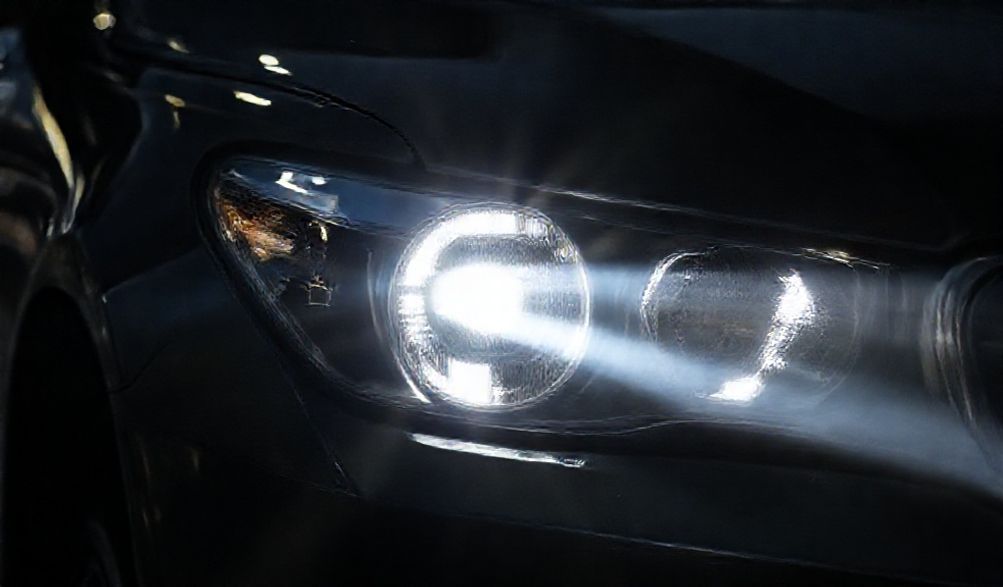
Moving Headlights Explained: A Complete Guide to Adaptive Front-Lighting Systems (AFS)
Introduction
Вы едете по извилистой проселочной дороге ночью. Приближаясь к крутому левому повороту, вы напрягаете зрение, вглядываясь в темноту. Фары вашего автомобиля, headlights, fixed in their forward gaze, illuminate the guardrail directly ahead but leave the crucial apex of the turn shrouded in shadow. You slow down, leaning forward, hoping to catch a glimpse of any obstacle—a deer, a pothole, a stray piece of debris—before it’s too late. This tense, familiar scenario highlights a fundamental flaw in traditional automotive design: static headlights in a dynamic driving world.
For over a century, headlights have simply lit the road directly in front of the vehicle. While technology progressed from dim sealed beams to brighter halogens, intense HIDs, and efficient LEDs, the beam pattern remained stubbornly fixed. This design works acceptably on straight highways but becomes a significant safety compromise on curves, hills, and intersections—precisely where enhanced visibility is most critical. The driver’s need to see where they are going is not the same as the car’s need to illuminate where it is pointing.
Enter the innovative solution: moving headlights. Formally known as Adaptive Front-lighting Systems (AFS), this technology represents a paradigm shift from passive illumination to active, intelligent lighting. By pivoting the headlight beam in sync with your steering, speed, and even the vehicle’s pitch, AFS ensures the light is projected precisely onto your intended path, illuminating the curve as you enter it. This guide provides a comprehensive, expert-backed exploration of moving headlights. We’ll dissect how they work, detail the different types available, analyze their proven safety benefits, and discuss important practical considerations. The information herein is synthesized from core automotive engineering principles, manufacturer technical documents, and published safety research, empowering you with the knowledge to understand this significant advancement in vehicle safety.
What Are Moving Headlights? (Adaptive Front-Lighting Systems)
At its core, an Adaptive Front-lighting System (AFS) is an active safety feature that automatically and dynamically adjusts the direction—and sometimes the range and shape—of a vehicle’s headlight beam. Unlike traditional static lights, AFS treats illumination as a responsive system, not a fixed component.
The primary goal is elegantly simple yet technically sophisticated: to direct light exactly where the driver needs it most, based on real-time driving conditions. This is achieved by factoring in:
* Steering Angle: How much and in which direction the wheel is turned.
* Vehicle Speed: How fast the car is traveling (affecting pivot speed and range).
* Additional Data: In advanced systems, yaw rate (the car’s rotation) and even GPS/navigation data for anticipating curves.
The result is a headlight beam that “looks” into corners, follows the road’s contour over hills, and broadens at intersections, dramatically improving the driver’s field of vision during nighttime driving.
A Brief History of Headlight Evolution
To appreciate the significance of AFS, it helps to view it as the latest step in a long evolution:
1. Sealed Beams (Pre-1980s): Single, non-replaceable units with a fixed filament. Dim and inefficient by today’s standards.
2. Halogen (1980s-Present): Introduced replaceable bulbs with brighter, whiter light. The first major step forward in output but still static.
3. High-Intensity Discharge (HID/Xenon) (1990s-Present): Produced a far more intense, blue-white light. Their efficiency and electronic control paved the way for the first widespread adaptive systems, as their precise arc lamps were well-suited to being swiveled by motors.
4. Light Emitting Diode (LED) (2000s-Present): Highly efficient, durable, and capable of near-instantaneous on/off switching. LED technology enabled the next leap: digital, pixel-precise lighting without moving parts.
5. Adaptive Technologies (2000s-Present): This marks the shift from merely improving light source to intelligently controlling light distribution. AFS represents a move from passive equipment to an integrated, sensor-driven safety system.
How Do Moving Headlights Actually Work?
The magic of moving headlights isn’t magic at all—it’s a precise orchestration of sensors, computers, and actuators working in milliseconds. Let’s break down the mechanics to understand the expertise behind the feature.
The Key Components
Every AFS relies on three fundamental hardware groups:
1. Sensors (The Eyes and Ears):
* Steering Angle Sensor: Located in the steering column, it measures exactly how far and how quickly you’ve turned the wheel.
* Vehicle Speed Sensor: Provides data from the wheel speed sensors.
* Yaw Rate Sensor: (In advanced systems) Detects the vehicle’s rotation around its vertical axis, helpful for understanding actual cornering dynamics versus steering input.
* Optional Data: Some systems integrate navigation data to “preview” an upcoming sharp curve or use a front-facing camera to detect oncoming traffic for glare management.
-
Electronic Control Unit (ECU) (The Brain):
- This dedicated microprocessor continuously receives data from all relevant sensors. Using complex, manufacturer-specific algorithms, it calculates the optimal headlight pivot angle and beam pattern for the current driving scenario. It makes hundreds of adjustments per second.
-
Actuators (The Muscles):
- These are small, high-precision electric motors physically attached to each headlight assembly. Upon command from the ECU, they swivel the entire light source (e.g., an HID bulb and reflector) or, in LED systems, specific lens elements to redirect the beam.
The Process in Action
Imagine driving at 40 mph and initiating a right-hand turn. Here’s the data flow:
1. Input: You turn the steering wheel. The steering angle sensor instantly registers a 20-degree turn to the right. The speed sensor confirms a 40 mph velocity.
2. Processing: This data stream is sent to the AFS ECU. The ECU’s algorithm determines that at this speed and steering angle, the headlights should pivot 15 degrees to the right to illuminate the lane you’re entering. It also calculates the required speed of the pivot for a smooth, natural follow.
3. Output: The ECU sends an electrical command to the actuator motors within the headlight housings. The left headlight (the one on the outside of the turn) swivels significantly to the right, casting light far into the curve. The right headlight may also pivot slightly inward to broaden the illuminated area near the vehicle. The entire process happens seamlessly, in real-time, lighting your path through the corner.
Different Types of Adaptive Lighting Technologies
The term “moving headlights” encompasses several technologies with varying levels of sophistication. Understanding these differences is key when evaluating vehicles.
Adaptive Cornering Lights (Basic Swivel)
This is the foundational form of AFS. The headlights pivot horizontally (side-to-side) based primarily on steering input and vehicle speed. When you turn the wheel or use a turn signal at low speeds (e.g., in a parking lot), the corresponding headlight may also illuminate to light up the immediate area beside the car. This type offers a clear benefit over static lights and is common in mid-range vehicles as an introductory adaptive feature.
Advanced AFS (with Vertical & Horizontal Control)
This more sophisticated system adds a second axis of movement: vertical adjustment. The headlights can:
* Swivel Horizontally for corners.
* Tilt Vertically to compensate for vehicle pitch. When you accelerate (causing the rear to squat) or load the trunk, the beams automatically adjust downward to prevent blinding oncoming traffic. When going over a hill crest, they can adjust upward to see further down the descending road. This dual-axis control provides a more comprehensive and stable field of vision.
Matrix LED / Pixel Lighting (The Cutting Edge)
This is the current pinnacle of adaptive lighting and represents a conceptual leap. These systems do not have swiveling motors. Instead, they use a densely packed array or “matrix” of dozens of individual LED segments (pixels), each independently controlled by the ECU.
* How it Works: A forward-facing camera detects vehicles, pedestrians, and road signs. The ECU then activates, deactivates, or dims specific LED pixels to shape the light pattern with incredible precision. It can create a “tunnel” of high-beam light that perfectly surrounds a detected oncoming car, maintaining maximum illumination everywhere else without causing glare.
* The “Moving” Effect: The beam pattern appears to “move” and morph around objects, but it’s done entirely electronically. This allows for features like projecting navigation arrows onto the road ahead or highlighting pedestrians with a subtle flash. Brands have their own names for this (Audi Matrix LED, BMW Selective Beam, Mercedes-Benz Digital Light).
Proven Benefits of Moving Headlights: Safety & Performance
The advantages of AFS are not merely theoretical; they translate directly into tangible improvements in driver capability and safety.
Enhanced Nighttime Visibility
This is the direct, primary benefit. By illuminating the actual trajectory of the vehicle, AFS dramatically extends the useful field of vision in curves. Studies and real-world experience show this allows drivers to detect pedestrians, cyclists, animals, or road hazards 1 to 2 seconds earlier than with static lights. In driving terms, at 60 mph, that’s an additional 88 to 176 feet of reaction distance—often the difference between a safe maneuver and a collision.
Reduced Driver Fatigue
Driving at night on unfamiliar or winding roads is mentally taxing. The constant strain of peering into darkness, the surprise of unlit obstacles, and the need to slow down excessively for curves contribute to cognitive load and stress. AFS mitigates this by providing consistent, predictable illumination of the road path. This reduces anxiety, improves situational awareness, and makes long night journeys less fatiguing.
Improved Safety Statistics
The most compelling evidence comes from safety research. The Insurance Institute for Highway Safety (IIHS), a leading authority, has conducted extensive studies on adaptive headlights. Their research has consistently found that vehicles equipped with good-rated AFS technology are involved in significantly fewer nighttime single-vehicle and pedestrian-related crashes compared to similar vehicles without the technology. This empirical data underscores AFS not as a mere convenience but as a bona fide, life-saving active safety system. It was this proven benefit that led the IIHS to include headlight ratings in their coveted Top Safety Pick awards, pushing manufacturers to improve lighting across their fleets.
Important Considerations and Potential Drawbacks
A balanced view is essential. While transformative, AFS technology comes with its own set of practical considerations.
Cost and Complexity
Advanced technology commands a premium. Vehicles equipped with AFS are typically in higher trim levels or optional packages, increasing the initial purchase price. The components themselves—specialized LED arrays, motors, sensors—are also more expensive than their static counterparts.
Maintenance and Repairs
This is the most significant practical drawback. AFS is deeply integrated into the vehicle’s network. If a headlight is damaged, a simple bulb swap won’t suffice. The entire assembly, often costing thousands of dollars, may need replacement. Crucially, after any front-end repair, wheel alignment, or even headlight replacement, the system requires a professional, computerized calibration. This process uses specialized tools and targets to align the headlights’ “zero position” and ensure the swiveling logic is accurate. An uncalibrated system can misdirect light, creating a safety hazard. This means repairs must be done by technicians with the right equipment and training.
Regulatory Landscape
Regulations have historically been a hurdle, particularly in the United States. Outdated Federal Motor Vehicle Safety Standards (FMVSS) effectively banned the most advanced adaptive driving beams (like matrix systems) for decades, while they were common in Europe. However, this has recently changed. In 2022, the National Highway Traffic Safety Administration (NHTSA) finalized a rule allowing adaptive driving beams on new vehicles, aligning U.S. regulations with global standards. This paves the way for the widespread adoption of the safest lighting technologies in the American market.
FAQ: Your Questions About Moving Headlights, Answered
Q: Are moving headlights the same as automatic high beams?
О: No, they are distinct but complementary features. Automatic High-Beam Assist simply turns your high beams on and off based on detected traffic. Adaptive Front-lighting Systems (AFS) physically move or reshape your low-beam pattern. Many modern cars equipped with AFS also have automatic high beams, creating a comprehensive, hands-free lighting suite.
Q: Can I retrofit moving headlights to my older car?
О: It is extremely complex, prohibitively expensive, and generally not recommended or feasible for the average consumer. AFS requires integration with the vehicle’s high-speed CAN bus network, installation of steering angle and other sensors, new wiring harnesses, and complex programming. It is a factory-engineered system, not an aftermarket accessory.
Q: Do moving headlights require special maintenance?
О: No daily or routine maintenance is needed. However, as noted, they должна be professionally calibrated by a qualified technician using OEM-approved equipment after any front-end collision repair, suspension work, or headlight assembly replacement to ensure safe and correct operation.
Q: Are they worth the extra cost?
О: This is a personal valuation. For drivers who frequently travel at night, especially on rural, winding, or poorly lit roads, the safety and comfort benefits can be substantial and well worth the investment. It is an advanced active safety feature, similar to automatic emergency braking. For primarily urban daytime drivers, the value proposition may be lower. Consider it an investment in nighttime safety and reduced driving stress.
Заключение
Moving headlights, or Adaptive Front-lighting Systems, represent one of the most meaningful yet understated advancements in modern automotive safety. By transitioning headlights from static lamps to dynamic, intelligent partners, AFS directly addresses the critical challenge of nighttime visibility in real-world driving conditions. As we’ve explored, the technology—whether through precise mechanical swiveling or digital pixel control—actively works to illuminate your path, not just the space in front of your bumper.
Understanding the mechanics, benefits, and considerations of AFS empowers you as a consumer. It allows you to appreciate the engineering in your vehicle and make informed decisions when purchasing your next car. With regulatory barriers falling in key markets like the U.S., this technology is poised to move from a premium feature to a more common safety standard. The future of nighttime driving is adaptive, promising roads that are safer, less stressful, and more clearly lit for everyone. For specific details on how the AFS operates in your vehicle, always consult your owner’s manual or speak with a certified dealership technician.
p>