
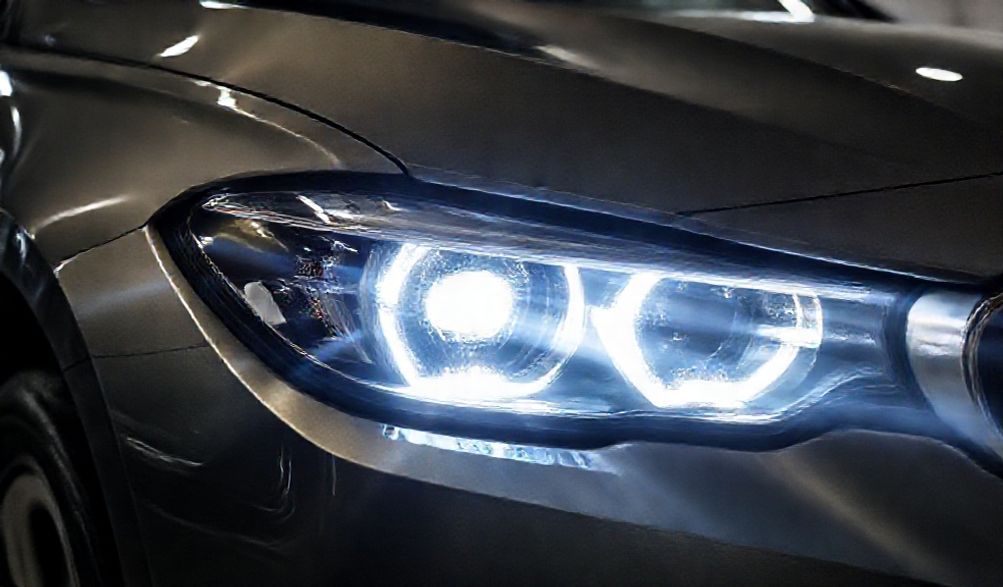
Adaptive Beam Headlights Explained: Safety, Technology & How They Work
Imagine driving on a dark, winding country road. Your high beams are essential to see the next curve, but a pair of oncoming headlights appears in the distance. You fumble for the stalk, switching back to low beams, and are suddenly plunged into near-darkness, straining to see the road’s edge. Just as you adjust, the other car passes, and you switch the high beams back on. This frustrating, all-too-common dance isn’t just annoying—it’s a safety compromise.
What if your headlights could intelligently see that oncoming car and, in a fraction of a second, dim единственный the specific slice of light that would hit its windshield, while keeping the rest of the road—and the shoulder where a deer might be poised—fully illuminated? This isn’t science fiction; it’s the reality of adaptive beam headlights. As an automotive technology that has been transforming nighttime driving in Europe for over a decade and is now finally available in the United States, adaptive beams represent one of the most significant leaps in vehicle lighting since the sealed-beam headlight. This post will provide clear, factual information to demystify this intelligent system, explain how it enhances safety for you and others, and help you understand its role in the future of driving.
What Are Adaptive Beam Headlights? The Intelligent Lighting Solution
At its core, an adaptive beam headlight system is a dynamic lighting technology that automatically and continuously adjusts the headlight pattern in real-time to provide optimal forward illumination without dazzling other road users. Unlike static headlights, which have a fixed beam pattern, adaptive beams (often called Adaptive Driving Beams or ADB) are “aware” of their surroundings.
Core Definition and Function
Adaptive beam headlights are an advanced front-lighting system that uses sensors and electronic controls to modify the distribution of light from the headlamps. The primary goal is dual-purpose: to maximize the driver’s seeing distance and to minimize glare for other drivers. It achieves this not by simply turning beams on and off, but by actively shaping the light output, creating zones of high and low intensity within the beam pattern based on the precise traffic situation.
The Key Difference: Adaptive vs. Standard vs. Auto High-Beams
The terminology can be confusing, so it’s crucial to distinguish between these three common systems:
- Standard (Static) Headlights: These are traditional headlights with fixed low-beam and high-beam patterns. The driver manually switches between them. The low-beam pattern is dipped to avoid glaring others, inherently limiting forward and peripheral visibility.
- Automatic High-Beam Assist: This is a helpful but simpler system. A sensor (often a camera) detects headlights or taillights and automatically switches from high beams to low beams when traffic is present. It’s a binary on/off function.
- Adaptive Driving Beams (ADB): This is the intelligent evolution. ADB doesn’t just switch; it modulates. When it detects other vehicles, it dynamically creates a “shadow” or a zone of reduced intensity around those vehicles within the high-beam pattern. The areas not occupied by other cars remain fully illuminated with high-beam intensity. It provides the benefits of high beams almost all the time, without the associated glare.
How Do Adaptive Beam Headlights Work? The Technology Behind the Beam
The magic of adaptive beams is a symphony of hardware and software working in milliseconds. It transforms your headlights from dumb bulbs into perceptive, reactive tools.
The System Components: Sensors, Cameras, and Control Units
The system relies on a few key components, often shared with other advanced driver-assistance systems (ADAS):
- Forward-Facing Camera: Mounted typically behind the windshield near the rearview mirror, this is the “eyes” of the system. It identifies light sources (headlights, taillights), determines their position, distance, and movement, and can also read road signs and lane markings.
- Sensors & Data Integration: Additional sensors, like steering angle sensors, GPS data, and vehicle speed sensors, provide context. Is the car entering a curve? Climbing a hill? This data is crucial for anticipating where the light needs to be directed.
- Electronic Control Unit (ECU): This is the “brain.” It processes all the data from the camera and sensors in real-time, calculating the optimal headlight beam pattern dozens of times per second.
- Adaptive Light Modules: This is the “muscle.” The ECU’s commands are executed here. There are two primary technological approaches:
- Matrix LED Systems: These use an array of many individually controlled LED segments (e.g., 32, 84, or even over 100). The ECU can turn specific LEDs on or off or dim them to carve precise shadows around detected vehicles while others stay lit.
- Dynamic Shield Systems: These systems use a movable shade or shield (often with Digital Light Processing – DLP technology) placed in front of a high-intensity light source. The shield moves physically to block specific portions of the beam, creating the shaded zones.
The Adaptive Process in Action
The entire sequence happens seamlessly and continuously:
- Detection: The camera identifies light sources up to 800 meters away, classifying them as oncoming headlights, preceding taillights, or even roadside reflectors.
- Calculation: The ECU fuses this data with vehicle dynamics (speed, yaw, steering angle). It predicts the path of both your vehicle and the detected objects. It then generates a precise light map: “Illuminate zones A, C, and E at 100%; dim zones B and D around that car to 20%.”
- Adjustment: The command is sent to the headlight modules. In a matrix system, specific LEDs are deactivated. In a shield system, the shield moves to the calculated position. The result is a beam pattern that fluidly dances around other vehicles, bends into corners (cornering lights are often integrated), and broadens at intersections to illuminate crosswalks and sidewalks.
Proven Safety Benefits of Adaptive Beam Technology
The sophisticated engineering serves one paramount goal: safety. Studies and real-world evidence point to substantial benefits.
Enhanced Visibility and Reduced Driver Fatigue
By providing near-constant high-beam levels of illumination, adaptive beams dramatically extend the driver’s functional sight distance. This means earlier detection of potential hazards—a pedestrian stepping off the curb, debris in the road, or an animal at the roadside. The IIHS has noted that better lighting gives drivers more time to react, which is critical in avoiding collisions. Furthermore, the constant optimal light level reduces the severe eye strain and cognitive load associated with frequent manual switching between high and low beams. This leads to less driver fatigue on long nighttime journeys, keeping the driver more alert.
Preventing Glare for Oncoming and Preceding Traffic
This is the other side of the safety equation. Glare from oncoming high beams is not just an irritation; it causes temporary blindness and impairs the vision of other drivers for several seconds—a dangerous amount of time at speed. Adaptive beams are designed to be polite. By precisely shadowing other vehicles, they eliminate the primary safety trade-off of conventional high beams. The National Highway Traffic Safety Administration (NHTSA), in its ruling to allow ADB in the U.S., estimated that this technology could prevent thousands of crashes annually by improving visibility while controlling glare. It’s an active safety feature that protects not only the driver using it but everyone sharing the road.
Availability, Regulations, and Vehicle Considerations
For drivers interested in this technology, understanding the practical landscape is key.
Are Adaptive Beam Headlights Legal Where You Drive?
История регулирования важна. Адаптивные фарами с динамическим управлением световым пучком были легальны и широко распространены в Европе с середины 2000-х годов. Однако в Соединенных Штатах Федеральный стандарт безопасности транспортных средств (FMVSS) 108 содержал строгие, устаревшие многолетние требования к распределению света фар, которые фактически запрещали технологию адаптивного светового пучка. После обширных исследований и лоббирования, NHTSA внесла поправки в FMVSS 108 в феврале 2022 года, наконец разрешив адаптивные фары дальнего света для новых автомобилей в США. Это означает, что автопроизводители теперь могут включать эту функцию в модели, продаваемые в США, и мы начинаем видеть их появление на автомобилях модельного года 2023+.
Какие марки и модели автомобилей предлагают адаптивные фары?
Теперь, когда американские нормы приведены в соответствие, технология быстро распространяется с люксовых марок на более массовые бренды. Часто это функция премиальных технологических или светотехнических пакетов. Вот несколько примеров фирменных систем:
* Audi: Matrix Design LED и Digital Matrix LED (доступны на моделях A4, A6, A8, Q5, Q7, e-tron)
* BMW: Адаптивные светодиодные фары с селективным пучком (доступны на моделях 3 Series, 5 Series, X5, X7)
* Mercedes-Benz: DIGITAL LIGHT (доступны на S-Class, EQS, GLE)
* Toyota/Lexus: Система адаптивного дальнего света BladeScan (доступна на Lexus RX, NX, Toyota Mirai)
* Ford/Lincoln: Adaptive Pixel Lighting (Lincoln), Adaptive Front Lighting System (Ford)
* Volvo: Активный дальний свет с пиксельной технологией
* Hyundai/Genesis: Адаптивный дальний свет (доступен на Genesis GV70, GV80, Hyundai Ioniq 5/6)
* Porsche: Porsche Dynamic Light System Plus (PDLS+)
Часто задаваемые вопросы (FAQ) об адаптивных фарах
В: Можно ли установить адаптивные фары на мой старый автомобиль?
О: Практически наверняка нет. Адаптивные фары — это не простая замена лампы или корпуса. Это глубоко интегрированные системы безопасности, требующие наличия специальной фронтальной камеры, датчиков, жгутов проводов, интеграции с бортовой сетью и заводской калибровки. Установка в условиях сервиса нецелесообразна, неэкономична и небезопасна, так как может нарушить работу системы и других функций ADAS.
В: Работают ли адаптивные фары в тумане или сильном дожде?
О: Их основная функция — реагировать на другие источники света и геометрию дороги. В тумане или сильном снеге свет может отражаться от осадков, потенциально снижая эффективность. Они не заменяют специальные противотуманные фары, которые используют широкий, низко расположенный пучок, предназначенный для освещения поверхности дороги без создания отражающей “стены света”. Водителям по-прежнему следует вручную включать противотуманные фары в соответствующих условиях.
В: Сколько стоит ремонт адаптивных фар?
О: Стоимость ремонта значительно выше, чем у стандартных галогенных или даже светодиодных блоков. Поврежденный узел адаптивной фары содержит сложную электронику, прецизионные линзы и часто массив светодиодов. Стоимость замены каждого блока может составлять несколько тысяч долларов, и они требуют профессиональной калибровки/регулировки с помощью специализированных диагностических инструментов. Всегда консультируйтесь со своей страховой компанией и уполномоченным дилером или ремонтной мастерской для получения точной оценки.
В: Отпадает ли необходимость полностью пользоваться переключателем дальнего света?
О: В подавляющем большинстве сценариев вождения на общественных дорогах с другим транспортом — да, система полностью автоматическая и управляет всеми регулировками пучка. Однако ручной переключатель обычно остается для особых случаев, таких как подача сигнала другим водителям в отдаленных районах или если вам необходимо переопределить систему по какой-либо причине. Автомобиль также может автоматически отключать адаптивную функцию в определенных неблагоприятных погодных условиях.
Заключение
Адаптивные фары — это нечто гораздо большее, чем просто умное удобство; они представляют собой фундаментальный прогресс в области активной безопасности автомобиля. Интеллектуально максимизируя обзорность для водителя и одновременно защищая зрение других участников движения, эта технология решает ключевую, давнюю проблему ночного вождения. Подкрепленные исследованиями авторитетных организаций, таких как IIHS и NHTSA, и наконец легализованные по всей территории США, адаптивные фары превращаются из европейской роскоши в глобальный стандарт безопасности. Для любого водителя, выбирающего свой следующий автомобиль — особенно того, кто часто ездит в темное время суток — понимание и приоритизация этой технологии является разумным, осознанным шагом к более безопасному пути для всех на дороге.
p>