
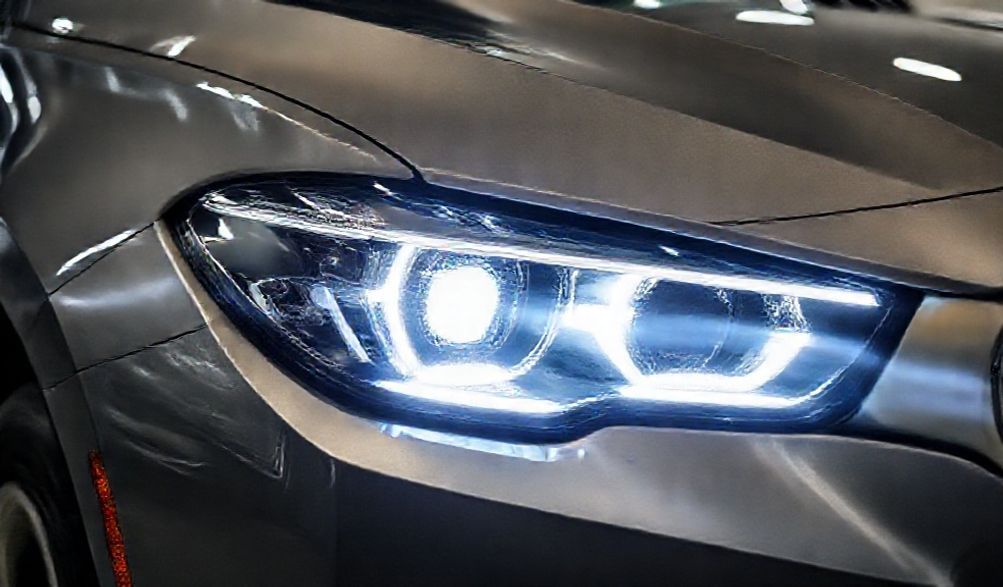
Adaptive Headlights Explained: Safety, Technology, and How They Work
You’re driving on a winding country road at night. As you approach a sharp curve, your headlights illuminate the guardrail but leave the actual turn ahead in deep shadow. A moment later, the blinding glare from an oncoming SUV floods your cabin, forcing you to squint and momentarily lose sight of the road’s edge. This tense, familiar scenario highlights a fundamental flaw in traditional car design: static headlights are ill-suited for our dynamic driving world.
For over a century, headlight technology remained relatively stagnant—a simple choice between a low beam that illuminates a short, wide area and a high beam that throws light far down a straight path. This binary system forces a constant, manual compromise between seeing the road and not blinding others. But what if your headlights could think?
Enter Адаптивные фары—also known as Adaptive Driving Beams (ADB) or matrix headlights. This intelligent evolution of automotive lighting doesn’t just react to darkness; it responds to the entire driving environment. By automatically adjusting their beam pattern, direction, and intensity, they aim to provide optimal illumination exactly where and when you need it, enhancing safety for you and everyone sharing the road.
This comprehensive guide will demystify this advanced technology. We’ll break down how adaptive headlights work, examine the compelling safety data behind them, explore their current availability and the recent regulatory shift that’s about to change the American automotive landscape, and glimpse into their exciting future. Our goal is to provide you with the expert-backed knowledge needed to understand this critical safety feature and make informed decisions about your next vehicle.
What Are Adaptive Headlights? A Technological Breakdown
At their core, adaptive headlights are about moving beyond the simple on/off switch of traditional high beams. They are a sophisticated system designed to provide maximum forward visibility without ever subjecting other road users to dangerous glare. To appreciate their innovation, it’s essential to understand how they function on a technical level.
Core Function: Beyond Simple High Beams
The fundamental principle is dynamic adjustment. Unlike conventional auto high-beam systems, which merely toggle between high and low beams when they detect taillights or headlights, adaptive systems are far more nuanced. They continuously modify the headlight output based on a constant stream of data including:
* Vehicle Speed: At highway speeds, the beam may focus farther down the road; in the city, it may widen for better peripheral vision.
* Steering Angle & Yaw Rate: The lights pivot to illuminate the path you are actually turning into, not just the straight-ahead road.
* Surrounding Traffic: Cameras detect the precise position of oncoming and preceding vehicles, allowing the system to selectively dim only the portions of the beam that would hit them.
* Environmental Conditions: Some systems integrate with navigation or weather data to anticipate curves or adjust for rain.
This results in a headlight beam that is no longer a static cone of light, but a malleable, intelligent shape that molds itself to the driving scenario in real-time.
Key Components and How They Work Together
This magic is performed by a coordinated orchestra of hardware and software:
1. Sensors & Cameras: This is the system’s eyes and ears. A network typically includes a forward-facing camera (often mounted near the rearview mirror), a steering angle sensor, a yaw rate sensor, wheel speed sensors, and sometimes GPS data. The camera is crucial for identifying light sources from other vehicles, pedestrians, and road signs.
2. Processing Unit (ECU): This is the brain. A dedicated electronic control unit analyzes the data from all sensors dozens of times per second. It runs complex algorithms to determine the exact optimal headlight position and beam pattern for the current millisecond.
3. Advanced Light Modules: This is the muscle that executes the commands. The technology here varies:
* Swiveling Modules: For cornering functions, motors physically pivot the headlight housing or internal reflectors.
* LED Arrays (Matrix LED): The most common system for ADB. The high beam is produced by a cluster of many individual LED segments. The ECU can turn off specific segments (e.g., those aimed at an oncoming car) while leaving the rest at full intensity.
* Digital Micromirror Devices (DMD) / Pixel Lighting: The cutting edge. Similar to a projector, thousands of tiny mirrors can be individually tilted to create incredibly precise light patterns with razor-sharp cut-offs, capable of “bending” light around multiple vehicles simultaneously.
Common Types of Adaptive Headlight Systems
Not all adaptive systems are created equal. The technology exists on a spectrum:
* Adaptive Front-lighting System (AFS): This is often the entry point. AFS headlights swivel laterally based on steering input and sometimes speed, illuminating corners and curves. They significantly improve visibility on winding roads but may still require switching between high and low beams manually or via a basic auto function.
* Adaptive Driving Beam (ADB) / Matrix LED: This represents the full realization of the “always-on high beam” ideal. Using an array of LEDs, the system maintains high-beam levels of illumination while actively creating a “shadow” around detected vehicles. As cars pass or are overtaken, the shadow moves with them, ensuring the driver has the brightest possible view without causing glare.
* Pixel Lighting & Digital Light: This is the next generation, currently found on high-end luxury vehicles. With resolution measured in thousands or even millions of individual pixels, these systems offer unparalleled control. They can project symbols or information onto the road, highlight specific hazards like pedestrians with a focused spotlight, and create complex, dynamic light patterns impossible for older systems.
Proven Safety Benefits of Adaptive Headlights
This technological sophistication isn’t just for show; it translates directly into tangible safety improvements. The primary mission of any headlight is to help the driver see and be seen, and adaptive systems excel at both.
Enhancing Driver Vision and Reducing Fatigue
The benefits for the driver are immediate and significant:
* Improved Illumination of Curves and Intersections: By lighting the actual path of the turn, AFS systems give drivers critical extra seconds to identify hazards like debris, animals, or pedestrians at the roadside before entering the curve.
* Extended High-Beam Use: ADB systems allow drivers to benefit from the far-reaching illumination of high beams more than 90% of the time, even in traffic. This dramatically extends the sight distance and time to react compared to standard low beams.
* Reduced Eye Strain and Fatigue: The constant cycle of being dazzled by oncoming lights and then switching to low beams is visually taxing on long night drives. By eliminating glare from other vehicles, adaptive headlights create a more consistent and comfortable visual environment, reducing driver fatigue.
Data and Studies: What the Research Shows
The safety case isn’t merely theoretical; it’s backed by rigorous research from leading transportation safety institutions.
* Insurance Institute for Highway Safety (IIHS): The IIHS, a leading authority on vehicle safety, began rating headlights in 2016 due to the clear link between illumination quality and crash rates. They have consistently found that vehicles with good-rated headlights have lower nighttime crash rates. In their evaluations, adaptive systems, particularly those with curve-adaptive and high-beam assist features, frequently earn the highest “Good” ratings. The IIHS states that halving the risk of nighttime crashes is a realistic goal with improved headlight technology.
* National Highway Traffic Safety Administration (NHTSA): The U.S. government’s road safety agency has acknowledged the potential of ADB systems. In its ruling to permit them, NHTSA cited estimates that these systems could prevent thousands of crashes annually. Their research indicates that poor lighting is a factor in approximately half of all fatal crashes that occur at night, despite lower traffic volumes.
Protecting Other Road Users
Perhaps the most elegant aspect of adaptive headlight technology is its ethos of mutual safety. It’s designed not just to help the driver see, but to ensure others are not blinded.
* For Oncoming Drivers: By precisely dimming only the sliver of light aimed at an approaching vehicle, ADB systems eliminate the dangerous “flash blindness” that causes temporary vision loss and is a major contributor to head-on collisions.
* For Pedestrians and Cyclists: Advanced systems can detect vulnerable road users and subtly adjust the beam to avoid shining directly in their eyes, while sometimes even highlighting them with a gentle spotlight to ensure the driver is aware of their presence.
Availability, Regulations, and Considerations for Buyers
As the safety benefits become undeniable, adaptive headlights are transitioning from a luxury novelty to a sought-after safety feature. Understanding their availability, the regulatory landscape, and practical ownership considerations is key.
Finding Cars with Adaptive Headlights
The technology has trickled down from the luxury segment into the mainstream.
* Pioneers & Luxury Standard-Bearers: Бренды, такие как Audi (with its Digital Matrix LED), BMW (Adaptive LED), Mercedes-Benz (Digital Light), and Volvo (Active Bending Lights) have offered sophisticated systems for years, often as standard or in premium packages.
* Mainstream Adoption: Today, you can find adaptive headlight technology (often AFS or basic ADB) on popular models from Toyota (e.g., Highlander, Camry), Honda (e.g., Accord, CR-V), Ford (e.g., F-150, Mustang Mach-E), Hyundai, и Kia. It is frequently bundled into upper trim levels or optional “Technology,” “Premium,” or “Lighting” packages.
* Buyer’s Tip: When researching a new car, don’t just look for “adaptive headlights” in the brochure. Check the specific package contents. Look for terms like “Adaptive Front-lighting System (AFS),” “Adaptive Driving Beam,” “Matrix LED,” or “Pixel Headlights.” Always ask the dealer for a demonstration at night to see the feature in action.
The Regulatory Landscape: A Shift in the U.S.
For decades, a regulatory hurdle stifled the most advanced adaptive headlight technology in the United States.
* The Old Rule (FMVSS 108): Established in the 1960s, the Federal Motor Vehicle Safety Standard 108 required a strict physical separation between high-beam and low-beam filaments. This made the dynamic, pixel-based shading of ADB systems technically illegal, as they used a single light source to perform both functions.
* The 2022 NHTSA Ruling: In a landmark decision, the NHTSA amended FMVSS 108 to permit Adaptive Driving Beam headlights. This brought the U.S. in line with Europe and Asia, where such systems have been legal and common for over a decade.
* What This Means for You: Automakers no longer need to create watered-down versions of their global headlight systems for the U.S. market. Consumers can expect to see true, advanced ADB and pixel lighting technology on an increasing number of new models starting in the 2023-2024 model years and beyond.
Cost, Maintenance, and Repair Considerations
While the safety payoff is high, there are practical factors to weigh:
* Upfront Cost: Adaptive headlights are more expensive to produce. You will typically find them as part of an optional package that can add $1,000 to $3,000 or more to a vehicle’s price. However, as with all technology, costs are decreasing with wider adoption.
* Repair Complexity and Cost: This is the most significant consideration. A minor fender-bender that cracks a standard headlight housing might cost a few hundred dollars to fix. Damaging an adaptive unit involves replacing not just the lens and bulb, but potentially the entire LED array, sensors, and motors. Repairs can easily run into the thousands of dollars per headlight. Furthermore, after replacement, the system often requires precise calibration using specialized equipment to ensure the cameras and lights are aligned correctly. This is a job for a certified technician and may add several hundred dollars to the bill.
* Insurance: Given the high repair cost, it’s wise to review your auto insurance policy. Consider whether a lower deductible is worthwhile for peace of mind.
The Future of Adaptive Headlight Technology
Adaptive headlights are not the endgame; they are a foundational step toward a fully integrated, communicative lighting ecosystem for future vehicles.
Integration with Advanced Driver-Assistance Systems (ADAS)
The next leap involves deep integration with other vehicle systems:
* Navigation Synergy: Headlights could proactively illuminate an upcoming freeway exit or sharp turn flagged by the GPS.
* Object Highlighting: Linked with night vision or advanced camera systems, headlights could automatically cast a spotlight on a pedestrian crossing the road ahead or a deer at the roadside, drawing the driver’s attention directly to the hazard.
* Поддержка автоматизированного вождения: Для полуавтономных транспортных средств интеллектуальное освещение является критически важным датчиком и инструментом коммуникации, обеспечивая оптимальное “зрение” автомобиля в любых условиях.
Цифровой свет и проекционные возможности
Переход к пиксельным системам открывает новые, не связанные с освещением функции:
* Коммуникационные проекции: Фары могут проецировать символы на дорогу, такие как пешеходный переход для пешеходов, указатель ширины для узкой строительной зоны или предупреждающие символы о гололеде или препятствиях впереди.
* Проекции для помощи водителю: Стрелки поворота, линии безопасной дистанции или направляющие для парковки могут проецироваться непосредственно в поле зрения водителя на дорожное полотно.
Стандартизация и широкое внедрение
Траектория ясна. По мере устранения регуляторных барьеров и снижения производственных затрат, следуя типичной нисходящей кривой для автомобильной электроники, технология адаптивных фар пойдет по пути антиблокировочной системы тормозов, электронного контроля устойчивости и камер заднего вида. Она перейдет из премиум-опции в распространенную функцию и, в конечном итоге, в стандартное требование безопасности для всех новых автомобилей, делая ночное вождение безопаснее для всех.
Часто задаваемые вопросы (ЧЗВ)
В1: Являются ли адаптивные фары тем же самым, что и автоматический дальний свет?
О: Нет. Автоматический дальний свет просто включает и выключает его. Адаптивные фары (особенно ADB) постоянно формируют и корректируют луч, часто оставляя дальний свет включенным, но выборочно блокируя его попадание на другие автомобили.
В: Сколько стоит ремонт адаптивных фар?
О: Стоимость ремонта может быть значительно выше, чем для стандартных фар, из-за сложных датчиков и электроники. После замены лобового стекла может потребоваться незначительная калибровка, в то время как замена всего блока может стоить тысячи. Всегда уточняйте информацию у своей страховой компании и у сертифицированного техника.
В3: Могу ли я получить адаптивные фары на любом новом автомобиле?
О: Они становятся более распространенными, но еще не являются универсальными. Их часто можно найти в более высоких комплектациях или технологических пакетах. Это ключевая особенность, которую стоит изучить при выборе автомобиля.
В4: Работают ли адаптивные фары во всех погодных условиях?
О: Несмотря на свою сложность, их эффективность может снижаться в условиях сильного тумана, снега или дождя, когда датчики и камеры могут быть заблокированы. Водитель всегда должен сохранять внимание и при необходимости вручную регулировать свет.
В5: Законны ли они там, где я живу?
О: Системы адаптивных фар (AFS), которые поворачивают свет, уже были легальны. Более новая технология Adaptive Driving Beam (ADB) теперь легальна в США с 2022 года, вслед за Европой и другими регионами. Всегда проверяйте местные нормативные акты для получения самой актуальной информации.
Заключение
Адаптивные фары представляют собой значительный скачок в технологии автомобильной безопасности. Перейдя от статического освещения к интеллектуальному, отзывчивому свету, который "видит" дорогу и реагирует на нее, они решают одну из самых старых и постоянных опасностей вождения: темноту. Данные авторитетных организаций, таких как IIHS и NHTSA, подтверждают их потенциал в значительном сокращении ночных столкновений, защищая водителей, пассажиров и уязвимых участников дорожного движения.
Как потребителю, понимание этой технологии позволяет вам отдать ей приоритет. Выбирая свой следующий автомобиль, рассматривайте адаптивные фары не как простое удобство или роскошную опцию, а как жизненно важную активную функцию безопасности — ту, которая активно работает на предотвращение аварий до их возникновения. С недавними изменениями в регулировании, раскрывшими их полный потенциал в США, мы стоим на пороге новой эры. Адаптивные фары готовы стать мейнстрим-стандартом, критически важным компонентом в более широкой экосистеме интеллектуальных, подключенных и более безопасных автомобилей для всех.
p>