
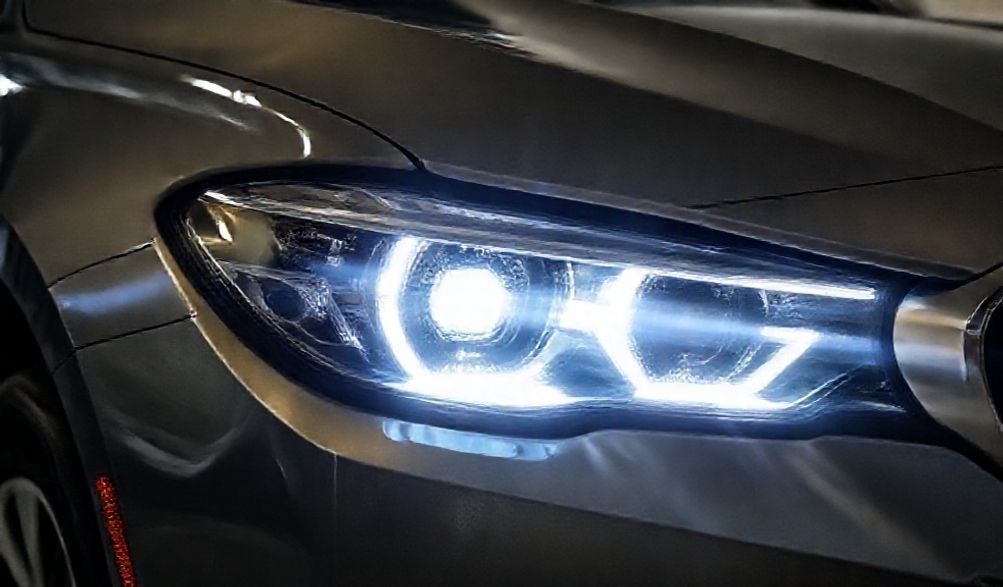
Adaptive Headlights Meaning: A Complete Guide to How They Work & Why They Matter
You’re driving on a winding country road at night. As you approach a sharp curve, your fixed headlights illuminate only the guardrail directly ahead, leaving the bend itself in deep shadow. You slow down, leaning forward, straining to see. Or perhaps you’re on a two-lane highway, and an oncoming car crests a hill, its high beams flooding your cabin with blinding light, leaving you disoriented for critical seconds.
These scenarios are more than just annoyances; they are significant safety compromises in the fundamental task of seeing and being seen. For decades, we’ve accepted this binary choice: low beams for traffic, high beams for darkness, with all the manual toggling and compromised vision that entails. But what if your headlights could think? What if they could actively bend light around corners and selectively dim themselves to avoid glaring other drivers, all while keeping the road ahead brilliantly lit?
This is where understanding the adaptive headlights meaning becomes crucial for modern driving safety and comfort. Moving beyond a simple feature name, it represents a paradigm shift in automotive lighting technology. This comprehensive guide synthesizes information from leading automotive safety organizations like the Insurance Institute for Highway Safety (IIHS), technical documents from major manufacturers, and expert engineering insights to provide a clear, trustworthy explanation.
Our goal is to demystify adaptive headlights entirely. We’ll break down what they are at their core, how they fundamentally differ from the lights in most cars on the road today, and explore the various types of systems in use. We’ll delve into the tangible safety benefits they offer, address practical considerations, and clarify the evolving regulatory landscape—especially here in the United States. By the end, you’ll not only grasp the adaptive headlights meaning but also understand why they are considered one of the most important advancements in vehicle safety in recent years.
What Are Adaptive Headlights? The Core Definition
Let’s start with a clear, jargon-free definition. Adaptive headlights—also known as Adaptive Driving Beams (ADB), Adaptive Front-lighting Systems (AFS), or “smart” headlights—are an advanced automotive lighting system that automatically and dynamically adjusts the headlight beam’s pattern, direction, and/or intensity in real-time.
This adjustment is based on a continuous stream of data including:
* Vehicle speed
* Steering wheel angle
* Road curvature (via navigation data or camera analysis)
* The presence, distance, and direction of other vehicles (detected via cameras)
The core principle is adaptive illumination versus static illumination. Traditional headlights are static: they project a fixed, pre-determined pattern of light regardless of what’s happening on the road. The only adaptation is the driver manually switching between two static patterns: low beam and high beam.
Adaptive headlights, in contrast, are dynamic. They create a fluid, optimized beam that reacts to the environment, providing the best possible illumination for the immediate driving scenario without subjecting the driver to constant manual adjustments or blinding other road users.
Adaptive Headlights vs. Standard Headlights: A Key Distinction
The difference is best understood through a direct comparison:
| Feature | Standard (Static) Headlights | Adaptive (Dynamic) Headlights |
| :— | :— | :— |
| Beam Pattern | Fixed. Two preset patterns: low beam and high beam. | Fluid. Continuously reshaped and redirected. |
| Control | Manual. Driver toggles between high and low beams. | Automatic. System controls beam via sensors and computers. |
| Cornering | Illuminates straight ahead. Light is lost on curves. | Swivels and/or intensifies light into the direction of a turn. |
| Oncoming Traffic | Requires driver to manually dip high beams to low beams. | Automatically masks or dims only the portion of the beam that would glare other drivers, often maintaining high-beam intensity elsewhere. |
| Primary Goal | To provide basic forward illumination. | To provide optimal, context-aware illumination while minimizing glare. |
In essence, standard headlights are a tool the driver must actively manage. Adaptive headlights are an intelligent partner that manages light on the driver’s behalf.
How Do Adaptive Headlights Work? The Technology Explained
The magic of adaptive headlights isn’t magic at all—it’s a sophisticated interplay of hardware and software. Understanding the components demystifies the process.
The Key System Components
-
Sensors & Cameras (The “Eyes”): This is the data-gathering layer. A network of sensors feeds information to the system:
- Steering Angle Sensor: Determines where the driver is intending to go.
- Yaw Rate & Speed Sensors: Understand the vehicle’s dynamics and velocity.
- Front-Facing Camera(s): The most critical component for advanced systems. Mounted typically near the rearview mirror, this camera detects light sources—specifically the headlights and taillights of other vehicles. It identifies their position, distance, and movement vector.
-
Control Unit (The “Brain”): A dedicated electronic control unit (ECU) processes the torrent of data from the sensors in milliseconds. It runs complex algorithms to map the road environment, predict the path of the vehicle and others, and decide exactly how to shape the light beam.
-
Actuators & Advanced Light Modules (The “Muscles”): This is the output layer that physically manipulates the light. The implementation varies by system type:
- In Swiveling (Bending) Systems: Small electric motors (actuators) physically rotate the entire headlight housing or a reflector inside it.
- In Matrix LED/Digital Systems: The headlight contains an array of dozens of individual LED segments (e.g., 84 LEDs in Audi’s Matrix design). Each LED can be independently turned on, off, or dimmed by the control unit, acting like a pixel on a screen to paint with light.
The Real-Time Adaptive Process
This happens continuously, hundreds of times per second:
1. Data Collection: The camera sees an oncoming car’s headlights 800 meters ahead. The steering sensor indicates a 10-degree turn to the right. The speed sensor reads 90 km/h.
2. Analysis: The control unit calculates the vehicle’s trajectory, predicts the path of the oncoming car, and determines that the right-side LEDs need to swivel or intensify to light the curve, while a vertical “shadow” must be created in the beam to cover the oncoming driver’s position.
3. Beam Adjustment: Instructions are sent. The actuators swivel the housing rightward, or specific LEDs in the matrix are dimmed to create a precise, dark tunnel around the other vehicle. The result: the driver gets a brightly lit curve without ever flashing or blinding the other motorist.
Main Types of Adaptive Headlight Systems
Not all adaptive headlights are created equal. The technology exists on a spectrum, from helpful assistance to transformative innovation.
Adaptive Bending Lights (Static Bending Lights)
This is often the entry point for adaptive technology. When you turn the steering wheel or use a turn signal at lower speeds (typically below a certain threshold, like 40 km/h), the headlight housing swivels laterally by up to 15 degrees to illuminate the corner you’re entering. It’s a significant improvement for navigating dark intersections and roundabouts. Some systems also adjust the beam vertically when accelerating or braking to prevent pointing too high or low.
Adaptive High-Beam Assist (Auto High Beams)
Widely available, this feature automates the most basic headlight function. A camera detects lights of other vehicles and automatically switches between high and low beams. While a great convenience that prevents “lamping” (forgetting your high beams are on), it’s still a binary switch. When it dips to low beams, you lose all long-range illumination.
Advanced Front-Lighting System (AFS) & Matrix LED
This is the pinnacle of adaptive lighting technology, representing the full adaptive headlights meaning. Systems like Audi Matrix LED, BMW Selective Beam, и Mercedes-Benz Digital Light use an array of individually controllable LEDs.
Instead of simply switching between high and low beams, these systems always operate on a high-beam foundation. When the camera detects another vehicle, the control unit selectively dims or turns off only the specific LED segments whose light would hit that vehicle. To the oncoming driver, it appears your lights have politely dipped. But to you, the road remains bathed in high-beam light, with only a perfectly shaped “shadow box” or “channel” carved out around the other car. As vehicles pass or you follow one, the shadow dynamically moves and reshapes with them. These systems can also project light patterns on the road, widen beams at intersections, and even highlight pedestrians or animals on the shoulder with a quick flash from specific LEDs.
Why Adaptive Headlights Are a Major Safety Advancement
The benefits of adaptive headlights extend far beyond mere convenience; they directly address critical gaps in nighttime driving safety.
Enhanced Visibility and Reduced Driver Fatigue
- Seeing Around Corners: By illuminating the actual path of the vehicle, not just straight ahead, adaptive bending lights give drivers crucial extra reaction time when navigating curves, reducing anxiety and the risk of running wide.
- Optimal Illumination, Always: Matrix-style systems provide near-constant high-beam coverage. This dramatically extends the distance at which drivers can identify hazards—debris, animals, broken-down vehicles—on straight roads.
- Reduced Cognitive Load: The mental effort of constantly judging when to switch beams is eliminated. This reduction in driver fatigue, especially on long nighttime journeys, is a subtle but significant safety benefit.
Preventing Glare for Oncoming Traffic
This is the collective safety benefit. By precisely controlling glare, adaptive headlights make roads safer for все. Oncoming drivers are not suddenly blinded, which is a common cause of discomfort, delayed reaction, and even accidents. The IIHS has consistently highlighted headlight performance as a key factor in crash prevention, noting that poor headlights are a major deficit in safety. In their ratings, vehicles with good adaptive systems consistently score top marks. The technology effectively solves a long-standing trade-off: you no longer have to choose between seeing well and being polite.
Considerations and Limitations
For a complete and trustworthy picture, it’s important to address the practical realities of this technology.
Стоимость и доступность
Adaptive headlights, especially advanced Matrix LED systems, are complex and expensive. They are still predominantly found on higher trim levels of vehicles and luxury brands. However, the technology is rapidly trickling down to more mainstream models, and Adaptive High-Beam Assist is becoming a common feature even on mid-range cars.
Maintenance and Repairs
The complexity has a downside. A minor fender-bender that damages a standard headlight assembly might cost a few hundred dollars to replace. Damaging an adaptive headlight unit, with its integrated cameras, sensors, actuators, and arrays of LEDs, can easily run into the thousands. Furthermore, after replacement, these systems often require professional calibration using specialized tools to ensure the cameras and beam patterns are aligned correctly with the vehicle’s geometry.
Regulatory Landscape (Notably in the U.S.)
This is a crucial point for understanding the market. For over half a century, U.S. Federal Motor Vehicle Safety Standard (FMVSS) 108 effectively banned the most advanced adaptive driving beams. The regulation, written in an era of sealed-beam bulbs, required a strict physical separation between high-beam and low-beam filaments, making dynamic beam shaping illegal.
This changed in феврале 2022 года, when the National Highway Traffic Safety Administration (NHTSA) amended FMVSS 108 to finally permit true adaptive driving beam systems on new vehicles in the United States. This rule change, which aligns U.S. regulations more closely with long-standing European ECE regulations, paves the way for automakers to introduce their full Matrix LED systems without modification. The rollout is gradual, as new models are certified, but it marks the end of a significant technological delay. In contrast, these advanced systems have been legally available and improving on European roads for over a decade.
Часто задаваемые вопросы: ответы об адаптивных фарах
Q: Are adaptive headlights the same as auto high beams?
О: No. Auto high beams are a single, simpler feature that automates the on/off switch between two static beams. True adaptive headlights (like Matrix or AFS systems) are far more sophisticated, dynamically shaping and redirecting a single, optimized beam without ever fully switching “off.”
В: Можно ли установить адаптивные фары на мой старый автомобиль?
О: It is generally not feasible or recommended. Adaptive systems are deeply integrated into the vehicle’s sensor network (steering, camera, speed) and onboard computers. A retrofit would require installing sensors, new wiring harnesses, control units, and complex programming that is proprietary to each manufacturer—a cost-prohibitive and technically challenging endeavor.
В: Работают ли адаптивные фары в тумане или сильном дожде?
О: Their primary function is to respond to other light sources and steering input. In dense fog, snow, or heavy rain, the camera’s ability to detect other vehicles can be impaired. In such conditions, the system may default to a standard low-beam pattern. They are not a substitute for properly aimed fog lights, which are designed to cut under fog banks.
Q: How do I know if my car has adaptive headlights?
О: Check your owner’s manual for terms like “AFS,” “Adaptive Driving Beam,” or “Matrix LED.” Look in your vehicle’s lighting or settings menu on the dashboard for an option to enable/disable a “bending light” or “adaptive” function. Visually, you might see specific branding on the headlight housing itself. When in doubt, your vehicle’s feature list from the manufacturer is the definitive source.
Заключение
— это не просто улучшение освещения; это фундаментальное усовершенствование самого критически важного инструмента хирурга — его зрения. Благодаря непревзойденной цветопередаче, бестеневому освещению и эргономичному комфорту эта технология напрямую способствует хирургической точности, снижает утомляемость во время операции и способствует положительным результатам для пациента. Переход от галогенных к светодиодным осветителям — это не просто смена оборудования, а стратегические инвестиции в клинические результаты и профессиональное благополучие. adaptive headlights meaning, therefore, is the evolution of automotive lighting from a passive tool into an intelligent, reactive safety system. It represents a fundamental shift toward optimizing visibility for the driver while actively minimizing risk for everyone else on the road. As we’ve explored, this isn’t a single feature but a spectrum of technologies, from helpful cornering lights to revolutionary pixel-precise Matrix beams.
Understanding this technology, as informed by safety research and technical expertise, empowers you as a driver and consumer. It allows you to appreciate a critical safety feature on your current vehicle, accessed through your owner’s manual, and to make informed decisions when considering your next car purchase. Ask about the lighting system—not just if it’s LED, but if it’s adaptive.
Looking forward, adaptive headlights are more than just better illumination. They are a foundational component for the future of mobility. The precise digital control of light opens doors for vehicle-to-pedestrian communication (e.g., projecting a crosswalk symbol on the road) and deeper integration with driver-assistance and autonomous driving systems. They are a brilliant example of how thoughtful engineering can solve a century-old problem, making the simple act of driving at night safer, less stressful, and more secure for all.
p>