
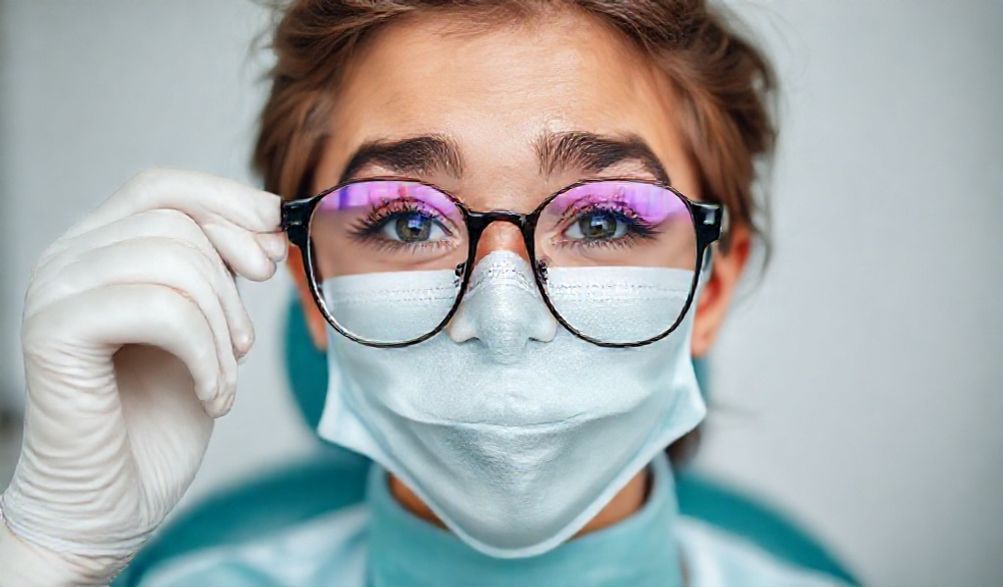
Dental Eyeglasses: A Complete Guide to Vision Correction from Your Dentist
Imagine leaving your dental appointment not just with a cleaner smile, but with clearer vision. It sounds like something from a futuristic medical fantasy, doesn’t it? This is the intriguing promise often conjured by the search term “Стоматологические очки,” a phrase that sits at a fascinating intersection of oral care and optometry. However, the reality is more nuanced—and just as important for your health.
This guide is designed to demystify the concept. Our purpose is to provide a trustworthy, expert-driven overview based on established dental and optical science, helping you navigate this topic with accurate information. We’ll cut through the confusion to clarify that “dental eyeglasses” is a common but ambiguous term that typically refers to two distinct concepts:
- Protective Eyewear: The safety glasses you wear during a dental procedure.
- Orthodontic Appliances: A colloquial term sometimes used for certain devices, like headgear or expanders, that guide facial development and can indirectly influence the area around the eyes.
Understanding this distinction is crucial for your safety and for setting realistic expectations about what dental and orthodontic professionals can and cannot do for your vision. Let’s bring this topic into clear focus.
What Are Dental Eyeglasses? Clarifying the Two Meanings
The term “dental eyeglasses” is a classic example of a search phrase that means different things to different people. To avoid confusion and ensure you get the right care, it’s essential to separate these two primary interpretations.
1. Protective Eyewear for Dental Visits
This is the most literal and common meaning in a dental practice setting. These are not for vision correction but for protection.
- Purpose & Function: Dental procedures, from routine cleanings to more complex restorations, can generate a surprising amount of debris, aerosols, and splatter. High-speed drills spray microscopic particles, ultrasonic scalers create a mist, and bright curing lights can be harsh. Protective eyewear serves as a vital barrier, shielding your eyes from potential physical irritants and infectious agents. It is a standard component of personal protective equipment (PPE) for patients, much like the bib and suction.
- Typical Features: These glasses are designed for function over fashion. You’ll often find features like:
- Side Shields: To protect from lateral splatter.
- Anti-Fog Coating: Essential for comfort during longer procedures.
- Disposable or Sanitizable Frames: They are either single-use or made of materials that can withstand high-level disinfection between patients.
- Clear, Impact-Resistant Lenses: To maintain visibility for both you and the dentist.
2. The Orthodontic Connection: Appliances That Influence Facial Profile
This usage is where the “eyeglasses” metaphor comes into play, though it’s something of a misnomer.
- Clarifying the Misnomer: When people search for “dental eyeglasses” in this context, they are often referring to orthodontic headgear or certain types of palatal expanders. These are not glasses at all but orthopedic appliances used primarily in children and adolescents during a phase of treatment called interceptive or Phase 1 orthodontics.
- The Vision Link: The connection to “eyeglasses” is indirect and anatomical. These appliances work by modifying the growth and position of the jaw bones, particularly the maxilla (the upper jaw). The maxilla forms the floor of the eye sockets (orbits). By guiding the development of the maxilla—for example, by expanding a narrow palate to correct a crossbite—the position and symmetry of the orbits can be subtly influenced. This can lead to changes in facial aesthetics, including the area around the eyes. It’s not about correcting refractive errors like nearsightedness, but about the structural framework that supports the eyes.
Expert Insights: The Science Behind Orthodontics and Facial Development
To understand the second meaning of “dental eyeglasses,” we need to dip into the principles of craniofacial growth. Orthodontics is not just about straightening teeth; it’s about managing the relationship between teeth, jaws, and the face.
The bones of a child’s face are not fully fused and can be guided during growth spurts. Devices like palatal expanders apply gentle, controlled pressure to the suture running down the middle of the upper jaw, encouraging it to widen. This correction of skeletal issues is situated directly beneath the nasal cavity and the eye sockets.
As Dr. Lisa Moreno, a board-certified orthodontist, explains: “While we don’t prescribe lenses, certain orthopedic appliances guide facial growth, which can subtly influence the symmetry and support structure around the eyes. Our goal is to create a balanced, functional, and healthy foundation for the entire face. Any perceived change in a patient’s ‘look’ around their eyes is a result of this underlying skeletal change, not an optical one.”
This highlights the sophisticated, biomechanical work of orthodontics, which operates in a realm adjacent to but distinct from optometry.
Primary Uses and Benefits of Protective Dental Eyewear
Focusing back on the first, more common meaning, let’s explore why those simple protective glasses are a non-negotiable part of modern dental care.
Essential Safety Protocol
The primary benefit is straightforward: безопасность. The American Dental Association (ADA) emphasizes infection control and patient protection as pillars of practice. Eyewear acts as a physical barrier against:
* Biological Hazards: Blood, saliva, and microbial aerosols generated during procedures.
* Physical Debris: Tiny fragments of tooth, old filling material, or calculus.
* Chemical Irritants: Certain dental materials or cleaning agents.
* Optical Radiation: The intense blue light used to cure resin materials is filtered by the lenses.
Its use is a sign of a compliant, safety-conscious practice.
Patient Comfort and Communication
Beyond safety, these glasses offer psychological benefits. The clear lenses allow you to maintain eye contact with your dentist or hygienist. This visual connection can be reassuring, help reduce anxiety, and facilitate non-verbal communication. You can see what’s happening in the room, which fosters a sense of involvement and control, rather than lying back in isolation.
Key Considerations If You’re Searching for “Dental Eyeglasses”
Ваши поисковые намерения определяют следующие шаги. Вот что вам нужно знать для каждого сценария.
Для защитных средств:
- Стандартная практика: Ожидайте, что вам предложат защитные очки в начале практически любой процедуры, кроме простой консультации. Это так же обычно, как слюнявчик.
- Личные предпочтения: Если вы носите очки с диоптриями, они часто обеспечивают достаточную защиту. Вы можете спросить своего стоматолога, являются ли они адекватными. Некоторые пациенты предпочитают приносить свои собственные сертифицированные защитные очки для комфорта или лучшей посадки. Просто обсудите это со своей стоматологической командой заранее.
Для ортодонтического лечения:
- Критически важный совет: Это невозможно переоценить: Настоящая коррекция зрения при таких проблемах, как миопия, гиперметропия, астигматизм или пресбиопия, требует лицензированного оптометриста или офтальмолога. Ни один ортодонтический аппарат не может изменить форму вашей роговицы или хрусталика, чтобы исправить ваши диоптрии. Если вам нужны очки, чтобы видеть четко, вы должны обратиться к глазному врачу.
- Совместный подход: Если вы или ваш ребенок проходите ортодонтическое лечение, и вас беспокоит развитие лица, симметрия или то, как рост может быть связан с областью глаз, ключевым фактором является общение. Лучший подход предполагает работу команды. Обсудите свои наблюдения с вашим ортодонтом. Если есть конкретные проблемы со зрительным здоровьем, ваш ортодонт и оптометрист могут пообщаться (с вашего разрешения), чтобы обеспечить скоординированный, целостный уход. Это и есть истинная интеграция специальностей.
Часто задаваемые вопросы: Ответы профессионалов на ваши вопросы
В1: Может ли мой стоматолог на самом деле выписать обычные очки для близорукости?
О: Нет. Стоматологи — это врачи здоровья полости рта, а не зрения. У них нет лицензии на проведение осмотров глаз, определение рефракционных ошибок или выписку рецептов на корректирующие линзы. Это исключительная сфера деятельности оптометристов и офтальмологов.
В2: Существуют ли очки, которые помогают при дентальной тревожности?
О: Да, но другим способом. Некоторые современные стоматологические клиники предлагают “видеоочки” или очки, подключенные к медиаплеерам, позволяя вам смотреть фильм или телешоу во время лечения в качестве отвлечения. Однако при сильной дентальной тревожности вам следует обсудить с вашим стоматологом существенные варианты, такие как закись азота (“веселящий газ”) или пероральная седация.
В3: Может ли ортодонтическое лечение, например брекеты, улучшить мое зрение?
О: Прямо — нет. Ортодонтия выравнивает зубы и челюсти для улучшения прикуса, функции и баланса лица. Любое заметное изменение внешнего вида ваших глаз будет крайне косвенным результатом изменения структуры и поддержки лицевых костей, а не улучшением оптического пути или здоровья самого глаза. Это не корректирует зрение.
В4: Являются ли защитные очки обязательными во время стоматологических процедур?
О: В аккредитованных и репутационных стоматологических клиниках это стандартная и ожидаемая часть ухода за пациентом, настоятельно рекомендуемая Американской стоматологической ассоциацией (ADA) и Центрами по контролю и профилактике заболеваний (CDC) для инфекционного контроля. Хотя пациент технически может отказаться, клиника, настаивающая на их использовании, демонстрирует высокую приверженность вашей безопасности.
Заключение: Видеть общую картину четко
Путь к пониманию “стоматологических очков” в конечном итоге укрепляет жизненно важный принцип в здравоохранении: важность точной терминологии и специализированной экспертизы. Мы прояснили ключевое различие между защитным снаряжением (необходимым для безопасности) и ортодонтическими аппаратами (инструментами, направляющими рост), двумя совершенно разными вещами, объединенными лишь запутывающим названием.
Ключевой совет этого руководства, соответствующий принципам E-E-A-T (Опыт, Экспертность, Авторитетность, Надежность), — всегда обращаться к нужному специалисту для вашей потребности:
* Обращайтесь к вашему стоматологу-терапевту по вопросам здоровья и гигиены полости рта.
* Консультируйтесь с ортодонтом по вопросам выравнивания зубов и челюстей.
* Посещайте оптометриста или офтальмолога по всем вопросам, связанным со зрением и здоровьем глаз.
Увлекательное пересечение этих областей — как развитие челюсти расположено под глазами или как защитное снаряжение оберегает несколько чувств — напоминает нам, что тело представляет собой взаимосвязанную систему. Истинное благополучие часто приходит из этой интегрированной перспективы, где профессионалы сотрудничают для вашего общего здоровья. Однако это всегда начинается с четкого понимания роли каждого специалиста, чтобы вы могли смотреть на будущее вашего здоровья с идеальным зрением.
p>