
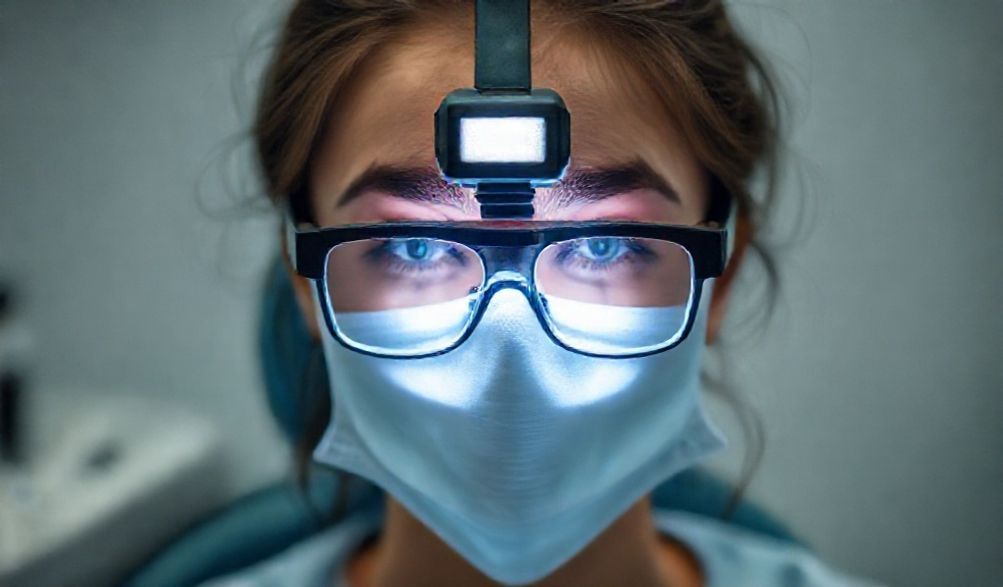
The Ultimate Guide to Dental Headlights for Glasses: Enhancing Precision and Comfort
Picture this: you’re midway through a complex Class II restoration. The margins are critical, the anatomy is subtle, and you’re leaning in, contorting your neck to catch the light from the overhead operatory lamp. A shadow falls across the prep. You shift, the patient moves slightly, and the shadow deepens. Frustration mounts alongside the tension in your shoulders. This daily struggle with inadequate, inconsistent illumination isn’t just an annoyance—it’s a barrier to clinical excellence and a direct threat to your long-term physical well-being.
This scenario is all too familiar for dentists and dental students worldwide. The core problem is universal: traditional overhead lighting is fundamentally misaligned with the intricate, shadow-prone nature of the oral cavity. It leads to eye strain, reduced diagnostic and procedural precision, and accelerated practitioner fatigue. But what if your light source moved with your eyes, illuminating exactly what you see, the moment you see it?
Enter the modern solution: the dental headlight for glasses. This is not merely an accessory; it’s an ergonomic revolution, transforming illumination from a static environmental factor into a dynamic, personal tool for clinical excellence. This comprehensive guide is designed to cut through the marketing jargon and provide an evidence-based, practical resource. We will dissect the technology, compare key features, and outline the ergonomic principles that make a glasses-mounted headlight an essential investment for any serious dental professional. Our goal is to empower you with the knowledge to choose a system that not only improves patient outcomes through superior visualization but also actively safeguards your most valuable asset: your own health and career longevity. We’ll explore everything from LED lumens and battery life to frame compatibility and infection control protocols, ensuring you can make a confident, informed decision for your practice.
Why Illumination is Critical in Modern Dentistry
Before delving into the specifics of headlight systems, it’s vital to understand why optimal lighting is non-negotiable in dentistry. It is the foundation upon which visual diagnosis and precise manual intervention are built.
The Link Between Lighting and Clinical Accuracy
Clinical accuracy in dentistry is inextricably linked to visual acuity. The ability to detect early caries, assess the integrity of a crown margin, differentiate between dentin and pulp, or place a composite restoration with seamless margins all depend on the quality of light. Proper illumination enhances contrast, reveals texture, and defines edges. Without it, subtle color variations in tooth structure can be missed, minute fractures may go undetected, and the precision of cavity preparation is compromised. Studies in operative dentistry consistently highlight that increased illumination correlates directly with improved performance in tasks requiring fine visual-motor skills. In essence, you cannot treat what you cannot see clearly, and a dental headlight for glasses ensures that your field of view is always brilliantly lit.
Consequences of Poor Lighting: Eye Strain and Fatigue
The repercussions of inadequate lighting extend far beyond a single procedure. Constantly battling shadows and glare forces the ciliary muscles of the eyes to work overtime to focus, leading to significant eye strain. This visual fatigue is a primary contributor to the broader issue of musculoskeletal disorders among dentists. To compensate for poor light, practitioners adopt strained, static postures—craning the neck, hunching the shoulders, and leaning forward. Over hours and years, this cumulative micro-trauma manifests as chronic neck, back, and shoulder pain, headaches, and even conditions like cervical spondylosis. Investing in proper illumination is, therefore, a critical ergonomic intervention. It is a direct investment in career longevity, helping to preserve the physical health required for a decades-long practice.
Understanding Dental Headlight Systems: A Breakdown
Современная dental headlight for glasses is a sophisticated piece of equipment. Understanding its core components demystifies the selection process and allows for meaningful comparison.
Core Components: Light Source, Power, and Optics
- Light Source: Light-Emitting Diode (LED) technology is the undisputed standard. LEDs offer exceptional brightness, long lifespan (often 50,000+ hours), and minimal heat output. Key specifications include:
- Lumens: A measure of total visible light output. For dental work, systems typically range from 20,000 to over 100,000 lux (a measure of illuminance at the working distance). More lumens generally mean a brighter light, but focus and beam quality are equally important.
- Color Temperature: Measured in Kelvins (K). “Cool white” light (5000K-6500K) mimics daylight, providing high contrast and is excellent for detection and diagnosis. “Warm white” light (3500K-4500K) is easier on the eyes during long procedures and can reduce perceived glare.
- Power: The engine of the system.
- Аккумулятор: Rechargeable Lithium-ion (Li-ion) batteries are standard due to their high energy density, lack of memory effect, and relatively light weight. Battery life is a crucial specification, typically quoted for a single charge at a given brightness level.
- Power Supply: Systems are either wireless (battery pack worn on a belt or clipped to clothing) or wired (connected to a wall outlet or operatory unit). Wireless offers ultimate freedom, while wired systems eliminate battery anxiety.
- Optics & Light Guide: This is the pathway that delivers light from the source to the mouth. Flexible fiber optic cables or liquid light guides are common. The quality of the guide affects light transmission efficiency and the characteristics of the beam (spot size, focus, and homogeneity).
The Glasses Frame: Compatibility and Fit
The frame is the interface between the technology and the practitioner. Comfort is paramount.
* Own-Glasses Mounts: Many systems offer universal clips or adapters that attach a lightweight light source to your personal prescription glasses. This is a cost-effective option but may affect balance.
* Dedicated Frames: Most high-performance systems come with their own frames, often made of lightweight, adjustable materials like titanium or GRILAMID. These are ergonomically designed to distribute the weight of the light source and any attached magnification loupes evenly across the nose and ears. Look for adjustable temple lengths, nose pads, and a secure, comfortable fit that doesn’t slip during movement.
Key Features to Compare
When evaluating a dental headlight for glasses, weigh these factors:
* Brightness & Focus: Adjustable intensity and a sharply focused, shadow-free beam are essential. Some systems offer a “flood” setting for a wider field and a “spot” for intense, focused light.
* Battery Life & Charging: Does the battery last a full clinical day? Does it support fast charging or have a hot-swappable option? A wireless system with a 8+ hour battery and quick-charge capability is ideal for most.
* Weight & Balance: The total weight of the frame, light source, and battery should be minimal (often under 150g for the frame/light assembly). Proper balance prevents the glasses from tipping forward.
* Cool vs. Warm Light: Decide which color temperature suits your workflow, or opt for a system with adjustable color temperature for versatility.
How to Choose the Right Dental Headlight for Your Glasses
Selecting a system is a personal decision that should align with your specific clinical demands and physical comfort.
Assessing Your Clinical Needs and Specialization
Your specialty dictates your visual requirements.
* General Dentists & Restorative Specialists: Need a versatile system with excellent color rendering for shade matching, good depth of field for crown preps, and sufficient brightness for intraoral photography. Adjustable focus is highly beneficial.
* Endodontists: Require intense, focused light to illuminate deep within pulp chambers and canal orifices, often in conjunction with high levels of magnification.
* Oral Surgeons & Periodontists: Prioritize a bright, wide field of illumination for procedures in the posterior mouth or during surgical interventions. A hands-free, wireless system is particularly valuable for mobility.
Prioritizing Ergonomics and Comfort
This is an investment you will wear for hours. Do not compromise.
* Try Before You Buy: If possible, arrange a demo. Wear the system for at least 20-30 minutes to assess pressure points on the nose and ears.
* Распределение веса: The center of gravity should be as close to your head as possible. A front-heavy system will cause neck strain.
* Heat and Cable Management: Ensure the LED module doesn’t radiate uncomfortable heat onto your forehead. For wired systems, check that the cable is lightweight and doesn’t tug on the frame.
Budget Considerations and Long-Term Value
A quality dental headlight for glasses is a professional investment, not an expense.
* Upfront Cost vs. TCO: Consider the Total Cost of Ownership. A slightly more expensive system with a long-lasting LED (no bulb replacements) and a durable battery may be cheaper over 5 years than a cheaper model requiring frequent part swaps.
* Гарантия и поддержка: Look for strong manufacturer warranties and reliable customer support from established dental equipment suppliers.
Top Benefits of Integrating a Glasses-Mounted Headlight
The advantages of making the switch are profound and multifaceted.
Unparalleled Hands-Free Operation and Mobility
Your light is no longer fixed to the ceiling. It moves with your line of sight, providing consistent illumination whether you’re examining the lingual of #31 or the buccal of #3. This freedom is revolutionary, especially in pediatric dentistry or when working with anxious patients who may shift position.
Enhanced Depth Perception and Shadow Reduction
Overhead lighting casts shadows from your hands and instruments into the cavity. A dental headlight for glasses, especially when paired with magnification loupes, provides co-axial illumination—the light travels along your visual axis. This dramatically reduces shadows, creating a flatter, more two-dimensional field that actually improves the perception of depth and texture, making margins and anatomy “pop” into view.
Improved Posture and Reduced Physical Strain
This is perhaps the most significant long-term benefit. With the light fixed to your glasses and perfectly aligned with your eyes, you are no longer a slave to the overhead lamp. You can sit upright, maintain a neutral spine position, and position the patient for optimal access without contorting yourself to find the light. This ergonomic alignment directly reduces the physical strain on your neck, back, and shoulders.
Best Practices for Use and Maintenance
To protect your investment and ensure optimal performance, follow these guidelines.
Daily Setup and Adjustment Protocol
- Don the Frame: Secure the glasses comfortably on your head.
- Отрегулируйте луч: Look straight ahead at a fixed point (e.g., a mirror). Adjust the position of the light module on the frame so the bright center of the beam falls directly on your point of focus. The goal is perfect alignment with your visual axis.
- Fine-Tune Focus: Adjust the focus ring (if available) to get the desired spot size and sharpness at your typical working distance.
Cleaning and Disinfection for Infection Control
- Daily & Between Patients: Wipe down all frame surfaces (temples, nose bridge, light module housing) with an EPA-approved intermediate-level disinfectant wipe that is safe for plastics and electronics. Всегда следуйте конкретным инструкциям производителя.
- Light Guide: Gently wipe the end of the light guide with an alcohol swab to remove debris. Avoid bending the guide sharply.
- Никогда immerse the light source, battery pack, or frame in liquids unless explicitly stated by the manufacturer.
Maximizing Battery Life and System Longevity
- Charging: Use only the provided charger. For Li-ion batteries, partial discharges are better than full ones. Avoid letting the battery fully deplete regularly.
- Хранение: When not in use for extended periods, store the system in its protective case in a cool, dry place. Store the battery at around 50% charge.
- Обращение: Be gentle with the light guide and connections. Avoid dropping the unit.
Раздел Часто задаваемых вопросов (ЧАВО)
Q1: Can I attach a dental headlight to my own prescription glasses?
A: Many systems offer universal clips or adapters designed for this purpose. However, it’s important to check the compatibility with your specific frame shape and weight. Dedicated frames are often superior as they are engineered for optimal weight distribution and balance with the light source attached.
Q2: What is the typical battery life, and is it sufficient for a full day?
A: Battery life varies by model and brightness setting. A good benchmark for a wireless dental headlight for glasses is 6 to 10+ hours on a single charge at medium-high brightness. For long clinic days, look for systems with quick-charge capabilities (e.g., 1-2 hours for a full charge) or consider purchasing a spare, hot-swappable battery.
Q3: Are wireless dental headlights as powerful as wired ones?
A: With modern LED and high-capacity Li-ion battery technology, the performance gap has virtually closed. Top-tier wireless systems offer brightness and light quality equivalent to their wired counterparts. The primary consideration is now the trade-off between the slight added weight/bulk of the battery pack and the complete freedom from a tethering cable.
Q4: How do I choose between cool white and warm white light?
A: Cool white light (5500K-6500K) provides higher contrast, making it excellent for detecting cracks, caries, and fine margins. Warm white light (3500K-4500K) is softer and can reduce eye fatigue during lengthy procedures. Many practitioners start with cool white for its diagnostic benefits. Some advanced systems now offer adjustable color temperature, providing the best of both worlds.
В5: Какие сертификаты безопасности следует искать?
A: Always look for relevant medical device certifications, such as FDA clearance (USA) or CE marking (Europe). These indicate the device has been evaluated and meets specific safety, health, and environmental protection standards for medical use. A certification from an independent testing body like UL or TÜV is also a strong positive indicator.
Заключение
Решение интегрировать dental headlight for glasses into your daily practice is one of the most impactful upgrades you can make for both your clinical outcomes and your personal well-being. It transforms illumination from a passive, environmental challenge into an active, precision extension of your own vision. By providing shadow-free, co-axial light that moves with your gaze, it enhances diagnostic accuracy, procedural precision, and fundamentally improves your ergonomic posture.
Choosing the right system is a personalized journey. It requires balancing clinical needs—be it the intense focus of endodontics or the broad field of surgery—with the non-negotiable demands of all-day comfort and long-term reliability. This guide has aimed to provide the unbiased, practical knowledge necessary to navigate that decision with confidence, focusing on the specifications and principles that truly matter.
We encourage you to take the next step. Consult with reputable dental suppliers to arrange hands-on demonstrations. Prioritize a trial period to experience how a system feels during a simulated procedure. Investing in the right dental headlight for glasses is an investment in the clarity of your work and the longevity of your career. See the difference for yourself.
p>