
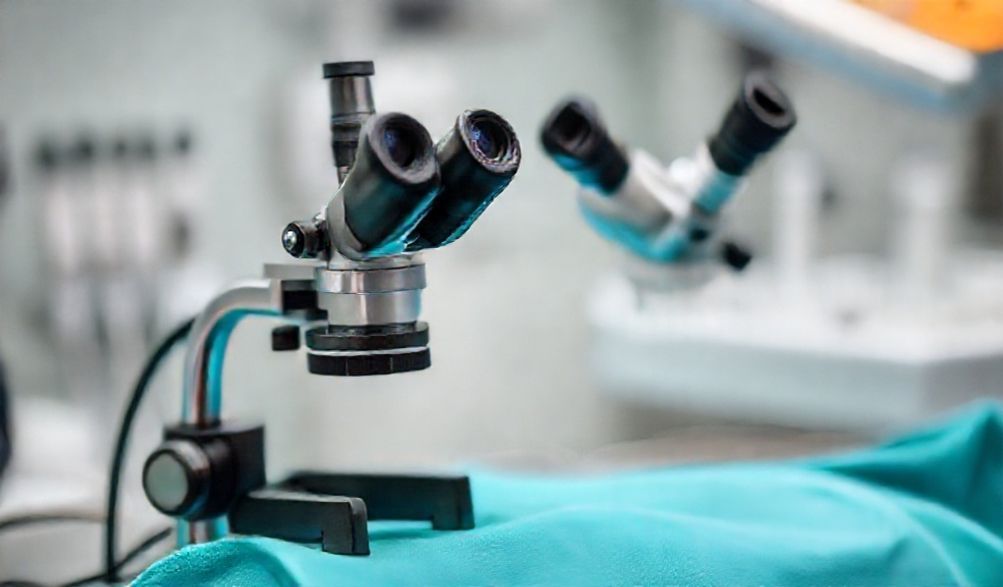
Dental Surgical Loupes: A Surgeon’s Guide to Enhanced Precision, Ergonomics, & Patient Care
If you’ve ever finished a long day of intricate dental surgery feeling like you’ve been in a wrestling match—with a stiff neck, a sore back, and eyes that ache from the strain—you’re not alone. This physical toll is a near-universal experience for clinicians relying solely on their naked eyes. The constant hunching, the squinting to discern a subtle margin or a fine root canal, isn’t just uncomfortable; it’s a professional hazard that compromises your skill, your efficiency, and, ultimately, your career longevity.
This guide is built on a foundation of clinical ergonomics and surgical best practices, drawing from peer-reviewed studies and the consensus of experienced practitioners. The core problem is clear: the human eye has limitations in resolution and working distance that directly conflict with the postural demands of precision dentistry. The result is a trade-off between visual acuity and musculoskeletal health—a trade-off no surgeon should have to make.
The solution, however, is transformative. Dental surgical loupes are far more than simple magnifying glasses. They are sophisticated, personalized ergonomic systems that fundamentally change the dynamic between the surgeon, the procedure, and the patient. This post serves as your comprehensive, evidence-based resource. Our goal is to move beyond marketing claims and provide the unbiased information you need to make a critical investment in the quality of your work and the preservation of your most important instrument: yourself.
What Are Dental Surgical Loupes? Beyond Simple Magnification
At first glance, dental loupes are a magnification tool. But to categorize them as such is to miss their true purpose. They are a postural enforcement system that uses optics to allow you to work in a neutral, sustainable position. By bringing a magnified, illuminated view of the operative field to you, they eliminate the need to contort your spine and neck to bring your eyes closer to the patient.
Core Components of a Loupes System
Understanding the parts demystifies the whole:
- Optical Lenses (Galilean vs. Prismatic): This is the heart of the system. Galilean loupes use a simple lens system, offering good clarity at lower magnifications (typically up to 3.0x). They are generally lighter and more affordable. Prismatic (or Keplerian) loupes use a more complex series of prisms to fold the light path, providing higher magnifications (3.5x and above) with a wider field of view and superior depth of field, though often at a higher weight and cost.
- The Frame: This is the interface with your body. Quality frames are lightweight, adjustable, and balanced to distribute weight evenly across the nose and temples, preventing slippage and pressure points during long procedures.
- Working Distance: This is the critical measurement from your eyes (specifically, the corneal plane) to your patient’s oral cavity when you are in a comfortable, upright, ergonomic posture. It is unique to each clinician and must be measured precisely during fitting.
- Declination Angle: This is the downward tilt of the loupe barrels. A correct declination angle ensures that when you are looking straight ahead with your head upright, your line of sight is directed perfectly into the patient’s mouth. An incorrect angle forces you to tilt your head forward, defeating the primary ergonomic benefit.
The Primary Benefits: Why Every Surgeon Should Consider Them
- Enhanced Visual Acuity & Precision: Magnification reveals what the naked eye cannot see: finer craze lines, more accurate margin preps, cleaner debridement of canals. This isn’t just about seeing “bigger”; it’s about seeing more detail, which directly translates to higher-quality, more predictable clinical outcomes.
- Foundational Postural Improvement (The #1 Benefit): This is the non-negotiable advantage. Properly fitted loupes force you into a spine-neutral position. Studies consistently show a significant reduction in forward head tilt and thoracic flexion when using loupes, directly addressing the leading cause of career-ending musculoskeletal disorders among dentists.
- Reduced Physical Fatigue and Career Longevity: By eliminating static, awkward postures, you conserve immense physical and mental energy. Less fatigue means sharper focus during the last procedure of the day, just as you were during the first. It’s an investment in a longer, healthier, and more productive career.
- Elevated Standard of Patient Care: The combination of superior visualization and a more relaxed, controlled operator results in procedures performed with greater accuracy, less tissue trauma, and improved efficiency. It allows you to consistently operate at the peak of your capabilities.
How to Choose the Right Dental Loupes: A Step-by-Step Evaluation
Selecting loupes is a highly personal process. There is no “one-size-fits-all.” This step-by-step framework will guide your decision.
Step 1: Determining Your Critical Specifications
- Finding Your Ideal Magnification: Start conservatively. увеличение от 2,5x до 3,5x is the sweet spot for most general surgical procedures, from complex exodontia to implant placement. Higher magnifications (4.5x+) offer stunning detail but have a narrower field of view and shallower depth of field, making them better suited for super-specialized endodontic or microsurgical work. Always try before you buy.
- Calculating Correct Working Distance and Declination Angle: This is why a professional fitting is mandatory. A trained representative will measure your unique anthropometrics while you simulate your working position. “Off-the-shelf” loupes with guessed measurements will cause more harm than good.
Step 2: Understanding Optical Quality & Field of View
- Depth of Field Explained: This is the range within which objects remain in sharp focus without you needing to move your head. Greater depth of field reduces the constant micro-movements of your head, improving comfort and stability. Prismatic loupes generally excel here.
- Importance of Edge-to-Edge Clarity: High-quality optics provide sharp focus across the entire lens, not just the center. Poor edge clarity causes eye strain as you try to look through the distorted periphery.
- Light Transmission and Coatings: Multi-coated, anti-reflective lenses maximize light transmission, providing a brighter, clearer image with less glare and ghosting, which is crucial when paired with a headlight.
Step 3: Evaluating Ergonomics & Comfort for Long Procedures
- Frame Weight and Distribution: A few grams of imbalance can feel like pounds after an hour. The best frames feel virtually weightless and secure.
- Nose Pad and Temple Adjustability: Customizable, soft silicone nose pads and adjustable temple arms ensure the loupes sit perfectly without pinching or sliding, even when you look down.
- Integration with Headlights and PPE: Your loupes should be compatible with a coaxial surgical headlight (more on this below). Also, consider how they fit with face shields or magnification hoods if you use them.
Integrating Loupes into Your Dental Surgical Practice
Период адаптации: Чего ожидать
- Initial Spatial Disorientation: For the first few hours, you may feel slightly uncoordinated. Your hand-eye coordination is recalibrating to a new visual field. Start by using them for shorter, less complex procedures.
- Building Muscle Memory for New Posture: You may feel unfamiliar muscles engaging as you maintain an upright posture. This is normal. Persist. The initial awkwardness is your body unlearning years of bad habits. Within 1-2 weeks of consistent use, the new, healthier posture will become automatic.
Partnering Loupes with a Surgical Headlight
- Why Coaxial Illumination is Non-Negotiable: Magnification is useless without proper light. A headlight provides shadow-free, focused illumination directly down your line of sight. When the light source is coaxial (aligned with your eyes), it eliminates the shadows created by your hands and instruments that are magnified by the loupes.
- Matching Light Source: Modern LED lights are the standard, offering brilliant, cool, white light with long battery life and minimal heat output. They have largely replaced older halogen systems.
Обслуживание и уход для долговечности
- Daily Cleaning Protocols: Используйте только специальные микрофибровые салфетки и спрей для линз. Никогда не используйте бумажные полотенца, одежду или агрессивные химические вещества, которые могут поцарапать деликатные покрытия.
- Правильное хранение: Always store them in a hard, protective case when not in use. Never leave them on a chair, bracket table, or in a drawer where they can be crushed or scratched.
- Re-calibration: If you drop them or notice a persistent alignment issue (double vision, eye strain), send them back to the manufacturer for professional service. Do not attempt to bend the frames yourself.
Addressing Common Concerns & Investment Considerations
Cost Analysis: Expense vs. Long-Term Investment
- Breaking Down the Price Range: A quality Galilean system may start around $800-$1,500, while advanced prismatic systems with a headlight can range from $2,500 to $5,000+. It’s a significant outlay.
- The ROI is Real: Frame this not as an expense, but as an investment with multiple returns: Improved Efficiency (procedures may go faster with fewer errors), Reduced Error & Redos (improved precision minimizes costly mistakes), and Health Preservation (preventing chronic pain, disability, and early retirement is priceless). Many practitioners find the investment pays for itself in a matter of months.
Debunking Myths About Dental Loupes
- “They’re only for specialists.” False. The ergonomic benefit is universal. Any dentist performing surgical procedures—from simple extractions to flap surgeries—will experience less fatigue and better posture. The enhanced visualization improves every prep, every suture.
- “They will cause more neck strain.” Only if improperly fitted. The myth stems from users who bought the wrong working distance or declination angle, forcing them to crane their neck. A professional fitting eliminates this risk entirely.
- “The learning curve is too steep.” While there is a short adaptation period (typically 5-10 hours of use), it is a minor hurdle compared to the lifelong benefits. The tips in the “Adjustment Period” section above are designed to smooth this transition.
FAQ: Expert Answers to Your Questions on Dental Surgical Loupes
Q: What is the best magnification for general dental surgery?
О: There is no single “best.” For most general surgical and restorative work, увеличение от 2,5x до 3,5x provides an excellent balance of increased detail, sufficient field of view, and depth of field. The only way to know is through a hands-on trial with different powers.
Q: Can I use my existing prescription with surgical loupes?
О: Безусловно. Reputable manufacturers offer custom prescription lenses. These can be made as clip-in inserts that attach behind the loupe lenses or as bonded lenses where your prescription is ground directly into the loupe optics. An accurate, current prescription from your optometrist is required.
Q: How often do dental loupes need to be replaced?
О: With proper care, a high-quality loupe system is a 5-10 year investment. Replacement is usually driven by a significant change in your vision prescription, physical wear and tear on the frame, or a desire to upgrade optical technology—not by planned obsolescence.
Q: Are flip-up or through-the-lens (TTL) loupes better?
О: This is a key choice. Through-the-Lens (TTL) loupes are custom-built to your pupilary distance, working distance, and declination angle, offering superior, consistent optical alignment and often better weight distribution. Flip-Up loupes have a standard frame with a flip-up magnifier, allowing you to look under them easily and making them easier to share among colleagues. TTL prioritizes optimal custom ergonomics; flip-ups prioritize flexibility and potentially lower cost.
Q: Where can I get properly fitted for loupes?
О: This is the most critical step. Seek out authorized dealers or representatives from established brands (e.g., Zeiss, Orascoptic, Designs for Vision, SurgiTel, Heine, SheerVision). They should offer an in-person, detailed fitting session that takes all the measurements discussed here. Never buy “off-the-shelf” online without this professional service.
Заключение
Dental surgical loupes represent a paradigm shift in clinical practice. The evidence is clear: they are not a luxury for a few, but an essential, evidence-backed tool for any dentist committed to precision, ergonomics, and a sustainable career. They enhance what you see, protect how you work, and elevate the care you provide.
Acknowledging the initial investment—both financial and in terms of a short adaptation period—is important. However, the long-term returns in clinical confidence, physical well-being, and professional longevity are profound and well-documented by both research and the lived experience of thousands of clinicians.
Your final, most important step is to prioritize a professional fitting and trial. The right loupes should feel like a natural, effortless extension of your own vision and posture. We strongly encourage you to consult with an experienced colleague who uses loupes or to schedule a demo with a trusted, reputable dental equipment supplier. See the difference, feel the posture, and experience for yourself how this tool can transform your practice from the inside out.
p>