
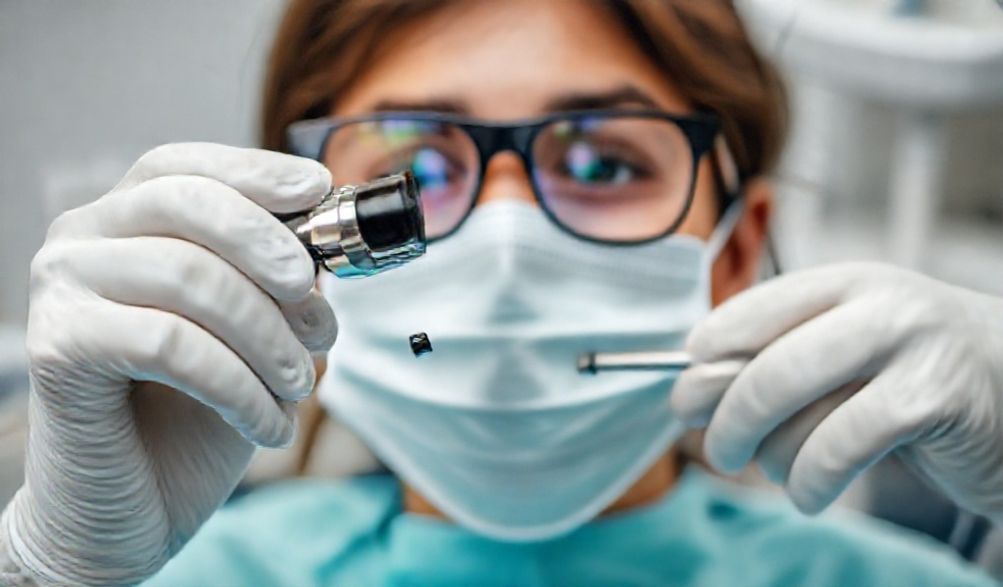
Dentist Loupes: The Ultimate Guide to Enhanced Vision, Ergonomics, and Patient Care
It’s the end of a long day, and as you finally lean back from the chair, a familiar ache radiates from your neck and shoulders. Your eyes feel strained, and you can’t shake the nagging thought: Did I see that distal margin clearly enough? This scenario is all too common in dentistry, a profession that demands microscopic precision while contorting the human body into less-than-ideal positions.
But what if a single investment could address the eye strain, improve your posture, and elevate the quality of your clinical work? This isn’t about a new technique or material; it’s about a foundational tool that has become non-negotiable for modern, health-conscious practitioners: стоматологическими лупами.
This comprehensive guide is designed to cut through the confusion. Compiled from dental ergonomic research, manufacturer engineering specifications, and decades of collective clinical experience, it will walk you through everything you need to know. Dental loupes are far more than simple magnifiers; they are sophisticated ergonomic systems critical for enhancing clinical outcomes, preventing career-ending musculoskeletal disorders (MSDs), and extending your professional lifespan. We’ll cover the science behind their benefits, the key components to understand, a step-by-step selection process grounded in expert advice, and how to care for your investment—ensuring your loupes become a seamless extension of your skill for years to come.
What Are Dental Loupes and Why Are They Essential?
At their core, dental loupes are magnification systems worn like glasses. However, to dismiss them as merely “glasses that make things bigger” is to miss their true, transformative purpose. They are a fundamental ergonomic intervention designed to reconcile the inherent conflict between the need for visual detail and the limitations of the human body.
Beyond Simple Magnification: The Core Benefits
The advantages of integrating loupes into your practice are profound and interconnected:
- Enhanced Visual Acuity: This is the most immediate benefit. Magnification reveals a hidden world of detail. Fine craze lines, subtle color variations in dentin, the exact endpoint of a caries excavation, and the integrity of a marginal gap—all become starkly visible. This level of detail, impossible to discern with the naked eye, is the bedrock of superior diagnostics and execution.
- Foundational Ergonomics: This is where loupes transition from a visual aid to a health imperative. Properly fitted loupes have a fixed рабочее расстояние (the distance from your eyes to the patient’s oral cavity) and a specific declination angle (the angle of the lenses relative to your eyes). To see a clear, magnified image, you должна maintain this distance and angle. This physically forces you into an upright, neutral spine posture, pulling your shoulders back and bringing the patient to you, rather than you hunching over toward the patient. It breaks the cycle of forward head posture that plagues the profession.
- Improved Clinical Outcomes: Better vision translates directly to better dentistry. Studies and anecdotal evidence consistently show that clinicians using loupes produce higher-quality restorations with better marginal adaptation, perform more precise periodontal scaling, achieve greater accuracy in endodontic locating, and experience fewer procedural errors. The precision gained is measurable in the longevity and success of your treatments.
- Долголетие карьеры: Dentistry is physically punishing. Chronic neck, back, and shoulder pain are not rites of passage; they are symptoms of work-related MSDs. By enforcing proper posture, loupes are one of the most effective preventative tools against these debilitating conditions. Investing in loupes is an investment in your ability to practice pain-free for decades.
A Brief History: From Simple Lenses to Advanced Systems
The journey to today’s advanced systems began with simple handheld magnifiers. The first surgical loupes emerged in the late 19th century, but it wasn’t until the latter half of the 20th century that they began gaining traction in dentistry. Early designs were often heavy, uncomfortable, and offered limited optics.
The revolution came with the understanding of ergonomics and the miniaturization of lighting technology. The development of lightweight, custom-fitted Through-The-Lens (TTL) and versatile откидной designs, combined with powerful, cool-running integrated LED lights, transformed loupes from an occasional aid into a daily-worn, essential system. Today’s loupes are the product of advanced optics, materials science, and a deep commitment to clinician well-being.
Key Components of a Dental Loupes System
Understanding the terminology and technology is crucial to making an informed choice. A loupes system is comprised of several key elements.
1. Optical Design: Galilean vs. Prismatic (Keplerian)
This refers to the lens system inside the loupes, and it’s the primary determinant of their capability.
- Галилеевы системы: These use a simple arrangement of lenses (like a telescope). They are generally more lightweight, compact, and affordable. However, they offer a more limited глубина резкости и field of view, and are typically capped at lower magnifications (2.5x to 3.5x). They are an excellent, lower-cost entry point for general dentistry and hygiene.
- Призматические (Кеплеровы) системы: These employ a more complex series of prisms to fold the light path. This allows for much higher levels of magnification (4.0x to 8.0x and beyond) while maintaining a good depth of field and a wider, flatter field of view. The trade-off is that they are slightly heavier and more expensive. They are the preferred choice for specialists in endodontics, periodontics, and surgery, and for any general dentist seeking maximum detail.
| Feature | Galilean Loupes | Prismatic (Keplerian) Loupes |
| :— | :— | :— |
| Optical Design | Simple lens system | Complex system with prisms |
| Weight | Lighter | Slightly heavier |
| Magnification Range | Lower (2.5x – 3.5x) | Higher (4.0x – 8.0x+) |
| Depth of Field | Shallower | Deeper |
| Field of View | Narrower | Wider, flatter |
| Ideal For | Entry-level, general dentistry, hygiene | High-precision work, specialists |
2. Magnification Power: Finding Your Sweet Spot
More power isn’t always better. It’s about matching the magnification to your clinical needs.
- 2.5x – 3.0x: Ideal for dental hygienists and general dentists new to loupes. Offers a generous field of view for procedures like exams, cleanings, and basic restorative work.
- 3.5x – 4.0x: The “sweet spot” for many general dentists. Provides excellent detail for crown preps, composite restorations, and endodontics without an overly restrictive field of view.
- 4.5x – 6.0x+: The domain of specialists and dentists focused on ultra-high-precision work. Essential for microsurgery, intricate endodontics, and advanced restorative techniques. Expert advice strongly cautions against starting here, as the narrow field and shallow depth of field can be disorienting for a new user.
3. Working Distance and Declination Angle: The Ergonomic Engine
These two measurements are the heart of a custom loupes fitting and are non-negotiable for ergonomic benefit.
- Working Distance: This is the measured distance from your eyes (specifically, the corneal plane) to your primary working area in the patient’s mouth. It is unique to your anatomy and posture. A correct working distance allows you to sit upright with your elbows at your sides.
- Declination Angle: This is the angle at which the loupe barrels are tilted downward from horizontal. It determines how far you need to tilt your head to bring the focal point into view. An incorrect angle will force you to flex your neck excessively.
A professional fitting is the only way to accurately determine these values.
4. Field of View and Depth of Field
These two concepts are intrinsically linked to magnification.
- Field of View: The width of the area you can see clearly through the loupes at one time. Higher magnification reduces the field of view.
- Depth of Field: The range of distance (from near to far) that remains in clear focus without you having to move your head. Higher magnification reduces depth of field.
High-quality prismatic loupes use superior optics to maximize both, mitigating the inherent trade-offs of high power.
5. The Non-Negotiable Partner: Integrated LED Lighting
Loupes without a light are only half a system. A shadow in your magnified field of view is a major problem. Integrated, coaxial lighting (where the light path is parallel to your line of sight) eliminates shadows, dramatically reduces eye strain, and increases contrast. It is absolutely essential for working at higher magnifications. Key features to consider:
* Color Temperature: Daylight (~5500K) is standard and provides true color rendition.
* Brightness: Measured in lumens; adequate brightness is key for illuminating deep cavities.
* Battery Life & System: Look for lightweight, rechargeable battery packs with a full day’s life (6-8 hours) and convenient charging docks.
How to Choose the Right Loupes for Your Practice
Selecting loupes is a personal and professional decision. Follow this structured approach.
Step 1: Conduct a Personal Needs Assessment
Задайте себе вопросы:
* What procedures constitute 80% of my practice?
* Do I have existing neck, back, or shoulder pain?
* Am I looking for an entry-level system or a long-term, high-performance investment?
* What is my realistic budget for a complete system (loupes + light)?
Step 2: Understand the Frame & Mounting Styles
- Through-The-Lens (TTL): The optical barrels are permanently mounted into custom-made lenses. Преимущества: Lightweight, always perfectly aligned, no moving parts. Недостатки: Parameters (working distance, declination) are fixed; they cannot be adjusted or shared with others.
- Лупы откидного типа (Flip-Up): The magnification barrels are mounted on a hinge and can be flipped up out of the way. Преимущества: Adjustable working distance (within a range), shareable among users with similar prescriptions, versatile. Недостатки: Slightly heavier front-end weight, can potentially go out of alignment if mishandled.
Step 3: Get a Professional Fitting (The Most Important Step)
Этому нельзя придать слишком много значения. An online order based on estimated measurements will fail. A proper fitting with a trained representative is mandatory for ergonomic and visual success. A good fitting includes:
1. A postural assessment while you simulate working.
2. Precise measurement of your Interpupillary Distance (PD).
3. Determination of your ideal Рабочее расстояние и Declination Angle.
4. Hands-on trial of different magnifications and optical designs.
Step 4: Consider Top Brands and Models
Reputable brands invest in research, optics, and quality control. Leading names include:
* Orascoptic: Known for innovative, lightweight designs and a wide range of options.
* Zeiss: Synonymous with exceptional, high-clarity German optics.
* Q-Optics: Popular for their very lightweight TTL designs and comfort.
* SurgiTel / Designs for Vision: Established leaders with robust, high-performance prismatic systems.
* Heine: Renowned for their high-quality optics and durability.
Each has its strengths; the “best” is the one that fits вам perfectly during a professional demo.
Maximizing Your Investment: Use, Care, and Maintenance
The Adjustment Period: Training Your Brain and Body
Expect a 2 to 4-week adaptation period. You may experience slight dizziness, altered depth perception, and new muscle memory for posture. Start by wearing them for shorter, less complex procedures and gradually increase usage. Your brain will adapt.
Ежедневный уход и протокол очистки
Правильный уход защищает ваши инвестиции:
1. Всегда используйте предоставленную микрофибровую салфетку или специальные салфетки для линз.
2. Никогда Не используйте бумажные полотенца, одежду или агрессивные химические средства (такие как спирт или средство для чистки окон) на линзах с покрытием.
3. Для очистки сначала сдуйте свободные частицы, затем аккуратно протирайте линзы круговыми движениями.
4. Храните их в жестком защитном футляре, когда не используете.
Устранение распространённых проблем
- Размытость/Напряжение глаз/Головные боли: Наиболее вероятная причина — неправильная центровка или неверное межзрачковое расстояние (PD). Вернитесь к вашему поставщику для повторной проверки.
- Боль в шее: Это часто означает, что ваша рабочая дистанция слишком мала, заставляя вас сутулиться, или угол наклона неправильный. Требуется профессиональная регулировка.
Часто задаваемые вопросы (ЧЗВ) о стоматологических лупах
В1: Стоит ли инвестировать в стоматологические лупы?
О: Безусловно. Переосмыслите стоимость: это не расход, а инвестиция в ваши клинические возможности, ваше физическое здоровье и долголетие вашей карьеры. Отдача проявляется в более качественной работе, повышенной эффективности и неоценимой пользе от предотвращения изнурительных и дорогостоящих профессиональных травм.
В2: Могу ли я делиться своими индивидуальными TTL-лупами с коллегой или студентом?
О: Это настоятельно не рекомендуется. TTL-лупы сконструированы под ваше уникальное межзрачковое расстояние и рабочую дистанцию. Использование чужих луп вызовет значительное напряжение глаз, головные боли и полностью сведет на нет эргономические преимущества, потенциально нанеся вред осанке пользователя. Лупы с откидными окулярами — лучший выбор для совместного использования.
В3: Как часто мне следует менять стоматологические лупы?
О: При надлежащем уходе высококачественная система может прослужить 5–10 лет. Рассмотрите возможность обновления, если значительно изменилась ваша оптическая коррекция, сместился фокус вашей практики (например, вы перешли к более хирургическим процедурам, требующим большего увеличения) или если появился значительный технологический прорыв (например, существенно улучшенная система освещения).
В4: Что важнее, лупы или свет?
О: Это симбиотическая система. Однако, как правило, более полезно иметь высококачественный свет с посредственными лупами, чем феноменальные лупы без света вообще. Никогда не экономьте на свете. Заложите в бюджет и выбирайте оба компонента как единое целое.
В5: Я ношу корректирующие очки. Могу ли я использовать лупы?
О: Да. Производители предлагают отличные решения: вашу коррекцию можно встроить непосредственно в окуляры индивидуальных TTL-луп, или вы можете выбрать лупы с откидными окулярами, которые предназначены для комфортного ношения поверх ваших обычных корректирующих очков. Подробно обсудите это во время примерки.
Заключение
Стоматологические лупы представляют собой одно из наиболее значительных достижений в области клинической эргономики и точности. Это гораздо больше, чем просто инструмент для лучшего зрения; это система, разработанная для защиты вашего тела, повышения вашего мастерства и обеспечения высочайшего стандарта ухода за пациентами. Путь к выбору подходящей пары индивидуален и имеет первостепенное значение.
Пусть это руководство послужит вам основой. Финальный и самый важный шаг — это лично испытать разницу. Мы настоятельно рекомендуем вам уделить первостепенное внимание профессиональной примерке у авторитетного поставщика. Это гарантирует, что ваша система луп не просто куплена, а тщательно изготовлена, чтобы стать идеальным, способствующим здоровью продолжением вашего клинического мастерства. Сделайте этот шаг — запишитесь на консультацию или демонстрацию уже сегодня. Это первая и самая важная инвестиция в более устойчивую, квалифицированную и успешную практику на долгие годы вперед.
p>