
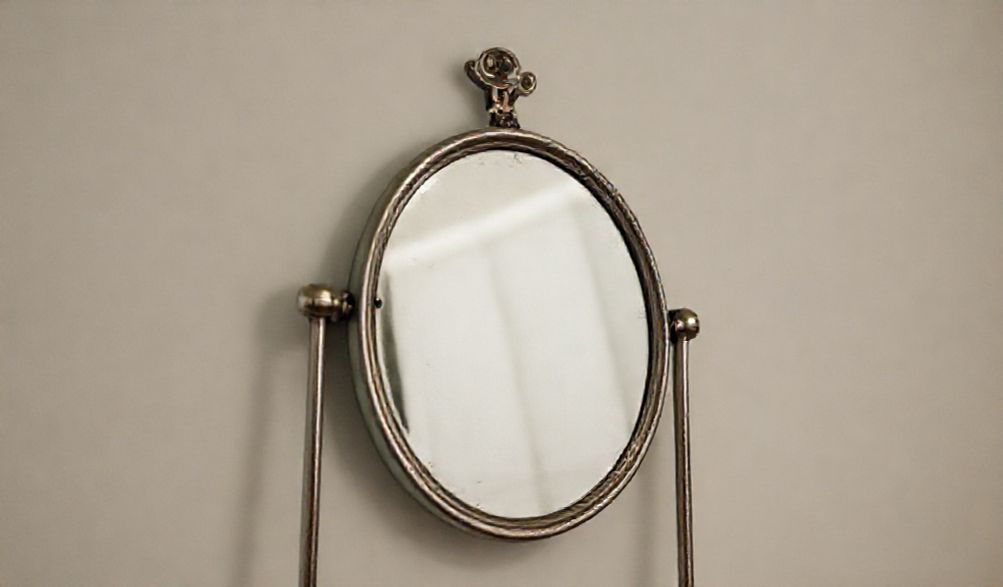
The Doctor’s Head Mirror: A Timeless Tool in Modern Medicine
In the collective imagination, few symbols are as iconic as the image of a physician: stethoscope draped around the neck, and a gleaming, circular mirror affixed to their forehead. This is the dr head mirror, a device that has, for over a century, represented the very essence of medical examination and diagnostic acumen. In today’s medical landscape—dominated by high-resolution MRI scans, robotic surgical systems, and digital diagnostics—this simple tool of glass and metal might appear to be a charming anachronism, a relic destined for a museum shelf.
Yet, step into the office of an experienced Otolaryngologist (ENT), and you are likely to see it still in active use. This persistence begs the question: in an age of technological wonder, why does this analog instrument endure? The answer lies not in nostalgia, but in unparalleled functionality. Far from being obsolete, the doctor’s head mirror remains an essential, cost-effective, and highly skilled component of a thorough physical examination. This post will delve into the fascinating history, precise physics, and enduring clinical value of this timeless tool, demonstrating that it represents a perfect marriage of simple design and profound utility that modern gadgets have yet to fully replicate.
What is a Doctor’s Head Mirror? Anatomy and Function
At first glance, the dr head mirror seems almost comically simple. Its design is an exercise in elegant minimalism, yet every component serves a precise optical purpose.
The Components: Headband, Mirror, and Optics
The apparatus consists of three key parts:
1. The Headband: Typically made of adjustable, sprung metal, it sits comfortably around the physician’s head, allowing for a secure and stable fit.
2. The Central Aperture: This is the hole in the very center of the mirror, usually about 1 to 1.5 centimeters in diameter. This is the physician’s viewing port.
3. The Concave Mirror: This is the heart of the device. It is a circular, front-surface mirror with a significant concave curvature, usually 3 to 4 inches in diameter. It is mounted on a swivel joint, allowing it to be angled precisely.
Constructed from high-quality glass and metal, the mirror is designed for durability and clarity. Its simplicity is its greatest strength—there are no circuits to fail, no batteries to die.
How It Works: The Principle of Focused Illumination
The magic of the doctor’s head mirror lies in basic, yet brilliantly applied, physics. The concave mirror is not a flat reflector; its curved surface collects and concentrates light.
- The Source: The physician positions an external light source—traditionally a dedicated examination lamp, but often a simple gooseneck or halogen light—to the side and slightly behind the patient’s head.
- The Reflection: The concave mirror captures this ambient light and reflects it forward as a bright, concentrated beam. The curvature focuses the light to a specific focal point.
- The View: The doctor positions themselves so the area they wish to examine (e.g., the patient’s throat) is at this focal point. They then look directly through the central aperture. The result is an intensely illuminated, magnified (due to the close working distance), and completely shadow-free view of the anatomy.
The technique requires the doctor to align their head, the mirror’s angle, the external light, and the patient in a precise spatial relationship. When done correctly, the physician’s view is unobstructed, and both of their hands remain free to hold instruments like a tongue depressor or a nasal speculum.
A Brief History of the Head Mirror in Medicine
— это не просто улучшение освещения; это фундаментальное усовершенствование самого критически важного инструмента хирурга — его зрения. Благодаря непревзойденной цветопередаче, бестеневому освещению и эргономичному комфорту эта технология напрямую способствует хирургической точности, снижает утомляемость во время операции и способствует положительным результатам для пациента. Переход от галогенных к светодиодным осветителям — это не просто смена оборудования, а стратегические инвестиции в клинические результаты и профессиональное благополучие. dr head mirror is a tool born of necessity and innovation, forever changing the course of a medical specialty.
19th Century Origins and the Father of Laryngology
While reflective mirrors had been used casually for centuries, the medical head mirror as we know it was pioneered in the mid-1800s. The story begins not with a physician, but with a singing teacher. In 1854, Manuel García, seeking to observe his own vocal cords, used a dental mirror and sunlight to see his larynx—the first documented laryngoscopy.
This idea was swiftly seized upon by physicians. Dr. Johann Nepomuk Czermak, a Hungarian physiologist, is credited with adapting and popularizing the tool for medical use in the late 1850s. He replaced the hand-held mirror with one mounted on a headband, added the central aperture for direct viewing, and used a lamp as a dedicated light source. This invention revolutionized medicine. For the first time, doctors could clearly and consistently examine the living larynx, nasal passages, and deeper ear structures, leading to the birth of modern Otolaryngology. The head mirror made the invisible, visible.
From Ubiquity to Specialized Tool
For decades, the doctor’s head mirror was the universal symbol of a practicing physician. General practitioners used it routinely for examinations. Its distinctive silhouette was etched into public consciousness through illustrations, photographs, and film.
However, the latter half of the 20th century saw a shift. The advent of bright, portable, battery-powered penlights and, later, LED headlamps offered new convenience. These tools were instantly easier for students to use and didn’t require setting up an external light. Consequently, the head mirror gradually retreated from general practice, becoming a more specialized instrument primarily associated with ENT specialists who valued its unique optical properties over sheer convenience.
Modern Applications: When and Why Doctors Still Use It
Today, the dr head mirror is not a default tool, but a deliberate choice for specific clinical scenarios where its advantages are irreplaceable.
The Gold Standard in ENT (Otolaryngology) Examinations
For the ENT specialist, the head mirror is often the instrument of choice, and for expert-driven reasons:
* Superior, Shadow-Free Illumination: When examining the deep, narrow confines of the nasal cavity or the recesses of the pharynx, focused light is crucial. LED headlamps, while bright, often cast shadows from speculums or other instruments. The head mirror’s focused beam illuminates the cavity evenly, eliminating these obstructive shadows.
* Bimanual Dexterity: ENT exams and minor procedures frequently require two hands—one to hold a speculum to open a nostril, and the other to manipulate a probe or suction. The head mirror, being completely hands-free once aligned, enables this seamlessly. A physician holding a penlight loses a hand.
* Optimal Light Quality: The reflected incandescent or halogen light from a traditional exam lamp is often considered a more natural, warmer light that reduces glare off moist tissues compared to the sometimes-harsh cool white of LEDs.
* Procedural Use: Its utility extends beyond examination. For procedures like nasal foreign body removal, control of epistaxis (nosebleeds), or biopsies, the brilliant, focused light and hands-free operation are invaluable.
Beyond ENT: Use in Primary Care and Other Specialties
While its home is in ENT, the doctor’s head mirror finds niche uses elsewhere:
* Primary Care: A discerning general practitioner may use one for a particularly thorough otoscopic or oropharyngeal exam, especially if they have been trained in its use.
* Дерматология: The bright, focused light can be excellent for examining skin lesions, particularly for assessing subtle texture and depth.
* Dentistry: Some oral surgeons or dentists use head mirrors for intraoral examinations and procedures, benefiting from the same shadow-free, hands-free illumination.
Head Mirror vs. Modern Alternatives: A Comparative Analysis
Is the dr head mirror better than a modern LED headlamp? The answer is not straightforward; it depends on the clinical need.
The Traditional Head Mirror: Pros and Cons
Преимущества:
* Unmatched Focused Illumination: Provides a brilliant, concentrated beam perfect for deep cavities.
* True Hands-Free Operation: Once aligned, it requires no manual support, freeing both hands.
* No Batteries Required: It relies on an external source, so it never dies mid-procedure.
* Durability and Cost: A well-made head mirror can last a lifetime with minimal maintenance and is relatively inexpensive.
Недостатки:
* Significant Learning Curve: It requires skill and practice to master the coordination of light, mirror, and patient.
* Dependent on External Light: Requires a separate, properly positioned light source.
* Less Portable: Not a “grab-and-go” tool for quick checks.
LED Headlamps and Penlights: Pros and Cons
Преимущества:
* Удобство использования: Intuitive; point and look. Minimal training required.
* Self-Contained Light Source: Built-in LEDs are powerful and portable.
* Brightness: Modern LEDs are exceptionally bright.
* Portability: Ideal for hospital rounds, emergency settings, or quick examinations.
Недостатки:
* Potential for Shadows: The light source is close to the eyes, so instruments held in front of it can create shadows in the field of view.
* Often One-Handed: A penlight ties up one hand. While headlamps are hands-free, their light is more diffuse.
* Battery-Dependent: Can fail at an inopportune time.
* Качество света: May not be as ideally focused for the deepest examinations as a mirrored beam.
The Skill and “Art” of Using a Head Mirror
Using a dr head mirror proficiently is a clinical skill, often described as an art form. It is a tactile, physical connection between doctor and patient that embodies the traditional exam.
It’s Not as Simple as It Looks: The Learning Curve
A novice will see only a reflection of their own eye. Mastery involves a deliberate choreography:
1. Positioning the patient and the external light source.
2. Donning the headband and adjusting the mirror angle.
3. Learning to keep the head and mirror still while moving only the eyes to look through the aperture.
4. Developing the muscle memory to instantly re-focus the beam as the examination site changes.
This skill is not innate; it is practiced. Medical students and ENT residents often spend hours learning this technique. Achieving a clear, bright view of the vocal cords on the first try is a rite of passage. This proficiency is a mark of experience and manual dexterity.
Why This Skill Remains Valuable in Medical Training
Preserving the skill of using a head mirror is about more than just using a tool; it’s about upholding a philosophy of care.
* Cultivates Fundamental Skills: It teaches young clinicians about optics, spatial reasoning, and the precise manipulation of instruments in a constrained space.
* Reinforces the Physical Exam: In an era leaning heavily on lab tests and imaging, mastering such a tool reaffirms the irreplaceable value of a meticulous, hands-on physical examination. It forces the clinician to be present, observant, and technically engaged with the patient.
* Connects to Medical Heritage: It provides a tangible link to the history and traditions of the medical profession, fostering an appreciation for the elegant solutions of the past.
Раздел Часто задаваемых вопросов (ЧАВО)
Q: Is the doctor’s head mirror still used today?
A: Absolutely. While not as common in every clinic, it remains a frequently used and highly valued tool, especially by Ear, Nose, and Throat (ENT) specialists. Its unique benefits ensure it hasn’t been fully replaced by modern technology.
Q: Why would a doctor use a head mirror instead of a bright LED headlamp?
A: A head mirror provides a uniquely focused and shadow-free beam of light. When examining deep, narrow cavities like the nasal passages or throat, this focused light is superior. It also allows the doctor to keep both hands free to use medical instruments simultaneously.
Q: Does using a head mirror require special training?
A: Yes, it does require practice to master. Medical professionals learn to coordinate their head position, the mirror’s angle, and an external light source to illuminate the exact area they are examining through the central hole. It’s a learned clinical skill.
Q: Is the head mirror just for looking in ears and throats?
A: Primarily, yes, for ENT examinations. However, it can also be useful for examining other small cavities or for providing excellent illumination during certain minor procedures where shadow-free light is critical.
В: Где можно купить медицинский головной рефлектор?
О: Медицинские головные рефлекторы продаются через специализированные компании по поставкам медицинского и хирургического оборудования. Для реального клинического применения важно приобретать правильно сконструированный медицинский инструмент, а не театральную реплику.
Заключение
— это не просто улучшение освещения; это фундаментальное усовершенствование самого критически важного инструмента хирурга — его зрения. Благодаря непревзойденной цветопередаче, бестеневому освещению и эргономичному комфорту эта технология напрямую способствует хирургической точности, снижает утомляемость во время операции и способствует положительным результатам для пациента. Переход от галогенных к светодиодным осветителям — это не просто смена оборудования, а стратегические инвестиции в клинические результаты и профессиональное благополучие. doctor’s head mirror — это нечто гораздо большее, чем ностальгический реликт или символ ушедшей эпохи. Это свидетельство элегантного и эффективного дизайна — инструмент, в котором форма с идеальной ясностью следует за функцией. Хотя современные технологии предоставили отличные и удобные альтернативы, специфические преимущества головного рефлектора — создание яркого, бестеневого освещения при освобождении рук врача — обеспечивают его постоянную актуальность в специализированной медицине. Его продолжающееся присутствие на лбах специалистов — это не отрицание прогресса, а взвешенный выбор для оптимального ухода за пациентами.
В конечном счете, dr head mirror символизирует приверженность детальному, непосредственному физикальному обследованию — фундаментальному и человеческому аспекту диагностики, который технология дополняет, но никогда не сможет полностью заменить. Он напоминает нам, что иногда самое совершенное решение оказывается и самым простым, и что истинное мастерство часто заключается в освоении как проверенных временем инструментов, так и новых.
p>