
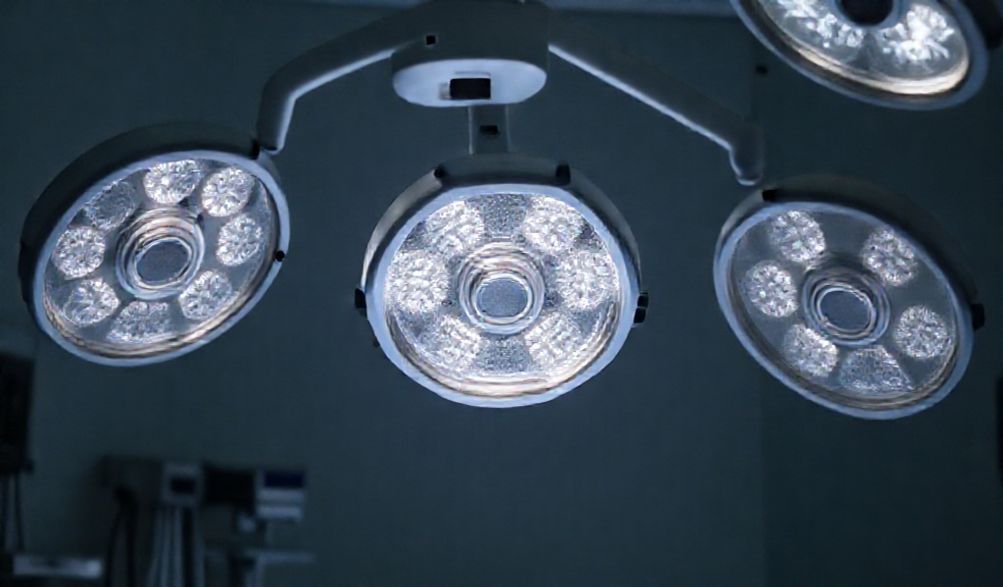
How Do Surgical Lights Eliminate Shadows? A Guide to Shadowless Illumination in Surgery
Imagine a cardiac surgeon delicately navigating a maze of coronary arteries. A millimeter’s miscalculation could be catastrophic. Now, picture a dark shadow falling across the surgical site, obscuring a critical vessel or a subtle tissue plane. In this high-stakes environment, imperfect lighting isn’t an inconvenience—it’s a direct threat to patient safety. The ability to see with absolute clarity, without visual obstruction, is a non-negotiable pillar of modern surgery. This brings us to the fascinating engineering question: how do surgical lights not cast shadows?
The answer lies not in a single, miraculous bulb, but in a symphony of optical engineering principles designed to outsmart darkness itself. This article, grounded in the physics of light and clinical design requirements, will demystify the technology behind “shadowless” illumination. We’ll explore how modern surgical lights—primarily advanced LED systems—use multi-source convergence, sophisticated reflectors, and deep-cavity penetration to provide the uniform, high-fidelity light that surgeons depend on. From the core principles to the essential features that go beyond mere shadow reduction, this guide serves as an authoritative resource for medical professionals, biomedical engineering students, and procurement specialists alike.
The Core Principle: Multi-Source Convergence for Shadow Reduction
At its heart, the secret to shadow reduction in surgery is a simple but brilliantly applied concept: if one light source creates a shadow, multiple sources from different angles can fill it in.
The “Shadow Fill” Effect in Practice
Think of shining a single flashlight on your hand in a dark room. You get a sharp, well-defined shadow on the wall behind it. Now, add a second flashlight from a slightly different angle. The shadow from the first light is now illuminated—or “filled in”—by the second. Add several more flashlights from a ring of positions, and the hard shadow dissolves into a faint, soft blur. This is the foundational idea. Surgical lights take this principle to an extreme, using not two or three, but dozens of individual light points arranged strategically to ensure that any object in the field (like a surgeon’s head or hand) blocks only a tiny fraction of the total light arriving at the surgical site.
Critical vs. Penumbral Shadows
To understand the goal, we must distinguish between two types of shadow:
* Umbra: This is the core, total shadow where all light from the source is blocked. It’s dark, well-defined, and clinically dangerous as it can completely hide anatomy.
* Penumbra: This is the softer, partial shadow at the edges of the umbra, where only some of the light is blocked.
The primary objective of surgical light engineering is to eliminate the umbra entirely и minimize the penumbra to such a degree that it becomes clinically irrelevant. The result is not a complete absence of darkness (which is physically impossible when an object interrupts light), but a field so uniformly lit that no single shadow interferes with visualization.
Key Engineering Components of Modern Shadowless Surgical Lights
Translating the multi-source principle into a reliable, sterile, and powerful medical device requires a suite of sophisticated technologies. Here’s how the theory becomes reality.
LED Arrays and Optical Assemblies
The heart of a modern surgical light is its LED array. Unlike old single-bulb systems, today’s lights feature a ring or cluster of 50 to over 100 individual LED emitters. This dense matrix is the primary engine of multi-source illumination. Each LED is a tiny, discrete light source. By packing them closely together in a circular pattern, engineers create a broad “source plane.” Even when an object blocks the direct path from several LEDs, countless others from surrounding angles continue to illuminate the area behind it. Furthermore, these LEDs are meticulously calibrated for consistent цветовая температура (typically a cool, daylight-like 4000K-5000K) and intensity, ensuring the blended light is homogeneous and true to color.
Reflector and Lens System Design
The LED array alone isn’t enough. The light from each discrete diode must be blended seamlessly. This is the job of complex reflector and lens systems. Behind the LED array lies a specially designed parabolic or multi-faceted reflector. Its shape is calculated to capture and redirect the light from each LED, overlapping and mixing the beams before they even leave the light head. This is often coupled with a diffusion lens or filter at the front of the light. This lens further scatters and homogenizes the light, transforming the potential for multiple faint shadows into a single, ultra-uniform field of illumination that appears to come from one very large, soft source.
Depth of Illumination (Field Depth)
This is one of the most critical, yet often overlooked, specifications. Глубина освещения refers to the distance—from the light head down into a body cavity—over which the light remains intense, focused, and shadow-reduced. A light with poor depth will create shadows as soon as a surgeon’s hands or instruments enter the wound at a certain depth. High-quality surgical lights are engineered for a deep field, often exceeding 25 cm. This ensures that whether the surgeon is working on the surface or deep within an abdominal or thoracic cavity, the quality of illumination remains consistent, maintaining the shadow-reduction effect throughout the three-dimensional surgical workspace. This depth is achieved through precise optical design that controls the convergence and spread of the thousands of individual light rays.
Beyond Shadows: Essential Features of Surgical Lighting Systems
While shadow reduction is the headline feature, it is part of a holistic system designed for maximum safety and efficacy. Ignoring these other elements would provide an incomplete picture.
Thermal Management (Cool Light)
Older halogen and incandescent surgical lights were notorious for radiating significant heat onto the surgical site, risking tissue desiccation and surgeon discomfort. Modern LED systems have revolutionized this. LEDs are inherently more efficient, converting most of their energy into light rather than heat. Advanced heat sinks and thermal management systems dissipate what little heat is generated away from the light beam. This “cold light” allows surgeons to work for hours without thermally damaging exposed tissues, a major advancement in patient safety.
Индекс цветопередачи (CRI)
What good is shadowless light if it distorts color? The Индекс цветопередачи (CRI) is a measure (on a scale of 0-100) of how accurately a light source reveals the true colors of objects compared to natural daylight. In surgery, a high CRI (typically >90, with premium lights reaching 95+) is non-negotiable. It allows surgeons to accurately distinguish between arterial and venous blood (based on oxygenation color), identify subtle tissue pathologies, and differentiate between similar-looking anatomical structures. Shadow reduction without accurate color rendering could lead to misdiagnosis or error.
Maneuverability and Sterility
A light that can’t be positioned perfectly is of limited use. Surgical lights are mounted on multi-articulating arms with gas springs or counterweights, allowing effortless floating movement and precise positioning that stays put. Furthermore, the entire light head is designed for asepsis. It features smooth, seamless surfaces without crevices and is often sealed to IP ratings to withstand rigorous cleaning and disinfection with harsh chemicals, preventing the light itself from becoming a vector for infection.
Types of Surgical Lights and Their Applications
Surgical lighting is not one-size-fits-all. The core principles are adapted into different form factors to suit various clinical settings.
Major Surgical Lights (Ceiling-Mounted)
These are the workhorses of the main operating room.
* Single-Arm Lights: A single light head on a large articulated arm. Often used in smaller ORs or as a secondary light.
* Multi-Arm Lights (Double, Triple, etc.): The most common configuration. Two or more independent light heads on separate arms are mounted on a single ceiling column. This allows the surgical team to combine beams from slightly different angles, enhancing shadow reduction and providing redundancy if one light is temporarily obstructed.
* Track-Mounted Systems: Multiple light heads are mounted on a ceiling rail, offering unparalleled flexibility to move lights between ORs or position several around a large operating table for complex procedures.
Minor Procedure & Examination Lights
These are smaller, often portable units on floor stands or wall mounts. They are used in minor ORs, emergency rooms, endoscopy suites, and clinics. While they may have fewer LED modules, they still employ the same multi-source and reflector principles for shadow-reduced illumination over a smaller field.
Specialty Lights
- Endoscopy Lights: The light source is separate, generating intense cold light that is transmitted via a fiberoptic cable to the endoscope inside the body.
- Dental Lights: Smaller, focused lights often with a single articulated arm, designed for illuminating the oral cavity.
- Headlights: Worn by the surgeon, these provide direct, coaxial illumination (light aligned with the surgeon’s line of sight) into deep or narrow cavities, complementing the overhead light. They are the ultimate personal shadow-reduction tool.
Часто задаваемые вопросы (ЧЗВ)
What is the difference between “shadowless” and “shadow-reduced” lighting?
“Shadowless” is a common industry term, but from a physics perspective, it’s a slight misnomer. It is impossible to eliminate all shadows when any object is placed in a light field. The more technically accurate terms are “shadow-reduced” или “deep-cavity illumination.” These describe the technology’s goal: to minimize shadows to such a degree—by filling in the umbra and softening the penumbra—that they are no longer clinically perceptible or obstructive. The effect is so effective that it is perceived as shadowless in practice.
Why are surgical lights often shaped like a dome or a ring?
The iconic dome or ring shape is a direct consequence of the multi-source design. This shape efficiently houses the circular array of LED modules and the complex parabolic reflector system that sits behind them. The circular geometry allows for perfectly symmetrical light convergence from all angles around the central axis, which is crucial for creating a homogeneous field. The dome also provides a large surface area for heat dissipation.
How has LED technology improved surgical lights over older models?
The shift from halogen/xenon to LED has been transformative:
1. Dramatically Reduced Heat: LEDs emit minimal infrared radiation, eliminating the risk of tissue thermal injury.
2. Энергоэффективность: LEDs consume far less power for the same or greater light output.
3. Долговечность: LED lifespans can exceed 50,000 hours, reducing maintenance and replacement costs versus bulbs that lasted only hundreds of hours.
4. Consistent Performance: Light output and color temperature remain stable over the diode’s entire life, unlike bulbs that dim and yellow with age.
5. Instant On/Off & Dimming: LEDs reach full brightness instantly and can be dimmed smoothly without color shift.
How do surgeons adjust for perfect lighting during an operation?
Adjustment is a two-step process. First, the circulating nurse or surgeon will position the light head using the sterile handles, centering it over the surgical field for general coverage. Once the incision is made, fine-tuning occurs. The surgeon will often adjust the focus (changing the field size and depth) and intensity to match the specific cavity depth and procedural stage. This is done using a dedicated sterile handle sleeve that fits over a control lever on the light head, allowing adjustment without breaking sterility.
Заключение
The question of how surgical lights avoid casting shadows reveals a world of applied medical physics and precision engineering. The answer is not magic, but the meticulous application of multi-source convergence through dense LED arrays, enhanced by sophisticated reflector and lens systems to create a homogeneous beam with exceptional depth of illumination. This technology, coupled with cool LED operation, high-fidelity color rendering, and sterile maneuverability, forms a critical pillar of the modern operating room.
This illumination is far more than a convenience; it is a fundamental, non-invasive tool that directly impacts surgical accuracy, procedure time, and ultimately, patient outcomes. Looking ahead, the future points toward even greater integration—with imaging systems for augmented reality overlays, AI-assisted automatic light field adjustment based on camera feedback, and adaptive lighting that changes spectrum to enhance specific tissue contrasts.
In the end, the surgical light stands as a testament to human ingenuity: a device designed to conquer the simple, ancient problem of shadow, thereby illuminating the path to healing with unprecedented clarity. For those involved in specifying this vital equipment, the key is to look beyond the marketing term “shadowless” and consult with clinical engineers to prioritize quantifiable metrics like Глубина освещения и Color Rendering Index alongside shadow reduction performance data.
p>