
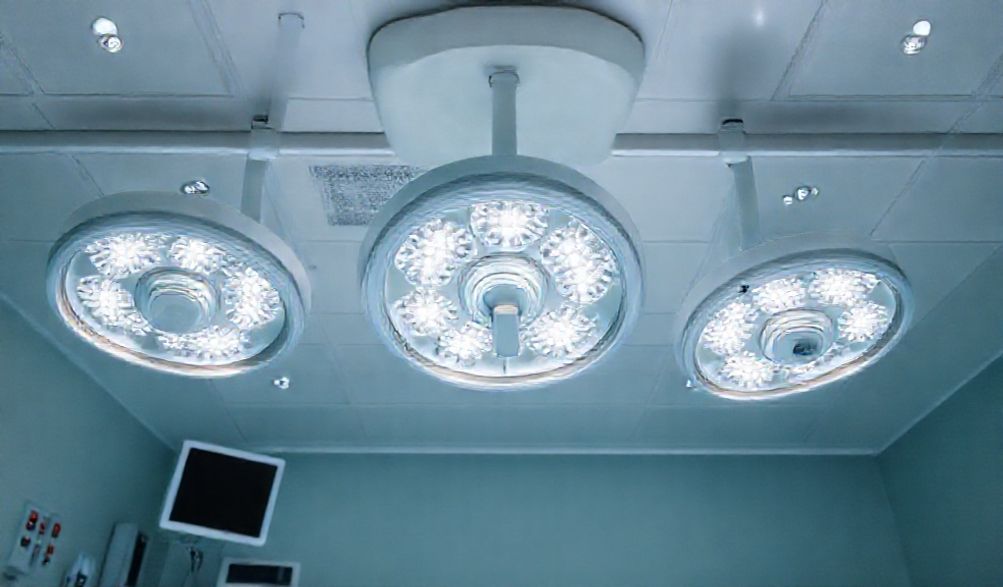
The Complete Guide to LED Operating Room Lights: Benefits, Technology & Selection Criteria
In the high-stakes environment of an operating room, every detail matters. The surgeon’s skill, the sterility of the instruments, and the precision of the technology all converge on a single goal: a positive patient outcome. Yet, one foundational element is so intrinsic that its importance can be overlooked—the quality of light. What if the light source itself could become an active contributor to surgical precision, reduce long-term operational costs, and enhance the performance and comfort of the entire surgical team? This is no longer a hypothetical question; it is the reality ushered in by LED operating room lights.
The transition from traditional halogen or metal halide surgical lights to advanced LED systems represents one of the most significant upgrades in modern operating room infrastructure. This shift is driven not by trend, but by a compelling convergence of clinical, ergonomic, and economic benefits. This comprehensive guide is compiled from insights into surgical engineering and healthcare procurement. It will cover the critical technical specifications, evidence-based clinical advantages, and key industry standards that define this technology. Our aim is to provide authoritative, factual, and balanced information—aligned with considerations from leading health technology assessment bodies—to empower informed decision-making, not to promote specific brands.
This guide will serve as your essential resource, exploring the multifaceted advantages of LED operating room lights, demystifying the technology behind them, outlining the critical features to evaluate, and demonstrating why they represent a smart, strategic investment for any forward-thinking healthcare facility.
Why LED Technology is Revolutionizing the Operating Room
The move to LED is more than a simple bulb swap; it’s a fundamental re-engineering of surgical illumination. The benefits permeate every aspect of the OR, from the surgeon’s visual field to the hospital’s balance sheet.
Superior Illumination for Surgical Precision
At its core, a surgical light must render the surgical field with absolute clarity and accuracy. LED technology excels in this primary function through superior optical control.
- Optimal Color Temperature & High CRI: Modern LED operating room lights are typically calibrated to a color temperature between 4000K and 4500K. This “daylight white” spectrum provides a neutral, bright field that reduces color distortion. More crucial is the Color Rendering Index (CRI), a measure of a light’s ability to reveal the true colors of objects compared to natural light. High-performance surgical LEDs boast a CRI of >90, and often >95. This exceptional color fidelity is vital for accurately differentiating between tissue types, assessing blood oxygenation (distinguishing arterial from venous blood), and identifying subtle changes in organ health that might be missed under inferior lighting.
- Shadow Reduction and Deep-Cavity Illumination: Advanced LED systems use multiple, strategically arranged LED modules and sophisticated reflector optics. This design creates homogeneous, multi-point illumination that minimizes the distracting and dangerous shadows cast by a surgeon’s head and hands. Furthermore, the focused beam and high lumen output provide exceptional depth of field and penetration, delivering bright, clear light even into deep surgical cavities during procedures like spinal or pelvic surgery.
Enhanced Safety and Patient Outcomes
Safety in the OR extends beyond sterile technique to the physical environment, and LED lights contribute significantly.
- Minimal Heat Emission (Cool Light): Unlike halogen lamps, which convert a significant portion of energy into infrared radiation (heat), LEDs are inherently cool-light sources. This dramatically reduces the risk of incidental tissue desiccation (drying out) at the wound margins and improves overall patient safety. It also creates a more comfortable environment for the surgical team, especially during long procedures.
- Отсутствие мерцания: Low-quality lighting can produce an imperceptible flicker that leads to eye strain, headaches, and fatigue. Premium LED surgical lights use constant-current drivers to deliver absolutely flicker-free illumination. This reduces visual fatigue for the surgical team, helping maintain peak concentration and performance throughout lengthy operations.
- Стабильный выходной сигнал: Halogen lights dim and their color spectrum shifts (typically yellows) as the filament ages. LEDs maintain consistent lumen output and color temperature over their entire lifespan, ensuring the light quality for the last procedure of the day is identical to the first.
Significant Operational and Cost Efficiency
The economic argument for LED conversion is overwhelmingly positive, impacting both operational expenses and capital planning.
- Dramatically Lower Energy Consumption: LED operating room lights are extraordinarily energy-efficient, typically consuming 50-70% less power than equivalent halogen systems. For a hospital with multiple ORs running 24/7, this translates to substantial, ongoing savings on electricity bills.
- Extremely Long Lifespan: Where a halogen bulb may last 1,000-2,000 hours, an LED module is rated for 50,000 to 100,000 hours or more. In practical terms, this means a light may last for a decade or longer under normal use, virtually eliminating the cost and logistical hassle of frequent bulb replacements.
- Lower Total Cost of Ownership (TCO): While the initial purchase price of an LED system may be higher, the TCO—factoring in energy savings, zero bulb replacement costs, and reduced maintenance—is significantly lower over a 5-10 year period. This makes LEDs a financially prudent long-term investment.
Key Technical Features and What They Mean for Your OR
Navigating the specifications of LED operating room lights requires understanding a few key metrics and how they translate to real-world performance.
Understanding Lux, Lumen Output, and Field Depth
These terms define the “quantity” and “shape” of the light.
- Illuminance (Lux): This is the measure of light intensity falling on a surface. Surgical standards (like ISO 9680) recommend high levels of illuminance: often >40,000 lux at the center of the field and >20,000 lux at the periphery (at a defined distance, e.g., 1 meter). Different specialties may have varying needs, with microsurgery demanding the highest intensities.
- Adjustable Intensity and Field Diameter: A critical feature is the ability to adjust both the brightness and the size (diameter) of the illuminated field. For a delicate cardiac procedure, a surgeon may want a small, intensely bright spot. For a large orthopedic operation, a wider, slightly less intense field is preferable. This adjustability allows one light system to be optimized for multiple surgical disciplines.
The Importance of Adjustability and Ergonomics
A light must go where the surgeon needs it, effortlessly and aseptically.
- Suspension Systems: Lights are typically ceiling-mounted on a single-arm, double-arm, or track-mounted system. Track systems offer unparalleled flexibility, allowing lights to be repositioned along the track to suit different OR table layouts and procedures.
- Maneuverability and Control: Smooth, multi-axis movement with excellent balance is essential. Surgeons must be able to position the light using a sterile handle without fighting against gravity or drift. Memory functions, which allow the light to return to pre-set positions for specific procedures or surgeons, are a major time-saving and ergonomic benefit.
Integration with Modern Operating Room Ecosystems
The modern OR is a networked environment, and the surgical light is becoming a central hub.
- Imaging and Documentation: Many LED operating room lights have integrated high-definition cameras for teaching, telemedicine, and procedural documentation. The light must provide flawless illumination for both the surgeon and the camera sensor without glare or hotspots.
- OR Integration: Lights can be interfaced with the OR’s control system, allowing intensity and position adjustments from a touch panel. In advanced hybrid ORs, lighting must synchronize with imaging equipment like C-arms and angiography systems.
- Future-Proofing: Consider systems with open architecture or upgrade paths to accommodate future technologies, such as augmented reality overlays or advanced spectral imaging.
Critical Selection Criteria for Healthcare Decision-Makers
Выбор правильного LED operating room lights is a multidisciplinary decision involving clinicians, biomedical engineers, infection control, and financial officers.
Clinical Requirements Assessment
Start with the end-users: the surgical teams.
* Surgical Specialty Mapping: Conduct a needs analysis based on the procedures performed. A neurosurgery suite has different requirements (deep-cavity illumination, shadow reduction) than an ophthalmology OR (coaxial illumination needs).
* Teaching vs. Ambulatory Use: A major teaching hospital will prioritize integrated video and recording capabilities. An ambulatory surgery center might prioritize cost-effectiveness and ease of use for high-volume, shorter procedures.
Compliance, Standards, and Certification
Это обязательное условие для безопасности пациентов и персонала.
* Essential Standards: Ensure the system complies with IEC 60601-1 (safety for medical electrical equipment) and ISO 9680 (performance requirements for surgical lights). Regional regulatory marks like FDA clearance (USA) or CE marking (Europe) are mandatory.
* Контроль инфекций: The light’s design must facilitate thorough cleaning. Look for sealed housings that prevent dust and fluid ingress, smooth surfaces without crevices, and materials compatible with harsh hospital-grade disinfectants. The sterile handles should be easily removable for sterilization.
Total Value Analysis: Beyond the Purchase Price
Shift the conversation from price to value over the asset’s life.
* Calculating ROI: Build a model that includes: (Initial Cost) vs. (Annual Energy Savings + Avoided Bulb/Maintenance Costs + Downtime Reduction). The ROI for LED lights is often compelling within just a few years.
* Service and Support: Evaluate the manufacturer’s warranty, the availability and responsiveness of their service network, and the quality of installation and training support they provide.
* Future-Proofing: Consider the modularity of the system. Can LED modules or control electronics be upgraded separately? This protects your investment against technological obsolescence.
Addressing Common Concerns and Misconceptions
LED Light Quality and Surgical Accuracy
- Myth: LED light is “harsh” or “unnatural.”
- Reality: Early LEDs had this reputation, but modern medical-grade LEDs are engineered for exceptional spectral quality. Studies have shown that high-CRI LED lighting can improve visual acuity and contrast sensitivity compared to traditional sources, directly supporting surgical accuracy. Concerns about “blue light hazard” are mitigated by filters and phosphor coatings that tailor the spectrum for medical use.
Durability and Reliability in a Demanding Environment
- Concern: Are solid-state LEDs durable enough for a busy OR?
- Reality: With no fragile filament or glass envelope, LEDs are inherently more resistant to shock and vibration. High-quality units are built to withstand the rigors of daily use and cleaning. Inquire about the Mean Time Between Failures (MTBF) for the LED drivers and electronics—a key reliability metric. They also perform instantly and consistently on backup power systems.
Upgrading Existing Infrastructure
- Question: Do we need a full replacement?
- Options: For some older systems, “retrofit” kits that replace the lamp head with an LED module are available and can be cost-effective. However, a full system replacement is often advisable to gain the full benefits of modern optics, ergonomics, and integration capabilities. A professional assessment should review structural support, electrical capacity, and ceiling infrastructure.
Часто задаваемые вопросы (ЧЗВ)
Q1: How long do LED operating room lights actually last?
О: LED modules are typically rated for 50,000 to 100,000 hours of operation. Assuming an OR is used for 10 hours a day, 250 days a year (2,500 hours annually), this translates to a potential lifespan of 20 to 40 years before light output significantly degrades, far surpassing any traditional technology.
Q2: Are LED surgical lights really worth the higher upfront cost?
О: Absolutely, when analyzed through a Total Cost of Ownership (TCO) lens. The higher initial investment is quickly offset by 50-70% energy savings, the complete elimination of bulb replacement costs, and reduced maintenance downtime. Most facilities achieve a positive Return on Investment (ROI) within 3-5 years, after which they enjoy pure savings.
Q3: Can the color temperature of LED lights be adjusted during surgery?
О: Yes, many advanced models offer adjustable color temperature. A surgeon might select a cooler temperature (e.g., 4500K) for optimal contrast in deep cavities or a warmer temperature (e.g., 4000K) for better rendering of superficial tissues and reduced glare. This flexibility can be a valuable tool for specific visual tasks.
Q4: What maintenance is required for LED surgical lights?
О: Routine maintenance is minimal and primarily involves: 1) Exterior cleaning per infection control protocols, 2) Periodic checks of the mechanical arms, joints, and brakes for smooth movement and stability, and 3) Verification of light output and homogeneity (often done annually). The LED modules themselves rarely require service.
Q5: How do I ensure the lights we choose are compliant and safe?
О: Always request and verify the manufacturer’s Declaration of Conformity and regulatory certificates (e.g., FDA 510(k), CE Mark with applicable directives). Ensure the product complies with IEC 60601-1 and ISO 9680. Choosing a manufacturer certified to ISO 13485 (Medical Devices Quality Management Systems) is a strong indicator of a reliable, quality-focused supplier.
Заключение
Внедрение LED operating room lights is a transformative decision for any healthcare facility. The benefits are clear and multidimensional: unparalleled illumination that provides true-tissue color and deep-cavity penetration for surgical precision; enhanced safety through cool, flicker-free light; and compelling long-term economics driven by massive energy savings and unparalleled durability.
Choosing the right system is a strategic decision that requires balancing deep clinical needs with technical specifications and a thorough lifecycle cost analysis. We encourage involving a cross-functional team—including surgeons, nurses, clinical engineers, and procurement specialists—in the evaluation process.
Ultimately, investing in advanced LED surgical lighting is not merely an equipment upgrade. It is a foundational investment in elevating surgical capability, safeguarding patient well-being, enhancing team performance and comfort, and building a more sustainable and efficient healthcare infrastructure for the future. Use the criteria and insights outlined in this guide to conduct a thorough, evidence-based evaluation that will illuminate a path to better outcomes for years to come.
p>