
The Complete Guide to LED Surgical Lights: Benefits, Technology & Selection Criteria
Introduction
Imagine a master painter working in dim, flickering light, their colors rendered inaccurately and shadows obscuring critical details. Now, translate that scenario to the high-stakes environment of an operating room. The surgeon’s ability to see—with absolute clarity, true color, and precise depth—is not merely a convenience; it is the very foundation of surgical precision, patient safety, and successful outcomes. For decades, the surgical field was illuminated by halogen and metal halide lights, technologies with significant limitations. Today, a revolution is shining brightly overhead: LED surgical lights.
This guide serves as a comprehensive, evidence-based resource for the entire surgical ecosystem: from the surgeons and nurses who rely on this light daily, to the clinical engineering teams who maintain it, and the healthcare administrators and procurement specialists tasked with making strategic investments. Our analysis is grounded in a deep review of clinical studies, international safety and performance standards (such as IEC 60601-2-41), and the evolving specifications from leading medical device manufacturers.
We will illuminate the path from understanding the core technology to realizing its tangible benefits. You will learn about the fundamental advantages of LED over legacy systems, decode the critical technical specifications, and gain a practical framework for selecting, integrating, and maintaining the optimal LED surgical light system for your facility. The journey from halogen’s warm glow to LED’s intelligent brilliance is one of the most impactful upgrades a modern operating theatre can make.
Understanding LED Technology in the Operating Room
From Halogen to LED: An Evolution in Surgical Illumination
The history of surgical lighting is a pursuit of the “daylight” ideal—consistent, shadow-free, and color-accurate illumination. Halogen lights, the long-standing workhorses, operate by heating a tungsten filament until it glows white-hot. While providing decent color rendering, they are notoriously inefficient, converting over 90% of their energy into intense heat. This radiant heat poses risks to patient tissue and surgeon comfort. Furthermore, halogen bulbs have a short lifespan (typically 1,000-2,000 hours), requiring frequent, costly replacements and posing a contamination risk during change-outs.
The advent of Metal Halide (HID) lights offered improved efficiency and a brighter, whiter light. However, they suffered from slow warm-up times, potential for catastrophic failure, and contained hazardous materials.
LED (Light Emitting Diode) technology represents a paradigm shift. LEDs are solid-state semiconductors that emit light when an electrical current passes through them. This fundamental difference unlocks a new era of performance: exceptional energy efficiency, minimal heat emission at the surgical site, instant on/off capability, and an extraordinary lifespan measured in decades of typical use. The transition is not merely a bulb swap; it is an upgrade to a fully controllable, intelligent illumination system.
How LED Surgical Lights Work: Core Components Explained
An LED surgical light is a sophisticated assembly of components engineered for a single purpose: to deliver perfect light to the surgical field.
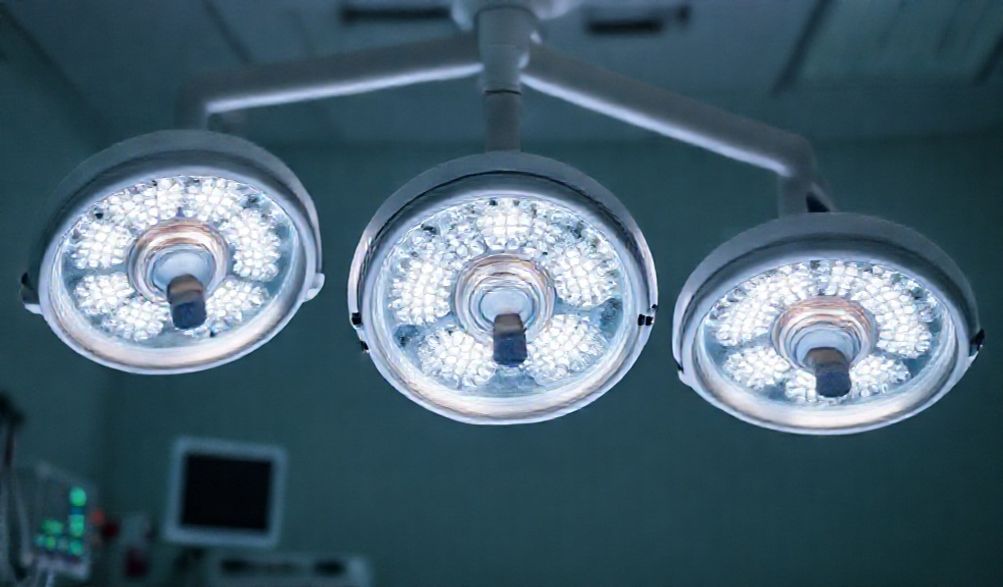
- The LED Array: Instead of a single bulb, a surgical light head contains hundreds, even thousands, of individual LED chips arranged in a specific configuration. This multi-source design is the key to shadow reduction. When an instrument obstructs one LED, light from the surrounding chips fills the gap, creating what is known as “shadow dilution” or a homogenous light field.
- Heat Sink & Thermal Management: While LEDs produce very little infrared (heat) radiation in their light beam, the electronic drivers do generate heat at the diode junction. Advanced heat sink designs, often using aluminum alloys, passively draw this heat away from the LEDs, ensuring stable performance and maximizing the system’s longevity.
- Optical Lenses and Reflectors: Secondary optics—precision lenses and reflectors—are placed over the LED array to shape and focus the light. They control the beam’s diameter (field size), depth of illumination, and the evenness of the lux distribution across the entire field.
- Индекс цветопередачи (CRI): This is a critical metric, especially in surgery. CRI measures a light source’s ability to reveal the true colors of objects compared to natural daylight (which has a CRI of 100). For surgical applications, a CRI of 90 or higher is essential. It allows surgeons to accurately differentiate between arterial and venous blood, identify subtle tissue changes, distinguish organs, and recognize states of ischemia or infection. High-CRI LED light renders tissue in its true hue, a non-negotiable requirement for precision.
Key Technical Specifications and What They Mean
Navigating product specs requires understanding the language of light. Here’s what matters most:
- Illuminance (Lux) vs. Luminous Flux (Lumens): Lumens measure the total light output of the source. Lux measures how much of that light lands on a surface (lumens per square meter). For surgery, lux at the surgical field is the key figure. Modern LED lights typically deliver 40,000 to 160,000+ lux at the center, with options to adjust intensity. Crucially, this high intensity should be achievable without excessive heat.
- Field Diameter and Depth: The light field is adjustable. A large field diameter (e.g., 30-40 cm) is needed for open abdominal surgery, while a smaller, more intense spot is used for deep-cavity work like neurosurgery. Depth of illumination refers to how far into a cavity (e.g., during laparotomy) the light maintains adequate and uniform intensity.
- Color Temperature (Kelvin – K): This describes the “warmth” or “coolness” of the white light. Warm white (e.g., 3500K) has a yellowish tint, while cool white (e.g., 5000K-6000K) appears bluish. A significant advantage of advanced LED systems is регулируемой цветовой температурой. A surgeon might select a warmer tone for superficial procedures to enhance contrast in reddish tissue, and a cooler, “daylight” tone for deep cavity work to improve perceived brightness and detail.
Top Clinical and Operational Benefits of LED Surgical Lights
Enhanced Visual Accuracy and Reduced Surgeon Fatigue
The primary beneficiary of superior lighting is the surgical team. High-CRI LED lighting provides a spectral output that closely mimics natural sunlight, enabling unparalleled tissue differentiation. The subtle difference between a nerve sheath and a tendon, or between healthy and ischemic bowel, becomes starkly apparent. This visual accuracy is the first line of defense against iatrogenic injury.
Furthermore, the ability to fine-tune color temperature allows surgeons to optimize contrast for the specific task and tissue type, a feature impossible with fixed-spectrum halogen lights. Combined with a perfectly homogenous, flicker-free light field, this reduces the cognitive load on the surgeon’s visual cortex. During marathon procedures, this translates to significantly less eye strain and mental fatigue, helping to maintain peak performance and focus from first incision to final closure.
Improved Patient Safety and Surgical Outcomes
Patient safety is directly enhanced by the physics of LED technology. Traditional halogen lights are, in effect, powerful heat projectors. Studies have shown this radiant heat can contribute to tissue desiccation (drying) at the wound margins, potentially impairing healing. LED lights emit virtually no infrared radiation in their beam. The surgical site remains cooler, preserving tissue integrity and improving patient comfort, especially in long procedures.
From an infection control perspective, LED light heads run cooler and often feature smoother, cleaner designs with fewer crevices compared to older halogen assemblies with large ventilation grilles. This makes them easier to clean and disinfect thoroughly, aligning with stringent OR protocols to minimize microbial harborage points. The elimination of frequent bulb changes also removes a recurring breach of the sterile field.
Long-Term Cost Savings and Sustainability
While the initial capital outlay for an LED system can be higher than replacing a halogen bulb, the total cost of ownership tells a different story—one of dramatic savings.
- Срок службы: A halogen bulb lasts 1,000-2,000 hours. An LED light engine is rated for 50 000 до 100 000 часов. In a busy OR used 2,000 hours a year, that’s 25 to 50 years of service without a “bulb” replacement.
- Энергоэффективность: LEDs consume 50-80% less electricity than equivalent halogen systems to produce the same or greater light output. For a hospital with dozens of ORs, this annual energy saving is substantial.
- Обслуживание и время простоя: The cost of bulbs, the labor for biomedical techs to change them, and the potential OR downtime are eliminated. The ROI calculation is compelling: when factoring in energy savings, zero consumable costs, and reduced maintenance labor, most hospitals find the payback period for an LED upgrade is only a few years, followed by decades of pure operational savings. This also contributes significantly to a hospital’s sustainability goals by reducing energy consumption and waste.
How to Choose the Right LED Surgical Light System
Assessing Your Surgical Specialty Needs
One size does not fit all in the OR. The ideal light system is matched to the procedures it will illuminate.
- General & Abdominal Surgery: Requires a large, homogeneous field (30cm+) with excellent depth of illumination for deep cavities. Adjustable color temperature is highly valuable.
- Neurosurgery & Spine: Demands a very intense, focused spot light with exceptional shadow control for deep, narrow wounds. A high “depth-to-diameter” ratio is critical.
- Cardiac & Thoracic: Needs a blend of broad field for opening and a focused beam for deep structures. Integration with overhead equipment booms is a key consideration.
- Orthopedic & Trauma: Benefits from very high lux levels to see into deep wounds and assess bone structure. Robust construction to withstand a busy environment is important.
- Minimally Invasive/Endoscopic Suites: While the monitor is the primary visual source, high-quality ambient OR lighting from LEDs reduces surgeon eye strain when looking away from the screen.
Critical Evaluation Criteria for Procurement
Create a weighted checklist based on these core pillars:
- Illumination Performance: Verify lux levels (center and edge), field diameter/depth adjustability, CRI (≥90), and color temperature range. Request a lux meter reading during a demo.
- Mechanical Movement & Ergonomics: Test the light’s reach, maneuverability, and balance. Does it stay in position without drift? Are the handles easy to grip and sterilize? How intuitive are the controls (often touch-sensitive or via a remote handle)?
- Контроль инфекций: Examine the design for cleanability. Are surfaces seamless? Can the entire handle be sterilized? Does the design minimize dust accumulation?
- Integration & Compatibility: Does it fit your existing ceiling infrastructure (track, single-point)? Can it integrate with OR video systems (via built-in or attachable cameras)? Is there a backup light system in case of power failure?
- Сервис и поддержка: Review the warranty length (often 5+ years on the LED engine), service network availability, and the cost of potential repairs.
Installation, Ergonomics, and OR Integration Considerations
The best light is useless if it disrupts workflow. Consider mounting: ceiling-mounted lights save floor space but require structural assessment. Track systems offer flexible positioning for multiple OR tables. Involve key stakeholders early: conduct hands-on evaluation trials with surgeons from different specialties and your clinical engineering team. They can assess real-world factors like glare on instruments, interference with other equipment, and ease of use for the entire team. Plan the installation during a scheduled OR downtime to minimize disruption.
Maintenance, Sterilization, and Best Practices
Routine Cleaning and Sterilization Protocols
Adherence to manufacturer guidelines is paramount. Typically, the sterile light handles are designed to be removed and sterilized via autoclave or low-temperature hydrogen peroxide plasma (e.g., STERRAD). The non-sterile light head and arms should be cleaned at the end of each day or after contaminated procedures using hospital-grade, non-abrasive disinfectants. Avoid harsh chemicals or abrasive wipes that can damage anti-reflective coatings or plastic lenses.
Ensuring Consistent Performance and Longevity
LEDs are stable, but performance should be verified periodically as part of a preventative maintenance (PM) program. Biomedical engineers should check:
* Illuminance and Homogeneity: Using a calibrated lux meter at a set distance to ensure output meets specifications.
* Цветовая температура и индекс цветопередачи (CRI): Using a light meter to verify settings.
* Механическая целостность: Checking for smooth movement, balance, and secure locking of all joints.
* Control System: Testing all touch controls, dimming functions, and backup systems.
This proactive PM protects your investment and ensures the light system is always “procedure-ready.”
The Future of Surgical Lighting
Smart Integration and Connected ORs
The surgical light is evolving from an illumination device into an integrated data and visualization hub. Future trends include:
* Built-in 4K/8K Cameras: Offering a pristine, primary view for teaching, telemedicine, and recording without cluttering the sterile field with external cameras.
* Advanced Controls: Voice activation (“Light, increase intensity”) or gesture control for sterile, hands-free adjustment.
* OR Integration: Lights acting as a node in the connected OR, communicating with the patient monitor, PACS system, and room controls to automatically adjust settings based on the procedure phase.
Advanced Imaging and Enhanced Visualization
LEDs’ ability to produce specific wavelengths of light is unlocking new imaging modalities directly from the light head:
* Флуоресцентная визуализация: Lights with integrated near-infrared (NIR) capabilities can excite fluorescent dyes like Indocyanine Green (ICG). This allows for real-time visualization of blood flow (angiography), lymphatic mapping, and tumor identification during surgery.
* Multi-Spectral Imaging: By using specific LED wavelengths, it may be possible to enhance the visualization of different tissue types or oxygen saturation levels beyond what the human eye can see, providing real-time physiological data superimposed on the surgical field.
Раздел Часто задаваемых вопросов (ЧАВО)
Q: What is the typical lifespan of an LED surgical light, and how does it compare to traditional lights?
О: LED surgical light engines are typically rated for 50,000 to 100,000 hours of operation. In contrast, a halogen bulb lasts 1,000-2,000 hours, and a metal halide bulb around 5,000-10,000 hours. For an OR used 10 hours a day, 250 days a year (2,500 hours), an LED system could last 20-40 years without needing a core light source replacement, compared to replacing halogen bulbs once or twice a year.
Q: Are LED surgical lights truly cool to the touch?
О: The light head itself will be warm due to the electronics and heat sinks, but the critical difference is in the light beam. Halogen lights emit a significant amount of infrared (IR) radiation, which is felt as heat on the patient’s tissue. LED beams contain minimal IR, so the surgical site remains noticeably cooler, enhancing patient safety and surgeon comfort, though the fixture housing should not be touched during procedures.
Q: Can the color temperature of LED lights be adjusted during surgery?
О: Yes, this is a defining feature of advanced LED systems. Surgeons can typically adjust from a warm white (e.g., 3500K) to a cool, daylight white (e.g., 6000K). This allows them to optimize visual contrast for the specific tissue and procedural depth—using warmer tones to differentiate vascular structures and cooler tones for enhanced brightness and detail in deep cavities.
В: Насколько важен индекс цветопередачи (CRI) для хирургии?
О: It is absolutely crucial. A high CRI (90 or above, with 95+ being ideal) ensures that tissues, blood, and organs are seen in their true, natural colors. Accurate color differentiation is vital for identifying anatomical structures, distinguishing between arterial and venous blood, and recognizing pathological changes. A low CRI can mask these subtle differences, potentially impacting surgical decision-making.
Q: What are the most important factors to test during a hands-on evaluation?
О: Request an in-OR trial. Key tests include: 1) Shadow Management: Place instruments in the beam—how effectively does the light fill the shadows? 2) Равномерность освещения: Is the light evenly bright across the entire field? 3) Ease of Repositioning: Is the light smooth, balanced, and does it hold position securely? 4) Control Intuitiveness: Может ли команда быстро настраивать параметры, не глядя? 5) Вид в реальных условиях: Предложите хирургам оценить дифференциацию тканей под светом на имитационной установке.
Заключение
Переход на светодиодное хирургическое освещение — это не просто технологическое обновление; это стратегические инвестиции в основу хирургической помощи. Доказательства очевидны: эти системы обеспечивают превосходные визуальные характеристики, повышая точность операций и снижая утомляемость команды, что напрямую способствует улучшению безопасности пациентов и результатов лечения. С операционной точки зрения они открывают путь к значительной долгосрочной экономии благодаря беспрецедентной энергоэффективности, практически полному отсутствию обслуживания и сроку службы, исчисляемому десятилетиями.
Выбор правильной системы требует партнёрства между клинической экспертизой и технической тщательностью. Он должен определяться конкретными потребностями ваших хирургических служб, подтверждаться строгой практической оценкой и поддерживаться надёжной сервисной структурой. В высокорискованной операционной, где зрение синонимично мастерству и безопасности, светодиодные хирургические светильники обеспечивают свет, максимально приближенный к идеальному дневному, позволяя хирургическим командам работать на пределе своих возможностей. Будущее хирургии — яркое, чёткое и интеллектуальное; пришло время увидеть разницу своими глазами.
p>