
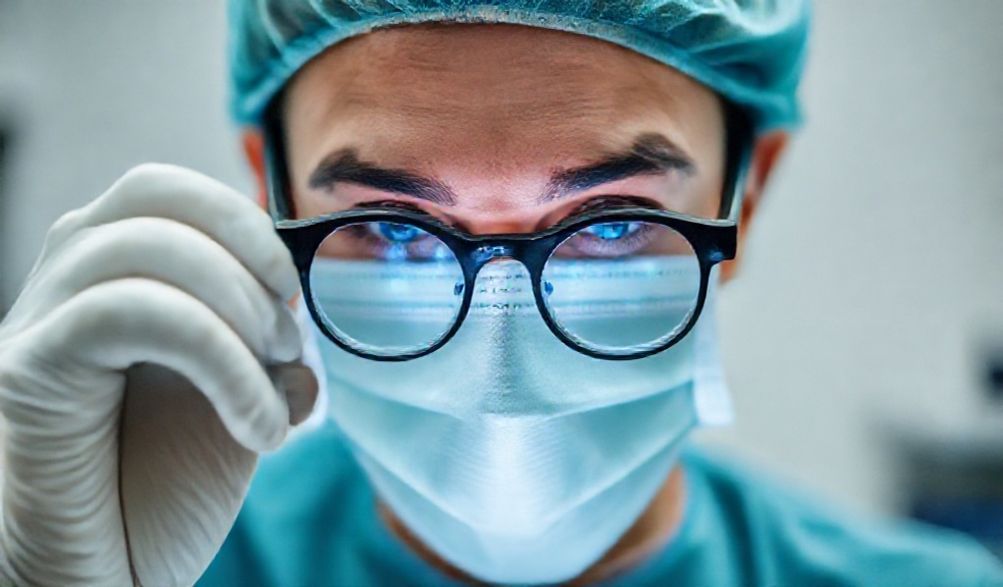
Loupes Surgery Glasses: A Surgeon’s Guide to Enhanced Precision, Ergonomics, and Performance
You’re three hours into a complex procedure. The delicate structures you’re working on demand absolute precision, but a familiar ache is beginning to creep up your cervical spine. You unconsciously hunch forward, narrowing the distance between your eyes and the field, sacrificing posture for a clearer view. The fatigue isn’t just physical; it’s mental, as your visual system strains to resolve the fine details critical to the outcome. This scenario is all too common in operating rooms and dental clinics worldwide.
It prompts a fundamental question: Could the right pair of surgical loupes be the most important tool in your operative arsenal, beyond your instruments?
For many seasoned professionals, the answer is a resounding yes. However, selecting loupes surgery glasses is often shrouded in jargon and vague recommendations. This guide cuts through the noise. Grounded in ergonomic science and surgical best practices, its purpose is to provide a comprehensive, evidence-based framework to inform your decision. We will move beyond simple magnification to explore how the correct loupes system functions as an integrated platform for enhancing clinical outcomes, protecting your physical health, and extending your career longevity. You will learn to decode key specifications, understand the non-negotiable benefits, and navigate the fitting process to find the system that becomes a seamless extension of your skill.
What Are Surgical Loupes? Defining the Essential Tool
At its core, a surgical loupe is a magnifying optic system worn like glasses. But to label them simply as “magnifiers” is to vastly understate their engineering and purpose. They are precision optical instruments designed for the unique demands of procedural medicine.
Core Function and Optical Principle
The primary function of loupes surgery glasses is twofold: magnification and an increased depth of field. Magnification brings small structures into clear, enlarged view, much like a cartographer using a magnifying glass to examine fine details on a map. This allows for the identification of minute nerves, vessel layers, and marginal distinctions that are invisible to the naked eye.
Concurrently, a quality loupe system provides a generous depth of field. This is the range within the surgical field that remains in sharp focus without requiring constant refocusing by the wearer. A shallow depth of field would force you to remain perfectly still; a deep one allows for natural, slight movements of your head and hands while keeping the critical area in crisp clarity. This combination transforms a challenging visual task into a manageable one, reducing cognitive load and visual fatigue.
Primary Users Across Medical Fields
While often associated with surgery, loupes are indispensable across a wide spectrum of hands-on medical disciplines:
- Dentistry: This is where loupe adoption is perhaps most widespread. They are critical in:
- Restorative Dentistry: For precise caries removal, margin preparation, and composite layering.
- Periodontics: For calculus detection and root surface debridement.
- Endodontics: For locating canal orifices and managing intricate root canal systems.
- Surgery: Specialties that rely on microsurgery and fine dissection are primary users:
- Пластическая и реконструктивная хирургия: For nerve coaptation, vessel anastomosis, and delicate flap dissection.
- Ophthalmic Surgery: For procedures on the cornea, retina, and micro-incisions.
- Neurosurgery: For working on delicate neural and vascular structures.
- Cardiovascular, ENT, and Hand Surgery: Where precision directly impacts patient outcomes.
- Ветеринария: Especially in small animal surgery, avian, and exotic pet procedures where scale is a significant factor.
- Other Procedural Specialties: Including dermatology (for Mohs surgery), aesthetics (for filler placement and threads), and even detailed wound care management.
The Proven Benefits: Why Loupes Are Non-Negotiable for Modern Practice
Investing in loupes surgery glasses is not about acquiring a gadget; it’s about upgrading your fundamental interface with the surgical field. The benefits are profound and multi-dimensional.
Enhanced Visual Acuity and Surgical Precision
The most obvious benefit is visual enhancement. Studies have consistently shown that magnification improves surgical accuracy. For instance, research in microsurgery and dentistry demonstrates that loupes significantly improve the quality of anastomoses and the detection of subgingival calculus or fine fractures. This isn’t just about seeing “bigger”; it’s about seeing better. Enhanced visualization leads to more accurate dissection, cleaner margins, and superior technical execution, which directly translates to improved patient outcomes, reduced operative times, and lower complication rates.
Ergonomic Advantage: Protecting Your Most Valuable Asset—Your Body
This may be the most critical, career-altering benefit. Without loupes, the natural instinct to see detail is to bring your head closer to the field—a recipe for a hunched, non-neutral spine posture. This “surgeon’s slump” leads to chronic neck, shoulder, and back pain, which is epidemic among proceduralists.
Properly fitted loupes combat this by allowing you to maintain a neutral, upright posture. The key lies in two specifications: Рабочее расстояние и Declination Angle. The working distance sets the correct space between your eyes and the field so you can sit or stand upright. The declination angle tilts the optical path downward so you can look straight ahead with your head level, rather than tilting your chin down. By promoting spinal neutrality, loupes are a primary intervention against work-related musculoskeletal disorders. Framed correctly, they are not an expense but an essential investment in your career longevity and quality of life.
Improved Documentation and Supervision
The clarity provided by loupes extends beyond the moment of the procedure. They are invaluable for high-quality clinical photography and videography, essential for patient records, legal documentation, and publishing. Furthermore, when training residents or working with assistants, the ability to clearly see and demonstrate fine techniques improves communication and educational outcomes. A supervising surgeon can more accurately assess a trainee’s work, and an assistant can better anticipate needs when they can see the field with similar clarity.
Key Specifications: How to Choose Your Loupes
Navigating the technical specifications is crucial to finding your ideal match. Here’s what you need to understand.
Magnification Power (Galilean vs. Prismatic)
Loupes come in two main optical designs:
* Галилеевы системы: Use a simple lens arrangement. They are typically lighter, more compact, and less expensive. They offer lower magnification ranges (usually up to 3.5x) with a good depth of field but a somewhat narrower field of view.
* Призматические (Кеплеровы) системы: Use a more complex series of prisms to fold the light path. They are capable of higher magnification (4.5x and above), provide a wider field of view, and offer superior optical clarity. The trade-off is increased weight and cost.
Guideline: For general surgery, dentistry, and introductory use, увеличение от 2,5x до 3,5x magnification is often ideal. For microsurgery, endodontics, or extremely fine work, 4.5x to 6.0x or higher may be necessary, typically requiring a prismatic design.
Working Distance (WD)
This is the distance from your eye to the center of your surgical field when you are in a comfortable, upright posture. It is measured during a professional fitting and is specific to your anatomy and typical operating position (seated or standing). An incorrect WD is the leading cause of poor posture and loupe rejection—too short, and you hunch; too long, and you strain to reach.
Field of View (FOV) and Depth of Field (DOF)
- Field of View: The width of the area you see through the loupes at a given distance. Higher magnification typically reduces the FOV.
- Depth of Field: The “front-to-back” range that stays in focus. A deeper DOF is more forgiving of minor head movements.
There is a constant trade-off: as magnification increases, both FOV and DOF generally decrease. The goal is to find the highest magnification you need that still provides a FOV and DOF that feel natural and unrestricted for your type of work.
Frame and Lens Considerations
Comfort is paramount for all-day wear. Consider frame weight, adjustability, and nose pad design. If you wear prescription lenses, discuss integrated custom Rx options. Compatibility with personal protective equipment (PPE) like face shields or surgical hoods is also key. Finally, invest in lens coatings: anti-reflective coating reduces glare from overhead lights, and антизапотевающим покрытием is essential to prevent condensation, especially when wearing masks.
The Integration of Loupes with Headlights
Magnification is only half the equation. To see the enhanced detail, you need optimal, shadow-free light directed precisely into your magnified field of view.
Why Coaxial Illumination is Critical
“Coaxial illumination” means the light source is aligned with your line of sight. When using high-magnification loupes, your head and the loupes themselves cast shadows over the deep, narrow field. A headlight mounted on your loupe frame or headband projects light directly down your visual axis, eliminating these shadows and dramatically improving contrast and tissue differentiation. It turns a magnified view into a brilliantly illuminated one.
Choosing a Compatible System
Modern systems use bright, cool, lightweight LED lights. Key factors include:
* Brightness (measured in Lux or Lumens): Ensure it’s sufficient for your highest magnification.
* Время автономной работы: Consider rechargeable battery packs and their duration.
* Интеграция: Many manufacturers offer loupes and headlights as a matched system, ensuring perfect balance and alignment. While mix-and-match is possible, an integrated system from a reputable provider often offers the best ergonomic and performance synergy.
A Step-by-Step Guide to Getting Fitted and Adjusted
Purchasing loupes is not an off-the-shelf online transaction. It is a professional fitting process.
The Professional Fitting Process
A proper fitting is non-negotiable. A trained representative will:
1. Assess your typical working posture (seated/standing).
2. Measure your Pupillary Distance (PD).
3. Determine your optimal Working Distance (WD) using a fitting gauge.
4. Establish the correct Declination Angle for your frame.
5. Allow you to test different magnifications and designs.
This process ensures the loupes are custom-tailored to your unique ergonomics.
The Break-in Period
When you first use loupes, there is an adaptation period. Your brain needs to adjust to the magnified, limited field of view, and your neck muscles need to strengthen to maintain the new, correct posture. Start by wearing them for short, non-critical tasks (e.g., charting, suturing practice) for 30-60 minutes a day, gradually increasing use over 2-3 weeks until they feel natural.
Ongoing Maintenance and Care
Your investment requires care:
* Очистка: Используйте только специальные микрофибровые салфетки и спрей для линз. Никогда не используйте бумажные полотенца, одежду или агрессивные химикаты.
* Хранение: Always place them in a hard, protective case when not in use. Never leave them on a surgical tray or in a pocket.
* Alignment Checks: Periodically check that the optical barrels are aligned. If the two images don’t merge seamlessly into one, they may need professional servicing.
Часто задаваемые вопросы (ЧЗВ)
Q1: Are surgical loupes only for experienced surgeons?
О: Absolutely not. Evidence and expert opinion strongly advocate for early adoption during residency or training. Learning with loupes instills proper ergonomic habits from the start, protects a young practitioner’s musculoskeletal health, and accelerates the development of fine motor skills and precision. It’s easier to learn correctly than to unlearn poor posture later.
Q2: What is the typical cost range, and are they worth the investment?
О: High-quality loupes represent a significant investment, typically ranging from $1,000 to over $3,500, with integrated headlight systems adding to the cost. However, this must be viewed as a dual investment. First, in superior patient outcomes through enhanced precision and accuracy. Second, and equally important, in the prevention of debilitating, career-ending chronic pain. When amortized over a 10-15 year career, the cost is minimal compared to the value of sustained health and performance. Many professionals consider them as essential as a reliable set of surgical instruments.
Q3: Can I use my dental loupes for surgical procedures, or vice versa?
О: While physically possible, it is suboptimal. Dental loupes are typically configured for a shorter working distance and a declination angle suited for a seated position looking into the oral cavity. Surgical loupes are often designed for a longer working distance for standing at an operating table. Using equipment not designed for your primary discipline can force you back into poor posture, negating the ergonomic benefits. It is recommended to use loupes fitted for your specific practice environment.
Q4: How long do surgical loupes typically last?
О: With proper care, the optical assembly itself is extremely durable and can last a decade or more. Frames and nose pads may show wear and need replacement sooner. The most common reasons for upgrading are a change in the user’s eyesight (requiring a new prescription lens), a desire for higher magnification as skills advance, or to adopt new technology such as digital magnification or integrated cameras.
Заключение
Surgical loupes are far more than a simple visual aid. They are a fundamental ergonomic and performance-enhancing system that redefines your interface with the surgical field. The decision to invest in them yields a two-fold return: enhanced precision and improved outcomes for your patients, and the preservation of health and longevity for your own career.
The path to reaping these benefits begins with a commitment to a proper fitting. Prioritize an in-person, professional consultation with a reputable supplier. The “optimal” specifications—the perfect blend of magnification, working distance, and field of view—are highly individual. View this process not as a purchase, but as a necessary step in honing your craft and actively safeguarding your ability to perform it at the highest level for decades to come. Consult with experienced colleagues, seek demonstrations, and take the step toward a fitting. Your patients, and your future self, will thank you.
p>