
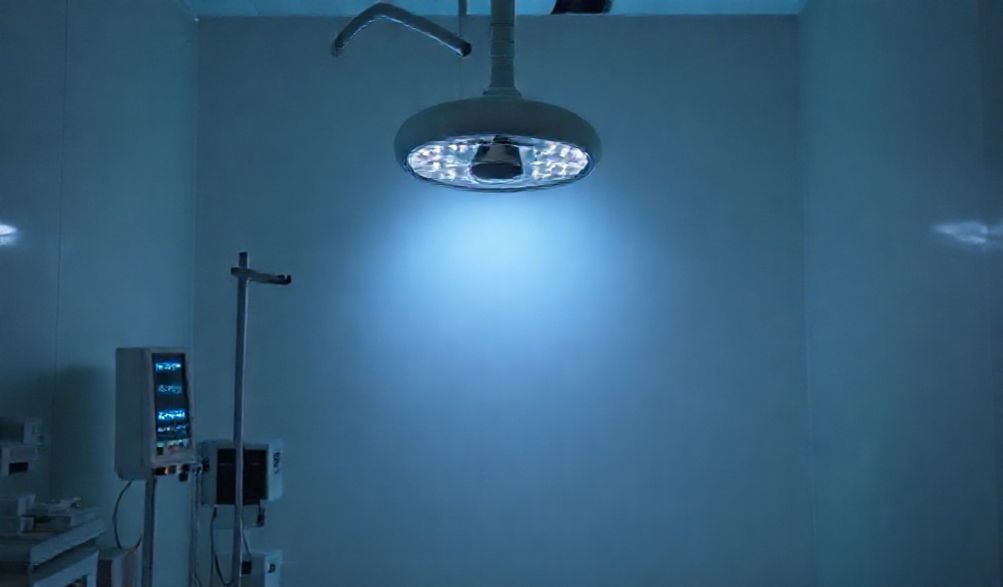
MedLED Headlights: A Complete Guide to Medical-Grade Illumination
Imagine this: It’s late at night, and a family member has a deep, concerning cut. As you try to assess the wound under the dim, shadow-casting light of a bathroom fixture, you struggle to see its true depth, to distinguish clean tissue from debris. Or picture a medical professional in a busy clinic, leaning over a patient during a minor procedure, their own head casting a frustrating shadow exactly where they need clear visibility. In moments where precision is paramount—from an emergency room to a home first-aid kit—the quality of your light is not a convenience; it’s a critical component of care.
This guide is designed to be your definitive resource on MedLED headlights. Authored with insights from professionals familiar with both clinical demands and lighting technology, we aim to demystify this essential tool. Whether you are a surgeon, dentist, EMT, nursing student, or a conscientious individual building a capable home medical kit, understanding what sets medical-grade illumination apart is key. This article will dissect what MedLED headlights are, explore their vital applications, detail the non-negotiable features to look for, and provide a clear framework for choosing the right model. Our goal is to empower you to make an informed decision based on safety, reliability, and performance, ensuring your light is always equal to the task.
What Are MedLED Headlights? Defining Medical-Grade Illumination
At first glance, a MedLED headlight might resemble the headlamp you’d use for camping or home repairs. But this similarity is only skin-deep. The “Med” in MedLED signifies a fundamental shift in design philosophy, engineering, and purpose, transforming a simple light source into a precision medical instrument.
Beyond the Standard Headlamp: The “Med” in MedLED
A standard LED headlamp is designed for general illumination—to light a path, fix a pipe, or read a book in a tent. Its priorities are often brightness (sometimes at the expense of color accuracy), battery life, and basic durability. A MedLED headlight, however, is engineered from the ground up for clinical observation and intervention. Its core tenets are:
- Reliability: Failure is not an option. Medical headlights are built with robust components to withstand the rigors of daily professional use, accidental drops, and exposure to cleaning agents.
- Sterility & Cleanability: In clinical environments, infection control is critical. MedLED units are designed with smooth, seamless housings that can be repeatedly wiped down with hospital-grade disinfectants without degrading. Some key components may even be autoclave-safe.
- Precision & Shadow Reduction: The optical system is crafted to provide even, focused light that minimizes the shadows cast by the user’s own head and hands—a common hindrance during procedures.
Core Technology: Why LED is Ideal for Medical Applications
The shift to LED (Light Emitting Diode) technology was a revolution for medical lighting, and for good reason. LEDs possess inherent qualities that make them uniquely suited for medical tasks:
- Cool Light: LEDs produce minimal infrared radiation, meaning they emit very little heat. This is crucial when working close to a patient’s skin, eyes, or sensitive tissues to avoid discomfort or thermal injury.
- Energy Efficiency & Longevity: LEDs consume far less power than traditional halogen or incandescent bulbs, translating to longer battery life for cordless freedom. They also boast lifespans of tens of thousands of hours, reducing downtime and replacement costs.
- Consistent Color Temperature & High CRI: This is perhaps the most critical advantage. LEDs can be engineered to produce a consistent, neutral white light. Coupled with a high Индекс цветопередачи (CRI), this ensures colors are rendered accurately. In a medical context, this allows a practitioner to reliably distinguish between arterial and venous blood, identify subtle tissue inflammation, or detect the true color of a rash—decisions where color accuracy directly impacts diagnosis and treatment.
Key Applications and Users of MedLED Headlights
The hands-free, directed illumination provided by MedLED headlights makes them indispensable across a wide spectrum of medical and caregiving scenarios.
Clinical and Surgical Settings
Here, MedLED headlights are vital tools for enhancing visualization and procedural accuracy.
* Dentistry: Dentists and hygienists use them to illuminate the deep, shadowy confines of the oral cavity during examinations, cleanings, and restorative work.
* Minor Outpatient Surgery: For procedures like suturing lacerations, removing cysts, or performing biopsies, a bright, shadow-free light source directed precisely by the surgeon’s gaze is invaluable.
* Wound Care & Nursing: Assessing wound beds, tracking granulation tissue, and performing precise dressing changes all require excellent light to monitor healing and detect early signs of infection.
* General Examinations: In ENT (Ear, Nose, Throat), dermatology, or primary care, a headlight allows for thorough, hands-free examination with consistent illumination.
Emergency Response and Field Medicine
In unpredictable, often low-light environments, reliable light is a lifeline.
* EMTs & Paramedics: At accident scenes or in the back of a moving ambulance, MedLED headlights provide crucial hands-free light for patient assessment, airway management, and initiating IV lines.
* Wilderness & Disaster Medicine: Where grid power is unavailable, a durable, long-running headlight is essential for performing care in tents, shelters, or remote locations. Durability and battery versatility (e.g., use of standard batteries) are key here.
Home Healthcare and Personal Care
While professional consultation is always paramount, a quality MedLED headlight can be a safe and useful tool for informed personal care.
* At-Home Wound Checks: For monitoring a healing surgical site or a child’s scrape under clear light.
* Minor First-Aid Tasks: Safely removing a splinter or inspecting an insect bite with precision and good visibility.
* Important Caution: These devices are for observation and assistance only. They do not replace professional medical judgment. Any concerning or worsening condition requires immediate consultation with a healthcare provider.
Essential Features to Look for in a Quality MedLED Headlight
Not all medical headlights are created equal. When evaluating models, prioritize these critical features that define true medical-grade performance.
Brightness and Beam Focus (Lumens & Spot/Flood Settings)
- Lumens: This measures total light output. For most close-up medical tasks, a range of 200 to 500 lumens is typically sufficient and avoids blinding glare. More isn’t always better; excessive brightness can cause eye strain for both user and patient.
- Adjustable Focus: The ability to switch between a focused spot beam (for illuminating a very small area like a tooth or stitch) and a wider flood beam (for examining a larger area like a wound or rash) is incredibly useful. Some models offer a smooth, variable zoom.
Color Temperature and CRI (Accuracy Over Aesthetics)
- Color Temperature: Measured in Kelvin (K), this describes the “warmth” or “coolness” of light. For medical use, a neutral white light (around 4000K to 5000K) is ideal. It mimics natural daylight without the yellow tint of warm light (<3000K) or the harsh blue cast of cool light (>6000K).
- Индекс цветопередачи (CRI): This is a non-negotiable specification. CRI measures a light source’s ability to reveal the true colors of objects compared to natural light. Aim for a CRI of 90 or higher. A high-CRI MedLED light ensures you are seeing accurate tissue colors, which is fundamental for correct assessment.
Ergonomics, Comfort, and Sterilization Capability
- Безопасность: You may wear this for hours. Look for a lightweight design, a padded, moisture-wicking headband, and good weight distribution to prevent neck strain.
- Стерилизация: Check the manufacturer’s guidelines. The housing should be IP-rated for water and dust resistance (e.g., IPX4 for splash resistance, higher for more protection). It must withstand cleaning with common disinfectant wipes or solutions. Never assume a headlight is autoclave-safe unless explicitly stated by the manufacturer.
Power Source and Runtime
- Rechargeable vs. Disposable: USB-rechargeable lithium-ion batteries are cost-effective and convenient for daily clinical use. However, for emergency or field kits, a model that can also operate on standard alkaline batteries (like AAA or AA) is a major advantage for long-term reliability and easy power replacement in the field.
- Runtime & Regulation: Look for information on runtime at a useful brightness level. A quality driver circuit will provide stable, consistent light output without dimming as the battery depletes, right up until it needs recharging.
How to Choose the Right MedLED Headlight: A Buyer’s Framework
With an understanding of the key features, use this practical framework to narrow your selection.
Assessing Your Primary Use Case
Create a simple priority list based on your main activities:
* Prolonged Clinical/Surgical Use: Top Priority: High CRI (>90), Superior Comfort, Rechargeability. Secondary: Adjustable focus, good runtime.
* Emergency/Field Response Kit: Top Priority: Durability, Battery Versatility (disposable + rechargeable), Water Resistance. Secondary: Good brightness, reliable runtime.
* Home Health & Personal Use: Top Priority: Ease of Use, Good CRI, Safe Cleanability. Secondary: Comfort, value.
Safety and Compliance Considerations
- Standards: Look for relevant IP (Ingress Protection) ratings for dust/water resistance. For devices marketed as medical instruments in the U.S., check for FDA registration (e.g., as a Class I medical device).
- Crucial Professional Advice: If you are purchasing for use within a hospital, clinic, or other institution, always consult your facility’s biomedical or procurement department first. They will have specific guidelines, approved vendor lists, and compliance requirements you must follow.
Budget vs. Investment: Balancing Cost and Quality
MedLED headlights range from affordable personal models to high-end professional systems. While budget is a factor, it’s vital to view a true medical headlight as a long-term professional investment. A failure during a critical moment has a cost far exceeding the price difference between a mediocre light and a reliable one. Prioritize reputable manufacturers known for quality and support.
Часто задаваемые вопросы (ЧЗВ) о фарах MedLED
Q: Can I use a regular camping headlamp for medical tasks?
О: In an absolute pinch, you could. However, it is strongly discouraged for planned use. Camping headlamps often have poor CRI (distorting colors), can emit significant heat, are not designed for easy sterilization with medical disinfectants, and their beam patterns often create harsh shadows. A MedLED headlight is purpose-built for the accuracy and safety required in medical scenarios.
Q: How important is a rechargeable battery for a medical headlight?
О: Для ежедневного клинического использования перезаряжаемый аккумулятор является чрезвычайно удобным и экономически эффективным решением. Однако для экстренных случаев или работы в полевых условиях, где зарядка может быть невозможна, модель, которая также может работать на стандартных одноразовых батареях или имеет съёмную/сменную перезаряжаемую батарею, обеспечивает критически важную резервную надёжность. Всегда имейте продуманный план обеспечения источника питания.
В: Что означает высокий индекс цветопередачи (CRI) и почему это важно?
О: CRI — это шкала от 0 до 100, которая измеряет, насколько точно источник света передаёт истинные цвета объектов по сравнению с естественным эталонным светом. Солнечный свет имеет CRI 100. Высокий CRI (90+) означает, что красный выглядит красным, синий — синим, а тонкие оттенки тканей, крови и кожи отображаются точно. Это крайне важно для различия здоровой и некротизированной ткани, выявления цианоза (синюшности кожи) или точной оценки воспаления.
В: Как правильно очищать и обслуживать мой налобный фонарь MedLED?
О: Всегда следуйте конкретным инструкциям производителя. Как правило, следует выключить и отсоединить устройство. Протрите внешний корпус и оголовье мягкой тканью, смоченной мягким дезинфицирующим средством (например, 70% изопропиловым спиртом или салфеткой больничного класса). Избегайте прямого распыления жидкости на устройство и следите, чтобы влага не попала в разъёмы или швы. Дайте полностью высохнуть на воздухе перед хранением или зарядкой. Никогда не погружайте устройство в воду, если это не предусмотрено его характеристиками, и никогда не стерилизуйте его в автоклаве, если производитель прямо не указывает, что это безопасно.
Заключение
Выбор MedLED headlight Это решение, выходящее за рамки простого выбора гаджета; речь идёт о выборе инструмента, который становится продолжением вашей заботы и наблюдательности. Как мы выяснили, правильный медицинский налобный фонарь обеспечивает гораздо больше, чем просто освещение — он даёт чёткость, надёжность и безопасность, необходимые для точной оценки и эффективного вмешательства. От светодиода с высоким CRI, обеспечивающего точную цветопередачу, до конструкции, позволяющей стерилизацию и обеспечивающей комфорт в течение всего дня, — каждая характеристика служит критически важной цели.
В качестве заключительного шага используйте изложенные здесь критерии в качестве контрольного списка. Сравните технические характеристики, изучите отзывы проверенных профессиональных пользователей в вашей области и отдавайте приоритет продукции авторитетных производителей, которые поддерживают своё оборудование чёткой документацией и сервисом. Инвестируя в надлежащее медицинское освещение, вы гарантируете, что в момент, требующий точности, ваше зрение — а следовательно, и ваши возможности — никогда не будут скомпрометированы.
p>