
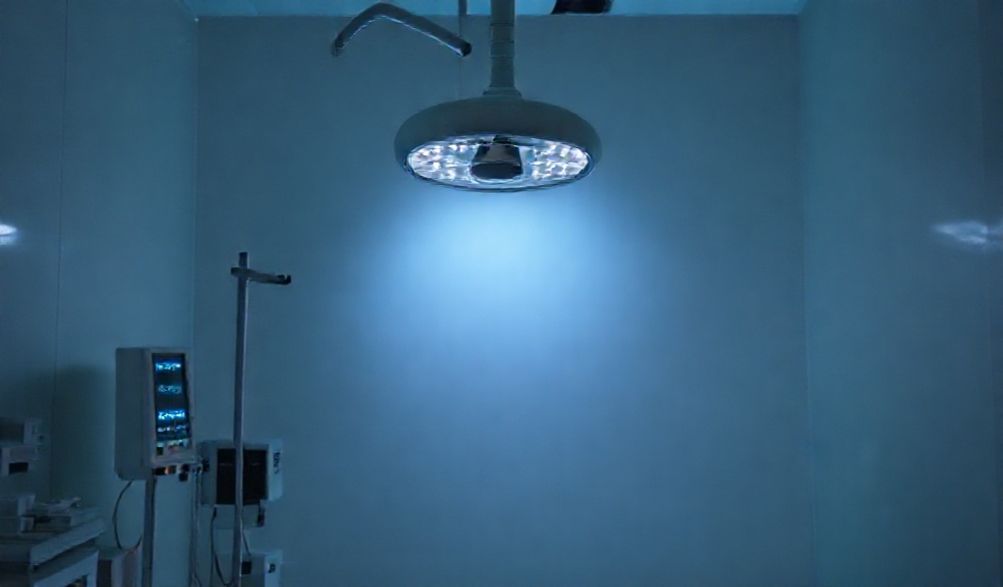
MedLED Headlight: Advanced Medical-Grade Illumination for Precision & Safety
In the high-stakes world of medicine, where a millimeter can be the difference between success and complication, clarity is non-negotiable. From the intricate dissection of a nerve in neurosurgery to the subtle assessment of tissue perfusion in a wound clinic, a clinician’s vision is their most fundamental diagnostic and procedural tool. Yet, this tool is only as good as the light that enables it. Standard overhead OR lights, while powerful, often create shadows, generate significant heat, and can struggle with color accuracy. In examination rooms, the lighting is frequently inadequate for detailed visualization. This universal challenge in medical environments demands a purpose-built solution: the MedLED headlight.
The MedLED headlight represents a paradigm shift in medical illumination. It is not merely a headlamp; it is a sophisticated, professional-grade system engineered from the ground up to meet the stringent demands of clinical and surgical practice. This guide is designed to cut through the technical jargon and provide a comprehensive, authoritative resource. We will delve into the core technology, tangible benefits, diverse applications, and critical selection criteria for MedLED headlights. Whether you are a surgeon seeking enhanced precision, a dentist requiring better intraoral visibility, an ER physician performing a critical exam, or a procurement officer responsible for equipping a facility, this post will illuminate the key considerations for investing in medical-grade headlight technology.
What is a MedLED Headlight? Defining Medical-Grade Illumination
At its essence, a MedLED headlight is a hands-free, LED-based illumination system specifically engineered for clinical, surgical, and diagnostic procedures. It transcends the category of a simple tool, representing a critical piece of procedural equipment designed to integrate seamlessly into the medical workflow.
The key distinction lies in its intent and construction. Unlike consumer camping headlamps or industrial work lights, a true MedLED headlight is developed with clinical outcomes as the primary driver. This often involves adherence to medical device standards (such as FDA clearance or CE marking as a Class I device), the use of biocompatible and cleanable materials that can withstand hospital-grade disinfectants, and a design philosophy centered on sterility, reliability, and user safety. It is instrumentation, not just illumination.
Core Components & Technology
Understanding the components demystifies why a medical-grade system outperforms generic alternatives.
-
Light Source (The LED): The heart of the system. Modern high-intensity LEDs offer a revolutionary combination of benefits: they emit a “cool” light with minimal infrared radiation (reducing heat on the patient and surgeon), possess an exceptionally long lifespan (often exceeding 50,000 hours), and are highly energy-efficient. Crucially, high-quality MedLEDs boast a Color Rendering Index (CRI) of 90 or above. A high CRI means the light source accurately reveals the true colors of tissues, allowing for precise differentiation between arterial and venous blood, identifying subtle signs of infection, or assessing tissue viability—a non-negotiable feature in medical settings.
-
Optics & Beam Patterns: Sophisticated optics shape the raw LED light into a usable medical tool. Systems offer focusable spots for penetrating deep cavities (like in sinus or dental surgery) or wide, homogeneous fields for illuminating broader surgical sites (like in plastic surgery). The goal is even light distribution without distracting hotspots or harsh edges that can cause eye strain, providing a “daylight” quality view of the operative field.
-
Power System: Reliability is paramount. Most professional systems utilize rechargeable Lithium-ion battery packs, prized for their high energy density and lack of memory effect. These packs are typically worn on an ergonomic belt or integrated into the headband, balancing weight away from the head. Run-times vary, with high-end systems offering 3 to 8+ hours of intense light on a single charge, often with hot-swappable batteries for indefinite use during marathon procedures.
-
Comfort & Ergonomics: A headlight that causes fatigue is a liability. Medical-grade systems prioritize balanced weight distribution (often aiming for a head-borne weight of less than 150 grams), fully adjustable headbands with secure yet comfortable fit systems, and breathable materials. All surfaces that contact the user or may be exposed to the field are designed for easy and repeated cleaning and disinfection.
Key Benefits of Using a MedLED Surgical or Examination Headlight
The investment in a MedLED system translates directly into tangible improvements in clinical practice, user well-being, and operational efficiency.
Enhanced Visual Accuracy & Precision
This is the primary benefit. By delivering bright, shadow-reduced, and color-accurate light directly into the line of sight, MedLED headlights dramatically improve visual clarity.
* Depth Perception & Detail: In deep, narrow cavities—common in ENT, spinal, or dental surgery—a focused beam provides essential depth cues and illuminates recesses that overhead lights cannot reach, minimizing the risk of collateral damage.
* Tissue Differentiation: The high CRI enables accurate assessment of tissue color, crucial for identifying ischemic boundaries, monitoring oxygenation, and distinguishing delicate anatomical structures. What you see is a truer representation of reality.
Improved Ergonomics & User Comfort
Physical strain is a significant concern for proceduralists.
* Reduced Fatigue: A lightweight, well-balanced headlight eliminates the need to crane the neck into awkward positions to catch the light from a fixed overhead source. This can significantly reduce cervical and upper back strain during long procedures.
* Hands-Free Operation: The fundamental advantage of a headlight is the liberation of the clinician’s hands. This allows for bimanual manipulation of instruments, steadying of tissues, and more efficient, fluid movements without constantly repositioning an external light source.
Reliability and Cost-Effectiveness
Beyond clinical performance, MedLED headlights offer practical advantages.
* Longevity & Lower TCO: With LED lifespans measured in decades of normal use, the recurring cost and downtime associated with replacing halogen or xenon bulbs are virtually eliminated. The “total cost of ownership” becomes favorable over time.
* Cool Operation & Efficiency: The minimal heat output enhances patient comfort (reducing tissue drying) and improves the surgeon’s comfort. Furthermore, the energy efficiency of LEDs means longer battery life and lower power consumption.
Primary Applications and Use Cases for MedLED Headlights
The versatility of MedLED technology makes it invaluable across a wide spectrum of medical disciplines.
Surgical Specialties
- Стоматология и челюстно-лицевая хирургия: Essential for illuminating the dark oral cavity, providing shadow-free light for restorative work, endodontics, and oral surgery.
- Otolaryngology (ENT): Critical for visualizing deep, narrow sinus passages, the larynx, and the inner ear. Depth of field and a focused spot are key.
- Пластическая и реконструктивная хирургия: Requires bright, wide, and homogeneous light for large surface areas like flaps and grafts, with accurate color rendering to assess tissue health.
- Neurosurgery & Spine Surgery: Demands intense, focused light for deep wound cavities and microsurgical techniques, often integrated with loupes or microscopes.
- Veterinary Surgery: Similar needs to human surgery, often in environments with less ideal fixed lighting infrastructure.
Clinical Examination & Procedures
- Emergency Medicine: For rapid, detailed trauma surveys, wound exploration, and procedures like laceration repair or foreign body removal at the bedside.
- Wound Care & Dermatology: Allows for close, magnified inspection of skin lesions, ulcer beds, and for guiding precise debridement.
- Mobile & Field Medicine: The portability and battery operation make it ideal for field clinics, disaster response, or home health visits.
Diagnostic and Technical Applications
- Офтальмология: Used as an adjunct to slit lamps or for external examinations.
- Dental Laboratories: Provides perfect illumination for detailed technical work on crowns, bridges, and dentures.
How to Choose the Right MedLED Headlight: A Buyer’s Guide
Selecting the appropriate system requires matching technical specifications to your specific clinical needs.
Critical Technical Specifications to Compare
- Luminosity (Lumens) & Lux: Lumens measure total light output; Lux measures intensity on a surface. For medical use, Lux at a working distance is more relevant. General examination may require 10,000-30,000 Lux, while microsurgery can demand 100,000-200,000 Lux or more.
- Beam Distance, Width, and Focus: Consider your typical working distance (e.g., 14″ for dentistry, 20″+ for open surgery). Does the system offer a variable focus from spot to flood? Is the beam pattern even?
- Цветовая температура и индекс цветопередачи (CRI): A color temperature of 4500K-5500K is often considered “daylight white.” Most importantly, insist on a CRI >90 for medical accuracy.
- Battery Life & Charging: Ensure the rated run-time at your required intensity exceeds your longest common procedure. Look for fast-charging and hot-swap capabilities for uninterrupted workflow.
Comfort, Fit, and Hygiene Considerations
- Эргономика: Try it on. Is it stable without being tight? Is the weight balanced? Can it be worn comfortably over glasses or loupes?
- Hygiene: The system must be compatible with your facility’s disinfection protocols. Are headband pads removable and cleanable? Is the light casing sealed against fluid ingress?
Durability, Warranty, and Support
- Build Quality: Look for robust construction. An IP rating (e.g., IP54) indicates protection against dust and water splashes.
- Гарантия и обслуживание: Medical equipment requires reliable support. A strong warranty (often 3+ years on the LED) and accessible, knowledgeable customer service from the manufacturer or distributor are essential.
Часто задаваемые вопросы (ЧЗВ) о фарах MedLED
Q1: Are MedLED headlights considered medical devices?
О: This varies by region and manufacturer. Many are designed and registered as Class I medical devices with regulatory bodies like the FDA (USA) or under the EU’s MDR/IVDR. Always verify the regulatory status and intended use claims provided by the manufacturer for compliance in your practice location.
Q2: How does LED light in a headlight benefit medical use over older halogen/xenon lights?
О: LEDs are superior in almost every way: they generate far less heat (reducing tissue drying and surgeon discomfort), last exponentially longer (50,000+ vs. 50-500 hours), reach full brightness instantly, consume less power for more light, and maintain a consistent color temperature throughout their lifespan.
Q3: What is a good battery life for a surgical headlight?
О: For most operating rooms, a minimum of 2-3 hours of runtime at maximum intensity is the baseline. Many advanced systems now offer 4-8 hours. For safety in long procedures, a system with hot-swappable batteries (allowing you to change the pack without turning off the light) is the gold standard.
Q4: Can the light intensity be adjusted, and why is that important?
О: Yes, dimmable control is a vital feature on professional models. It allows adaptation to different procedural depths, prevents blinding reflections off wet surfaces, helps avoid eye fatigue for the user, and is crucial for maintaining dark adaptation in a dimmed operating room.
В: Как правильно очищать и обслуживать мой налобный фонарь MedLED?
О: Strictly follow the manufacturer’s Instructions for Use (IFU). Generally, non-sterile components like the headband and light body can be wiped down with a hospital-grade disinfectant wipe. The optical lens should be cleaned gently with a soft, lint-free cloth, often with a specific lens cleaner. Never immerse the light core or battery unless explicitly stated as safe to do so.
Заключение
The MedLED headlight has evolved from a niche accessory to a cornerstone of modern clinical visualization. By providing brilliant, color-accurate, and hands-free illumination, it directly enhances procedural precision, improves clinician ergonomics, and supports better patient outcomes. The core decision factors are clear: prioritize high CRI and appropriate light intensity (Lux) for your tasks, demand ergonomic comfort for long-term use, and ensure the system is built for the rigors of a medical environment with proper hygiene protocols.
Ultimately, seeing is believing. While specifications provide a framework, the subjective experience of using a high-quality MedLED headlight—the clarity, the comfort, the control—is profound. We strongly encourage medical professionals and procurement teams to consult with specialized clinical equipment providers, review detailed specification sheets, and, most importantly, arrange for a hands-on trial or demonstration. Experience firsthand how advanced medical-grade illumination can illuminate not just the operative field, but also a path to greater confidence, efficiency, and safety in practice. In medicine, where vision is everything, the quality of your light is not a detail—it is a fundamental component of care.
p>