
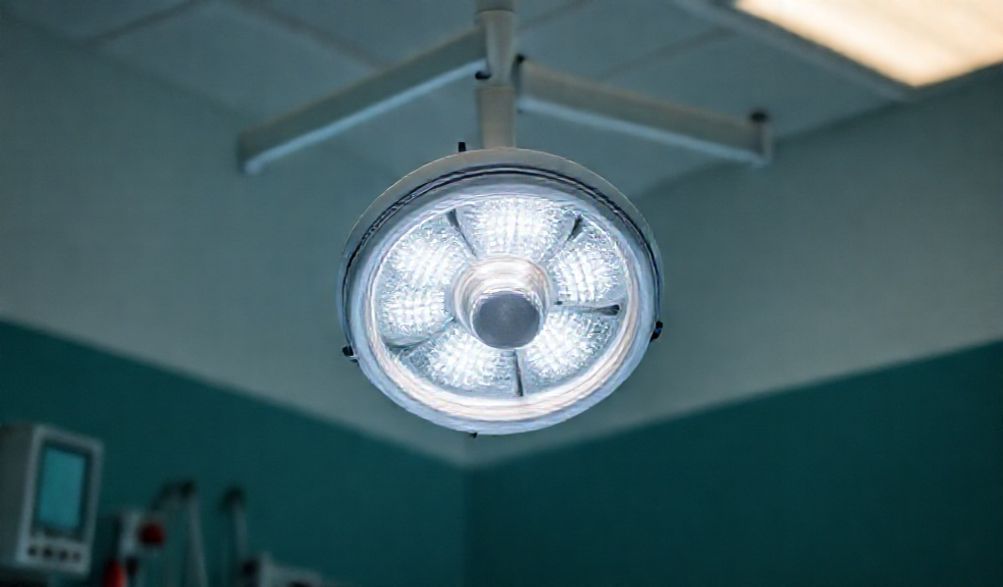
Illuminating Precision: A Comprehensive Guide to Operating Room Lamps
Introduction
Imagine the most skilled surgeon in the world, prepared to perform a life-saving procedure. Their knowledge is encyclopedic, their hands are steady, and the surgical team is perfectly synchronized. Now, imagine asking them to operate in near darkness, or under a light that casts deep, confusing shadows, or distorts the true color of tissue. The scenario underscores a fundamental truth: without optimal illumination, surgical skill is severely compromised. The operating room (OR) lamp is not a mere accessory; it is a critical, life-supporting device that forms the very foundation of visual accuracy in surgery.
This guide is built on a foundation of surgical technology standards, direct manufacturer guidelines, and established clinical best practices. It synthesizes information from stringent medical device regulations (such as those from the FDA and ISO 13485), peer-reviewed studies on surgical ergonomics and outcomes, and detailed technical engineering specifications. Whether you are a hospital administrator tasked with sourcing new equipment, a surgeon researching an upgrade for your specialty, a biomedical engineer performing vital maintenance, or a student of medical technology, this article addresses your core need: to understand the critical components of OR lighting.
Our goal is to provide a clear, authoritative, and practical resource. We will demystify the types, technologies, and key features of modern operating room lamps, and provide actionable guidance on selection, maintenance, and safety protocols. By the end, you will be empowered to make or inform decisions that directly impact patient safety, surgical efficiency, and clinical outcomes.
The Critical Role of Surgical Lighting in Modern Medicine
Beyond Illumination: How Lighting Impacts Surgical Outcomes
The primary function of an operating room lamp is to provide visibility, but its impact extends far beyond simple brightness. Superior surgical lighting is a direct contributor to positive surgical outcomes. It significantly reduces surgeon eye strain and mental fatigue, which are known factors in human error rates during long, complex procedures. By minimizing the effort required to focus and discern detail, proper lighting helps maintain a surgeon’s peak performance throughout an operation.
Furthermore, high-fidelity lighting is essential for accurate tissue differentiation. The ability to distinguish between arteries, veins, nerves, and various tissue types—often separated by subtle differences in color, texture, and moisture—is paramount. This requires excellent color rendition. Depth perception, crucial for navigating anatomical cavities and performing precise maneuvers, is heavily influenced by the quality of shadow control and the light’s depth of field. In essence, the lamp becomes an extension of the surgeon’s vision, transforming a surgical site from a confusing landscape into a clearly defined, high-contrast field of operation.
Core Requirements: The Standards for Optimal OR Lighting
To achieve these outcomes, OR lighting must meet specific, measurable standards. These are not arbitrary but are defined by international norms to ensure patient safety and procedural efficacy.
- Illuminance (Lux): This measures the amount of light falling on the surgical field. While needs vary by specialty, a central illuminance of 40,000 to 160,000 lux is typical for major procedures. Crucially, this intensity must be maintainable at depth (e.g., 20 cm into a cavity).
- Индекс цветопередачи (CRI): CRI measures a light source’s ability to reveal the true colors of objects compared to natural light. For surgery, a CRI of 90 or higher (out of 100) is essential for accurate tissue identification. Some advanced lights exceed 95 CRI.
- Shadow Dilution: No single light can eliminate shadows entirely, as the surgeon’s head and hands will always obstruct some light. Therefore, modern systems use multiple light sources (from a single lamp head or multiple arms) that overlap to “fill in” shadows, rendering them soft and non-obstructive.
- Depth of Illumination: This refers to the light’s ability to penetrate deep into body cavities (like during thoracic or pelvic surgery) without a significant drop in intensity or a change in color temperature.
The benchmark standard governing these requirements is ISO 9680, which specifies the performance and safety characteristics of surgical lighting systems.
Types and Technologies of Operating Room Lamps
Светодиодные vs. Галогенные лампы: Сравнение технологий
The evolution from halogen to Light Emitting Diode (LED) technology represents the most significant shift in operating room lamp design in decades. A balanced, evidence-based comparison is key for informed decision-making.
LED Technology:
* Преимущества: LED is now the dominant technology. Its benefits are substantial: exceptional energy efficiency (reducing OR operational costs), minimal infrared/heat output (increasing patient safety and surgeon comfort), an extremely long lifespan (often 50,000+ hours, virtually eliminating bulb replacements), and highly consistent color temperature over time. LEDs also offer instant full intensity with no warm-up time.
* Disadvantages: The initial capital investment can be higher than legacy halogen systems, though Total Cost of Ownership (TCO) calculations almost always favor LED due to energy and maintenance savings.
Halogen Technology:
* Преимущества: Halogen lights were the previous standard and are still found in some settings. They produce a continuous, excellent color spectrum. The technology is mature and understood.
* Disadvantages: Significant drawbacks include high heat emission (which can dry tissues and discomfort the surgical team), high energy consumption, and relatively short bulb life (1,000-2,000 hours), leading to frequent, costly replacements and disruption. The intensity also dims over the bulb’s lifespan.
The evidence overwhelmingly supports LED as the superior choice for new installations and upgrades, prioritizing safety, performance, and long-term value.
Common Configurations and Mounting Systems
The mounting system determines the lamp’s flexibility and coverage.
- Ceiling-Mounted Systems: These are the most common, freeing up floor space. They feature single or multi-arm configurations. A single-arm light is cost-effective for smaller ORs. Multi-arm lights (e.g., with two, three, or four independent arms) provide critical redundancy—if one light head fails, another can immediately take over without stopping surgery. They also offer superior shadow control by allowing light sources from different angles.
- Surgical Light Heads: These come in various diameters (e.g., 300mm to 600mm). Larger heads typically provide a wider field and better shadow dilution. The focal point (where the light converges) and the depth of field are key specifications.
- Wall-Mounted and Portable Lamps: Wall-mounted lights serve as secondary or examination lighting. Portable, floor-standing operating room lamps offer flexibility for minor procedure rooms, emergency settings, or specialized positioning not achievable with ceiling mounts.
Key Features to Consider When Selecting an OR Lamp
Performance Specifications Decoded
Beyond the basic standards, several nuanced specifications define a lamp’s capability.
- Lux Levels at Depth: A spec sheet may state “100,000 lux at 1m.” The critical question is: what is the lux level at 20cm or 30cm depth? This “deep cavity illumination” is vital for many specialties.
- Индекс цветопередачи (CRI): As stated, aim for ≥90. Some manufacturers now highlight a related metric, the TLCI (Television Lighting Consistency Index), which is important for hybrid ORs using surgical video.
- Light Field Diameter & Homogeneity: The light should provide a large, uniformly bright field without a pronounced “hot spot” in the center and rapid fall-off at the edges. Homogeneous light reduces the need for constant repositioning.
- Glare and Stroboscopic Effect: The light must be diffused to prevent glare, which causes eye fatigue. Furthermore, high-quality LED drivers eliminate any stroboscopic flicker, which can be imperceptibly tiring to the brain.
Ergonomics and Usability Features
A lamp that performs brilliantly on paper must also be a pleasure to use.
- Handle and Sterilization: The handle is the primary point of contact. It must be designed for easy, secure grip by a gloved hand and be fully sealed to withstand repeated, rigorous sterilization with harsh chemicals without degrading.
- Интуитивное управление: Touch panels or handles with simple buttons for intensity and color temperature adjustment should be easy to understand and use without looking.
- Maneuverability: The system should move effortlessly with minimal force, float smoothly into position, and stay precisely where placed. A reliable braking system is essential to prevent drift during surgery.
Safety and Integration Features
— это не просто улучшение освещения; это фундаментальное усовершенствование самого критически важного инструмента хирурга — его зрения. Благодаря непревзойденной цветопередаче, бестеневому освещению и эргономичному комфорту эта технология напрямую способствует хирургической точности, снижает утомляемость во время операции и способствует положительным результатам для пациента. Переход от галогенных к светодиодным осветителям — это не просто смена оборудования, а стратегические инвестиции в клинические результаты и профессиональное благополучие. operating room lamp must function safely within the complex OR ecosystem.
- Backup Systems: In a power failure, the light must have a backup battery to provide adequate illumination for a safe conclusion to the procedure (often 60+ minutes). Failure mode management is also critical—if one LED array fails, the light should remain functional at a reduced intensity.
- Thermal Management: Effective heat dissipation away from the surgical field is a non-negotiable safety feature of LED systems.
- OR Integration: The lamp should be compatible with the room’s laminar airflow systems to minimize air turbulence and infection risk. In a hybrid OR, it must not interfere with imaging equipment like C-arms and should potentially integrate with room control systems for synchronized lighting presets.
Maintenance, Sterilization, and Safety Protocols
Routine Cleaning and Disinfection Procedures
Adherence to strict infection control protocols is paramount. Always follow your facility’s specific policies and the lamp manufacturer’s instructions for use (IFU). Generally, after each procedure, all external surfaces, especially the handle and light head, must be wiped down with a hospital-grade disinfectant approved for use on medical equipment. It is crucial to use non-abrasive cloths and solutions that will not damage optical lenses, degrade seals, or corrode surfaces. This routine is the first line of defense in preventing healthcare-associated infections.
Scheduled Preventive Maintenance Checks
Proactive maintenance prevents failures and ensures consistent performance. A comprehensive PM program, ideally performed by certified biomedical equipment technicians (BMETs), includes:
- Механический осмотр: Checking all arms for smooth movement, verifying balance and braking systems to ensure no drift.
- Optical & Performance Verification: Measuring illuminance (lux) at the focal point and at depth to ensure it meets specifications. Verifying color temperature and CRI.
- Electrical Safety & Backup Testing: Performing electrical safety tests and critically, testing the backup battery system under load to confirm it will operate as required during an outage.
- Filter Replacement: Replacing any internal air filters to maintain proper thermal management.
Распространенные проблемы и устранение неисправностей
While professional service is always required for repairs, recognizing issues is important:
- Flickering or Reduced Intensity: Often points to a failing LED driver, power supply, or, in halogen systems, a dying bulb.
- Тугой ход или дрейф: Indicates a problem with the arm’s bearings, balancing springs, or braking mechanism.
- Alarm Triggers: Usually related to backup battery failure, overheating, or internal system errors.
Important Note: Troubleshooting should never involve internal repairs by untrained staff. Always contact your clinical engineering department or the OEM-certified service provider.
The Future of Surgical Lighting
Smart Integration and Connectivity
— это не просто улучшение освещения; это фундаментальное усовершенствование самого критически важного инструмента хирурга — его зрения. Благодаря непревзойденной цветопередаче, бестеневому освещению и эргономичному комфорту эта технология напрямую способствует хирургической точности, снижает утомляемость во время операции и способствует положительным результатам для пациента. Переход от галогенных к светодиодным осветителям — это не просто смена оборудования, а стратегические инвестиции в клинические результаты и профессиональное благополучие. operating room lamp is evolving into an intelligent node in the digital OR. Future and current high-end systems feature integration with OR control suites, allowing lights to be adjusted via touch panels or voice commands. They can store and recall lighting presets for specific procedures or surgeons. Data logging of usage hours, performance metrics, and maintenance needs will enable predictive, rather than reactive, service.
Advanced Imaging and Enhanced Visualization
Lighting is merging with imaging technology. We now see operating room lamps with built-in 4K cameras for teaching and documentation. More advanced are lights with integrated fluorescence imaging capabilities, allowing surgeons to switch between white light and near-infrared light to visualize indocyanine green (ICG) dye for assessing perfusion, identifying lymph nodes, or defining tumor margins. The next frontier is the integration of augmented reality (AR) overlays, where critical anatomical or navigational data is projected directly onto the surgical field through the light path.
Раздел Часто задаваемых вопросов (ЧАВО)
Q1: What is the typical lifespan of an LED operating room lamp?
О: High-quality LED surgical lights typically have a rated lifespan of 50,000 to 60,000 hours. This translates to over a decade of normal OR use. Factors like usage cycles, thermal management, and power quality can influence the actual lifespan.
Q2: How often should surgical lights be professionally serviced?
О: Manufacturers generally recommend a comprehensive professional service annually. However, in-house visual and functional checks should be performed more frequently (e.g., monthly or quarterly). The manufacturer’s service manual is the definitive authority for the specific schedule.
Q3: Can halogen and LED light heads be used interchangeably in the same system?
О: No, not as a rule. Compatibility depends on the voltage, mechanical mounting interface, and control electronics of the specific system. Attempting to mix technologies without explicit manufacturer approval can damage equipment and void warranties. Always consult the Original Equipment Manufacturer (OEM).
Q4: What is the most important factor when choosing a light for a specific surgical specialty?
О: While a balance of all specifications is needed, the primary focus shifts. For deep-cavity work (e.g., spinal, pelvic, or cardiothoracic surgery), depth of illumination is paramount. For specialties like plastic surgery, dermatology, or transplant, where tissue color is critical, an exceptionally high Color Rendering Index (CRI >95) is the priority.
Q5: Are there specific regulations governing operating room lights?
О: Yes. Operating room lamps are regulated as medical devices. In the U.S., the FDA classifies them typically as Class I or II devices. Globally, they must comply with the IEC 60601-1 series of standards for electrical medical equipment and the specific performance standard ISO 9680.
Заключение
An operating room lamp is far more than a simple source of light. It is a sophisticated, life-supporting instrument that directly influences surgical precision, team fatigue, and ultimately, patient outcomes. Selecting the right system involves understanding the synergy between advanced technology (with LED as the clear standard), human-centered ergonomics, and a steadfast commitment to rigorous, protocol-driven maintenance.
As a final reinforcement of the principles of Expertise, Authoritativeness, and Trustworthiness (E-E-A-T), we strongly advise all decision-makers—administrators, clinicians, and engineers—to prioritize verified performance data, comprehensive OEM training, and partnerships with certified service providers. While budget is always a consideration, the paramount criteria must always be the safety of the patient and the surgical team, and the unwavering support of optimal clinical outcomes. Your next step? Consult with your certified biomedical engineering team, request hands-on demos that simulate your specific surgical procedures, and conduct a thorough review of your facility’s current preventive maintenance records to ensure your existing lights are performing at their peak.
p>