
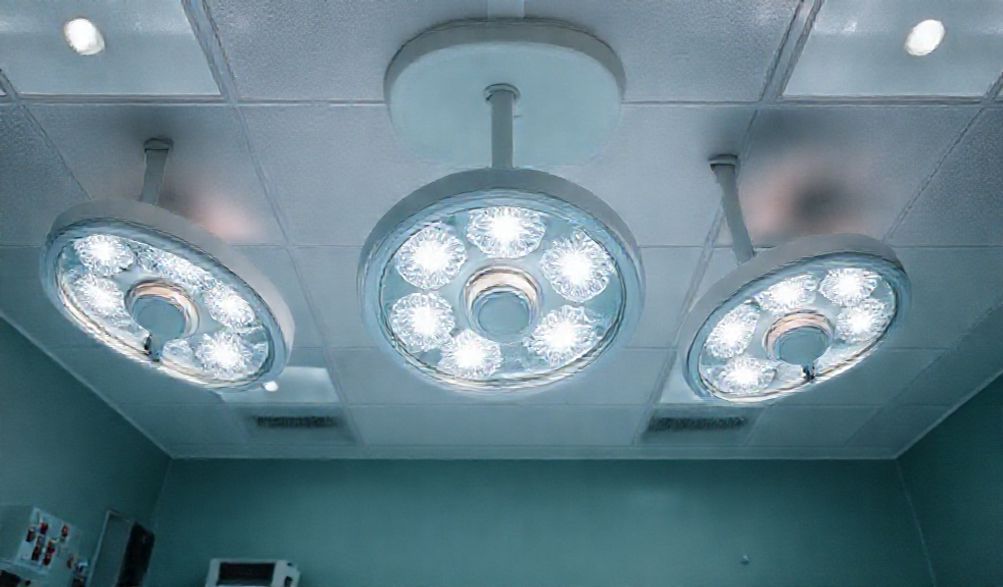
Operating Room Lights: A Comprehensive Guide to Surgical Lighting Technology
In the high-stakes environment of an operating room, where a millimeter can be the difference between success and complication, every element is meticulously engineered for precision. While advanced imaging and robotic systems often capture the spotlight, one fundamental technology remains the unsung hero of every procedure: surgical lighting. More than just “bright lights,” modern operating room lights are sophisticated medical devices designed to create an optimal visual field, directly impacting surgical accuracy, surgeon well-being, and ultimately, patient safety.
This guide is built on a foundation of expert knowledge, synthesizing insights from clinical engineering principles, leading manufacturer data, and established surgical protocols. Whether you are a hospital procurement officer evaluating capital equipment, a facility manager overseeing OR maintenance, a medical student curious about the tools of the trade, or a patient seeking to understand the intricacies of your care environment, this article aims to illuminate the critical role of this technology. We will delve into the core principles, advanced features, selection criteria, and essential maintenance protocols for operating room lights, empowering you to make or understand decisions that foster optimal surgical environments.
The Critical Role of Surgical Lighting in Modern Medicine
Surgical lighting’s primary function transcends simple visibility. It is a tool for visual clarity, designed to meet the extreme demands of the human visual system during prolonged, intricate tasks. Poor lighting can lead to eye strain, misinterpretation of tissue morphology, and increased operative time—all of which are risk factors for patient outcomes.
Beyond Illumination: How Lighting Impacts Surgical Outcomes
The connection between lighting and surgical performance is direct and multifaceted:
- Reducing surgeon eye strain and Fatigue: Surgeons operate for hours under intense concentration. Lighting that causes glare, has poor color rendering, or creates harsh shadows forces the eye muscles to constantly adjust, leading to fatigue. This cognitive and visual fatigue can impair decision-making and fine motor skills. Modern lights are designed to provide homogeneous, comfortable illumination that minimizes these stressors.
- Enhancing Depth Perception and Tissue Differentiation: Surgery is a three-dimensional endeavor. Distinguishing between a blood vessel, a nerve, and a layer of fascia relies on subtle differences in color, texture, and contour. Lighting with a high Color Rendering Index (CRI) accurately reproduces these subtle hues, allowing for precise identification. Furthermore, the quality of light directly affects depth perception within a cavity, enabling the surgeon to gauge distances and relationships between structures accurately.
Core Principles: Understanding Shadow Management and Light Field
Two fundamental principles define effective surgical lighting: deep-cavity illumination and shadow management.
- Deep-Cavity Illumination: Unlike illuminating a flat surface, surgery often involves working deep within a body cavity. The light must penetrate this depth without being obstructed by the surgeon’s head, hands, or instruments. This is achieved through strategic optical design and positioning.
- The Principle of “Shadow Dilution”: A single point of light creates hard, obstructive shadows. Modern surgical lights use multiple LED modules or reflectors arranged in a ring or array. Each acts as an individual point source. When these multiple light paths converge on the surgical site, the shadow cast by an instrument from one source is filled with light from the others. This “dilutes” the shadow, rendering it soft, faint, and non-disruptive. The surgeon’s view remains clear even when their hands or tools enter the field.
Key Technologies in Modern Operating Room Lights
The evolution from incandescent bulbs to today’s systems represents a leap in control, efficiency, and integration.
LED Dominance: Benefits Over Traditional Halogen and Metal Halide
Light Emitting Diode (LED) technology has become the unequivocal standard, replacing halogen and metal halide sources for compelling reasons:
- Energy Efficiency & Longevity: LEDs consume significantly less power and have an operational lifespan of 50,000-60,000 hours, compared to 1,000-2,000 for halogens. This drastically reduces energy costs and the frequency and cost of bulb replacements.
- Reduced Heat Output: Traditional lights emitted substantial infrared radiation, which could dry out exposed tissue and cause discomfort for the surgical team. LEDs produce minimal heat, enhancing patient safety and OR comfort.
- Superior Color Control & Stability: LEDs offer instant, flicker-free illumination at full intensity. Their color temperature can be precisely tuned and adjusted electronically, allowing surgeons to select a warm or cool light based on the procedure, without the color shift or degradation experienced over the life of a halogen bulb.
Advanced Optical Systems and Light Guides
The light source is only part of the equation. The optical system—the reflectors, lenses, and guides—shapes the raw light into a usable surgical tool.
- Shaping the Light Field: Complex parabolic reflectors and specialized lenses collimate and direct the light. The goal is to create a large, homogeneous field of even intensity. The “light field” is often described by its diameter at a specific distance (e.g., a 30cm field at 1m). A good system maintains a consistent intensity (lux) across the entire central field, with a gradual fall-off at the edges, preventing “hot spots” that can cause glare.
- Homogeneous Light Distribution: This evenness is critical. It ensures that no matter where in the illuminated area the surgeon is working, the tissue is presented with the same clarity and color accuracy, eliminating the need for constant repositioning.
Integration with Digital Systems
The modern surgical light is becoming a connected node in the digital OR ecosystem.
- Compatibility with Imaging: Light heads now often feature integrated high-definition cameras for teaching, telemedicine, and documentation. More advanced systems are designed to work in harmony with fluorescence imaging (e.g., for angiography or cancer margin detection), with modes that switch to specific non-visible wavelengths.
- Intelligent Controls: Touchscreen panels allow for the storage of personalized settings for different surgeons or procedure types. Lights can be programmed to automatically adjust color temperature or intensity at different stages of an operation and can often be controlled via the OR’s central touch panel or even voice commands.
Essential Features to Evaluate When Selecting OR Lights
Selecting the right surgical light requires balancing a suite of performance metrics with practical ergonomic and safety considerations.
Illumination Quality Metrics
These are the quantifiable specs that define the light’s performance.
- Lux/Lumen Output: Lux measures illuminance (light falling on a surface). Surgical lights typically deliver between 40,000 and 160,000 lux at the center of the field, with 100,000+ lux being common for high-demand procedures. The required intensity varies by specialty; neurosurgery and microsurgery demand the highest levels.
- Индекс цветопередачи (CRI): This is a non-negotiable metric. CRI measures a light source’s ability to reveal the true colors of objects compared to natural light. For surgery, a CRI >90 (and ideally >95) is essential. A low CRI can make oxygenated blood, bile, and subtle tissue variations harder to distinguish.
- Color Temperature: Measured in Kelvin (K), this describes the “warmth” or “coolness” of white light. Adjustable ranges (e.g., 3000K to 6700K) are valuable. A warmer light (3000-4000K) may be preferred for abdominal surgery for better contrast in red tissue, while a cooler, bluer light (5000-6700K) can enhance visual acuity and is often likened to daylight.
Mechanical Design and Ergonomics
A light with perfect specs is useless if it’s difficult to position or maintain.
- Maneuverability: The light must have sufficient reach and articulation to cover any position on the operating table without obstructing the team. Counterbalanced arms should move smoothly and stay precisely where positioned, even with heavy light heads. “Touch-to-position” functionality, where a gentle nudge repositions the light, is a key ergonomic feature.
- Sterilization & Cleanability: The light is a frequent contact point. Its design must be seamless, without joints or crevices that harbor pathogens. All surfaces must withstand daily cleaning with harsh disinfectants like hydrogen peroxide without corroding or degrading. Anti-glare coatings on handles are also important.
- Fail-Safe Systems: Redundancy is critical for patient safety. Look for lights with multiple, independent LED modules so the failure of one does not plunge the field into darkness. An integrated battery backup that provides at least 30 minutes of illumination during a power failure is a standard and vital requirement.
Installation, Maintenance, and Safety Protocols
Proper implementation and upkeep are as important as the initial selection.
Planning for Installation: Ceiling Structure and OR Layout
Installation is not an afterthought. The OR’s physical structure must support the system.
* Track Systems vs. Single-Point Mounts: Track systems allow multiple light heads to be shared between ORs or positioned with great flexibility along a ceiling rail. Single-point mounts are fixed to a central ceiling column. The choice depends on OR size, surgical workflow, and budget.
* Structural Load: The ceiling must bear the weight of the light, its support system, and a safety factor. A professional structural assessment is mandatory.
Routine Maintenance Schedule for Peak Performance
Proactive maintenance ensures consistent performance and infection control.
* Cleaning Procedures: Strict protocols for daily and post-procedure cleaning must be followed using manufacturer-approved agents to prevent cross-contamination.
* Performance Checks: Clinical engineering should perform regular checks (at least annually) to verify lux output, color temperature, and CRI are within specification. A monthly visual check by OR staff for dirt, damage, or smooth movement is also recommended.
Compliance and Safety Standards
Operating room lights are regulated medical devices.
* Relevant Standards: Key international standards include IEC 60601-2-41, which specifically covers the safety and essential performance of surgical luminaires. Compliance with regional standards like UL (USA) or CSA (Canada) is also required for market access.
* Manufacturer Certification: Always verify that equipment carries the necessary certifications (CE mark, FDA clearance, etc.). Manufacturer support, training, and access to clinical validation studies are components of E-E-A-T (Expertise, Authoritativeness, Trustworthiness) that should factor into procurement decisions.
The Future of Surgical Lighting
The trajectory points toward greater intelligence and integration.
* Smart OR Integration: Lights will act as IoT sensors, automatically adjusting based on the phase of surgery, the specific instrument in use, or inputs from other OR devices, optimizing the environment without surgeon intervention.
* Advanced Imaging & AR Overlays: The next frontier is the fusion of light with patient-specific data. Imagine a light that can project a pre-operative MRI scan or tumor margins directly onto the surgical site as an augmented reality overlay, guided by real-time tracking, turning the light into a direct surgical navigation aid.
Раздел Часто задаваемых вопросов (ЧАВО)
Q: What is the typical lifespan of an LED operating room light?
О: Most high-quality LED surgical lights have a lifespan of 50,000 to 60,000 hours, significantly longer than traditional sources, reducing long-term costs.
В: Как часто следует обслуживать или калибровать хирургические светильники?
О: Manufacturers recommend a professional service check annually by clinical engineering. Daily cleaning and a monthly visual/functional check by OR staff are standard.
Q: Can operating lights be used for all types of surgery?
О: While general surgery lights are versatile, specialized procedures (e.g., neurosurgery, ophthalmology, cardiac) may benefit from lights with specific focal spots, higher intensity, or integrated cameras and are often served by dedicated specialty lights.
Q: What is the most important factor in choosing an OR light?
О: There is no single factor. A combination of excellent shadow reduction, high CRI (>90), appropriate and adjustable intensity, and reliable, ergonomic design is critical. The choice should ultimately match the specific needs and workflows of the surgical specialty.
Q: Are there specific infection control concerns with OR lights?
О: Yes. Lights are high-touch devices. They must have a seamless, cleanable design with no crevices. All surfaces must withstand harsh disinfectants without degradation, and handles should be designed to minimize glare and be easy to wipe down.
Заключение
Operating room lights have evolved from simple illuminators into intelligent, ergonomic, and indispensable surgical instruments. Their role in enabling precision, safeguarding patient tissue, and preserving surgeon stamina is foundational to modern surgical care. This journey from bulb to integrated system underscores a critical truth: investing in quality surgical lighting—backed by robust clinical evidence, stringent safety standards, and reliable manufacturer support—is a direct investment in superior patient outcomes and enhanced surgical team performance. For those responsible for specifying this vital equipment, the path forward involves consulting closely with clinical end-users and engineering teams, reviewing peer-validated studies, and, crucially, arranging hands-on demonstrations from reputable manufacturers. There is no substitute for experiencing firsthand how the right light can illuminate the path to a successful operation.
p>