
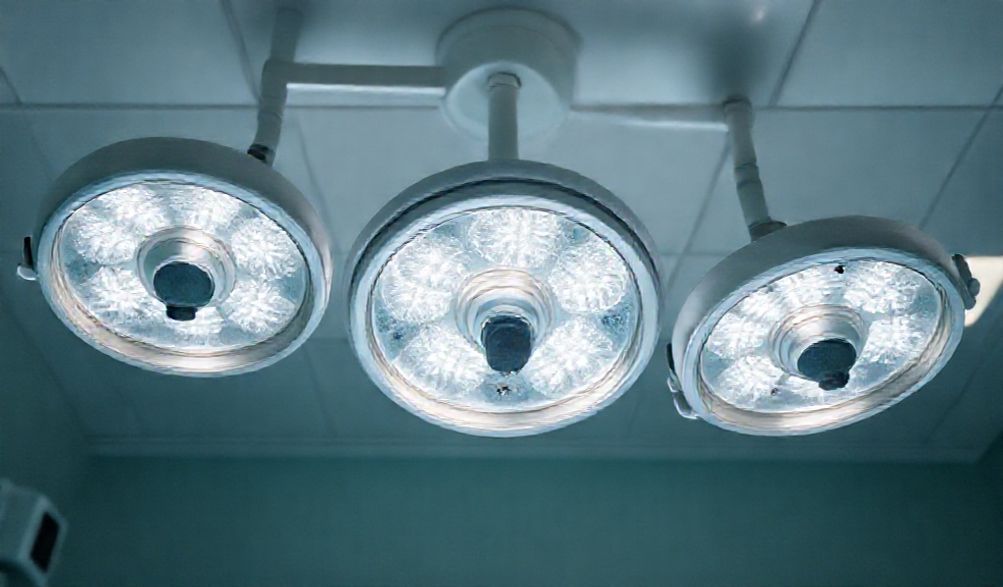
Overhead Surgical Lights: A Guide to Technology, Selection & Safety in the Operating Room
What if the single most important tool for a surgeon isn’t a scalpel, but the light that illuminates the surgical field? While scalpels, clamps, and imaging systems often steal the spotlight, the quality of illumination is the foundational element upon which every precise incision, delicate dissection, and critical decision is made. In the high-stakes environment of the modern operating room (OR), overhead surgical lights are far more than simple lamps; they are sophisticated, life-critical medical devices that directly influence procedural success, patient safety, and surgical team performance.
Optimal surgical illumination is non-negotiable for differentiating subtle tissue variations, achieving hemostasis, and navigating complex anatomies. Poor lighting can lead to eye strain, increased procedural time, and, most critically, a higher risk of error. This guide serves as a comprehensive, evidence-based resource for healthcare administrators, facility managers, clinical engineering teams, and procurement specialists tasked with the crucial responsibility of evaluating, selecting, and maintaining these vital systems. We will illuminate the core technologies, provide a structured framework for selection, outline essential safety protocols, and explore the future of OR lighting.
The Critical Role of Illumination in Modern Surgery
Beyond Basic Lighting: How Surgical Lights Impact Outcomes
The connection between superior illumination and positive surgical outcomes is well-documented in clinical literature. Modern overhead surgical lights are engineered to provide more than just brightness; they deliver a specific quality of light that enhances human visual performance under demanding conditions.
- Surgical Accuracy and Error Reduction: A well-illuminated, shadow-controlled field allows surgeons to perceive depth, texture, and color with high fidelity. This is paramount for tasks like identifying bile ducts during a cholecystectomy, distinguishing tumor margins from healthy tissue in oncology, or suturing microvasculature in plastic and reconstructive surgery. Studies have shown that improved illumination can reduce visual task completion time and error rates, directly contributing to patient safety.
- Tissue Differentiation and Color Rendering: The human body is a palette of reds, pinks, yellows, and blues. Accurate color representation is vital. For instance, differentiating between oxygenated arterial blood and deoxygenated venous blood, or identifying a cyanotic bowel, relies on the light source’s ability to render colors truthfully. This is quantified by the Color Rendering Index (CRI), a metric where high-fidelity surgical lights excel.
- Shadow Management: Unlike a single-point light source that creates harsh, obstructive shadows from hands and instruments, advanced surgical lights use multiple LED point sources and specialized reflector optics. This technology creates “shadow dilution,” where remaining shadows are soft, diffuse, and non-disruptive, ensuring the surgical site remains consistently visible.
Ergonomics and Surgeon Well-being: Reducing Fatigue and Strain
Surgeons and surgical staff often work in static, hunched positions for hours. The lighting system plays a significant role in their physical well-being and sustained focus.
- Reducing Visual Fatigue: Glare, excessive contrast, and poor color quality force the eye muscles to work harder, leading to headaches, dry eyes, and diminished concentration. Anti-glare designs and consistent, homogenous light reduce this strain, helping the team maintain peak visual acuity throughout long procedures.
- Promoting Better Posture: Lights that are difficult to position or that require constant readjustment cause surgeons to twist and strain. Modern systems offer effortless, balanced maneuverability with intuitive controls, allowing the light to be positioned perfectly without forcing the user into an awkward posture. This ergonomic consideration is a key factor in reducing musculoskeletal injuries among surgical professionals.
Core Technology & Features of Advanced Surgical Lights
LED Technology: The New Standard for Efficiency and Performance
The shift from halogen and metal halide to Light Emitting Diode (LED) technology represents the most significant advancement in surgical lighting in decades. LEDs are now the unequivocal standard, offering a suite of benefits:
- Cool Light Output: LEDs produce minimal infrared (IR) and ultraviolet (UV) radiation. This “cold light” drastically reduces radiant heat directed at the surgical site, minimizing tissue desiccation (drying) and improving patient outcomes, especially in open-cavity surgeries.
- Exceptional Energy Efficiency & Longevity: LEDs consume up to 80% less energy than traditional bulbs and have a lifespan exceeding 50,000 hours. This translates to massive operational cost savings on electricity and bulb replacements.
- Consistent Color Temperature: LEDs provide stable, consistent color temperature (typically daylight-balanced around 4000K-4500K) throughout their entire lifespan, with no color shift or degradation over time. This reliability is crucial for consistent visual conditions.
Understanding Key Lighting Metrics
Evaluating surgical lights requires understanding specific technical parameters. Here’s what matters most:
- Illumination Intensity (Lux): Measured in lux (lumens per square meter), this indicates the brightness at the surgical field. While sufficient intensity is vital (often 40,000 to 160,000 lux at the center), the quality and evenness of that light are more important than maximum peak output alone.
- Индекс цветопередачи (CRI): This metric, on a scale of 0-100, measures a light source’s ability to reveal the true colors of objects compared to natural light. For surgery, a CRI of 90 or higher is essential for accurate differentiation of tissues, organs, and fluids.
- Shadow Reduction: This is a performance characteristic, often described as a percentage or qualitatively. It results from the engineered placement of multiple LED modules and reflectors to fill in shadows cast by the surgeon’s head and hands.
- Depth of Illumination: This refers to the light’s ability to maintain intensity and focus deep within a cavity (e.g., during pelvic or spinal surgery). It is a function of the optical design and is critical for deep-field procedures.
Sterility and Integration: Handling, Draping, and Connectivity
The surgical light must function within the sterile field of the OR.
- Стерильные рукоятки: Light heads feature specially designed handles that can be easily covered with a sterile transparent drape or are themselves sterilizable, allowing the surgeon or assistant to reposition the light during the procedure without breaking sterility.
- Ease of Draping: The physical design should facilitate quick and secure draping, with smooth surfaces and minimal crevices where drapes can snag.
- OR Integration: Increasingly, surgical lights are becoming hubs for technology. They may incorporate built-in 4K cameras for documentation and teaching, offer ports for specialty light sources (like fluorescence imaging for cancer margin detection or angiography), and connect to the hospital network to stream data and video to displays throughout the OR or beyond.
How to Select the Right Overhead Surgical Light: A Buyer’s Checklist
Assessing Your Surgical Department’s Needs
A one-size-fits-all approach does not work. Begin with a clinical needs assessment:
- Профиль выполняемых операций: Does your facility specialize in high-depth neuro/spine surgery, broad-field trauma, or microsurgical procedures? Each has different lighting priorities (depth of field vs. field width vs. shadow control).
- OR Suite Configuration: Consider ceiling height, the presence of other ceiling-mounted equipment (booms, monitors), and the planned workflow. Will you need a single large light, multiple smaller lights, or a combination?
- Infrastructure: Evaluate the structural capacity of the ceiling, electrical supply, and data connectivity requirements for integrated systems.
The Procurement Evaluation Framework
Move beyond brochures with a structured comparison. Create a checklist table to evaluate competing models:
| Evaluation Category | Key Criteria to Compare |
| :— | :— |
| Технические характеристики | Central Lux & Field Diameter, CRI Value, Shadow Reduction Performance, Depth of Illumination, Color Temperature Stability. |
| Mechanical Performance | Range of Motion (X-Y-Z), Ease of Maneuverability & Balance, Reach from Mounting Point, Number of Articulating Arms. |
| Safety & Compliance | Adherence to IEC/ISO 60601-2-41 (Essential Safety & Performance), FDA 510(k) or CE Marking, Risk of Thermal Injury, Failure Mode Protections. |
| Общая стоимость владения (TCO) | Initial Purchase Price, Estimated Energy Consumption, Expected Lifespan/LED Warranty, Cost of Service Contracts & Replacement Parts. |
| Usability & Sterility | Handle Design, Ease of Draping, Control Panel Logic, Noise Level of Cooling Fans. |
The Importance of Demos and Clinical Trials
This is the most critical step in the selection process. Manufacturer specifications are a starting point, but real-world performance is everything.
- Insist on an In-OR Demonstration: Arrange for the lights to be installed in a real or mock OR setting. Involve the key stakeholders: surgeons, surgical nurses, and sterile processing staff.
- Simulate Real Procedures: Use surgical trainers, tissue models, or simulated cavities to test depth of field, shadow control, and color rendering under realistic conditions.
- Gather Structured Feedback: Have the clinical team evaluate ease of use, positioning, glare, and overall satisfaction. Their direct experience is invaluable data that cannot be gleaned from a datasheet.
Installation, Maintenance, and Safety Protocols
Professional Installation and Ceiling Considerations
Surgical lights are heavy, complex devices. Their installation is not a typical electrical job.
- Certified Installers: Installation must be performed by technicians certified by the manufacturer or authorized dealers. They understand the specific structural, electrical, and safety requirements.
- Структурную целостность: The ceiling mount must be secured to building structural members, not just ceiling tiles, to handle the dynamic loads as the light is moved and positioned.
Routine Maintenance for Optimal Performance and Longevity
Proactive maintenance ensures safety, performance, and maximizes the return on your investment.
- Ежедневно/перед использованием: Visual inspection for physical damage. Wiping down non-sterile surfaces with a hospital-grade disinfectant compatible with the materials.
- Еженедельно/ежемесячно: Checking the smoothness of movement and balance. Inspecting sterile handles and draping surfaces for integrity.
- Annual/Bi-annual: Must be performed by qualified clinical engineering staff or a service technician. This includes verification of light output (lux) and color temperature, inspection of all mechanical joints and springs, electrical safety testing, and replacement of air filters if present. Always use OEM-approved parts.
Ensuring Ongoing Safety and Compliance
- Performance Verification: Regularly scheduled testing ensures the light meets its original specifications. A drop in lux output or a shift in color temperature can degrade surgical conditions.
- Контроль инфекций: Strictly adhere to the manufacturer’s Instructions for Use (IFU) for cleaning and disinfection. Using incompatible, harsh chemicals can degrade seals, plastics, and optical coatings, leading to premature failure and potential safety hazards.
Будущее хирургического освещения: новые тенденции
Integration with Digital OR and Imaging
The surgical light is evolving into a central data and imaging node.
- Built-in Visualization: Lights with integrated 4K/8K cameras provide a seamless, unobstructed view for recording, tele-mentoring, and hybrid OR applications.
- Advanced Imaging Modalities: Fluorescence Image-Guided Surgery (FIGS) is a major trend. Special LED modules can excite fluorescent dyes, allowing surgeons to visualize blood flow, identify cancerous tissues, or assess organ perfusion in real-time, with the overlay displayed on nearby monitors.
Smart Lighting and Automation
Intelligence is being embedded into the lighting system itself.
- Voice Control & Presets: Surgeons can adjust light position or switch to pre-programmed lighting modes (e.g., “cardiac,” “superficial,” “deep cavity”) using voice commands or touchless controls, enhancing sterility and efficiency.
- Automated Alignment: Future systems may use sensors and cameras to automatically adjust the light focus and position based on the surgical field or tracked instruments, providing hands-free, optimal illumination.
Frequently Asked Questions (FAQ) About Overhead Surgical Lights
Q1: What is the typical lifespan of an LED surgical light, and what are the main factors that affect it?
О: High-quality LED surgical lights have a rated lifespan of 50,000 to 60,000 hours. The main factors affecting real-world lifespan are the thermal management system (overheating degrades LEDs), the quality of the electrical components, and adherence to proper maintenance schedules (like cleaning filters to prevent overheating).
Q2: How often should surgical lights be serviced or inspected by a qualified technician?
О: While daily and weekly user checks are vital, a comprehensive technical inspection and performance verification by qualified personnel should be conducted at least ежегодно, or as recommended by the manufacturer (often every 6-12 months). Always consult the device’s service manual for the specific planned preventive maintenance (PPM) schedule.
Q3: Can older halogen or metal halide surgical light systems be upgraded to LED?
О: Во многих случаях да, путем замены головы на “модернизированную”. Однако это не универсальное решение. Требуется оценка совместимости, проводимая производителем оригинального оборудования (OEM), чтобы гарантировать безопасную работу новой светодиодной головы со старыми кронштейнами, потолочным креплением и системой управления. Для оптимальной производительности и действия гарантии часто рекомендуется полная замена системы.
В4: Какие стандарты безопасности являются наиболее важными для операционных светильников?
О: Главным мировым стандартом является IEC 60601-2-41 (принятый как ISO 60601-2-41), который устанавливает основные требования безопасности и эффективности для хирургических осветителей и осветителей для диагностики. Соблюдение этого стандарта, наряду с региональными рыночными разрешениями, такими как 510(k) FDA в США или знак CE в Европе, является обязательным.
В5: Как правильно очищать и дезинфицировать головы хирургических светильников, не повреждая их?
О: Всегда следуйте конкретным Инструкциям по применению (IFU) производителя. Как правило, используйте мягкие салфетки и дезинфицирующие средства больничного класса, одобренные для использования на пластиках и металлах. Ключевым моментом является избегание фенольных соединений, хлорсодержащих отбеливателей и абразивных чистящих средств, так как они могут вызвать микротрещины на пластиковых линзах, коррозию металлов и разрушение световых уплотнений, что приводит к риску поражения электрическим током и снижению производительности.
Заключение
Выбор потолочных хирургических светильников — это стратегическое капитальное решение, оказывающее прямое и ежедневное влияние на клинические результаты, операционную эффективность и долгосрочные финансовые показатели. Это решение должно балансировать передовые технологии с практической удобностью и строгой безопасностью.
Наиболее обоснованный выбор ставит клиническую потребность выше одной лишь цены. Привлекайте хирургические команды на раннем этапе и регулярно — их экспертиза незаменима. Смотрите дальше первоначальной закупочной цены на общую стоимость владения, учитывая экономию энергии, долговечность и затраты на обслуживание. Наконец, никогда не недооценивайте ценность практической клинической оценки.
Ваш следующий шаг: Проконсультируйтесь с отделом клинической инженерии, запросите у производителей подробные отчеты об испытаниях и сертификаты соответствия и, что наиболее важно, настаивайте на живой демонстрации в операционной, адаптированной под ваши конкретные хирургические специализации. Применяя этот комплексный, основанный на доказательствах подход, вы обеспечиваете своему учреждению освещение, способствующее успеху.
p>