
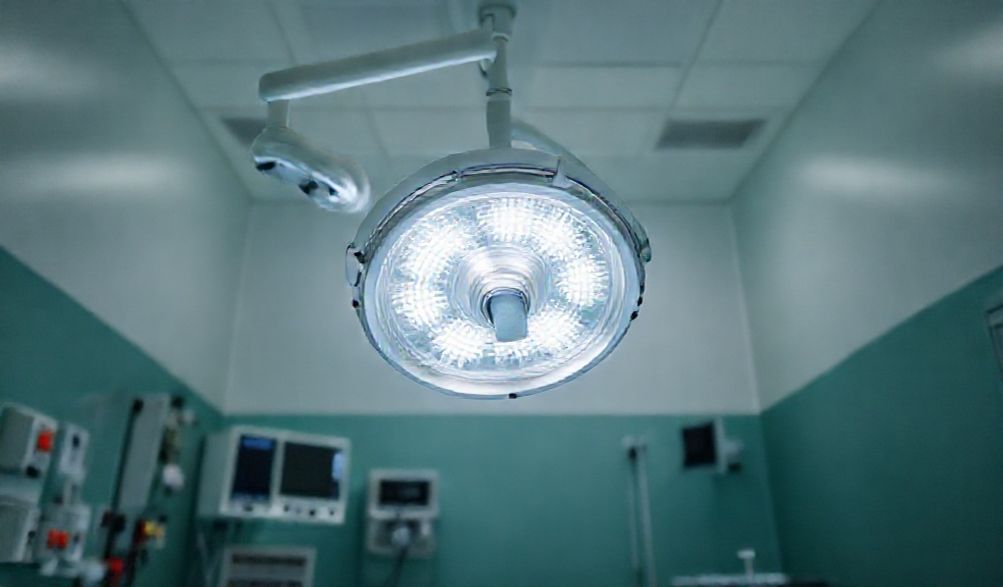
Portable Operating Room Lights: A Guide to Enhanced Surgical Mobility and Safety
In the high-stakes environment of surgery, success is built on a foundation of precision, skill, and clarity. At the very core of this clarity lies a factor so fundamental it’s often taken for granted until it’s inadequate: light. Optimal surgical lighting is not a luxury; it’s a critical determinant of patient safety and surgical outcomes. It reduces eye strain for the surgeon, enhances tissue differentiation, and illuminates the finest anatomical details, directly impacting the accuracy and speed of the procedure.
For decades, the massive, ceiling-mounted surgical light has been the undisputed king of the operating room. However, modern healthcare is dynamic. It unfolds not only in traditional ORs but also in bustling emergency departments, austere field hospitals, outpatient clinics, and during specialized procedures where fixed infrastructure is a limitation, not an asset. The rigidity of traditional lighting clashes with the need for flexibility, rapid response, and adaptability.
Enter the portable operating room light—a sophisticated, mobile solution engineered to bring hospital-grade illumination directly to the point of need. This guide is designed for healthcare administrators, clinical engineers, surgeons, and procurement specialists. We will move beyond marketing claims to provide a comprehensive, expert-driven analysis of portable surgical lights. We’ll explore their defining features, critical benefits, and the essential technical and clinical considerations for selection and integration, ensuring your investment enhances both mobility and safety.
What is a Portable Operating Room Light? Defining Modern Surgical Illumination
A portable operating room light is a self-contained, mobile unit designed to deliver high-intensity, shadow-reduced illumination specifically for surgical and procedural applications. Unlike its fixed counterpart, it is not dependent on ceiling tracks or permanent electrical installations, offering unparalleled freedom of movement.
Core Definition and Key Differentiators from Fixed Lights
The primary distinction lies in autonomy and flexibility. A ceiling-mounted light is a permanent fixture with a broad, general field of illumination for a designated space. A portable surgical light is a dedicated tool that can be positioned with precision. Think of it as the difference between a room’s main ceiling fixture and a high-intensity architect’s lamp: one provides ambient light, while the other delivers focused, task-oriented brilliance exactly where the user needs it. This mobility allows the light source to adapt to the patient and the procedure, not the other way around.
Primary Use Cases and Clinical Applications
The versatility of portable lights makes them indispensable across a spectrum of settings:
- Emergency & Trauma Surgery: In the ER or trauma bay, seconds count. A portable light can be rolled into position instantly, providing crucial illumination for life-saving interventions without waiting for room setup or struggling with suboptimal ambient light.
- Field Hospitals, Military Medicine & Disaster Response: In resource-limited, remote, or mobile medical units, portable lights are often the primary surgical light source. Their battery-powered operation and rugged design are essential where fixed infrastructure is nonexistent or unreliable.
- Outpatient Surgical Centers & Clinics: For facilities performing minor procedures (e.g., dermatology, podiatry, cataract surgery), investing in a full suite of ceiling lights may be cost-prohibitive. A high-quality portable light offers a cost-effective, professional solution that can be shared between rooms.
- Specialized Procedures: Disciplines like dentistry, veterinary surgery, wound care clinics, and specific plastic or orthopedic procedures benefit from the ability to position light at unconventional angles, illuminating oral cavities, animal patients on tables, or intricate surgical sites with perfect clarity.
- Supplemental Lighting: Even in a main OR with advanced ceiling lights, complex multi-site operations (e.g., simultaneous harvesting and implantation) can benefit from a portable unit as a dedicated secondary light source, eliminating shadows and providing focused intensity where the main light cannot reach.
Critical Features to Evaluate When Choosing a Portable Surgical Light
Selecting the right unit requires a careful balance of clinical performance and practical design. Here are the non-negotiable features to scrutinize.
Optical Performance and Light Quality
This is the heart of the device. Superior optics are what separate a medical-grade instrument from a simple spotlight.
- Illuminance (Lux): This measures the intensity of light falling on the surgical field. Look for models capable of delivering 40,000 to 160,000 lux or more at a typical working distance. Higher lux allows for deeper cavity illumination.
- Цветовая температура и индекс цветопередачи (CRI): Color temperature (measured in Kelvin, K) defines the “warmth” or “coolness” of light. A range of 4000K to 4500K is considered ideal for surgery, providing a neutral, daylight-like quality that enables true tissue color rendition. The Color Rendering Index (CRI) measures how accurately colors are revealed under the light. A CRI of >90 (with Ra9 >50 being critical for reds) is essential for distinguishing between arterial blood, venous blood, and different tissue types.
- Homogeneity & Shadow Reduction: The light field should be even, without hot spots or dark rings. Advanced systems use multiple LED arrays and specialized optics (like Fresnel lenses) to create deep, shadow-reduced illumination, allowing surgeons to work at depth without obscuring their own view.
Mobility, Ergonomics, and Design
If the light is difficult to position, its brilliant optics are wasted.
- Maneuverability: Assess the wheelbase and casters. They should roll smoothly over OR flooring, have effective locking brakes, and a tight turning radius. The overall footprint should be compact enough to navigate crowded spaces without becoming a hazard.
- Boom Arm Articulation: The reach, range of motion, and ease of adjustment of the boom arm are critical. Can it be positioned high, low, and at oblique angles? Look for smooth, gas-assisted movement that allows for one-handed, sterile adjustment—a surgeon should be able to reposition the light without breaking sterility.
- Устойчивость: A heavy base is good for preventing tip-overs, but it must be balanced with overall weight for transport. The unit should feel solid and vibration-free when positioned.
Power Source and Operational Reliability
Power failure during a procedure is unacceptable. Reliability is paramount.
- Battery Life & Management: Runtime varies by model and intensity setting. Seek a minimum of 4-6 hours of high-intensity runtime on a full charge. Key features include:
- Hot-Swappable Batteries: The gold standard. Allows a depleted battery to be replaced with a charged one in seconds without interrupting power.
- Operation While Plugged In: The ability to run directly from AC power, preserving battery life for mobile use or as a backup.
- Clear Power Indicators: Intuitive displays showing remaining battery life (in hours/minutes, not just bars) are essential for planning.
- Charging System: Fast-charging capabilities and well-designed charging docks that facilitate routine “always ready” protocols are important for workflow.
Sterilization and Infection Control Compliance
The device must seamlessly integrate into the OR’s aseptic field.
- Sealed Design & Materials: The housing must be completely seamless and crevice-free to prevent the accumulation of bioburden. All surfaces must be compatible with aggressive, hospital-grade disinfectants like isopropyl alcohol, hydrogen peroxide, or quaternary ammonium compounds.
- Sterile Interaction Points: Any part of the device that clinical staff touch during a procedure (primarily the handle used to position the light head) must be designed for easy cleaning. The best designs feature handles that can be wiped down directly or are easily draped with a sterile cover without compromising function.
Benefits and Advantages of Integrating Portable Lights into Surgical Practice
The investment in a high-quality portable light yields significant returns across clinical, operational, and financial domains.
Unmatched Flexibility and Procedural Adaptability
This is the defining benefit. The light conforms to the needs of the surgery. Whether the patient is positioned prone, lateral, or sitting; whether the site is on the head, foot, or torso; the light can be brought to the perfect angle and distance. This adaptability supports modern surgical techniques and improves ergonomics for the entire team.
Enhancing Patient Safety and Surgical Outcomes
Superior illumination has a direct, measurable impact on safety:
* Снижение утомляемости хирурга: High-quality, homogeneous light minimizes eye strain and accommodative effort, allowing surgeons to maintain focus and precision for longer durations.
* Improved Visual Accuracy: Excellent color rendition and shadow reduction enable better differentiation of critical structures (nerves, vessels, tissue planes), leading to more accurate dissections and potentially reducing iatrogenic injury.
* Decreased Procedural Time & Errors: With a clear, well-lit field, surgeons can work more confidently and efficiently, which can contribute to shorter anesthesia times and reduced risk of complications.
Cost-Effectiveness and Operational Efficiency
From a facility management perspective, portable lights offer compelling advantages:
* Lower Capital Outlay: Acquiring several portable lights is often significantly less expensive than installing multiple permanent ceiling systems, especially in retrofit or multi-room settings.
* Resource Multipliers: A single portable light can serve multiple rooms (e.g., a minor procedure room, an ER bay, and a cast room), maximizing asset utilization.
* Streamlined Workflow: In fast-paced environments like the ER, the ability to instantly deploy perfect lighting eliminates setup delays, getting critical care to the patient faster.
Key Considerations for Implementation and Maintenance
Successful integration goes beyond unboxing the device. Thoughtful planning ensures safety, longevity, and optimal use.
Safety Standards and Regulatory Compliance
This is the absolute baseline. A portable light for surgery is a medical device.
* Regulatory Clearance: In the United States, the device must have FDA 510(k) clearance or approval. In other regions, look for equivalent marks like the (для Европы) и подтверждённое соответствие (Europe) or other local regulatory approvals. Never use a non-medical-grade light for surgical procedures.
* Электробезопасность: Compliance with the international standard IEC 60601-1 (and its -2-25 particular standard for surgical lights) is mandatory. This ensures protection against electrical shock, mechanical hazards, and excessive radiation.
Total Cost of Ownership (TCO) and Maintenance
Look beyond the initial purchase price. Consider the long-term financial commitment:
* Battery Replacement: Rechargeable batteries have a finite lifespan (typically 2-5 years). Inquire about replacement cost and availability.
* LED Lifespan: While LEDs last for tens of thousands of hours (often 50,000+), understand the manufacturer’s rating and policy.
* Сервис и поддержка: What is the warranty period? Is there local or readily available technical support? What is the expected cost of periodic maintenance? Choosing a reputable manufacturer with a strong service network is crucial.
Training and Clinical Workflow Integration
A tool is only as good as the team using it. Develop simple protocols:
* Clinical In-Service: Have the vendor train surgeons and nurses on optimal positioning, intensity adjustment, and sterile handling.
* Operational Protocols: Establish clear responsibilities for daily charging, post-procedure cleaning (according to manufacturer C&D instructions), and battery rotation (if using multiple packs).
* Storage Designation: Assign a dedicated, accessible storage and charging location to ensure the light is always ready for use.
Часто задаваемые вопросы (ЧЗВ) о переносных операционных светильниках
В1: Ярки и эффективны ли переносные операционные светильники так же, как стационарные потолочные?
О: Да, современные высококлассные переносные светильники используют ту же передовую светодиодную технологию, что и лучшие стационарные модели. Они способны обеспечить эквивалентный или превосходящий уровень освещенности (люкс) и точности цветопередачи (CRI). Ключевой момент — сравнить технические характеристики переносной модели с требованиями ваших конкретных процедур. Для обширных полостных операций в специализированной операционной крупный многолучевой потолочный светильник может по-прежнему быть предпочтительнее, но для подавляющего большинства других применений высококачественный переносной светильник более чем способен обеспечить необходимое освещение.
В2: Как долго обычно работает аккумулятор, и что произойдет, если он разрядится во время операции?
О: Время работы от аккумулятора варьируется в зависимости от модели и используемой интенсивности освещения, обычно составляя от 4 до 8+ часов на полном заряде при высокой мощности. Надежные модели разработаны с системами безопасности: они могут работать от сети, имеют точные индикаторы заряда для предотвращения внезапных отказов и часто оснащены сменными аккумуляторами, которые можно заменить за секунды без какого-либо прерывания питания световой головки.
В3: Можно ли должным образом стерилизовать эти светильники для использования в операционной?
О: Безусловно. Медицинские переносные светильники специально разработаны для этой среды. Они имеют герметичные, непористые корпуса из материалов, выдерживающих многократную очистку больничными дезинфицирующими средствами. Крайне важно точно следовать утвержденным производителем инструкциям по очистке и дезинфекции (ОиД). Критически важные точки контакта, такие как ручки, спроектированы для легкого протирания или совместимы со стерильными одноразовыми чехлами.
В4: Какой типичный ценовой диапазон у профессионального переносного хирургического светильника?
О: Цены значительно различаются в зависимости от оптических характеристик, качества сборки, бренда и функциональных возможностей. Базовые модели для малых процедур могут начинаться от 3 000–5 000 долларов США. Высокопроизводительные устройства с исключительной светоотдачей, длительным временем работы от аккумулятора и премиальной эргономикой для поддержки основных операционных могут стоить от 15 000 до 30 000+ долларов США. Следует рассматривать это как капитальные вложения в безопасность пациентов и клиническую эффективность, где ценность и надежность должны перевешивать первоначальные затраты.
В5: Для каких типов процедур переносные светильники наиболее подходят?
О: Они исключительно универсальны. Идеальные сферы применения включают: экстренную/травматологическую хирургию, амбулаторные процедуры (пластическая хирургия, дерматология, стоматология), ветеринарные операционные, клиники для обработки и ухода за ранами, в качестве дополнительного освещения в основных операционных, а также в любых условиях полевой или военной медицины. Они подходят для любой процедуры, где требуется гибкое, высококачественное освещение.
Заключение
— это не просто улучшение освещения; это фундаментальное усовершенствование самого критически важного инструмента хирурга — его зрения. Благодаря непревзойденной цветопередаче, бестеневому освещению и эргономичному комфорту эта технология напрямую способствует хирургической точности, снижает утомляемость во время операции и способствует положительным результатам для пациента. Переход от галогенных к светодиодным осветителям — это не просто смена оборудования, а стратегические инвестиции в клинические результаты и профессиональное благополучие. portable operating room light эволюционировал из простого резервного варианта в краеугольный камень адаптируемой современной хирургической помощи. Он напрямую устраняет ограничения стационарной инфраструктуры, обеспечивая яркое, надежное освещение там и тогда, где и когда это необходимо — от контролируемого хаоса приемного отделения до точности амбулаторной клиники.
Выбор подходящего устройства требует системного подхода. Расставьте приоритеты: клиническая эффективность (превосходное качество света и точность цветопередачи), практичность конструкции (интуитивная мобильность и строгая стерилизуемость) и бескомпромиссную безопасность (полное соответствие нормативным требованиям и электротехническим стандартам). Наиболее обоснованные решения о закупке принимаются совместно.
Итоговая рекомендация: Перед покупкой, проконсультируйтесь напрямую с хирургами и клиническими инженерами, которые будут использовать и обслуживать оборудование. Соотнесите конкретные требования процедур непосредственно со спецификациями продукта. По возможности запросите живое демонстрационное испытание или пробный период, чтобы оценить работу светильника в вашей реальной клинической среде.
Поскольку хирургические методы продолжают развиваться, а оказание медицинской помощи выходит за пределы традиционных больничных стен, роль гибкого, высокоточного освещения будет только возрастать. Инвестиции в правильный переносной операционный светильник — это инвестиции в хирургическую точность, операционную устойчивость и, в конечном счете, в оптимальные результаты лечения пациентов.
p>