
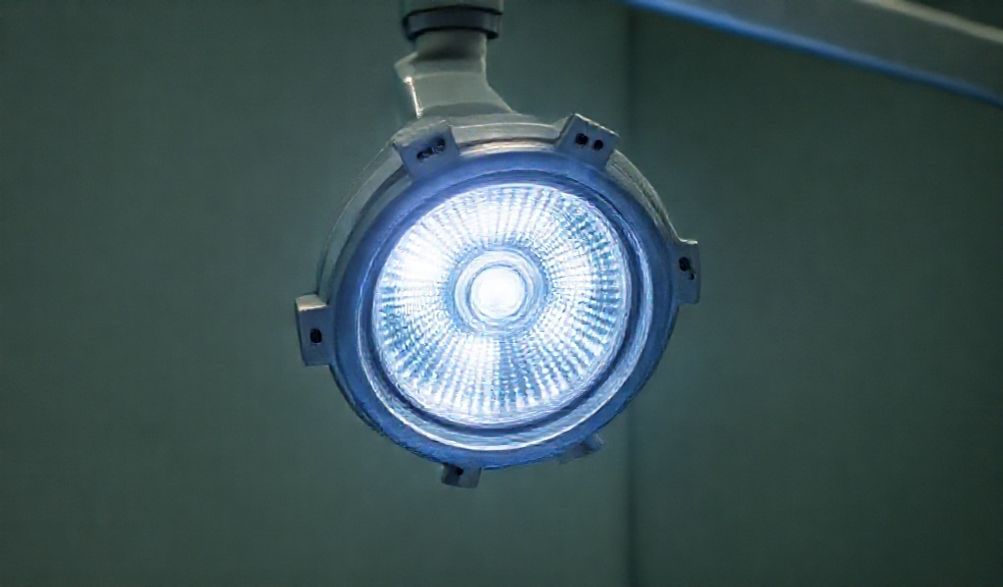
Surgical Headlights: A Surgeon’s Guide to Enhanced Precision, Safety, and Outcomes
In the high-stakes theater of surgery, where millimeter precision can define the boundary between success and complication, one factor remains fundamentally non-negotiable: the ability to see. Yet, despite our reliance on advanced imaging, robotic systems, and specialized instrumentation, the quality of the most basic surgical tool—light—is often an afterthought. Consider this: studies suggest that a significant proportion of preventable surgical errors can be attributed, at least in part, to inadequate visualization. In deep cavities, during microsurgical anastomoses, or in the complex anatomy of the spine or skull base, poor lighting isn’t just an inconvenience; it’s a direct threat to patient safety.
This post is dedicated to the хирургический налобный осветитель—a fundamental, yet profoundly impactful, piece of technology that bridges the gap between the surgeon’s intent and execution. Far more than a simple lamp, a modern surgical headlight is an extension of the surgeon’s vision, providing coaxial, shadow-free illumination that moves in perfect harmony with their gaze. Our purpose here is to move beyond catalog specifications and provide a comprehensive, evidence-based guide grounded in Expertise, Experience, Authoritativeness, and Trustworthiness (E-E-A-T). Whether you are a resident building your first kit, an attending surgeon seeking an upgrade, or a hospital procurement specialist evaluating capital equipment, this guide will equip you with the knowledge to understand the technology, select the right system for your needs, and ultimately, leverage optimal illumination to enhance precision, ergonomics, and surgical outcomes.
Why Optimal Illumination is Non-Negotiable in Modern Surgery
Surgery is a visual craft. Every decision—from identifying tissue planes and controlling bleeders to placing sutures and dissecting nerves—is predicated on clear, accurate sight. While the overhead surgical light is a fixture of every OR, its limitations are inherent to its design.
The Clinical Impact of Superior Visualization
The correlation between superior lighting and improved surgical outcomes is supported by both clinical experience and research. Enhanced illumination directly contributes to:
- Reduced Error Rates: A well-lit field improves depth perception and contrast, allowing for better identification of anatomical structures. This clarity can reduce the risk of iatrogenic injury to nerves, vessels, and critical tissues.
- Increased Efficiency and Shorter Procedure Times: Surgeons spend less time repositioning overhead lights or struggling to see into shadows. The ability to work with consistent, targeted light streamlines the procedure.
- Enhanced Tissue Differentiation: This is particularly crucial in specialties like oncology, where distinguishing between malignant and healthy tissue is vital, or in reconstructive surgery, where assessing tissue perfusion is key.
The value of a personal headlight is magnified in specific fields. In нейрохирургии и spinal surgery, deep, narrow wounds are notorious for creating shadows that overhead lights cannot penetrate. In microsurgery (plastic, hand, ophthalmic), the intense, focused beam is essential for working under high magnification. ENT procedures within the nasal cavity or sinuses, and dentistry или oral surgery, all demand bright, direct light in confined spaces.
Beyond the Overhead Light: Limitations and Shadows
Fixed overhead lights, while powerful, have significant drawbacks. They can be easily obstructed by the surgeon’s or assistant’s head. They cast shadows from instruments and hands directly into the wound. They often create glare off reflective surfaces. Most critically, the light path is independent of the surgeon’s line of sight.
The surgical headlight solves these problems by providing coaxial illumination—the light emanates from a point very close to the surgeon’s eyes, traveling along the same axis as their vision. This eliminates parallax and shadows cast by the surgeon’s own instruments, illuminating exactly what they are looking at. It puts control of the visual field directly in the hands—or rather, on the head—of the surgeon.
Key Features and Technology: Choosing the Right Surgical Headlight
Navigating the market for surgical headlights requires an understanding of the core technologies and specifications that define performance and usability.
Light Source Technology: LED vs. Halogen/Xenon
The evolution from halogen and xenon bulbs to Light Emitting Diodes (LEDs) represents the single most significant advance in headlight technology.
- Halogen/Xenon: These were the previous standards, producing a very bright, warm light. However, they generate immense heat, have short lifespans (often 50-100 hours), consume significant power, and their output dims and yellows over time.
- LED (Modern Standard): LEDs have become ubiquitous for excellent reasons:
- Холодная работа: They produce minimal infrared radiation, drastically reducing heat exposure to the surgeon’s forehead and the surgical site.
- Exceptional Longevity: LED modules can last 20,000 to 50,000 hours, effectively making them a lifetime component.
- Энергоэффективность: They provide more light per watt, enabling longer battery life and smaller, lighter power systems.
- Стабильный выходной сигнал: LED color temperature and brightness remain stable throughout their lifespan.
For any new purchase, an LED-based system is the only logical choice.
Understanding Specifications: Lumens, Lux, and Color Temperature
Don’t be intimidated by the specs; understanding them is key to choosing the right tool.
- Lumens: A measure of the total amount of visible light emitted by the source. More lumens mean a brighter light. Surgical headlights typically range from 20,000 to over 200,000 lux at a given distance (see below).
- Lux: This is the critical metric. It measures illuminance—how much light actually falls on a surface (lumens per square meter). A headlight’s brightness is usually stated as “X lux at Y distance” (e.g., 40,000 lux at 400mm). For deep cavity work (spine, pelvis), you’ll need a system capable of high lux at a longer working distance.
- Color Temperature: Measured in Kelvin (K), this describes the “warmth” or “coolness” of the light. Warm light (~3500K) is yellowish, while cool light (~6000K) is bluish-white. A neutral daylight temperature (~4500-5500K) is generally preferred in surgery as it provides the best contrast and is less fatiguing for the eyes.
- Индекс цветопередачи (CRI): Perhaps the most underappreciated spec. CRI (on a scale of 0-100) measures a light’s ability to reveal the true colors of objects compared to natural light. A high CRI (90+) is essential for accurately assessing tissue color, vitality, and pathology. Don’t sacrifice CRI for raw lux output.
Ergonomics and Comfort: Weight, Balance, and Adjustability
A headlight you can’t wear comfortably for a three-hour case is a poor investment. Ergonomics are paramount.
- Weight and Balance: The total system weight (light source, headband, battery) should be minimal and well-distributed. The center of gravity should be close to the head to prevent neck strain. Lightweight polymers and aluminum are common.
- Headband Design: Look for padded, adjustable headbands that distribute pressure evenly. Some feature a ratcheting dial for a secure, one-handed fit. A comfortable, stable fit prevents slippage during critical moments.
- Регулируемость: The light source should pivot easily to align perfectly with your visual axis, whether you wear it alone or with loupes/glasses. Fine vertical and horizontal adjustments are a must.
Power Systems: Corded vs. Battery-Powered
This choice often comes down to a trade-off between unlimited runtime and maximum mobility.
- Проводные системы: Powered by a base station or wall outlet.
- Преимущества: Unlimited runtime, no battery management, often slightly brighter maximum output.
- Недостатки: The tether can be restrictive, posing a minor trip hazard and potentially snagging on equipment. It limits the surgeon’s mobility around the table.
- Battery-Powered Systems: Use rechargeable battery packs.
- Преимущества: Complete freedom of movement, no cords to manage or sterilize. Modern lithium-ion batteries offer long runtimes (3-8+ hours on a charge).
- Недостатки: Finite runtime requiring battery management and charging. The battery pack adds weight, though it is often worn on a waist belt to balance the head-mounted unit.
For most surgeons, the mobility of a battery-powered system is overwhelmingly preferred.
A Buyer’s Guide: How to Select a Surgical Headlight System
Armed with technical knowledge, you can now make a selection tailored to your practice.
Assessing Your Surgical Specialty’s Needs
Match the tool to the task:
* High-Intensity / Deep Cavity (Neurosurgery, Spine, Orthopedics, Bariatric): Prioritize maximum lux output at a working distance of 400-500mm. Look for systems with a focused, penetrating beam pattern.
* Moderate / Close-Up (General Surgery, Vascular, OB/GYN): A versatile system with good brightness at 300-400mm and a balance of spot and flood beam options is ideal.
* High-Precision / Microsurgery (Plastics, Hand, Ophthalmology, Dentistry): Extreme brightness at short distances (200-300mm) is key. A very high CRI is non-negotiable for fine color discrimination. Compatibility with high-magnification loupes is critical.
Must-Ask Questions Before You Purchase
For procurement teams and individual buyers alike:
1. Вопрос: Каков срок гарантии и что он покрывает? (Look for 2-3 years minimum).
2. What is the expected service life of the core LED module?
3. What is the typical lifespan and replacement cost of the battery? How many charge cycles can it withstand?
4. Is it compatible with my existing surgical loupes? Can it be mounted directly to the loupe frame?
5. What are the costs of consumables and replacement parts (headbands, filters, cables)?
6. What is the sterilization protocol? Is the light source fully immersible? What about the cable connector?
The Importance of a Trial Period
Never buy a surgical headlight based on a brochure or website alone. Insist on a clinical trial. Reputable dealers should offer a 1-2 week evaluation period. Use it in your own OR or clinical setting. Assess the comfort over a long case, the quality and color of the beam on tissue, the ease of adjustments, and the intuitiveness of the controls. The right headlight should feel like a natural extension of your senses.
Maximizing Your Investment: Maintenance, Safety, and Best Practices
Proper care ensures performance, longevity, and safety.
Proper Cleaning and Sterilization Protocols
Adhere strictly to the manufacturer’s instructions for use (IFU). Generally:
* After each use, wipe down the headband and light source housing with a hospital-grade disinfectant wipe.
* The light source module itself is typically designed for low-temperature sterilization (e.g., hydrogen peroxide plasma, ethylene oxide). Never autoclave an LED headlight unless explicitly stated by the manufacturer.
* For corded systems, ensure the cable connector is properly sealed and cleaned according to guidelines to maintain its IP (Ingress Protection) rating.
Battery Care and Longevity Tips
- Follow the “charge/discharge” guidance. For lithium-ion batteries, avoid constantly keeping them at 100% charge. It’s often better to store them partially charged.
- Have at least two batteries to rotate, allowing one to be in use while the other charges.
- Note the battery’s “runtime until 50% brightness” spec, as this is more clinically relevant than runtime to full depletion.
Integrating Headlights with Surgical Loupes and Cameras
- Loupes: The headlight beam must be perfectly converged with the optical axis of your loupes. Many systems offer custom mounting arms or adjustable brackets to achieve this. Proper alignment prevents “tunnel vision” and ensures the illuminated area matches your magnified field of view.
- Cameras: For recording procedures or teaching, a headlight-mounted camera can provide a true “surgeon’s-eye-view.” Ensure the headlight’s beam pattern is even and doesn’t create hotspots that wash out the camera’s image sensor.
Часто задаваемые вопросы (ЧЗВ)
Q: What is the typical lifespan of a high-quality LED surgical headlight?
О: The LED module itself can last 20,000 to 50,000 hours—far longer than the useful life of the rest of the system. The practical lifespan of the entire unit (5-10+ years) is more often determined by battery degradation, wear on headbands and cables, or advances in technology.
Q: Can surgical headlights be used with prescription glasses or loupes?
О: Absolutely. Most modern systems are designed with this in mind. They feature adjustable mounting arms or brackets that allow the light source to be positioned above or below the lenses, ensuring the beam path aligns with your corrected visual axis. A trial period is essential to perfect this alignment.
В: Как предотвратить запотевание источника света во время длительных процедур?
О: Запотевание возникает из-за разницы температур. Решения включают: 1) Использование налобных осветителей с пассивной или активной системой вентиляции/конструкцией против запотевания, 2) Нанесение коммерческого антифогового раствора на световое окно (если это совместимо), 3) Предварительная акклиматизация осветителя к температуре в операционной до начала процедуры и 4) Обеспечение легкого воздушного потока между головой и корпусом осветителя.
Вопрос: Существуют ли специальные стандарты безопасности для хирургических налобных осветителей?
О: Да. Как медицинское электрооборудование, они должны соответствовать международным стандартам безопасности, таким как IEC 60601-1. Соответствие обеспечивает защиту от поражения электрическим током, механических опасностей и чрезмерного теплового излучения. Всегда проверяйте, чтобы рассматриваемая система имела соответствующие сертификаты (знак CE, разрешение FDA и т.д.).
В: Какой диапазон стоимости у профессиональной системы?
О: Профессиональные светодиодные хирургические налобные системы представляют собой значительные капиталовложения. Цены обычно варьируются от 2 500 до 8 000+ долларов США за полную систему (источник света, оголовье, аккумулятор, зарядное устройство). Этот разброс отражает различия в максимальной яркости, оптическом качестве, бренде и включенных функциях. Рассматривайте это не как расходы, а как долгосрочные инвестиции в хирургическую точность, эффективность и безопасность пациента.
Заключение
Хирургический налобный осветитель — это не просто аксессуар; это критически важный инструмент, повышающий производительность, который напрямую расширяет возможности хирурга. В эпоху технологических чудес фундаментальное преимущество четкого зрения — без теней, с истинной цветопередачей и в идеальном соответствии с фокусом — остается незаменимым. Выбор системы налобного освещения зависит от триады факторов: передовая светодиодная технология для холодного, стабильного света с высоким индексом цветопередачи (CRI); превосходная эргономика для комфорта в течение всего дня; и соответствие конкретной специализации между характеристиками светового пучка и вашими хирургическими потребностями.
Выбор и освоение этого инструмента — это прямое применение хирургического опыта и экспертизы (E-E-A-T). Это отражает приверженность использованию всех доступных преимуществ для оптимизации ухода за пациентом. Инвестируя время в понимание технологии, тщательно оценивая варианты на практике и бесшовно интегрируя систему в свою работу, вы повышаете не только качество визуализации, но и стандарты своих хирургических результатов.
Призыв к действию: Прежде чем принять решение, проконсультируйтесь с доверенными коллегами об их опыте. Взаимодействуйте с компетентными специалистами по оборудованию, которые могут предоставить клинический контекст. Что наиболее важно, уделите первостепенное внимание практической оценке в реальных условиях. Найдите хирургическую налобную осветительную систему, которая станет неотъемлемой, бесшовной частью вашей техники, освещая путь к большей точности и безопасности.
p>