
The Ultimate Guide to Wireless Dental Headlights: Benefits, Features & How to Choose
Introduction
For the dental professional, the clinical environment is a world of minute details, demanding both unwavering precision and physical endurance. Every procedure hinges on clear visualization—finding that hidden caries, prepping the perfect margin, or navigating a complex root canal system. For decades, the corded dental headlight was the standard, a necessary tool that came with its own set of frustrations: the constant tug on your head, the tangLED cord at your feet, the restricted pivot as you move from quadrant to quadrant, and the distracting heat radiating onto your forehead.
Today, a transformative solution has redefined operatory illumination: the wireless dental headlight. This isn’t merely an incremental upgrade; it’s a paradigm shift in clinical ergonomics and workflow efficiency. By cutting the cord, these systems offer unprecedented freedom, but with a market full of options, how do you choose the right one?
This guide is designed to be your comprehensive, unbiased resource. We’ll move beyond marketing claims to explore the core technology, tangible clinical benefits, and critical features you need to evaluate. We’ll synthesize product specifications with principles of clinical ergonomics and practical user experience, empowering you to make an informed decision that enhances your practice, your comfort, and ultimately, your patient care.
What is a Wireless Dental Headlight and How Does It Work?
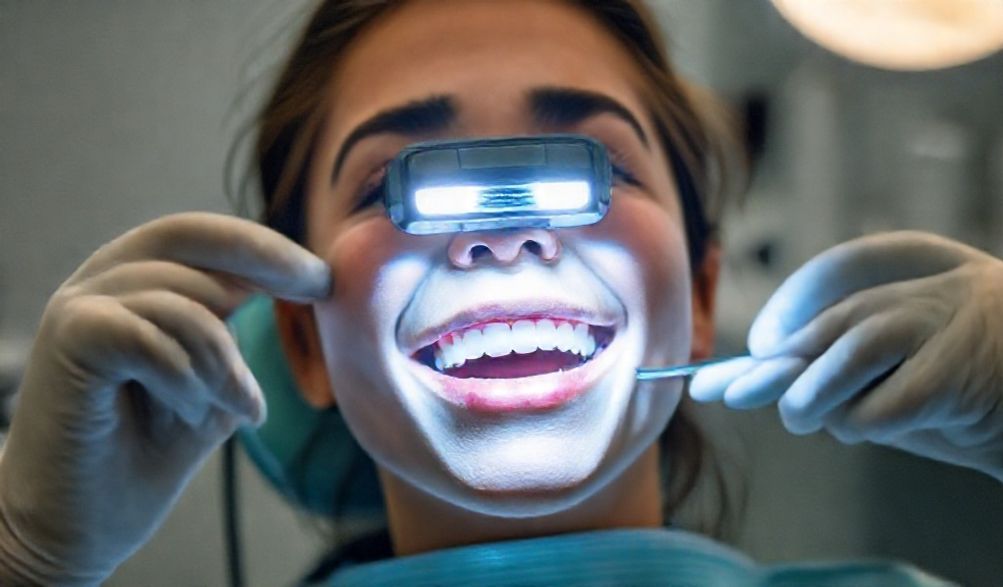
At its essence, a wireless dental headlight is a cordless, wearable lighting system. It typically consists of a compact, powerful light source (the “light engine”) mounted onto an adjustable headband or directly integrated with your surgical loupes. Its primary purpose is to deliver intense, focused, and shadow-free illumination directly into the oral cavity, following your line of sight effortlessly.
The magic lies in its self-contained design. Freed from a wall outlet or chair-mounted box, the system houses its own advanced power source and lighting technology, creating a truly mobile personal spotlight.
Core Components and Technology
Understanding the components demystifies the performance and helps you compare models effectively.
-
Light Source (LED): The heart of any modern headlight is the Light Emitting Diode (LED). Gone are the days of hot, inefficient halogen or xenon bulbs. LEDs represent a monumental leap forward:
- Холодная работа: They emit minimal infrared radiation, eliminating the “hot spot” on your forehead—a major comfort and focus benefit during long procedures.
- High Intensity & Efficiency: LEDs produce exceptionally bright light while consuming less power, directly contributing to longer battery life.
- Color Accuracy: Advanced LEDs offer superior color rendering (more on this later) and stable color temperature, ensuring tissues and materials appear true to life.
- Долговечность: An LED module can last for tens of thousands of hours, often outliving the headlight itself, which means no more frequent and costly bulb replacements.
-
Power System: This is the enabling technology for wireless freedom. Modern systems use rechargeable lithium-ion or lithium-polymer battery packs, similar to those in premium electronics.
- These batteries are prized for their high energy density, light weight, and lack of “memory effect,” meaning they can be recharged at any time without degrading capacity.
- Battery life is a critical spec, typically ranging from 6 to 10+ hours of continuous use on a full charge—more than enough for a full clinical day.
- Charging is usually via a dedicated docking station or a USB-C cable, offering convenient overnight charging or a quick top-up between patients.
-
Optics & Beam Control: Not all light is created equal. The optical system shapes the raw LED output into a tool for dentistry.
- Focal Distance: This is the “sweet spot” where the beam is perfectly focused. It should align with your loupes’ working distance for a seamless, sharp field of view.
- Spot Size & Homogeneity: Can the beam be adjusted from a wide field for general exams to a tight, intense spot for endo or surgery? More importantly, is the light field uniform, without dark spots or irregular edges that cause eye strain? High-quality optics ensure a smooth, consistent circle of light.
The Ergonomic Advantage: Freedom of Movement
This is where the wireless dental headlight delivers its most immediate and profound impact. Contrast it with a corded system: the physical and mental load of the cord is constant. It tugs with every turn, gets caught on chair arms or cabinetry, and subconsciously influences your posture as you compensate to avoid pulling it.
Eliminating the cord removes this entire layer of friction. You can stand up, move to a different instrument tray, or reposition around the patient’s chair without a second thought. This unrestricted, natural movement is a cornerstone of clinical ergonomics. It reduces static muscle tension in the neck, shoulders, and back, directly combating the physical fatigue that accumulates over a long day. The benefit isn’t just about convenience; it’s about preserving the practitioner’s musculoskeletal health.
Key Benefits of Upgrading to a Wireless System
The advantages of going wireless extend far beyond simply avoiding a tangled cord. They translate into measurable improvements in clinical care, personal well-being, and practice operations.
Enhanced Clinical Precision and Outcomes
Superior illumination directly enables superior dentistry. A high-performance wireless dental headlight provides:
* Shadow Reduction: By being co-axial with your vision (mounted on your head/loupes), it drastically minimizes shadows cast by your hands and instruments, revealing anatomy in greater detail.
* Exceptional Visualization: The combination of high intensity and excellent color rendering illuminates fissures, exposes subtle margin discrepancies, and improves visibility into subgingival and endodontic spaces. This can lead to earlier caries detection, more precise prep work, and higher-quality restorative outcomes.
* Consistent Performance: Unlike some corded lights that may dim over time or with voltage fluctuations, a quality wireless system provides stable, unwavering output from the first to the last patient of the day.
Improved Practitioner Ergonomics and Comfort
We’ve touched on freedom of movement, but the ergonomic benefits are multi-faceted:
* Reduced Physical Strain: Without the cord’s drag and the need to manage it, you maintain a more neutral, healthy posture. This can significantly reduce the risk of chronic neck, back, and shoulder pain—common occupational hazards in dentistry.
* Lightweight Design: Modern units are engineered with balanced weight distribution. The battery pack is often mounted at the back of the headband, counterbalancing the light engine at the front to prevent neck strain.
* Thermal Comfort: The cool operation of LEDs removes the distracting and uncomfortable heat associated with older bulb technologies.
Increased Efficiency and Clinic Workflow
A smoother workflow benefits everyone—the dentist, the assistant, and the patient.
* Simplified Setup: Donning the headlight is as easy as putting on a headband. There’s no plug to find, no cord to route, and no time spent untangling.
* Seamless Mobility: Moving between operatories is instantaneous. In multi-op practices or during hospital/sedation cases, this mobility is invaluable.
* Enhanced Hygiene: With one less cord running across surfaces and the floor, there are fewer potential vectors for cross-contamination. Most headbands and light engines are designed for easy and effective surface disinfection.
Critical Features to Compare When Choosing a Headlight
With a clear understanding of the benefits, you can now intelligently compare models. Focus on these core performance and usability categories.
Light Performance Metrics
Don’t just look at “brightness.” Understand the specs that matter:
* Luminance (Lux or Foot-Candles): This measures the intensity of light falling on a surface (the tooth). For demanding procedures like endo or surgery, look for systems capable of delivering 50,000 to 100,000+ lux at a typical working distance. This ensures ample illumination even in deep cavities.
* Color Temperature (Kelvin): Measured in Kelvins (K), this describes the “warmth” or “coolness” of the white light. A range of 5000K to 6000K is generally preferred in dentistry. This is a cool, daylight-white light that enhances contrast and reduces eye strain compared to warmer (yellower) or harsher bluer tones.
* Индекс цветопередачи (CRI): This is a crucial, often overlooked metric. CRI (on a scale of 0-100) measures a light’s ability to reveal the true colors of objects compared to natural light. A CRI of 90+ is essential for accurate shade matching in restorative and aesthetic dentistry, ensuring composites and ceramics blend seamlessly.
Battery and Operational Life
Battery performance defines reliability.
* Runtime: Manufacturers state battery life, but consider “real-world” use at your typical brightness setting. A robust system should offer a minimum of 6-8 hours to comfortably cover a full day without anxiety.
* Battery Indicators: Look for clear, multi-level indicators (e.g., 4-LED display) so you can easily monitor charge status.
* Swappable Batteries: Some systems offer hot-swappable batteries. This is a premium feature that guarantees unlimited runtime—as one battery depletes, you swap in a fully charged spare in seconds, with no interruption.
* Charging: Fast-charging capabilities and convenient docking stations add to daily ease of use.
Comfort and Adjustability
If it’s not comfortable, you won’t wear it.
* Headband Design: Look for wide, padded headbands with secure, tool-free adjustment mechanisms (ratchets or dials). A secure, even fit prevents pressure points.
* Weight & Balance: Lighter is generally better, but balance is paramount. A well-designed system will feel stable and almost weightless when properly fitted.
* Loupe & PPE Compatibility: Ensure the headlight integrates smoothly with your existing surgical loupes (either via a dedicated mount or an adjustable universal mount) and doesn’t interfere with your face shield or mask.
Durability and Support
This is a professional tool, not a consumer gadget.
* Build Quality: The unit should feel robust, with high-quality plastics and metals. Look for ingress protection (IP) ratings that indicate resistance to dust and moisture from cleaning.
* Гарантия: A strong warranty (e.g., 2-3 years) reflects the manufacturer’s confidence in their product.
* Customer & Technical Support: This is critical. Choose a brand with a reputation for accessible, knowledgeable, and responsive support. When you need help, you need it quickly.
Integrating a Wireless Headlight into Your Dental Practice
Making the transition is straightforward, but a little planning ensures success.
Cost Analysis and Return on Investment (ROI)
Yes, a high-quality wireless dental headlight represents a significant upfront investment, often ranging from several hundred to over a thousand dollars. It’s essential to frame this not as an expense, but as an investment with multiple returns:
* Investment in Health: Reduced physical strain may lower the risk of work-related pain, missed days, or even early career burnout.
* Investment in Quality: Improved visualization can enhance diagnostic and procedural accuracy, potentially reducing remakes and increasing case acceptance for complex work.
* Investment in Efficiency: The time saved and frustration eliminated in daily workflow has tangible, though harder-to-quantify, value.
* Trial Period: If possible, work with a supplier that offers a demo or trial period. There is no substitute for experiencing the freedom and performance in your own operatory.
Maintenance and Care Best Practices
Protect your investment with proper care:
* Cleaning & Disinfection: Всегда следуйте конкретным Инструкциям по применению (IFU) производителя. Как правило, нестерильный оголовье можно протирать салфеткой с дезинфицирующим средством, одобренным EPA для использования в медицинских учреждениях. Корпус светового модуля можно аккуратно протирать, но избегайте прямого распыления жидкости в швы, вентиляционные отверстия или на линзу. Никогда не погружайте устройство в жидкость.
* Уход за аккумулятором: Для максимального срока службы избегайте полной разрядки аккумулятора до нуля. Привыкните ставить его на зарядку в конце каждого рабочего дня. При длительном хранении обратитесь к руководству по эксплуатации для определения оптимального уровня заряда (часто ~50%).
* Хранение: Используйте прилагаемый кейс или чистый отдельный ящик для защиты налобного осветителя от пыли, ударов и случайных повреждений, когда он не используется.
Часто задаваемые вопросы (ЧЗВ)
Вопрос: Беспроводные стоматологические налобные осветители такие же яркие, как проводные?
О: Безусловно. Современные беспроводные LED-осветители, как правило, соответствуют или значительно превосходят яркость старых проводных галогенных систем. Ключевой момент — сравнить спецификации освещенности (люкс или фут-канделы) на стандартном рабочем расстоянии. Лучшие беспроводные модели более чем способны обеспечить интенсивный свет, необходимый для всех стоматологических специальностей.
Вопрос: Как долго обычно работает аккумулятор и что произойдет, если он сядет во время процедуры?
О: Большинство профессиональных моделей обеспечивают от 6 до 10 часов работы на одной зарядке при средних и высоких настройках — этого более чем достаточно для полного клинического дня. Наилучшей практикой является выработка привычки заряжать его ежедневно. Для вашего спокойствия некоторые системы оснащены режимом “резервного питания”, который обеспечивает свет меньшей интенсивности для завершения экстренной процедуры, а модели со сменными аккумуляторами полностью устраняют эту проблему.
Вопрос: Достаточно ли равномерно и сфокусировано световое поле для таких процедур, как эндодонтия или пародонтологическая хирургия?
О: Да, высококачественные беспроводные налобные осветители специально разработаны для этих сложных задач. Ищите модели, которые обеспечивают глубоко сфокусированное, однородное световое пятно с высокой интенсивностью (люкс). Многие позволяют регулировать диаметр луча, обеспечивая плотный, сконцентрированный круг света, идеальный для работы в ограниченном пространстве.
Вопрос: Могу ли я использовать его с моими существующими хирургическими бинокулярами (лупами)?
О: В большинстве случаев — да. Подавляющее большинство беспроводных осветителей разработаны с учетом совместимости с лупами. Они либо крепятся непосредственно к оправе ваших луп с помощью специального или универсального зажима, либо монтируются на отдельное оголовье, надеваемое под лупы. Перед покупкой важно убедиться в совместимости с конкретной маркой и моделью ваших луп.
Вопрос: Как правильно дезинфицировать осветитель, не повредив его?
О: Это критически важный вопрос безопасности и долговечности. Всегда строго следуйте инструкциям производителя по применению (IFU). Как правило, процесс включает протирание непористых поверхностей оголовья и корпуса светового модуля совместимыми дезинфицирующими салфетками. Избегайте погружения, автоклавирования или прямого распыления дезинфицирующего средства на устройство, особенно вблизи линз, отсеков аккумулятора и зарядных портов, так как это может привести к необратимым повреждениям.
Заключение
Переход на беспроводной налобный осветитель — wireless dental headlight это больше, чем покупка; это обязательство перед более эргономичным, эффективным и точным способом стоматологической практики. Избавившись от провода, вы получаете непревзойденную свободу движений, снижаете физическую нагрузку и оснащаете себя мощным инструментом для улучшенной визуализации.
Однако выбор должен быть осознанным. Отдавайте приоритет сочетанию превосходных световых характеристик (высокий уровень освещенности в люксах, отличный индекс цветопередачи CRI), комфорта и сбалансированности в течение всего дня,, надежного времени работы от аккумулятора, и и надежной поддержки производителя.. Хотя первоначальная стоимость является фактором, сопоставьте ее с долгосрочными инвестициями в ваше профессиональное здоровье и клинические возможности.
Если представится возможность, протестируйте устройство лично. Ощутите его вес, отрегулируйте оголовье и оцените качество света. Правильная система освещения становится продолжением вас самих — молчаливым партнером в каждой процедуре, работающим на улучшение результатов для ваших пациентов и вашего собственного благополучия.
p>