
The Ultimate Guide to Surgeon Headlights: Enhancing Precision, Safety, and Outcomes
In the high-stakes theater of the operating room, where millimeters matter and anatomy holds its secrets in shadow, the surgeon’s most fundamental tool is not the scalpel, the forceps, or the electrocautery. It is vision. The ability to see clearly, to differentiate tissue planes, to trace the delicate path of a nerve or vessel—this is the bedrock upon which successful surgery is built. But what happens when the primary source of illumination is a fixed, overhead light, casting shadows with every movement of the surgeon’s head and hands? The limitations become glaringly apparent.
This is the problem that surgeon headlights—also known as surgical headlamps or LED headlights—were born to solve. They are not merely an accessory; they are a transformative technology that places a powerful, personal sun directly in the surgeon’s line of sight. This comprehensive guide is designed for surgeons, surgical residents, and hospital procurement teams seeking an evidence-based understanding of this critical tool. We will move beyond marketing claims to explore the core technology, the proven benefits, and the practical considerations for selecting and using a surgical headlight system, empowering you to make an informed decision that enhances both surgical performance and patient care.
What is a Surgeon Headlight? Core Technology and Evolution
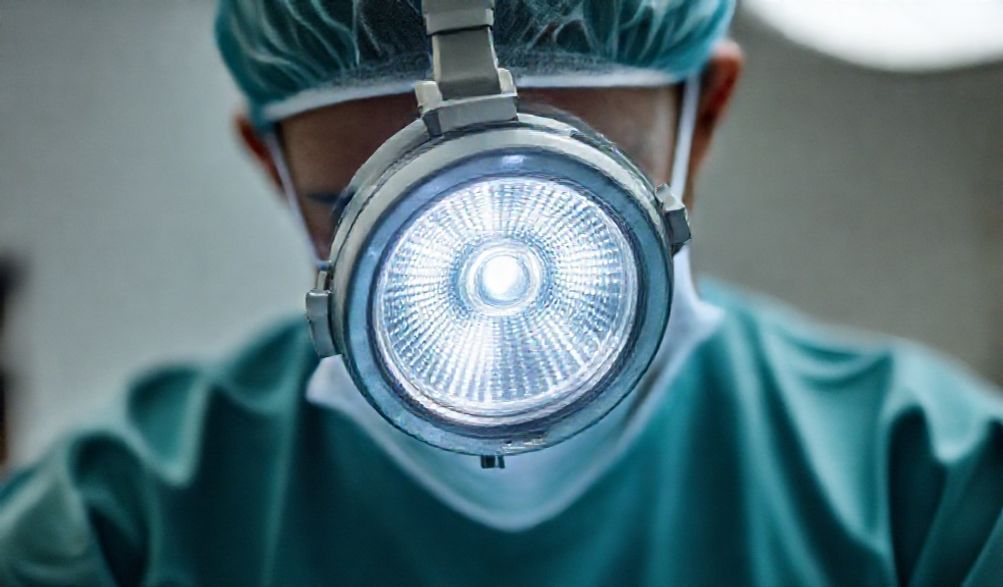
A surgeon headlight is a wearable illumination system designed to provide bright, shadow-free light directly onto the surgical field, precisely where the surgeon is looking. Unlike static overhead lights, it moves in perfect synchrony with the surgeon’s gaze, creating an intimate and controlled visual environment.
From Halogen to LED: A Brief History of Surgical Illumination
The journey to today’s advanced systems began with cumbersome, heat-generating halogen lamps. These early systems, often fiber-optic, provided a cooler light than incandescent bulbs but were plagued by limitations: bulky external light generators, fragile fiber bundles that degraded over time, and a yellowish light that could distort tissue color. The revolution came with the advent of Light Emitting Diode (LED) technology. LEDs offered a leap forward: they are incredibly energy-efficient, produce minimal heat, have a exceptionally long lifespan (often tens of thousands of hours), and deliver a bright, white “daylight” spectrum that reveals true tissue color. This evolution has made high-quality, personal illumination more reliable, affordable, and accessible than ever before.
Key Components of a Modern Surgical Headlight System
Understanding the components demystifies the selection process:
- Light Source (LED Modules): The heart of the system. Key specifications include:
- Lumens: A measure of total visible light output. More lumens generally mean a brighter light, but beam focus is equally important.
- Color Temperature: Measured in Kelvin (K). A range of 4500K to 5500K is considered “daylight white,” providing neutral, accurate color perception crucial for distinguishing between tissues, such as identifying a bile duct or assessing tissue perfusion.
- Color Rendering Index (CRI): A scale (0-100) indicating how accurately a light source reveals the true colors of objects. A high CRI (90+) is essential for surgery.
- Power Source: Modern systems use rechargeable Lithium-ion (Li-ion) battery packs. Considerations include battery life per charge (typically 4-8+ hours), the convenience of hot-swappable batteries for long cases, and whether the pack is belt-mounted, waist-clipped, or can be placed on a back table.
- Optical System: This shapes and delivers the light. Systems are either fiber-optic (where light is generated in a remote box and piped to the head via a light cable) or LED-on-head (where the LED module itself is mounted on the headband). LED-on-head systems are now dominant, offering superior brightness and efficiency. Lenses and reflectors then focus this light into a defined spot size (e.g., small for microsurgery, large for open abdominal work) with a sharp or soft-edged beam pattern.
- Headband & Mounting: Often the most personal factor. A good headband is adjustable, well-padded, and balances weight to prevent neck strain during long procedures. It must also integrate seamlessly with surgical loupes, magnification systems, and protective eyewear without compromising comfort or stability.
Key Benefits of Using a Surgical Headlight System
The investment in a surgeon headlight pays dividends across multiple dimensions of surgical practice.
Unparalleled Visualization and Shadow Reduction
The paramount benefit is co-axial illumination—the light beam is aligned with the surgeon’s visual axis. As you look into a wound, the light follows. This eliminates the shadows cast by your head, hands, and instruments when using overhead lights. The result is a uniformly illuminated, high-contrast field that dramatically improves the recognition of anatomical details, tissue planes, and subtle color variations. It turns a deep, dark cavity into a well-lit workspace.
Enhanced Surgical Precision and Ergonomics
Hands-free, directable light translates directly to improved mechanics. Surgeons no longer need to constantly adjust overhead lights or hold retractors at awkward angles just to get light into a corner. This reduces physical strain, allows for more neutral postures, and minimizes fatigue during marathon procedures. The reduction in cognitive load—not having to think about lighting—frees mental bandwidth to focus entirely on the surgery itself, enhancing precision and flow.
Improving Patient Safety and Surgical Outcomes
Superior illumination is fundamentally a patient safety issue. Studies and expert consensus indicate that optimal lighting can reduce technical errors and improve accuracy, particularly in procedures involving delicate structures like nerves, microvasculature, or biliary anatomy. By providing a clearer view, it can facilitate more complete tumor resections, more precise anastomoses, and better hemostasis. Furthermore, the efficiency gains from not fighting shadows can contribute to reduced operative time—a benefit for both patient and institution.
Versatility Across Surgical Specialties
While indispensable in traditionally “deep and dark” fields, headlights are now ubiquitous across specialties:
* Neurosurgery & Spine: Illuminating the depths of the cranium or spinal canal.
* ENT (Otolaryngology): Critical for sinus, laryngeal, and otologic procedures.
* Plastic & Reconstructive Surgery: Essential for microsurgical flap dissection and delicate tissue handling.
* Orthopedic Surgery: Especially valuable in joint arthroplasty, spine, and trauma with deep wounds.
* Dental/Oral Maxillofacial: For procedures within the oral cavity.
* General, Vascular, and Cardiothoracic Surgery: For deep abdominal, pelvic, or thoracic cavities.
How to Choose the Right Surgeon Headlight: A Buyer’s Guide
Selecting a system is a personal and professional decision. Here’s a framework to guide your evaluation.
Assessing Your Surgical Needs and Specialty Requirements
Start with your practice. A cardiothoracic surgeon working in a large chest cavity has different needs than a hand surgeon performing microvascular anastomoses. Consider the typical depth of your field and the required spot size. Microsurgery demands an intense, small, focused spot. Open abdominal surgery may benefit from a wider, flood-style beam. Your specialty society or experienced colleagues can offer valuable guidance on common specifications.
Technical Specifications Decoded: Lumens, Spot Size, and Beam Pattern
Don’t be intimidated by the numbers. Ask for a clinical demonstration.
* Lumens/Brightness: While more can be better, the focused intensity (often measured in lux at a specific working distance) is more telling than raw lumen output. A 50,000-lux system focused on a 10cm spot is far brighter in that spot than a 100,000-lumen light diffused over a wide area.
* Spot Size & Beam Pattern: Do you need a sharp, defined circle of light or a soft-edged, wider flood? Can the system adjust between settings? This flexibility is key for surgeons who perform a variety of procedures.
Comfort and Usability: The Human Factors
The most powerful light is useless if it’s uncomfortable. You must try it on.
* Weight & Balance: The system should feel secure but not burdensome. Weight distribution between the front (light/loupes) and back (counterweight/battery) is critical.
* Heat Management: Even with LEDs, some heat is generated. Ensure it’s directed away from your forehead.
* Cable Management: Is the power cable intrusive? Does it snag? Some newer systems are wireless, with a battery directly on the headband.
* Compatibility: Does it fit with your preferred loupes, safety glasses, or face shield? A combined fitting session is ideal.
Evaluating System Durability and Manufacturer Support
This is a professional tool for daily use. Investigate the warranty (often 2-5 years), the availability of service plans, and the turnaround time for repairs. A reputable manufacturer will offer strong clinical support, training, and easy access to consumables like batteries and sterile drapes. Read reviews and ask peers about long-term reliability.
Best Practices for Using and Maintaining Your Surgical Headlight
To protect your investment and ensure optimal performance, proper care is essential.
Proper Setup and Adjustment for Optimal Performance
Take time for the initial setup:
1. Balance the Headband: Adjust the straps so the unit sits comfortably without slipping, distributing weight evenly.
2. Align the Light Path: With your loupes on (if used), look at a fixed point. Adjust the light source until its hotspot is centered in your field of view. The goal is for the light to illuminate exactly where you are looking without creating a glare or “veiling” effect.
3. Set Focus/Spot Size: Adjust the focus ring (if available) to get the desired spot size and edge sharpness for your task at the typical working distance.
Cleaning, Disinfection, and Sterilization Protocols
Follow the manufacturer’s instructions meticulously. They are designed to prevent damage and ensure infection control.
* Headband & Cables: Typically, these are non-sterile and should be cleaned after each use with a hospital-grade disinfectant wipe. They should not be submerged or autoclaved.
* Light Source/LED Module: This is the critical component. Most are designed to be sterilizable. Common methods include low-temperature hydrogen peroxide plasma (e.g., STERRAD®) or ethylene oxide (EtO) gas. Some may be autoclavable—verify this explicitly in the manual. Always use a compatible, single-use sterile barrier sleeve or drape over the light source for each procedure.
Battery Care and Management for the OR
- Charging: Use only the manufacturer’s charger. Avoid constantly keeping batteries at 100% charge when not in use; modern Li-ion batteries prefer partial cycles.
- OR Strategy: Have at least one fully charged backup battery available. For predictable long cases, start with a fresh battery and have the backup ready. For unpredictable marathon cases, use a system with hot-swappable batteries.
- Storage: If storing for extended periods, charge (or discharge) the battery to about 50% capacity.
Frequently Asked Questions (FAQ) About Surgeon Headlights
Q: How many lumens/lux do I really need for general surgery vs. microsurgery?
A: It’s less about lumens alone and more about focused intensity (lux). As a general guide, microsurgery (e.g., hand, plastics, ophthalmology) often requires systems rated between 40,000 to over 100,000 lux at the working distance to provide dazzling, shadow-free detail. For general, orthopedic, or spine surgery, systems in the 20,000 to 60,000 lux range are often sufficient. The best advice is to request a demo in a realistic setting (a deep tray simulator) to judge subjectively.
Q: Are surgeon headlights compatible with surgical loupes?
A: Absolutely. In fact, they are complementary technologies. Most modern headlight systems are designed with integrated or adaptable mounts for all major loupe brands. It is highly recommended to have a combined fitting session where your loupes and headlight are aligned together to ensure perfect co-axial illumination and comfort.
Q: What is the typical battery life, and is it sufficient for long procedures?
A: Battery life varies by model and brightness setting but commonly ranges from 4 to 8+ hours on a single charge for LED-on-head systems. For the vast majority of procedures, this is ample. For exceptionally long cases (e.g., complex reconstructions, double organ transplants), the key is to choose a system with hot-swappable batteries. This allows you to replace the depleted battery with a fresh one in seconds without breaking sterility.
Q: How do I justify the cost of a high-quality headlight system to my hospital administration?
A: Frame it as a value-based investment, not an expense.
* Efficiency & Throughput: Improved visualization can reduce time spent searching or adjusting overhead lights, potentially shortening OR time.
* Patient Safety & Cost Avoidance: By enhancing precision, it may reduce the risk of costly complications (e.g., nerve injury, anastomotic leak, return to OR), which carry significant financial and human costs.
* Surgeon Well-being & Retention: Reducing physical strain and fatigue contributes to surgeon longevity and job satisfaction, helping retain valuable surgical staff. Present a holistic case that ties the tool directly to institutional priorities of quality, safety, efficiency, and talent retention.
Conclusion
A surgeon headlight is far more than a simple light. It is a fundamental enhancement to the surgeon’s primary sense—vision. By delivering bright, shadow-free, co-axial illumination, it directly empowers greater precision, improves ergonomics, and creates the conditions for safer surgery and better patient outcomes. The “best” system is not the one with the highest price tag, but the one that disappears on your head—comfortable, intuitive, and perfectly matched to the unique demands of your surgical practice.
As technology advances, we see trends like integrated 4K cameras for recording and teaching, and adaptive lighting that automatically adjusts intensity. The future is bright. Your next step is to experience the difference firsthand. Consult with trusted colleagues, reach out to reputable medical device suppliers for a clinical evaluation and trial, and invest the time in proper setup and training. In doing so, you are not just buying a piece of equipment; you are investing in the clarity, confidence, and capability you bring to every single operation.
p>