
Surgery Lamps: A Comprehensive Guide to Types, Technology, and Selection for Optimal Surgical Outcomes
Introduction
Imagine a surgeon poised to perform a delicate vascular anastomosis, where a millimeter’s precision can mean the difference between success and complication. Now, imagine them doing it in dim, flickering light that casts deep shadows, obscuring tissue planes and color differentiation. This wasn’t just a nightmare scenario; it was a stark reality for centuries. From the era of sunlight and candles to the early, hot, and inconsistent electric lights, the evolution of the surgery lamp is a story of the relentless pursuit of clarity—a quest to eliminate the very shadows that hide risk.
Today, the surgical light is no longer a simple utility; it is a sophisticated, life-critical piece of medical equipment. Its performance directly influences a surgeon’s ability to see, interpret, and act, thereby impacting procedural speed, accuracy, and ultimately, patient outcomes. This guide serves as an authoritative resource for medical professionals, hospital procurement teams, and facility managers. We will demystify the science behind modern surgery lamps, explore the different types available, and provide a clear framework for selection and maintenance—all grounded in current medical standards, peer-reviewed research on surgical ergonomics, and industry best practices. The information herein is synthesized from leading manufacturer specifications, clinical studies on visual performance, and guidelines from bodies like the Association for the Advancement of Medical Instrumentation (AAMI) and the International Electrotechnical Commission (IEC).
The Critical Role of Illumination in Modern Surgery
Beyond Basic Visibility: How Lighting Impacts Surgical Precision and Safety
A surgery lamp must do far more than just “light up the room.” It must create an optimal visual environment that supports the complex psychomotor tasks of surgery. This involves three key elements:
- Depth Perception: Unlike ambient room lighting, a high-quality surgical light is designed to provide a three-dimensional view of the operative field. This is achieved through multi-point source technology (in modern LEDs) that minimizes the creation of confusing, overlapping shadows, allowing the surgeon to accurately judge depth and spatial relationships between tissues and instruments.
- Color Rendition: The human body is a palette of subtle hues—the pale pink of healthy tissue, the bluish tint of a vein, the bright red of oxygenated blood, and the darker maroon of deoxygenated blood. Accurate color differentiation is paramount for identifying anatomical structures, assessing tissue viability, and detecting early signs of ischemia or infection.
- Shadow Reduction & Management: While complete shadow elimination is impossible (and undesirable, as some shadow can provide texture), a premium surgery lamp is engineered to render “soft” or penumbral shadows. This means if an instrument or hand obstructs part of the light, the resulting shadow is faint and diffuse, not a stark, black void that obscures critical detail. Studies have consistently linked poor lighting conditions to increased visual fatigue, eye strain, and elevated error rates among surgeons.
Key Technical Specifications Decoded
To evaluate a surgery lamp objectively, you must understand its technical language. Here are the core metrics:
- Illuminance (Lux): This measures the amount of light falling on a surface. It’s not about the raw power of the lamp (lumens) but the useful light in the surgical cavity. General superficial procedures may require 40,000 to 160,000 lux at the center of the field. Deep-cavity surgeries (e.g., thoracic, pelvic) demand lights capable of delivering high illuminance even at depth, often requiring systems with adjustable focus and intensity to maintain consistent levels as the field changes.
- Color Temperature (Kelvin – K): This describes the “warmth” or “coolness” of the light. Measured in Kelvins, a lower number (e.g., 3500K) produces a yellowish “warm” light, while a higher number (e.g., 4500K-5500K) produces a bluish “cool” light. Modern surgical LEDs are typically tuned to a “daylight white” around 4000K-4500K. This cooler temperature enhances contrast and is generally considered less fatiguing for the eye, providing better differentiation between tissues and fluids.
- Color Rendering Index (CRI): Perhaps the most critical specification. CRI is a scale from 0 to 100 that measures a light source’s ability to reveal the true colors of objects compared to a natural reference light (like the sun). A surgery lamp must have a CRI of 90 or higher. A high CRI ensures that the subtle differences in tissue color, vascularity, and oxygenation are rendered accurately, preventing misdiagnosis and surgical error. A lamp with a low CRI can make tissues look unnaturally grey, pink, or yellow.
Types of Surgical Lighting Systems: A Detailed Comparison
LED Surgery Lamps: The Modern Standard
Light Emitting Diode (LED) technology has revolutionized surgical lighting and is now the undisputed standard in new operating room installations.
- Advantages:
- Energy Efficiency & Longevity: LEDs consume significantly less power than halogen lamps and have an exceptionally long lifespan—typically 40,000 to 60,000 hours compared to 1,000-2,000 for halogen. This drastically reduces energy costs and the frequency (and cost) of bulb replacements.
- Minimal Heat Emission: LEDs produce very little infrared radiation. This “cold light” is a major benefit: it reduces the risk of tissue desiccation (drying out) in the operative wound and greatly improves comfort for the surgical team, who no longer work under a powerful heat source.
- Consistent Performance: LED color temperature and intensity remain stable throughout their entire lifespan, unlike halogen bulbs which dim and yellow over time.
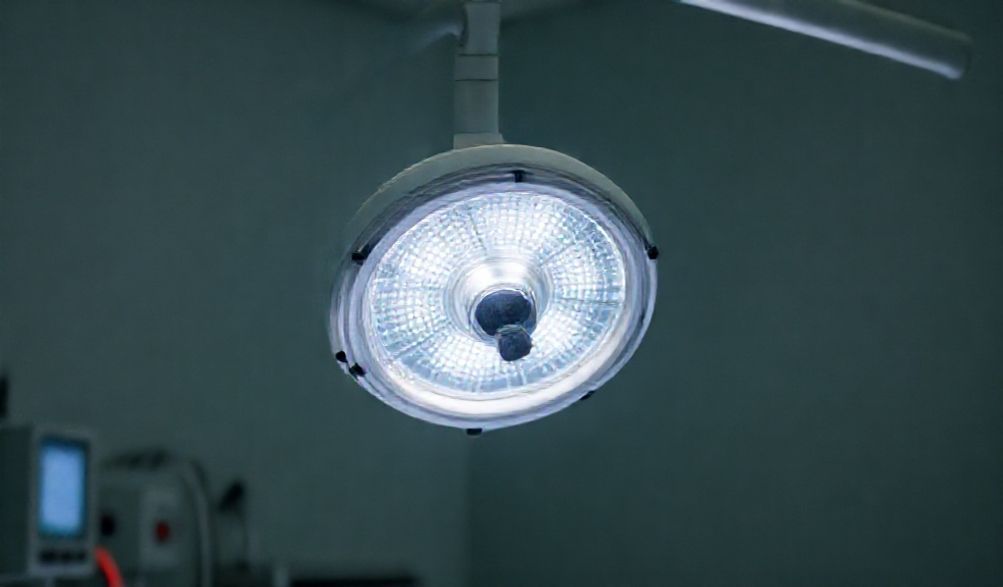
- Technology Focus: Modern LED surgery lamps create a homogeneous, shadow-reduced light field through arrays of hundreds of small, individually positioned LEDs. Advanced models offer features like automatic intensity adjustment as the light head is moved closer or farther from the field, and integration with hospital networks for data logging and control.
Halogen Surgery Lamps: Traditional Technology
While being rapidly phased out, halogen systems are still found in many operating rooms.
- Current Role: Their primary remaining advantage is a lower initial purchase price. Some facilities may still use them in lower-acuity procedure rooms or as secondary/backup lights.
- Drawbacks: The disadvantages are significant: high power consumption, substantial heat output (leading to patient tissue drying and surgeon discomfort), frequent and costly bulb replacements, and degradation of light quality (color temperature drops, becoming yellower) as the bulb ages.
Specialized Lighting Systems
Beyond the main overhead light, specialized systems address unique needs:
- Headlights and Loupe Lights: Essential for microsurgery, neurosurgery, dentistry, and ENT procedures. These wearable systems provide bright, focused, coaxial illumination (light aligned with the surgeon’s line of sight) directly into deep, narrow cavities. They offer unparalleled mobility but have a smaller field of view.
- Endoscopic/Video Integration Lights: In minimally invasive surgery (MIS), the light source is separate from the camera. These are high-intensity “light engines” that generate light which is then channeled through a fiber-optic cable to the endoscope inside the patient’s body. The quality of this light directly affects the clarity of the video feed seen by the surgical team.
How to Choose the Right Surgery Lamp: A Procurement Checklist
Selecting a surgery lamp is a strategic decision. A purely price-driven choice can compromise clinical care for years.
Assessing Clinical and Procedural Needs
Start with the clinical requirements:
* Surgical Specialty: A cardiac surgery team needs a light with exceptional depth penetration for the thoracic cavity. An orthopedic team needs broad, even illumination for large open wounds. Neurosurgery often requires a combination of a high-performance overhead light and surgeon headlights.
* OR Layout & Workflow: Consider the size of the operating room, the type of surgical table, and the common positioning of staff and equipment. Does the light have sufficient reach and articulation to cover all common table positions without obstructing the anesthesia team or imaging equipment?
Evaluating Mechanical and Ergonomic Features
The best light is useless if it’s difficult or unsafe to use.
* Mobility & Positioning: The light should move effortlessly, with smooth articulation at all joints (ceiling mount, boom, light head). It must stay precisely where it is positioned without “drift.” Handles and controls should be easily sterilizable. Look for features like magnetic or touchless handles.
* Durability & Safety: Construction should be robust to withstand years of daily use and cleaning. Safety is non-negotiable: the system must have backup bulbs or LED arrays that engage instantly if the primary fails, and it should include thermal management systems to prevent overheating.
Total Cost of Ownership (TCO) Analysis
Move beyond the sticker price. A true financial analysis includes:
1. Initial Purchase Price.
2. Energy Consumption: Calculate the annual cost difference between an LED and halogen system.
3. Replacement Parts: For halogen, factor in the cost and labor of bulb changes every few months. For LED, this cost is negligible for a decade or more.
4. Preventive Maintenance & Service Contracts.
5. Expected Lifespan: Divide the TCO by the expected years of service. The long lifespan of LEDs often makes them the most cost-effective choice over a 7-10 year period, despite a higher upfront cost.
Installation, Maintenance, and Best Practices
Proper Installation for Performance and Safety
A surgery lamp must be installed by the manufacturer’s certified technicians or qualified clinical engineers. Proper installation ensures:
* Structural Safety: The ceiling mount or track system is securely attached to load-bearing structures.
* Electrical Safety: Compliance with all local codes and medical equipment standards (e.g., IEC 60601).
* Optimal Performance: The light is correctly balanced, moves smoothly through its full range of motion, and delivers the specified lux levels at the standard working distance.
Routine Maintenance Protocol
- Daily Cleaning: The light head, handles, and arms are high-touch surfaces in the sterile field. They must be cleaned daily with hospital-grade, non-corrosive disinfectants that do not damage lenses or coatings.
- Scheduled Professional Servicing: At least annually, a qualified technician should perform a full inspection: checking mechanical joints for wear, verifying electrical safety, and most importantly, recalibrating the light output. This ensures the lamp continues to deliver the correct color temperature, CRI, and illuminance as certified.
Training Surgical Staff
All users—surgeons, nurses, techs—should be trained on the specific model in use. Training should cover:
* Correct positioning techniques to maximize illumination and minimize shadows.
* How to adjust focus and intensity for different procedures.
* Proper handling to avoid damaging the delicate balance mechanisms or optics.
* Understanding the lamp’s safety features and failure modes.
FAQ Section
Q1: What is the typical lifespan of an LED surgery lamp compared to a halogen one?
A: An LED surgery lamp typically has a rated lifespan of 40,000 to 60,000 hours. In a busy OR used 10 hours a day, this translates to over 15 years of service. A halogen bulb lasts only 1,000 to 2,000 hours, requiring replacement several times a year. The long-term operational savings of LED are substantial.
Q2: Can surgery lamps be customized for specific procedures?
A: Yes, many modern systems offer customization. This can include interchangeable light guides or reflectors to change the field size and pattern, adjustable color temperature modes (e.g., a “vascular” mode to enhance blue tones), and the use of sterile, disposable handles. Some lights offer specialty filters, like a green light filter to reduce glare during procedures involving a lot of red tissue.
Q3: How do I know if our existing surgery lamps need to be replaced or recalibrated?
A: Key signs include: visible dark spots or inconsistent illumination in the field; a noticeable yellowing or dimming of the light compared to when it was new; the light head drifting from its set position; or, most definitively, failing a routine performance check where a light meter shows it cannot achieve the required lux levels at the standard distance.
Q4: Are there specific standards or certifications we should look for?
A: Absolutely. The most critical standard is IEC 60601-2-41, which outlines the particular safety and performance requirements for surgical luminaires. Compliance with this standard is essential. Additionally, look for FDA clearance (or equivalent regulatory approval in your region) and CE marking for devices sold in Europe. These certifications provide assurance that the device has been tested for safety and efficacy.
Conclusion
The modern surgery lamp is a pinnacle of medical engineering, a critical tool that extends a surgeon’s vision and safeguards patient well-being. It is far more than a simple light; it is an integral component of the surgical ecosystem, impacting precision, efficiency, and safety. The selection process, therefore, must be holistic and evidence-based, prioritizing clinical performance, ergonomic design, and true long-term value over initial price alone.
Investing in a high-quality, modern surgical lighting system is an investment in superior surgical outcomes, staff satisfaction, and operational efficiency. We encourage procurement teams to engage their clinical staff and clinical engineering departments, review the latest research, and insist on hands-on demonstrations from reputable manufacturers. By making an informed, strategic choice, you illuminate the path to better care for every patient on the table.
p>