
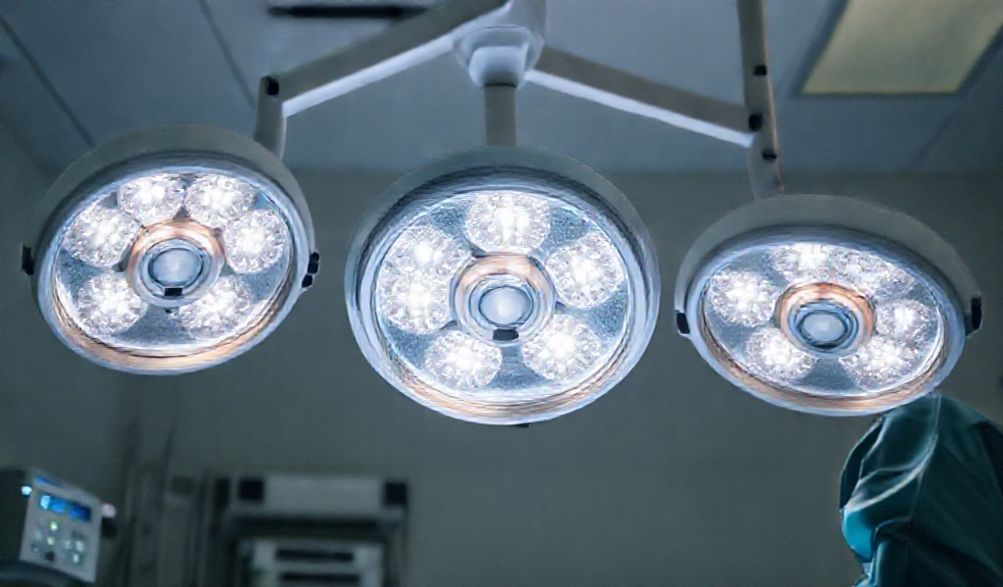
Surgical Examination Lights: A Comprehensive Guide to Optimal Lighting in Medical Procedures
In the high-stakes environment of an operating room, where millimeters can separate success from complication, one foundational element is often overlooked until it fails: the light. It is the surgeon’s primary tool for visual perception, directly shaping every incision, suture, and decision. Consider this: studies suggest that up to 30% of a surgeon’s operating time can be spent adjusting or compensating for inadequate lighting, directly impacting procedural efficiency and potentially, patient outcomes. This isn’t just about brightness; it’s about creating a visual environment where human anatomy reveals its subtlest details with clarity and truth.
This comprehensive guide is designed to be your definitive resource on surgical examination lights. We will move beyond basic catalogs to provide an expert-driven analysis, synthesizing principles from surgical best practices, biomedical engineering standards, and clinical ergonomics. Whether you are a surgeon seeking to specify the ideal light for a new hybrid OR, a clinical director overseeing a facility upgrade, or a procurement specialist evaluating bids, this article will equip you with the knowLEDge to understand critical specifications, compare technologies, make informed purchasing decisions, and ensure optimal long-term performance.
We will illuminate the core technologies behind modern systems, decode the essential specifications that matter most, navigate the crucial landscape of safety and compliance, and provide a practical framework for implementation. By the end, you will see surgical lighting not as a generic piece of overhead equipment, but as a sophisticated, life-critical instrument integral to modern surgical care.
The Critical Role of Surgical Lighting in Modern Medicine
Surgical lighting transcends simple illumination. It is a pivotal component of the operative environment, engineered to support the extreme visual demands of surgery. Its quality directly influences two interconnected pillars: procedural success and team performance.
Impact on Surgical Precision and Patient Outcomes
The primary mission of a surgical light is to enable perfect visual discrimination. This relies on three key optical qualities:
- Shadow Reduction & Depth of Illumination: Modern multi-diode LED arrays and reflector systems are designed to project overlapping beams of light. This “depth of field” illumination penetrates deep cavities (like in abdominal or pelvic surgery) without creating harsh, obscuring shadows from the surgeon’s hands or instruments. The ability to see around corners and into depths is paramount for safe dissection and hemorrhage control.
- Exceptional Color Rendering: The human body is a palette of subtle hues—differentiating arterial blood from venous, identifying bile ducts, or distinguishing between healthy and ischemic tissue requires light that reproduces color with absolute fidelity. A light with a poor Color Rendering Index (CRI) can make tissues appear misleadingly pale, cyanotic, or erythematous.
- Adjustable Intensity & Homogeneity: A light must deliver intense, focused brightness (often exceeding 160,000 lux at the center) without causing “hot spots” that can glare and wash out detail. The light field should be homogeneous, meaning the intensity is evenly distributed across the entire illuminated area, preventing eye strain from constantly adjusting between bright and dark zones.
Expert consensus holds that optimal lighting reduces visual fatigue errors, enhances the accuracy of tissue handling, and can contribute to shorter operating times—all factors that correlate with improved patient safety and recovery.
Enhancing Surgical Team Comfort and Reducing Fatigue
Surgeries can last for many hours, and the visual strain on the entire team is significant. Advanced surgical lights are engineered with ergonomics in mind:
- Flicker-Free Operation: LED drivers must provide constant current to eliminate any perceptible flicker, which is a major, often subconscious, cause of eye strain, headaches, and fatigue.
- Minimal Heat Emission: Unlike old halogen systems that radiated significant infrared heat onto the surgical site (potentially drying tissues) and the surgical team’s heads, modern LED lights are “cold light” sources. This maintains patient tissue integrity and keeps the team comfortable.
- Effortless Maneuverability: A light that is difficult to position, drifts out of place, or requires constant re-adjustment is a source of physical frustration and procedural interruption. Proper balance and smooth articulation are not luxuries; they are necessities for maintaining focus and workflow.
By safeguarding the comfort and visual acuity of the surgical team, high-quality lighting supports sustained concentration, reduces the risk of error due to fatigue, and promotes a safer, more efficient operating environment.
Core Technologies & Types of Surgical Examination Lights
The shift from halogen to LED technology represents the most significant evolution in surgical lighting in decades. Understanding this and the different form factors available is key to selecting the right system.
LED vs. Halogen: A Performance Comparison
While halogen lights were the long-standing standard, LED (Light Emitting Diode) technology has become the definitive choice for new installations and upgrades. Here’s an expert breakdown:
| Feature | LED Technology | Halogen Technology | Clinical & Operational Implication |
| :— | :— | :— | :— |
| Lifespan | 40,000 – 60,000 hours | 1,000 – 2,000 hours | LEDs drastically reduce replacement frequency and long-term maintenance costs. |
| Lux Output | Very High (Often >160,000 lux) | High (Degrades over time) | LEDs provide intense, consistent illumination throughout their lifespan. |
| Heat Emission | Very Low (Cold Light) | Very High (Infrared Radiation) | Eliminates tissue drying and improves team comfort. Safer for patient and staff. |
| Energy Efficiency | Extremely High | Low | LEDs consume ~70-80% less power, reducing operational costs and heat load in the OR. |
| Color Rendering (CRI) | Consistently >95 (Excellent) | ~100 (Excellent) but dims/yellows | Both can achieve excellent CRI, but LED color temperature is more stable and adjustable. |
| Start-Up Time | Instant, full intensity | Requires warm-up time | LEDs provide immediate, reliable light, crucial for emergency situations. |
Expert Verdict: LED technology offers superior total cost of ownership, enhanced performance, and better support for the surgical environment. Halogen systems are now largely considered legacy technology.
Primary Lighting Systems: Ceiling-Mounted vs. Wall-Mounted
- Ceiling-Mounted Surgical Lights: These are the most common configuration in main operating suites. They are suspended from a track or fixed ceiling mount, providing maximum flexibility and unobstructed floor space. Modern systems often feature multiple surgical light heads on a single boom, allowing for combined illumination from different angles to eliminate shadows. They are ideal for complex procedures requiring deep-cavity lighting and multi-angle access.
- Wall-Mounted Examination Lights: Commonly found in minor procedure rooms, emergency departments, endoscopy suites, and labor & delivery. They are fixed to the wall and swing out on an articulated arm. While they may offer slightly less range of motion than ceiling mounts, they are a cost-effective, space-saving solution for examinations and less invasive procedures where extreme depth of field is less critical.
Supplementary Lighting: Headlights, Loupe Lights, and Minor Procedure Lights
For specialized needs or added illumination, supplementary systems are indispensable:
* Surgical Headlights: Fiber-optic or LED lights mounted on the surgeon’s head. Provide direct, coaxial illumination (light follows the line of sight) into deep, narrow cavities (e.g., spine, sinus, oropharyngeal surgery). They are the ultimate tool for shadow-free visualization in confined spaces.
* Loupe Lights: Integrated LED lights attached to surgical magnification loupes. Offer hands-free, focused lighting directly into the small, magnified field of view, essential for microsurgery, dentistry, and plastic surgery.
* Minor Procedure Lights: Portable or small ceiling-mounted lights designed for superficial procedures, wound care, and examinations in clinics, urgent care centers, and outpatient settings.
Key Specifications to Evaluate When Selecting Lights
Navigating product brochures requires understanding the language of photometrics and ergonomics. Here are the non-negotiable specs to scrutinize.
Illumination Metrics: Understanding Lux, Lumen, and Depth of Field
- Lux: This is the most important metric. It measures illuminance—the amount of light that actually falls on the surgical field (lumens per square meter). A general major OR light should deliver a minimum of 160,000 lux at the center of a defined field (e.g., 150mm depth). For specialized procedures like cardiac or neurosurgery, demands can be even higher.
- Lumen: A measure of the total light output from the source. While relevant, it doesn’t tell you how that light is focused or delivered to the target. A high-lumen light with poor optics is less effective than a lower-lumen light with excellent focus.
- Depth of Illumination (Field Depth): This defines how far the light can penetrate into a cavity (e.g., 150mm, 300mm) while maintaining a homogenous, high-lux field. This is critical for deep abdominal or pelvic surgery.
Color Quality: The Importance of Color Rendering Index (CRI)
The Color Rendering Index (CRI) is measured on a scale of 0-100. It indicates how accurately a light source reveals the true colors of objects compared to natural daylight (CRI 100). For surgery, a CRI of ≥90 is considered essential, and ≥95 is ideal. A light with a CRI of 85 might make a slightly cyanotic tissue appear normal, posing a serious risk. Many top-tier LED surgical lights now achieve a CRI of 97-98.
Maneuverability and Sterility: Articulation, Balance, and Handle Design
The best light is useless if it’s hard to position or compromises sterility.
* Articulation & Balance: The light should move smoothly across its full range of motion with minimal inertia. It should stay precisely where it is positioned without drift. Look for systems with gas spring counterbalances for effortless, stable movement.
* Sterile Handle Design: Handles must be designed for single-use sterile sleeves or be made of smooth, seamless materials that can withstand repeated disinfection with hospital-grade cleaners. Touchless control options (via sterile handle buttons, foot pedals, or voice control) are a premium feature that further protects the sterile field.
Compliance, Safety, and Operational Standards
Surgical lights are regulated medical devices. Compliance is not optional—it’s a fundamental requirement for patient and staff safety.
Navigating Regulatory Requirements (FDA, IEC 60601-1, etc.)
In the United States, surgical lights are Class II medical devices requiring FDA 510(k) clearance. Globally, the benchmark safety standard is IEC 60601-1 (and its particular section IEC 60601-2-41 for surgical lights). Procurement specifications must explicitly require compliance with these standards. They ensure the device is electrically safe, mechanically secure, and performs to its stated claims.
Infection Control and Cleaning Protocols
The entire light, especially the handle and external surfaces, is a frequent touch point and a potential reservoir for pathogens.
* Materials: Surfaces should be non-porous, seamless, and resistant to corrosion from harsh disinfectants.
* Protocols: Follow the manufacturer’s Instructions for Use (IFU) for approved cleaning agents (typically hospital-grade disinfectants like quaternary ammonium compounds or diluted bleach solutions). Avoid abrasive cleaners that can damage coatings. Establish a strict protocol for cleaning the light after every procedure.
Routine Maintenance and Safety Checks
Proactive maintenance prevents failures and ensures consistent performance.
* Daily/Pre-Use: Visual inspection for damage, check handle sterility sleeves, verify smooth movement and locking.
* Monthly: Check for light intensity consistency and color temperature. Inspect cables and covers for integrity.
* Annually/Bi-Annually: Mandatory performance verification by a certified biomedical equipment technician (BMET). This includes measuring lux output at the focal point, checking color temperature and CRI, verifying electrical safety, and re-calibrating balance mechanisms as needed.
Implementing and Optimizing Your Surgical Lighting
Selecting the light is only half the battle; proper implementation ensures you realize its full value.
The Procurement Checklist: Questions to Ask Vendors
Go beyond the brochure with these expert-level questions:
1. What is the total cost of ownership over 10 years, including expected bulb/diode replacement and service?
2. What does the warranty cover (parts, labor, travel)? Is an extended service contract available?
3. What is the lead time for critical spare parts (e.g., LED driver, articulation joint)?
4. Is the system compatible with our existing sterile handle sleeves or ceiling infrastructure?
5. Can you provide reference installations at similar facilities?
6. What training and documentation are provided for clinical staff and biomedical engineering?
Planning for Installation and OR Integration
- Infrastructure: Verify ceiling load capacity, electrical supply requirements, and the need for any structural reinforcements.
- Placement: For new OR construction, involve the lighting vendor early. Plan the placement of primary and secondary light booms to ensure optimal coverage of the operating table from multiple angles without interfering with equipment booms or imaging systems.
- Integration: Increasingly, lights can integrate with OR control systems (e.g., Stryker’s iSuite, Karl Storz OR1) for preset lighting scenes, or with video systems to automatically adjust light intensity for optimal recording.
Training Surgical Staff for Maximum Utility
A formal in-service for surgeons, nurses, and surgical techs is critical. Training should cover:
* Proper use of sterile handles and touchless controls.
* Techniques for positioning multiple lights to eliminate shadows.
* How to use and save intensity presets for different procedure phases.
* Basic troubleshooting (e.g., what to do if the light won’t turn on or drifts).
* Emergency manual positioning procedures.
Frequently Asked Questions (FAQ)
Q1: What is the typical lifespan of an LED surgical light compared to a halogen one?
A: An LED surgical light typically has a lifespan of 40,000 to 60,000 hours of operation. In contrast, a halogen bulb lasts approximately 1,000 to 2,000 hours. This means an LED light can last for over a decade under normal OR use, while halogen bulbs may need replacement multiple times per year, resulting in significantly higher long-term maintenance and material costs for halogen systems.
Q2: How often should surgical lights be professionally serviced or calibrated?
A: At a minimum, a full performance and safety inspection by a certified biomedical technician should be conducted annually. For lights in high-use environments, a bi-annual schedule is recommended. This service should include quantitative measurement of lux output, color temperature, CRI verification, electrical safety tests, and mechanical adjustment of balance systems.
Q3: Can surgical lights be integrated with other operating room technologies?
A: Yes, this is a growing trend in the “digital OR.” Many modern surgical lights offer connectivity options (e.g., DALI, Ethernet) for integration with centralized OR control panels. This allows for lighting presets to be part of a room’s “procedure profile.” They can also interface with surgical video systems to automatically dim or adjust when recording starts, ensuring optimal image quality.
Q4: What is the most important factor when choosing a light for a high-specialty procedure like cardiac or ophthalmic surgery?
A: While all specifications are important, the priority shifts:
* Cardiac/Deep Cavity Surgery: Extreme depth of illumination and shadow reduction are paramount. Look for lights with the highest lux output at deep fields (e.g., 300mm+) and advanced multi-spot reflector technology.
* Ophthalmic Surgery: Color temperature and homogeneity are critical. A very specific, cool white light (often around 4500K-5000K) is preferred to enhance contrast of ocular tissues. Exceptional homogeneity prevents glare and hot spots on the reflective retinal surface.
Conclusion
Selecting and maintaining surgical examination lights is a critical investment in the foundation of surgical care. As we have explored, this decision impacts far more than simple visibility; it is intrinsically linked to surgical precision, patient safety, team well-being, and operational efficiency. The move to LED technology, with its unparalleled lifespan, efficiency, and performance, is now the standard of care.
Looking ahead, surgical lighting will continue to evolve, becoming more adaptive and intelligent—potentially linking directly to intraoperative imaging to adjust color spectra or integrating with augmented reality systems. However, the core principles remain: truth in color, depth in illumination, and reliability in performance.
Final Authoritative Guidance: The choice of surgical lighting should never be made in isolation or based solely on initial purchase price. It must be a multidisciplinary decision, incorporating the direct clinical feedback of surgeons and nurses, the technical expertise of biomedical engineering, and the protocols of infection control. Always prioritize the specific clinical needs of your highest-acuity procedures. A light that excels in a minor procedure room will likely fail in a major trauma OR, but not vice-versa.
Call to Action: Begin your evaluation process by consulting with the certified biomedical engineers within your facility and engaging with reputable manufacturers who can provide clinical evidence and site references. Request hands-on demonstrations in a simulated OR setting to truly assess performance. By applying the knowledge in this guide, you can ensure your operating rooms are equipped with the visual clarity necessary to achieve the best possible outcomes.
p>