
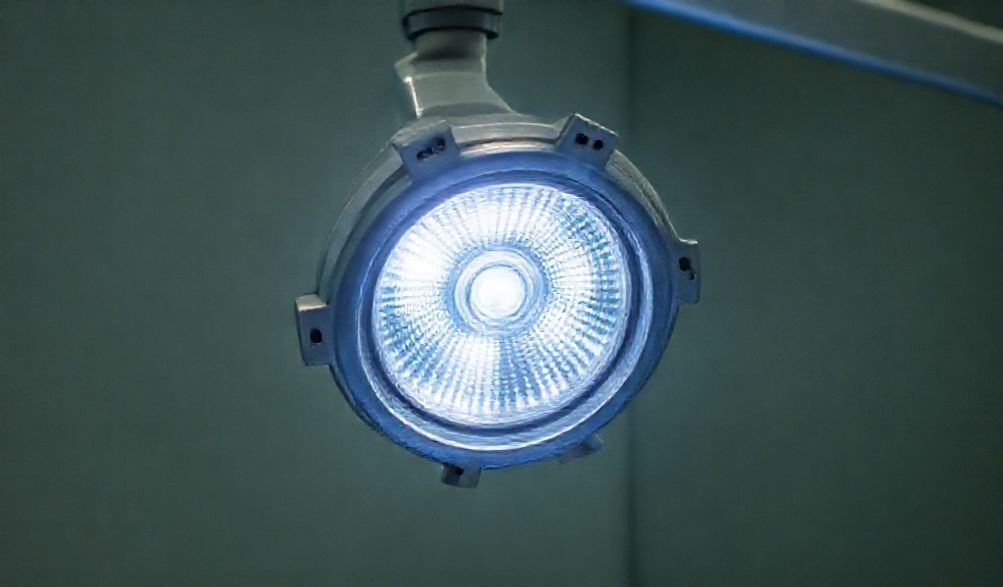
Surgical Headlights: A Surgeon’s Guide to Enhanced Precision, Safety, and Outcomes
Imagine navigating the intricate landscape of the human body—where a millimeter can mean the difference between success and complication—but you’re working in shadows. The universal, unspoken challenge in surgery isn’t just skill or knowledge; it’s the fundamental need for perfect, unobstructed visualization. In deep cavities, around delicate structures, and within narrow corridors, the quality of light becomes the quality of sight. This raises a critical question for every operating professional: How does your choice of illumination directly impact patient safety, procedural efficiency, and surgical outcomes?
This article serves as an authoritative, comprehensive guide to modern surgical headlights. Grounded in surgical best practices, optical engineering principles, and clinical evidence, it is designed to empower surgeons, hospital procurement teams, and surgical residents. You will gain a clear understanding of the technology, decode essential specifications, learn a structured framework for selection, and master protocols for maintenance. Our core thesis is this: Today’s surgical headlights are not mere flashlights; they are sophisticated, ergonomic systems fundamental to advancing precision, reducing surgeon fatigue, and elevating the entire standard of operative care.
The Critical Role of Illumination in Modern Surgery
Beyond Basic Visibility: Precision and Patient Safety
Optimal surgical lighting transcends simple visibility. It is the cornerstone of precision and a direct contributor to patient safety. Inadequate or shadow-filled lighting forces the surgeon’s eye to constantly adjust, leading to significant visual strain and fatigue. This cognitive load can increase the risk of error. More importantly, high-quality illumination allows for the critical differentiation of subtle tissue variations—the slight change in color signaling ischemia, the texture of a tumor margin, or the delicate path of a microvessel.
Studies and clinical experience consistently show that superior, targeted lighting correlates with improved patient safety metrics. It enables more accurate dissection, reduces inadvertent tissue damage, and facilitates faster identification of anatomical landmarks and bleeding points. The result is often a reduction in operative time and, by extension, a decrease in anesthesia exposure and associated risks for the patient. In essence, what you see determines what you can safely do.
The Evolution from Overhead Lights to Personal Illumination
For decades, the overhead surgical light was the undisputed source of illumination. While these systems have advanced, they possess inherent limitations. They cast shadows from the surgeon’s head and hands, require constant repositioning by staff, can be obstructed by equipment or additional personnel, and often emit significant radiant heat onto the surgical field.
The paradigm shift came with the advent of high-quality, personal illumination systems. Surgical headlights liberated the light source, attaching it directly to the surgeon’s perspective. This innovation meant the light went exactly where the surgeon looked, eliminating shadows created by the operator and providing consistent, cool, and brilliant light deep within cavities that overhead lights could never properly reach. This transition marked a move from general ambient lighting to personalized, precision visualization.
Key Components and Technology of a Surgical Headlight System
Light Source: LED vs. Halogen/Xenon – A Clear Winner
The heart of any headlight is its light source, and here, Light Emitting Diode (LED) technology is the unequivocal winner, rendering older halogen and xenon bulbs obsolete.
- Color Temperature & Spectrum: LEDs produce a consistent, high-color-temperature light (5000-6000K) that closely mimics natural daylight. This “cool white” light enhances contrast and reduces eye strain compared to the yellowish hue of halogen.
- Lifespan & Reliability: An LED module can last 50,000 hours or more, effectively the entire lifetime of the device. Halogen bulbs last a few hundred hours and gradually dim over time.
- Efficiency & Heat: LEDs are extremely energy-efficient, converting most power into light with minimal waste heat. This eliminates the risk of thermal injury to tissues or discomfort to the surgeon, a notable issue with halogen systems.
- Performance: LEDs provide instant, full-intensity light with no warm-up time and maintain consistent luminosity throughout their lifespan.
Understanding Optical Specifications: Lumens, Lux, and Spot Size
Navigating technical specifications is crucial. Here’s a practical, experience-driven decoding:
- Lumens: Measures the total amount of visible light emitted by the source. Think of it as the raw output. For surgical headlights, common ranges are from 20,000 to over 200,000 lux-equivalent lumens.
- Lux (or Equivalent Lux): Measures illuminance or the intensity of light falling on a surface (the surgical field). This is the more critical metric. A small, focused beam can generate extremely high lux from modest lumens. Recommendations vary by specialty:
- Neurosurgery, Spine, Deep-Cavity Procedures: Require very high lux (100,000+), often with a small spot size to penetrate deep tissue.
- ENT, Plastic, Reconstructive Surgery: Benefit from high lux with good color accuracy and a moderately adjustable field.
- Dental/Oral Surgery: Often use slightly lower lux but prioritize lightweight, cordless designs.
- General Surgery & Orthopedics: Need versatile systems with a wide range of adjustable brightness and spot size.
- Spot Size: The diameter of the illuminated area at a given working distance. An adjustable spot size is a vital feature, allowing the surgeon to switch from a wide field for overview to a focused pin-point beam for micro-dissection.
The Power System: Battery Packs and Ergonomics
The power system dictates freedom of movement and comfort during long procedures.
- Belt-Mounted Packs: The traditional choice. They house larger batteries for long life but add weight to the waist and require a cable running up to the headset.
- Waistband/Battery Holster Packs: A lighter variation of the belt pack, often more streamlined.
- Battery-on-Head (BOH) Designs: Integrate a compact, rechargeable battery directly onto the headband. This eliminates the cable entirely, offering maximum freedom of movement and reducing setup time. Advances in lithium-ion technology now allow BOH systems to provide sufficient power (6-10+ hours) for most procedures.
The choice hinges on ergonomics: weight distribution and balance. A poorly balanced system can cause neck and shoulder fatigue. The ideal system feels like a natural extension of the surgeon, forgotten during the focus of the procedure.
How to Choose the Right Surgical Headlight: A Buyer’s Framework
Matching the Headlight to Your Surgical Specialty
Your specialty should guide your primary specifications. Use this as a quick-reference guide:
| Specialty | Primary Need | Key Specifications |
| :— | :— | :— |
| Neurosurgery / Spine | Deep-cavity penetration, shadow elimination | Very High Lux (>150,000), Small/Minimum Spot Size, Deep-Cavity Optics |
| ENT / Facial Plastic | Color accuracy, broad & detailed field | High CRI (>90), Adjustable Spot Size, Bright & Even Field |
| Dental / Oral Maxillofacial | Mobility, access in confined space | Lightweight, Cordless (BOH), Good Mid-Range Lux |
| General / Orthopedic / Vascular | Versatility for open procedures | Wide Brightness Range, Highly Adjustable Spot, Durable Build |
Essential Features Checklist
When evaluating models, ensure they tick these boxes:
- Adjustability: Variable brightness (dimmer control) and adjustable spot size are non-negotiable for adaptability.
- Headband Comfort: Look for a fully adjustable, padded headband. Consider hygiene: are the foam pads easily replaceable or washable?
- Battery Management: A clear battery level indicator (LED lights or digital readout) and quick-charge capability are essential for OR workflow.
- Durability & Support: The device should feel robust. A comprehensive warranty (2-3 years minimum) and accessible service support from the manufacturer or distributor are critical.
Budgeting: Balancing Cost with Long-Term Value (Total Cost of Ownership)
While initial price is a factor, evaluate the Total Cost of Ownership (TCO). A cheaper system with halogen bulbs may seem attractive but will incur frequent, costly bulb replacements and higher energy use. An LED system with a higher upfront cost typically has near-zero consumable costs for years. For institutional procurement, consider not just unit cost, but also the impact on procedure times, potential for reduced error, and surgeon satisfaction/retention. The headlight is a long-term investment in clinical capability.
Best Practices for Use, Maintenance, and Sterilization
Proper Fitting and Alignment for Optimal Performance
A perfect headlight is useless if poorly fitted. Follow these steps:
1. Adjust the headband so it sits securely but comfortably above the eyebrows and around the occiput.
2. Position the light source (on the headband or loupe mount) so it is centered.
3. With both eyes open, look at a target at your typical working distance (e.g., 18 inches). The “hot spot” should be centered in your field of view without you needing to tilt your head. Fine-tune the angle.
4. The goal is a neutral head and neck posture. Improper alignment is a common, preventable cause of postoperative neck strain.
Cleaning, Disinfection, and Sterilization Protocols
Adherence to manufacturer guidelines and hospital infection control policy is paramount. Never assume.
* Headband & Cables: These are non-sterile. They should be cleaned between uses with a hospital-grade disinfectant wipe. Removable foam pads should be cleaned or replaced according to protocol.
* Light Source/Loupe Mount: The metal or plastic bracket that attaches to your loupes or glasses may be designed to be wiped down or, in some cases, autoclaved. Check the specifications.
* The Light Cable/Body: Typically designed for robust disinfection with wipes. Avoid immersing components unless explicitly stated by the manufacturer.
Routine Maintenance and Troubleshooting
Proactive care extends the life of your system:
* Battery Care: Follow charging instructions. Avoid completely draining lithium-ion batteries regularly. Store in a cool, dry place.
* Cable Inspection: Periodically check the cable for kinks, fraying, or damage to the insulation.
* Longevity: LEDs don’t “burn out” but can slowly degrade over decades. There are no user-serviceable parts.
* Troubleshooting:
* Dimming/Flickering: First, check the battery charge. If using a corded system, check connections. Persistent issues may require service.
* No Light: Ensure all connections are secure, the battery is charged, and the device is turned on. Try a different battery pack if available.
Frequently Asked Questions (FAQ)
Q: What is the typical battery life for a modern LED surgical headlight?
A: Most high-quality systems offer 6-10 hours of runtime on a full charge at medium-to-high brightness settings. High-capacity belt-pack batteries can extend this significantly, often lasting through the longest procedures without issue.
Q: Can I integrate a surgical headlight with my existing loupes?
A: Yes, absolutely. Most reputable headlight manufacturers offer universal or brand-specific mounts (e.g., for Zeiss, Designs for Vision, Orascoptic) that securely and safely clamp onto the frame of your surgical loupes, creating a cohesive, integrated visualization system.
Q: How important is the Color Rendering Index (CRI) for surgery?
A: Extremely important. CRI measures a light source’s ability to reveal the true colors of objects compared to natural light. A high CRI (90+ is excellent, 95+ is ideal) is vital for accurately distinguishing tissue colors, identifying anatomical structures, detecting subtle cyanosis, or assessing tissue perfusion and viability.
Q: Are cordless headlights as powerful as corded models?
A: Thanks to advances in LED efficiency and lithium-ion battery density, modern cordless (Battery-on-Head) models now match or even exceed the light output (lux) of older corded systems. You no longer need to sacrifice performance for the freedom of movement and convenience that cordless designs provide.
Q: What is the recommended warranty for a surgical headlight?
A: Look for a comprehensive warranty of at least 2-3 years on the entire system, including the light engine. This reflects the manufacturer’s confidence in its durability. Pay particular attention to the warranty terms for the battery, as these are consumable items with a shorter lifespan, often covered for 1-2 years.
Conclusion
Selecting a surgical headlight is a critical professional decision with direct clinical implications. It is far more than purchasing a piece of equipment; it is an investment in your precision, your ergonomic health, and ultimately, the standard of care you provide to your patients. As this guide has outlined, the key is to prioritize the specifications that align with your specific procedural demands and physical comfort over generic features or marketing claims.
We strongly recommend a hands-on demonstration before any purchase. Feel the weight, test the balance, adjust the beam, and experience the quality of light. Look to the horizon, where emerging trends like integrated 4K camera systems for recording and teaching, or adaptive smart lighting, await. Ultimately, the foundation of exceptional surgical practice is the synergy of proper tools, deep knowledge, and refined skill. Empower your vision with the best illumination possible. For personalized advice, consult with experienced colleagues and reputable, established medical equipment providers who understand the nuanced demands of the operating room.
p>