
Your Complete Guide to Buying Surgical Lights for Sale: Features, Types, and Key Considerations
Operating rooms are theaters of immense precision, where outcomes hinge on the skill of the surgeon and the clarity of the field. In this high-stakes environment, illumination is not a utility—it is a critical medical device. The quality of light directly influences diagnostic accuracy, surgical precision, and ultimately, patient safety. Whether you are a hospital administrator overseeing a suite renovation, a procurement specialist sourcing equipment, or a surgeon advocating for your team’s needs, purchasing surgical lights represents a significant capital investment with long-term implications.
This comprehensive guide is designed to demystify the process. We translate complex technical specifications into clear, actionable insights, empowering you to navigate the market for surgical lights for sale with confidence. Our goal is to be your authoritative resource, blending deep industry knowLEDge with a practical understanding of the clinical and operational challenges faced by healthcare facilities. By the end, you’ll be equipped to make an informed decision that balances unparalleled clinical performance, surgeon ergonomics, and long-term financial value.
Understanding Surgical Lighting: More Than Just Brightness
To evaluate surgical lights for sale effectively, one must first appreciate that they are engineered instruments, not simple lamps. Their design addresses specific physiological and practical challenges inherent to surgery.
Core Principles of Surgical Illumination
Three optical principles form the bedrock of effective surgical lighting:
- shadow reduction & Depth Perception: Unlike a single spotlight, which casts harsh, obstructive shadows, surgical lights use multiple LED points or complex reflector systems. These sources converge from slightly different angles, filling in shadows created by hands, instruments, or deep within body cavities. This multi-point design is crucial for providing three-dimensional perception, allowing surgeons to accurately judge depth and tissue relationships.
- Color Rendering Index (CRI): This is a measure of a light source’s ability to reveal the true colors of objects compared to natural light. In surgery, a high CRI (typically >90, with >95 being ideal) is non-negotiable. It enables surgeons to distinguish between subtle tissue variations—differentiating arterial from venous blood, identifying bile ducts, or recognizing early signs of tissue ischemia. Poor CRI can lead to visual fatigue and diagnostic errors.
- Luminance & Homogeneity: Luminance refers to the intensity of light, often measured in lux (illuminance) at the surgical site. While sufficient intensity (e.g., 40,000 to 160,000 lux) is vital, its distribution is equally important. The light field must be homogeneous—uniformly bright across its entire diameter without a blinding central “hot spot” or dim edges. This even illumination prevents eye strain as the surgeon’s gaze moves across the wound and ensures consistent visibility regardless of where in the field they are working.
The Evolution from Halogen to LED
The technology behind surgical lights has undergone a profound transformation:
- Halogen & Metal Halide: For decades, these were the standards. While providing acceptable light quality, they came with significant drawbacks: they generated intense radiant heat, posing a risk of tissue desiccation and surgeon discomfort. Their bulbs had short lifespans (1,000-2,000 hours), leading to frequent, costly replacements and operational downtime. They were also energy-inefficient, converting most power into heat rather than light.
- The LED Revolution: Light Emitting Diode (LED) technology is now the unequivocal standard for modern surgical lights for sale. Its advantages are transformative:
- Cool Operation: LEDs emit minimal infrared radiation, drastically reducing heat transfer to the surgical site and the surgical team.
- Exceptional Longevity: LED arrays boast lifespans of 30,000 to 60,000 hours, translating to a decade or more of normal use without a bulb change.
- Instant & Consistent Output: They reach full intensity immediately, with no warm-up time, and maintain consistent color temperature and output over their lifespan.
- Energy Efficiency: LEDs consume a fraction of the power of older technologies, offering substantial savings on utility bills.
When evaluating options, consider LED technology the baseline requirement.
Key Features to Evaluate When Comparing Surgical Lights for Sale
Armed with foundational knowledge, you can now dissect the specifications sheet. Use this checklist to compare models critically.
Optical Performance Specifications
- Light Field Diameter & Depth: Match the light’s performance to your surgical specialty. A broad, shallow field is excellent for superficial or laparoscopic procedures. For deep-cavity surgeries like spinal, pelvic, or cardiac operations, you need a light with a high “depth of illumination”—the ability to deliver intense, homogeneous light deep into a wound (e.g., 15cm to 30cm deep). The diameter at the deepest point of focus should remain adequate.
- Color Temperature Options: Measured in Kelvin (K), color temperature affects visual perception. A “cooler” white (4500K-5000K) can enhance contrast and is often preferred for microsurgery. A “warmer” white (4000K) may reduce eye strain during long procedures and render tissue tones more naturally. The most versatile lights offer adjustable color temperature, allowing surgeons to tailor the light to the procedure and personal preference.
- Infrared (IR) and Ultraviolet (UV) Filtering: High-quality LEDs inherently emit little IR/UV, but premium designs incorporate additional filters. This is critical to eliminate the remaining radiant heat (IR) that can dry tissue and to block UV rays that can cause surgeon eye fatigue over time.
Mechanical & Ergonomic Design
- Mounting Solutions: Your OR layout dictates the choice.
- Ceiling Mount: The most common, freeing up floor space and offering the widest range of motion. Requires structural assessment of ceiling load capacity.
- Wall Mount: A space-saving alternative for smaller rooms or where ceiling mounting is impractical.
- Floor Stand: Offers maximum portability for multi-purpose rooms, outpatient centers, or veterinary clinics. Consider stability and cable management.
- Maneuverability & Reach: The suspension system is the “arm” of the light. Look for a double-jointed, parallelogram design or a central sterile column (CSC) system that allows easy, drift-free positioning with a single touch. It should have a wide horizontal reach and the ability to be positioned out of the way when not in use. Smooth, effortless movement is key to maintaining a sterile field.
- Sterility & Cleanability: The light must support infection control protocols. Handles should be designed for one-handed, sterile manipulation. All surfaces, especially control panels and joints, should be seamless, crevice-free, and fully sealed to withstand daily wiping with aggressive disinfectants like hydrogen peroxide without degrading.
Reliability and Total Cost of Ownership (TCO)
The purchase price is just the beginning. True value is measured over the asset’s life.
- LED Lifespan & Warranty: Scrutinize the manufacturer’s claimed LED lifespan (L70 rating indicates hours until output drops to 70%). More important is the warranty. A comprehensive 3-5 year warranty covering the LED engine, electronics, and mechanical parts signals robust build quality and manufacturer confidence.
- Serviceability & Downtime: Modular design is a major advantage. Can individual LED modules, control boards, or handles be replaced quickly without removing the entire light? What is the manufacturer’s service network like? Fast, local technical support minimizes OR downtime—a cost far exceeding most repair bills.
- Energy Consumption: Calculate the operational savings. An LED light may use 80% less energy than a comparable halogen model. Over 10 years, this can amount to thousands of dollars in saved electricity costs, directly improving your facility’s bottom line.
Navigating the Market: Types of Surgical Lights Available
The market for surgical lights for sale offers configurations for every need and budget.
Single-Head vs. Dual-Head Surgical Lights
- Single-Head Lights: Ideal for minor procedure rooms, outpatient surgery centers, or specialized applications where space is limited or illumination needs are focused. They are typically more cost-effective but lack the shadow-cancelling capability of a dual-head system.
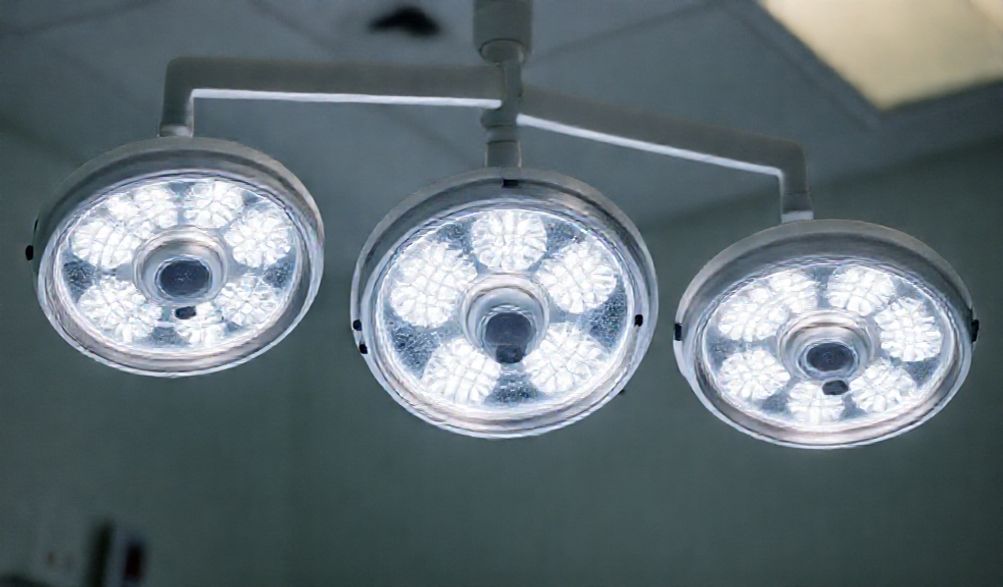
- Dual-Head (and Multi-Head) Lights: The gold standard for main operating rooms. The two (or more) independent light heads can be positioned to overlap their fields, virtually eliminating shadows even from multiple surgeons and instruments. They offer redundancy; if one head fails, the other can often provide sufficient light to complete a procedure.
Specialized Surgical Lighting Solutions
- Hybrid/Integrated Lights: These systems combine a primary overhead light with secondary features, such as a built-in high-definition camera for documentation/teaching, a high-intensity examination light for close-up work, or even integrated displays.
- Specialty Lights: Certain fields demand tailored solutions:
- Surgical Headlights: Fiber-optic or LED headlamps provide portable, coaxial shadow-free light for deep and narrow cavities.
- Dental Operatory Lights: Designed for the seated clinician, with a focus on oral cavity illumination and patient comfort.
- Veterinary Surgery Lights: Built to withstand diverse environments and often feature flexible mounting for varied table heights and animal sizes.
The Purchasing Process: A Step-by-Step Guide
A structured approach prevents costly mistakes and ensures the final selection meets all stakeholder needs.
Conducting a Needs Assessment for Your Facility
- Surgical Specialty Analysis: Engage your surgeons. A cardiovascular team’s needs (deep cavity, high intensity) differ from a plastic surgeon’s (color accuracy, homogeneous field) or an ophthalmologist’s (cool, focused light). Create a list of must-have specifications based on your most common and demanding procedures.
- OR Layout & Infrastructure Audit: Involve your biomedical engineering and facilities team. Measure ceiling height, assess structural support for weight and torque, verify electrical supply points, and plan for cable management. This step can immediately narrow your mounting options.
- Budgeting with TCO in Mind: Present the budget not just as a purchase price, but as a 7-10 year financial model. Include estimated costs for energy, preventive maintenance, potential repairs (factoring in warranty), and the labor cost of OR downtime. A slightly more expensive, reliable light with a strong warranty often has a lower TCO.
Vetting Manufacturers and Suppliers
- Regulatory Compliance is Non-Negotiable: In the US, surgical lights are Class II medical devices requiring FDA 510(k) clearance. Ensure any light you consider has this or the equivalent (CE marking, ISO 13485 certification). Request the documentation.
- Evaluate Supplier Credentials: You are entering a long-term partnership. Choose an established supplier with a proven track record. Do they offer professional installation? Comprehensive training for staff? A responsive, local service network? Check references from similar facilities.
- Insist on a Clinical Demonstration or Trial: A spec sheet cannot convey the feel of a light. Arrange for a demo in a non-sterile area of your facility, or better yet, a short-term trial in a real OR setting. Have surgeons and nurses test the maneuverability, sterility handles, and light quality on a simulated field. Their hands-on feedback is invaluable.
FAQ: Common Questions About Buying Surgical Lights
Q: What is the typical lifespan of a modern LED surgical light?
A: High-quality LED surgical lights typically have a rated lifespan of 30,000 to 60,000 hours. Under normal operating room schedules, this translates to 10-20 years of use before a significant drop in light output, virtually eliminating the bulb replacement costs and hassles of older technologies.
Q: Can I retrofit my old surgical light with an LED module?
A: Some manufacturers offer LED retrofit kits for their own older models. While potentially cost-saving upfront, proceed with caution. You must verify that the retrofit maintains optical performance (homogeneity, depth of field), doesn’t void remaining warranties, and is supported by the manufacturer. Often, a new system designed from the ground up for LED technology offers superior performance, ergonomics, and a full new warranty.
Q: How important is the warranty, and what should it cover?
A: Extremely important. A strong warranty is a proxy for product reliability. Look for a comprehensive warranty of at least 3 years that explicitly covers the core components: the LED light engine/array, the electronic control systems, and the mechanical parts of the suspension system (motors, brakes, arms). Understand the response time and labor coverage terms.
Q: What’s the difference between a “procedure light” and a “surgical light”?
A: This is a critical distinction. A “surgical light” is a regulated medical device (FDA Class II) designed for major invasive procedures in a sterile field. It must meet stringent standards for shadow reduction, depth of illumination, color rendering, and sterility. A “procedure light” is often used for minor exams, wound dressing changes, or in non-sterile environments like emergency bays. It may have lower intensity, poorer homogeneity, and may not be designed for repeated harsh chemical disinfection.
Q: How do I ensure the light is easy to keep sterile?
A: Examine the physical design. The best lights have a “clean room” aesthetic: smooth, seamless surfaces with no visible screws or gaps. Handles and control panels should be fully encapsulated and sealed. Confirm with the manufacturer the specific list of hospital-grade disinfectants (e.g., bleach, hydrogen peroxide, quaternary ammonium) that are approved for use on the light’s surfaces without causing damage over time.
Conclusion
Selecting the right surgical lights for sale is a multifaceted decision that resonates through your operating rooms for a decade or more. It impacts patient outcomes, surgeon satisfaction, team efficiency, and your facility’s financial health. The journey requires moving beyond glossy brochures and engaging in a disciplined evaluation of clinical needs against technical capabilities, always viewed through the lens of long-term value.
By grounding your search in the core principles of surgical illumination, rigorously applying the feature checklist, and following a structured procurement process that prioritizes clinical input and supplier reliability, you can make a confident investment. This investment won’t just light a room; it will illuminate the path to safer surgery, more efficient operations, and the highest standard of patient care. Begin by convening your clinical and technical teams to define needs, then use this guide as your roadmap to navigate the market and find the optimal solution for your facility.
Disclaimer: This guide is for informational purposes to support your purchasing research. All technical specifications and regulatory compliance must be verified directly with the equipment manufacturer. Consult with clinical staff, biomedical engineering, and procurement specialists within your institution before making a final purchasing decision.
p>