
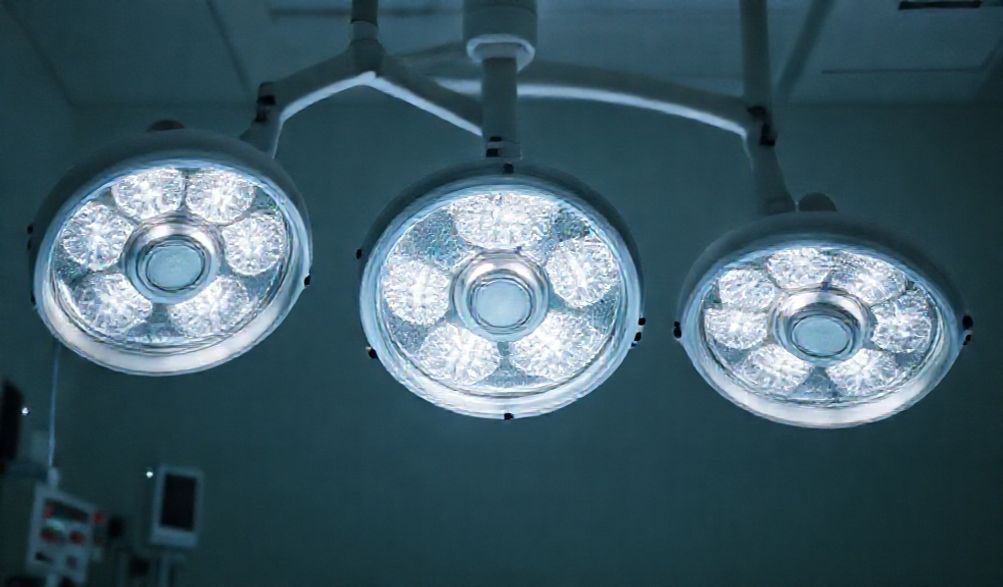
Illuminating Precision: The Ultimate Guide to Shadow-Free Surgical Lights
Imagine a cardiac surgeon preparing to suture a microscopic coronary artery, a neurosurgeon navigating the delicate folds of the brain, or an orthopedic surgeon aligning a complex fracture. In each scenario, a single, unseen variable could mean the difference between success and complication: a shadow. It’s estimated that visual clarity accounts for up to 90% of a surgeon’s sensory input during a procedure. When critical anatomy is obscured by inconsistent lighting, the risks multiply. Modern surgery demands not just light, but perfect, consistent, and intelligent illumination.
The challenge of the traditional surgical light is its inherent flaw: it casts shadows. A surgeon’s head, hands, or instruments can plunge the surgical site into darkness, forcing awkward repositioning, increasing mental strain, and elevating the risk of error. This isn’t merely an inconvenience; it’s a direct threat to patient safety and surgical efficiency. This guide delves into the critical world of modern surgical lights with no shadow, exploring the technology that makes them possible, their undeniable benefits, and the practical criteria for selecting the right system. Our analysis is grounded in the principles of evidence-based medical design, synthesizing engineering innovation, clinical ergonomics, and stringent industry standards to provide a comprehensive resource for healthcare professionals.
Why “No Shadow” Lighting is Non-Negotiable in Modern Surgery
The operating room is a theater of precision, where millimeters and milliseconds matter. Lighting is the stage director, and its quality dictates the performance of the entire surgical team. Moving beyond simple brightness, the elimination of shadows has become a fundamental requirement for advanced surgical care.
The Critical Impact of Shadows on Surgical Outcomes
Shadows are more than just areas of darkness; they are zones of uncertainty. In a deep cavity during a spinal fusion, a shadow can hide a critical nerve root. In laparoscopic surgery, poor illumination can distort the view on the monitor, making tissue differentiation challenging. Shadows force surgeons to work from memory and inference rather than direct, clear visualization.
This has tangible clinical consequences. Studies examining surgical error often cite visual obstruction as a contributing factor. While specific citations are beyond this blog’s scope, research in journals like the Journal of Clinical Anesthesia and Surgical Endoscopy consistently highlights the link between optimal visualization and reduced intraoperative complications, shorter procedure times, and improved patient recovery metrics. Shadow-free lighting is, therefore, not a luxury but a foundational component of patient safety protocols, directly supporting the surgeon’s ability to execute with unparalleled accuracy.
Beyond Visibility: Enhancing Surgical Team Performance
The benefits of shadow-reduced illumination extend beyond the immediate surgical field to the well-being of the entire OR team. Conventional lighting, with its stark contrasts and deep shadows, causes significant visual fatigue. The human eye must constantly adjust between bright and dark areas, leading to strain, headaches, and decreased concentration over long procedures.
A homogeneous, shadow-minimized light field creates a visually comfortable environment. This reduces cognitive load and physical stress, allowing surgeons and assistants to maintain focus and dexterity throughout lengthy and complex operations. The ergonomic payoff is substantial: less neck and back strain from avoiding awkward postures to “chase the light,” and less mental fatigue, contributing to better decision-making stamina. In essence, superior lighting is a tool for enhancing human performance, enabling surgical teams to operate at their peak for longer.
The Technology Behind Truly Shadow-Free Illumination
Achieving a near-perfect, shadow-reduced field is a feat of optical and mechanical engineering. It moves far beyond a simple, powerful bulb to an integrated system designed to mimic the most uniform light source of all: daylight.
Multi-Source Lighting and Optical Design
The core principle behind surgical lights with no shadow is the strategic use of multiple light sources. Instead of one bright lamp, a modern surgical light head contains an array of many smaller LEDs. These LEDs are arranged on a curved reflector panel so that each one illuminates the surgical site from a slightly different angle.
When a surgeon’s hand or instrument blocks the light path from one LED, the others immediately fill in the gap from their different angles. The result is that shadows are dramatically reduced, rendered soft, and displaced to non-critical areas. This is augmented by sophisticated optical components:
* Reflectors: Engineered surfaces that direct and mix light rays before they leave the lamp head.
* Lenses/Filters: Help to focus the light and further homogenize the beam.
* Diffusers: Create a smooth, even light field without harsh edges or “hot spots.”
LED Revolution: Brightness, Color, and Control
The shift from halogen or metal halide to Light Emitting Diode (LED) technology has been transformative for surgical illumination. LEDs are the ideal partner for multi-source shadow management.
* Compact Arrays: Their small size allows for hundreds of individual sources to be packed into a light head, creating exceptionally dense and overlapping light paths for superior shadow fill.
* Superior Color Rendering Index (CRI): CRI is a measure of a light source’s ability to reveal the true colors of an object compared to natural sunlight. For surgery, a CRI of 90+ (out of 100) is essential. It allows for precise differentiation between arterial blood, venous blood, fatty tissue, and various organ structures. LED systems consistently achieve CRIs of 95+.
* Adjustable Color Temperature: Surgeons can often adjust the light’s color temperature, measured in Kelvins (K). A cooler, bluer light (e.g., 4500K) can enhance contrast in superficial procedures, while a warmer, yellower light (e.g., 4000K) may be preferred for deep-cavity work, reducing eye fatigue.
* Cool Operation & Longevity: LEDs emit very little infrared radiation, minimizing heat transfer to the surgical site and the surgical team’s heads. They also have lifespans exceeding 50,000 hours, drastically reducing downtime and replacement costs.
Advanced Systems: Depth of Field and Cavity Lighting
True performance is tested in deep surgical sites. Advanced systems are engineered to provide consistent intensity and color quality even at depths of 20-30 cm into a cavity. This is achieved through precise optical engineering that controls the light beam’s divergence. Furthermore, some systems offer a “focus” or “depth” adjustment, changing the field diameter and intensity profile to optimally illuminate either a wide superficial area or a deep, narrow site without sacrificing homogeneity.
Key Features to Evaluate When Choosing a System
Selecting a surgical light with no shadow requires looking beyond marketing claims to measurable performance and practical design. Here are the critical axes of evaluation.
Illumination Performance Metrics
- Lux Intensity & Homogeneity: Evaluate the lux (illuminance) at the typical working distance (e.g., 1000mm). More important is the homogeneity—the uniformity of light across the entire field. A spec of “≥ 160,000 lux with homogeneity > 75%” is more meaningful than a peak lux number alone. Beware of “hot spots.”
- Field Diameter: The size of the illuminated area at various distances. It should be easily adjustable.
- Depth of Illumination: Can the light maintain effective, homogeneous intensity deep into a cavity? Request performance graphs from the manufacturer.
Mechanical Flexibility and Sterility
- Maneuverability: The light must go where the surgery is, effortlessly. Evaluate the articulation arms for their range of motion, balance (does the head stay where you put it?), and ease of handling. A “sterile handle” that can be draped or is easily cleanable is mandatory.
- Design for Infection Control: The entire light head should have a seamless, closed design with no crevices where contaminants can lodge. It must withstand rigorous cleaning with hospital-grade disinfectants.
Reliability and Total Cost of Ownership
The initial purchase price is just one part of the equation. Consider the Total Cost of Ownership (TCO):
* Energy Efficiency: LEDs consume up to 70% less power than halogen systems.
* Lifespan & Maintenance: With no bulbs to replace and long LED lifespans, maintenance costs plummet. Inquire about the Mean Time Between Failures (MTBF) for critical components.
* Service & Support: Ensure the manufacturer offers reliable local service and support contracts.
Implementing Optimal Surgical Lighting: A Practical Guide
Assessing Your Operating Room’s Needs
Begin with a clinical and architectural assessment:
* Surgical Specialties: Cardiothoracic and neurosurgery may prioritize deep-cavity performance, while plastic surgery might value exceptional color rendering.
* OR Layout & Ceiling: Determine the ceiling height, track systems, and number of lights needed per room (often a primary and a secondary “satellite” light).
* Integration: In a hybrid or digital OR, ensure the lighting system can interface with room controls, surgical video systems, and potentially offer built-in cameras.
Installation and Calibration Best Practices
Professional installation is non-negotiable. A technician must calibrate the multiple light sources within a single head (and between primary and satellite lights) to ensure perfect overlap and the promised homogeneity. This is also the time for comprehensive staff training on all features, handling, and cleaning protocols.
Routine Maintenance for Consistent Performance
Protect your investment with a simple maintenance routine:
* Daily/Cleaning: Wipe down handles and light heads with approved disinfectants.
* Monthly/Visual Check: Inspect arms for smooth movement and any signs of wear. Ensure handles are intact.
* Annually/Professional Service: Schedule a manufacturer service to verify optical alignment, check electrical systems, and ensure all performance metrics are still being met.
Frequently Asked Questions (FAQ)
Q1: Are “shadow-free” surgical lights completely without any shadows?
A: While no physical system can eliminate all shadows 100%, high-quality multi-source LED systems reduce them to such a degree that they become clinically insignificant. The goal is “shadow-reduction” so effective that no critical part of the surgical field is ever obscured, making it functionally shadow-free for the surgical team.
Q2: How do LED surgical lights compare to traditional halogen in terms of shadow management?
A: LED systems are inherently superior for shadow management. Their design allows for dense arrays of dozens or hundreds of small light sources, creating natural and homogeneous overlap. Traditional halogen lights, often relying on a single or dual source with a reflector, cannot achieve the same level of seamless shadow fill and consistent field homogeneity.
Q3: What is Color Rendering Index (CRI) and why is it important?
A: CRI measures a light’s ability to reveal the true colors of objects compared to natural light. A high CRI (90+ is ideal for surgery) is crucial for accurately distinguishing between tissues, arteries, veins, and organs. This accurate color differentiation is vital for precision, diagnosis during a procedure, and overall surgical safety.
Q4: Can these lighting systems be integrated with digital or hybrid ORs?
A: Absolutely. Modern systems are designed for integration. They often feature digital control interfaces, compatibility with OR integration systems (like nurse control panels), and options for direct camera mounting or built-in 4K cameras. When selecting lights, discuss your facility’s integration roadmap with the provider.
Q5: How often do surgical lights need to be serviced or replaced?
A: LED modules have exceptionally long lifespans, often rated for 50,000 to 100,000 hours (decades of normal use). The primary maintenance focus is on the mechanical arms and controls. A routine annual professional inspection is recommended. The total system, with proper care, can be a 10-15 year investment, making quality and reliability paramount.
Conclusion
The journey to surgical excellence is illuminated by technology that removes barriers to precision. As we have explored, surgical lights with no shadow represent a critical evolution in operating room technology, directly supporting enhanced patient safety, superior clinical outcomes, and improved surgeon ergonomics. This is made possible by the synergy of multi-source optical design and advanced LED technology, delivering unparalleled homogeneity, color accuracy, and depth penetration.
When evaluating systems, look beyond the initial price tag. Prioritize the performance metrics that matter: homogeneity of the light field, a high Color Rendering Index (CRI), proven depth of illumination, and mechanical reliability. The total cost of ownership of a quality LED system often makes it the more intelligent financial choice over time.
Investing in optimal surgical lighting is, fundamentally, an investment in your patients’ well-being and your surgical team’s capability. We recommend partnering with experienced clinical engineers and trusted medical equipment providers who can demonstrate the technology in a realistic setting. Take the next step: request a live demonstration in a simulated OR environment. Experience firsthand the difference that truly shadow-reduced, homogeneous illumination makes in visualizing anatomy and handling instruments. See how the right light can illuminate a path to higher standards of care.
p>