
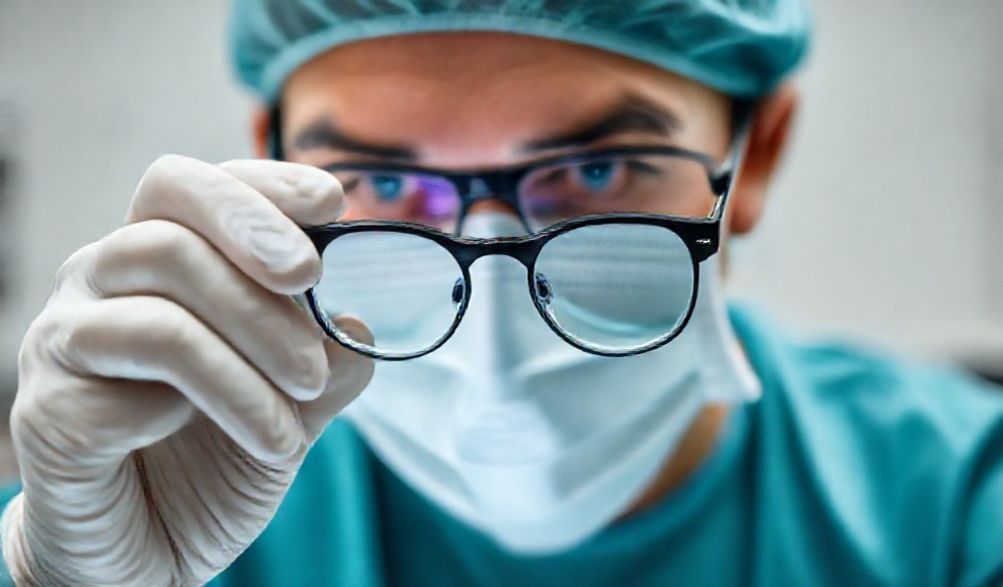
Surgical Loupe Glasses: A Comprehensive Guide for Medical Professionals
In the high-stakes world of precision-based medicine, the margin for error is often measured in millimeters. Whether performing a delicate vascular anastomosis, a complex dental restoration, or intricate ophthalmic surgery, the universal challenge remains the same: achieving and maintaining flawless visual acuity. The human eye, while remarkable, has its physiological limits, especially under the strain of prolonged focus on a small, shadow-filled field. This is where the transformative tool of surgical loupe glasses comes into play. Far more than simple magnifiers, modern loupes are sophisticated optical systems engineered to enhance a practitioner’s natural abilities and protect their long-term health.
This comprehensive guide is designed to demystify surgical loupes. Compiled from industry standards, principles of optometric science, and the documented experiences of thousands of surgical professionals, it serves as an authoritative resource. Our goal is to help surgeons, dentists, veterinarians, and other procedural specialists understand, select, and utilize surgical loupe glasses effectively. By the end, you will see how the right loupes are not merely an accessory but a critical investment in enhanced surgical outcomes, reduced physical fatigue, and career longevity. The information herein is grounded in manufacturer specifications, peer-reviewed ergonomic studies, and established clinical best practices.
What Are Surgical Loupe Glasses? Defining the Tool
At its core, a surgical loupe is a magnification system worn like glasses. However, to dismiss them as “magnifying glasses” is to overlook the sophisticated engineering that makes them indispensable in modern medicine.
The Basic Principle: Magnification and Clarity
Surgical loupes function as telescopic systems. There are two primary optical designs:
- Galilean Loupes: These use a simple two-lens system (a convex objective lens and a concave eyepiece). They are typically lighter, more compact, and less expensive. They offer good depth of field but are generally limited to lower magnifications (up to about 3.5x) before becoming too bulky.
- Prismatic (Keplerian) Loupes: These employ a more complex system of prisms to fold the light path. This design allows for higher magnifications (4.5x and above) with a wider field of view and superior optical clarity, but they are often heavier and more costly.
Three interrelated optical concepts are crucial for understanding loupe performance:
- Working Distance (WD): This is the distance from your eye to the surgical site where the image is in perfect focus. It is a fixed, custom measurement based on your posture.
- Depth of Field (DOF): This is the range, in front of and behind the focal point, within which objects remain acceptably sharp. Higher magnification typically reduces DOF.
- Field of View (FOV): This is the diameter of the area you can see through the loupes at the working distance. A wider FOV provides better situational awareness.
More Than Just Magnification: The Ergonomic Imperative
Perhaps the most significant benefit of loupes is their role as an ergonomic intervention. Without loupes, a professional instinctively bends their head and neck forward to bring their eyes closer to the work, adopting a “turtle-neck” posture. This places immense strain on the cervical spine, trapezius muscles, and supporting structures.
Surgical loupes promote a neutral posture. By providing magnification, they allow you to see fine detail while keeping your head upright and your spine in a healthier, aligned position. This is not a minor comfort issue; it is a critical defense against career-ending musculoskeletal disorders (MSDs). Studies consistently show a high prevalence of neck and back pain among surgeons and dentists, directly linked to prolonged static postures. Loupes are a primary tool for mitigating this occupational hazard.
Key Benefits of Using Surgical Loupes
The investment in a quality pair of surgical loupes yields a powerful return across multiple dimensions of clinical practice.
Enhanced Visual Accuracy and Surgical Precision
Magnification reveals what the naked eye cannot see. This leads to tangible improvements in technical execution:
* Improved Knot Security: Visualizing suture throws and knot configuration with clarity.
* Refined Tissue Handling: Differentiating tissue planes and identifying micro-structures with greater ease.
* Reduced Error Rates: Enhanced visualization leads to fewer mistakes in delicate tasks like microsurgical anastomosis or caries removal. Research has documented measurable improvements in accuracy and efficiency when loupes are employed in various surgical and dental procedures.
Improved Practitioner Ergonomics and Health
As outlined above, this is a paramount benefit. By enabling an upright posture, loupes directly reduce the compressive forces on cervical discs and muscular fatigue in the neck and shoulders. This translates to less pain during and after procedures, reduced risk of chronic injury, and the preservation of physical capability throughout a long career. Framing loupes as a long-term health investment is entirely accurate.
Increased Confidence and Reduced Eye Strain
The visual effort required to focus on a tiny area for hours is significant and leads to accommodative fatigue. Loupes do this focusing work for you. By providing a clear, magnified image, they dramatically reduce the cognitive load associated with visual processing. This leads to less overall fatigue, greater mental stamina during long cases, and a corresponding boost in confidence, as you can trust what you see.
Critical Factors to Consider When Choosing Loupes
Selecting loupes is a highly personal process. The “best” loupes are the ones perfectly matched to your anatomy, specialty, and procedural needs.
Magnification Power (x): Finding the Right Level
Magnification is the most obvious starting point, but more is not always better.
* 2.0x – 3.5x: The sweet spot for general surgery, dentistry, veterinary surgery, and nursing procedures (like IV starts). Provides a good balance of magnification, field of view, and depth of field for most macro-to-mid-level tasks.
* 4.5x and above: Essential for microsurgery, endodontics, periodontics, and ophthalmology. Used for tasks requiring extreme detail. Remember, higher power means a smaller field of view and shallower depth of field, requiring more precise head movement and potentially a brighter headlight.
Working Distance (WD): Measured for Your Posture
Your WD is unique. It is measured from the tear film of your eye to your primary operative field while sitting or standing in your typical, comfortable working posture. An accurate measurement is critical—incorrect WD will force you into an awkward, strained position to achieve focus. Most vendors conduct this measurement during a professional fitting.
Field of View (FOV) and Depth of Field (DOF): The Balancing Act
- FOV: A wider field of view allows you to see more of the operative site without moving your head, improving efficiency and spatial awareness. Prismatic loupes generally offer a wider FOV than Galilean loupes at equivalent magnification.
- DOF: A greater depth of field means more of the three-dimensional surgical site stays in focus if you move slightly closer or farther. This is forgiving and comfortable. Higher magnification and wider FOV often come at the expense of DOF.
Frame Design and Fit: Comfort is King
If they aren’t comfortable, you won’t wear them. Key considerations include:
* TTL vs. Flip-Up: Through-the-Lens (TTL) loupes have the optical barrels permanently fixed in the line of sight. They are lighter, more stable, and offer a wider field of view but require you to look through them constantly. Flip-Up loupes have a hinged mechanism that allows you to flip the optics up and down. They offer flexibility (easy switching between magnified and unmagnified vision) and can be used with prescription glasses, but can be slightly heavier and less stable.
* Weight & Balance: The weight should be distributed evenly across the nose and ears. Lightweight materials like titanium are popular for all-day comfort.
* Adjustability: Look for adjustable nose pads, temple lengths, and tilt angles for a truly customized fit.
Advanced Features and Integrated Systems
Today’s loupes are often part of a broader integrated system.
Surgical Headlights: The Essential Companion
Magnification is useless without proper illumination. Shadows are magnified just as much as the tissue. A coaxial headlight (where the light path is aligned with the line of sight) is crucial for eliminating shadow and providing bright, even light directly into the depth of the wound.
* LED Technology: Modern LEDs offer brilliant, white light with minimal heat emission and long battery life.
* Battery Systems: Options include lightweight belt-pack batteries or rechargeable battery packs mounted directly on the headband, balancing weight and runtime.
Digital Integration and Camera Systems
Loupes-mounted cameras are revolutionizing documentation, teaching, and collaboration.
* High-Definition Recording: Capture procedures for patient records, legal documentation, or self-review.
* Live Teaching & Telemedicine: Stream the surgeon’s point-of-view to observers, students, or remote consultants in real-time.
* Form Factor: Cameras are now remarkably small and lightweight, often attaching discreetly to the loupe frame or integrated into the optical path itself.
The Fitting Process and Customization
Why Professional Fitting is Non-Negotiable
Surgical loupes are a custom medical device, not an off-the-shelf product. A proper fitting is essential for reaping the ergonomic and optical benefits. A trained representative will:
1. Analyze your typical working posture.
2. Precisely measure your pupillary distance (PD) and working distance.
3. Have you trial different models and magnifications.
4. Ensure the frame fits securely and comfortably without pressure points.
Skipping this step almost guarantees a suboptimal—and potentially harmful—experience.
Prescription Lenses: Incorporating Your Vision Needs
If you wear corrective lenses, your loupes can and should be made with your personal optical prescription ground into the ocular lenses. This ensures the sharpest possible image. You have the option of a full prescription or a “reader” add for those who only need help at the working distance.
Care, Maintenance, and Safety
Protecting your investment ensures optimal performance and longevity.
Daily Cleaning and Safe Handling Protocols
- Step 1: Use a soft, clean, lint-free microfiber cloth.
- Step 2: Gently blow or brush away any loose debris first to avoid scratching.
- Step 3: If needed, apply a small amount of lens cleaner designed for anti-reflective coatings (or use a gentle soap and water solution) to the cloth—never directly on the lens.
- Step 4: Wipe lenses gently in a circular motion.
- Avoid: Paper towels, shirt sleeves, rough fabrics, ammonia- or alcohol-based cleaners (they can damage coatings), and excessive pressure.
Proper Storage and Transportation
- Always store your loupes in their designated hard case when not in use.
- Never place them lens-down on a surface.
- The hard case protects the critical optical alignment from bumps and shocks.
Periodic Professional Inspection and Adjustment
- Schedule an annual “check-up” with your vendor or a qualified technician.
- They will verify optical alignment (convergence), check hinge tension, and ensure all components are secure. Misaligned loupes can cause headaches, double vision, and negate ergonomic benefits.
FAQ Section
Q: What is the typical cost range for a good pair of surgical loupes?
A: A quality entry-level system starts around $800 – $1,200. Mid-range systems with good optics and a basic headlight typically range from $1,800 – $2,800. High-end, fully customized prismatic loupes with integrated high-lumen LED headlights and camera compatibility can range from $3,000 to $5,000+. It’s vital to frame this as a long-term investment in your skill, health, and career, not merely an equipment purchase.
Q: How long does it take to get used to wearing surgical loupes?
A: Most professionals report an adaptation period of 1 to 2 weeks of consistent, daily use. Start by wearing them for non-critical tasks or shorter procedures to build muscle memory for the new posture and hand-eye coordination. Some initial dizziness or nausea is not uncommon but should pass quickly.
Q: Can I use my surgical loupes for procedures outside my primary specialty?
A: While physically possible, it is not generally recommended. Your loupes are optimized for a specific working distance and posture. Using dental loupes (shorter WD) for a surgical procedure would force you to hunch over, defeating the ergonomic purpose. It’s best to have loupes fitted for your primary task.
Q: What warranty should I expect?
A: Reputable manufacturers stand behind their optics with extensive warranties, often 5 to 10 years against defects in materials and workmanship. Electronics (headlights, batteries) usually have a shorter warranty, typically 1 to 2 years. A strong warranty is a key indicator of product quality and company confidence.
Q: Are there financing options available for surgical loupes?
A: Yes. Most major suppliers offer financing plans with monthly payments. Additionally, many hospitals, group practices, and DSOs (Dental Service Organizations) provide equipment stipends or include loupes in new-graduate or employment contracts. It’s always worth inquiring with your employer and vendor.
Conclusion
Surgical loupe glasses represent a fundamental convergence of optical science and ergonomic design. They are far from a luxury; they are a critical tool that enhances precision, preserves the practitioner’s physical health, and fosters sustainable career performance. The selection process is deeply personal, requiring careful consideration of magnification, working distance, fit, and integrated features like illumination.
We strongly recommend consulting with multiple reputable vendors for professional fittings before making a final decision. There is no substitute for trying different models on your own face, in a simulation of your working posture.
We invite you to share your own experiences or questions about surgical loupes in the comments below. Learning from the collective wisdom of peers is invaluable. By investing in the right optical tools, you are not just buying equipment—you are optimizing your most important instrument: yourself. In doing so, you pave the way for superior patient care and a long, healthy, and fulfilling career at the forefront of medicine.
p>