
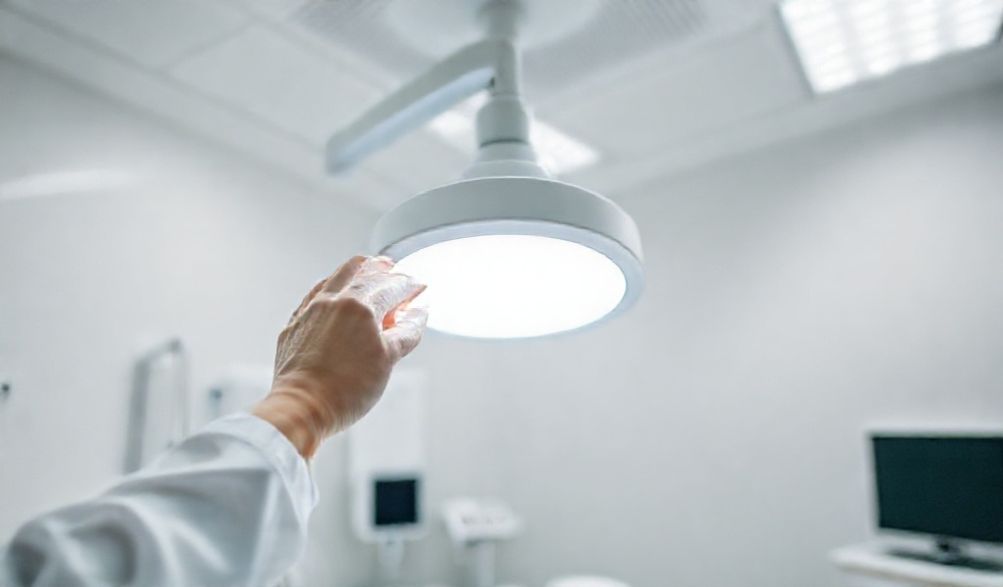
Medical Examination Lights: The Ultimate Guide for Healthcare Professionals
In the intricate dance of clinical diagnosis, few tools are as fundamental—and yet as frequently overlooked—as the medical examination light. It is the silent partner in every visual assessment, the unsung hero that illuminates the subtle signs guiding a physician’s judgment. From detecting the faint jaundice in a sclera to assessing the true vascularization of a healing wound, the quality of light directly translates to the quality of care.
This comprehensive guide is designed for healthcare professionals, clinical purchasers, and facility managers who understand that patient outcomes hinge on precision. Drawing upon clinical expertise and technical insights, we will dissect the critical role of the exam light, explore the technologies that power modern units, and provide a detailed framework for selection, use, and maintenance. Our goal is to empower you to make informed decisions that enhance diagnostic accuracy, improve ergonomics, and ensure long-term value for your practice.
What is a Medical Examination Light? Core Functions and Clinical Importance
A medical examination light is a specialized illumination device designed to provide optimal, shadow-controlled light for the visual inspection and assessment of a patient. Far beyond a simple lamp, it is an engineered clinical instrument. Its core function is to replicate the properties of natural daylight in a controlled manner, enabling healthcare providers to see anatomy, color, texture, and detail with uncompromised clarity. In essence, it extends and refines the clinician’s most vital diagnostic tool: their own vision.
The Role of Examination Lighting in Accurate Diagnosis
The link between illumination and diagnostic accuracy is profound and well-documented. Inadequate or poor-quality lighting is a silent contributor to diagnostic error.
- Reducing Diagnostic Errors: Subtle color variations are often key diagnostic indicators. Poor lighting can mask cyanosis, pallor, erythema, or the characteristic hue of a bruise. A high-quality exam light ensures these visual cues are rendered truthfully, reducing the cognitive load on the clinician and minimizing the risk of oversight.
- Enhancing Visual Acuity: Optimal lighting increases contrast sensitivity and visual resolution. This is critical for tasks like identifying foreign bodies, examining fine vascular structures, or evaluating dermatological conditions. The right light reduces eye strain for the provider, allowing for longer, more focused examinations.
- Real-World Clinical Impact: In wound care, accurate assessment of tissue color (necrotic vs. granulating) dictates treatment plans. In dermatology, distinguishing between benign and malignant lesions relies on precise color and border definition. During an ENT exam, deep cavity illumination is impossible without a focused, bright light source. Each scenario underscores that diagnosis begins with what you can clearly see.
Key Components and Technology of Modern Exam Lights
Understanding the anatomy of an exam light demystifies its performance.
- Physical Components: The system typically consists of a light head (housing the LEDs or bulb and optics), articulated arms for positioning (often with counterbalanced springs), a mounting system (ceiling, wall, rail, or floor stand), and user controls (dimmers, color temperature adjustment).
- Core Lighting Technologies:
- Halogen: The traditional standard, offering good color rendering. Their significant drawbacks include high heat output, high energy consumption, short bulb lifespan (1,000-2,000 hours), and gradual dimming over time.
- LED (Light Emitting Diode): The modern standard. LEDs provide exceptional energy efficiency, extremely long lifespan (50,000+ hours), minimal heat radiation, and instant, consistent full brightness. They allow for precise control over color temperature and intensity.
- Critical Performance Metrics:
- Color Temperature (measured in Kelvin, K): Determines how “warm” (yellowish, ~3500K) or “cool” (bluish, ~5000K) the light appears. Adjustable settings allow customization; cooler temps are often preferred for detail-oriented tasks.
- Color Rendering Index (CRI): A scale from 0-100 that measures a light’s ability to reveal the true colors of objects compared to natural light. For clinical use, a CRI >90 is essential for accurate tissue differentiation.
Types of Medical Examination Lights and Their Specific Applications
Not all clinical spaces have the same needs. Selecting the right type of exam light is the first step toward optimized workflow.
Overhead Examination Lights: The Clinical Workhorse
These are the ubiquitous lights found in standard exam rooms, providing broad, general illumination.
- Design & Mounting: Typically feature a large-diameter light head on a multi-joint arm. Ceiling-mounted lights save floor space and offer the widest range of motion. Wall-mounted units are a cost-effective alternative for smaller rooms or specific procedural areas.
- Ideal Use Cases: Perfect for primary care, pediatrics, internal medicine, and general physical examinations. They provide the versatile, broad-field illumination needed for full-body visual assessments and routine procedures.
Specialized Procedure Lights for Enhanced Care
When tasks require higher intensity, deeper cavity penetration, or specific field patterns, specialized lights come to the fore.
- Surgical Examination Lights: Designed for minor procedures (laceration repair, biopsies, I&D). They offer higher intensity (lux), superior shadow dilution (often via multiple LED arrays), and a focused field pattern. Some are rated for use in sterile fields.
- Portable and Diagnostic Lights: These include:
- ENT Lights: Often head-mounted or handheld, with a bright, focused beam for otoscopic and rhinoscopic exams.
- Dental Lights: Focus on oral cavity illumination with excellent shadow control.
- Gynecological Lights: Integrated into exam chairs or as floor-standing units to provide hands-free, focused lighting for speculum exams.
- Environment-Specific Lights: Emergency Room lights prioritize durability, high output, and easy decontamination. Labor & Delivery lights may offer broader, softer illumination for the entire delivery field and integrated warming functions.
Critical Features to Evaluate When Choosing an Exam Light
Moving beyond basic type, these performance and design features separate adequate tools from exceptional ones.
Lighting Performance Metrics: What the Numbers Really Mean
- Lux/Lumens: Lux measures light intensity at the surface. A specification like “40,000 lux at 1 meter” tells you how bright the light will be on the patient. Ensure the intensity meets the demands of your most challenging visual tasks.
- CRI >90 & Adjustable Color Temperature: As stated, prioritize high CRI. Adjustable color temperature (e.g., 3500K-5000K) adds versatility, allowing clinicians to tailor the light to the procedure.
- Field Diameter & Depth of Illumination: A larger field diameter is good for general exams; a smaller, more intense field is better for focused procedures. Depth of illumination ensures brightness is consistent even in deep cavities.
- Shadow Reduction: Look for technologies like multiple LED arrays or reflective bowls designed to minimize obstructive shadows cast by the clinician’s head or hands.
Ergonomics, Durability, and Operational Efficiency
- Maneuverability: The light should be effortlessly positioned with one hand, stay firmly in place once set, and have a sufficient reach to cover the entire exam area without constant re-adjustment.
- Build Quality & Maintenance: The housing should withstand frequent cleaning with harsh disinfectants. Sealed designs prevent dust and fluid ingress. Consider the ease of replacing components if needed.
- Total Cost of Ownership (TCO): This is where LED exam lights shine. Factor in:
- Energy Efficiency: LEDs use a fraction of the power of halogens.
- Lifespan: A 50,000-hour LED vs. a 1,000-hour halogen bulb drastically reduces replacement labor and costs.
- Heat Output: Reduced heat improves patient comfort and lowers room cooling costs.
Best Practices for Installation, Safety, and Maintenance
Proper stewardship of this clinical asset ensures safety, performance, and longevity.
Proper Installation for Optimal Performance and Safety
- Placement: Install the light to illuminate the primary exam area without shining directly into the seated patient’s eyes. The path of the arm should not obstruct workflow or pose a bump hazard.
- Safety & Compliance: Installation must comply with local electrical codes and medical device regulations (e.g., IEC 60601-1). Ensure proper grounding and that the system does not interfere with other medical equipment.
- Infection Control: The design should allow for easy cleaning of all surfaces, with minimal seams or crevices where pathogens can hide.
Routine Maintenance and Quality Assurance Protocols
- Cleaning & Disinfection: Follow manufacturer guidelines. Typically, daily wiping with a hospital-grade disinfectant on external surfaces is recommended. Avoid abrasive cleaners that can damage lenses or housings.
- Quality Assurance Checks: Perform a monthly visual check: Does the light turn on instantly? Is the intensity consistent? Do the arms move smoothly and hold position? Annually, consider a formal check with a light meter to verify lux output has not degraded.
- Troubleshooting: Flickering/dimming often points to a power supply or LED driver issue. Stiff movement may require lubrication of joints per manufacturer instructions. Always refer to the service manual.
The Future of Examination Lighting: Trends and Innovations
The exam light is evolving from a passive tool into an integrated component of the smart clinic.
Integration with Digital Health Systems
- Documentation & Telemedicine: Lights with integrated high-resolution cameras allow for easy capture and storage of clinical images directly into Electronic Health Records (EHRs). This is invaluable for wound tracking, dermatology, and telemedicine consultations, where a specialist can see exactly what the primary provider sees.
- Smart Environments: Future systems may use sensors to automatically adjust light intensity and color temperature based on the procedure being performed or the ambient light in the room, optimizing conditions without clinician intervention.
Advances in Patient-Centered and Sustainable Design
- Reducing Anxiety: Designers are incorporating features like pre-settable “soft exam” modes with warmer color temperatures and lower intensity to create a more calming environment for anxious or pediatric patients.
- Sustainability: Beyond energy efficiency, manufacturers are exploring the use of recycled materials and designing for end-of-life recyclability. LED technology itself is mercury-free, unlike some older light sources.
- Enhanced Infection Control: New antimicrobial coatings on surfaces and even more seamless, fully sealed designs are being developed to withstand increasingly rigorous cleaning protocols.
FAQ Section
Q1: What is the main advantage of LED exam lights over traditional halogen?
A: LED lights offer superior energy efficiency (saving on operational costs), a significantly longer lifespan (often 50,000+ hours vs. 1,000-2,000), and minimal heat emission, which increases patient comfort. They also provide consistent, flicker-free light output over their entire lifespan, leading to a lower total cost of ownership.
Q2: How important is Color Rendering Index (CRI) for a medical light?
A: It is critically important. A high CRI (90+) ensures that the colors of tissue, skin, blood, and medications are rendered as they would appear under natural daylight. This accuracy is non-negotiable for distinguishing subtle variations in color during diagnosis, wound assessment, and surgical procedures, directly impacting clinical decision-making.
Q3: Can a standard overhead exam light be used for minor surgical procedures?
A: While it may provide basic illumination, it is not ideal or recommended. Minor surgical procedures require lights with higher intensity (lux), advanced shadow reduction technology, and often a more focused field pattern. Using lights specifically designed and rated for surgical tasks ensures optimal visibility, reduces eye strain, and enhances procedural safety and efficiency.
Q4: How often should a medical examination light be calibrated or serviced?
A: Adhere to the manufacturer’s recommended service schedule. As a best practice, conduct a basic functional check (smooth movement, consistent brightness, clean lenses) monthly. A formal performance check, potentially using a light meter to verify intensity and color metrics, should be performed by qualified personnel at least annually.
Q5: Are there specific standards for medical examination lights?
A: Yes. Reputable medical device manufacturers design their exam lights to comply with stringent international standards. Key standards include IEC 60601-1 (general safety for medical electrical equipment) and ISO 9680 (specific performance requirements for surgical and examination lights). Compliance ensures the device is safe for both patients and operators.
Conclusion
Selecting the right medical examination light is a consequential decision that resonates through every patient encounter. It is an investment in diagnostic confidence, clinical efficiency, and patient comfort. By prioritizing evidence-based performance metrics like CRI and intensity, thoughtfully matching the light type to your clinical applications, and valuing ergonomic design and durability, healthcare facilities can build environments where precision is a given.
As technology advances, staying informed about trends like digital integration and sustainable design will prepare your practice for the future of patient care. Ultimately, the most informed choice comes from combining the hands-on experience of your clinical staff with the technical expertise of trusted, reputable manufacturers. In the critical realm of healthcare, the right light is not just an accessory—it is a foundation for seeing, and healing, more clearly.