
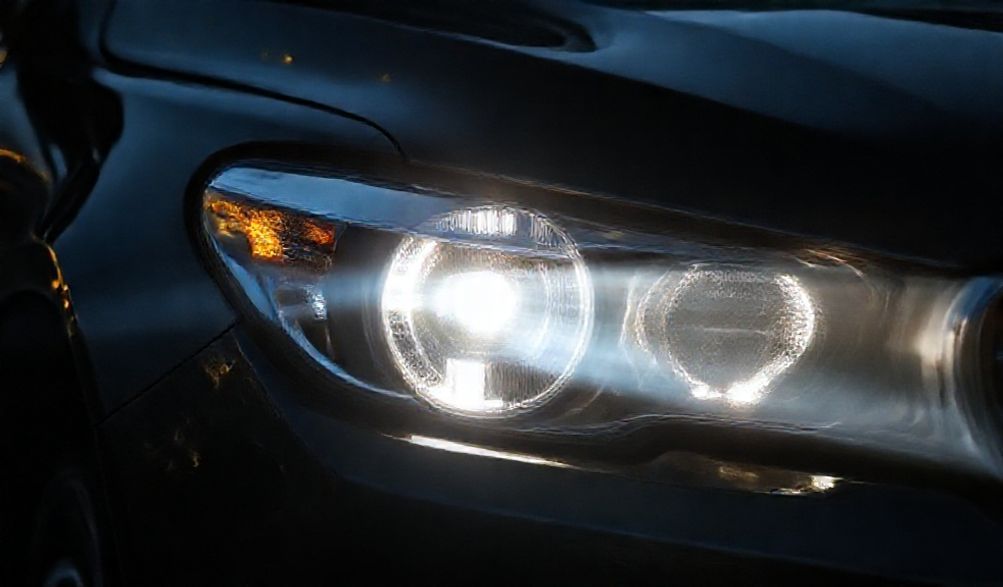
Turning Headlights On: A Complete Guide to Safer Driving
You’re settling in for a drive. You check your mirrors, fasten your seatbelt, and start the engine. But before you shift into drive, do you consciously consider your headlights? For many drivers, headlight operation is an afterthought—a function handled by an “auto” setting or a switch flipped only when it’s pitch black. This passive approach overlooks a fundamental truth: your headlights are your primary tool for communication and safety on the road.
This guide moves far beyond the simple “on/off” switch. We’ll explore the critical when, why, and how of proper headlight use, directly addressing the practical need for “turning headlights” on correctly. The advice here is rooted in official safety guidelines, expert mechanic recommendations, and the overarching goal of protecting you, your passengers, and every other person sharing the roadway. Turning on your headlights isn’t just about seeing; it’s about being seen, understood, and safe.
Why Proper Headlight Use is Non-Negotiable for Safety
Think of your vehicle as a participant in a constant, high-speed conversation on the road. Your turn signals, brake lights, and horn are all forms of communication. Your headlights are arguably the most important part of that dialogue, speaking volumes before you ever make a turn or stop.
Beyond Illumination: Headlights as a Communication Tool
Headlights do more than just light up the path ahead. They are a vital beacon that announces your presence, size, and intentions to every other road user.
- Signaling Presence: In low-light conditions—dusk, dawn, rain, or fog—a vehicle with its lights on is instantly recognizable. For a cyclist at an intersection, a pedestrian stepping off a curb, or another driver at a merge point, your headlights transform your car from a vague, gray silhouette into a defined, moving object. This split-second recognition is often the difference between a safe maneuver and a collision.
- Indicating Size and Distance: The spread and intensity of your lights help others judge what you are and how far away you are. The paired points of light allow the brain to quickly gauge distance and speed, crucial information for making safe passing decisions or judging gaps in traffic.
The Statistics: How Headlights Reduce Collisions
The importance of headlights isn’t just theoretical; it’s proven by hard data. According to the National Highway Traffic Safety Administration (NHTSA), 49% of passenger vehicle occupant fatalities occur in dark conditions, despite significantly lower traffic volumes at night. While many factors are at play, visibility is paramount.
The Insurance Institute for Highway Safety (IIHS) has conducted extensive research showing that better headlight systems can significantly reduce nighttime crash rates. Furthermore, studies on Daytime Running Lights (DRLs) have shown they can reduce multi-party daytime collisions by improving a vehicle’s conspicuity. One NHTSA study estimated that DRLs could reduce daytime frontal crashes by 5-10%. This data underscores a simple fact: being more visible makes you less vulnerable.
When Are You Legally Required to Turn On Your Headlights?
The law provides a clear baseline for headlight use, though specifics can vary. Ignorance of these laws isn’t just risky—it can be expensive.
State-by-State Laws: A General Framework
Most state vehicle codes are built on a common principle. The universal rule is that headlights must be used from sunset to sunrise. However, many states build in a crucial buffer, requiring lights from 30 minutes after sunset until 30 minutes before sunrise. This “civil twilight” rule accounts for the rapidly diminishing light at dusk and dawn when visibility is poor but some drivers may not think to turn their lights on.
It is your responsibility as a driver to know your local statutes. A quick visit to your state’s official Department of Motor Vehicles (DMV) website will provide the exact wording of the law. Don’t rely on assumptions.
Mandatory Use in Low-Visibility Conditions
The law universally demands headlight use anytime visibility is compromised, regardless of the time on the clock. “Low-visibility” is legally defined to include:
* Rain
* Snow
* Fog
* Sleet
* Even cloudy, overcast days where visibility is reduced to a certain distance (often 500 or 1000 feet, as defined by state law).
This leads to one of the most important and widely adopted rules: “Wipers On, Lights On.” Many states have enacted laws that require headlights to be on whenever windshield wipers are in continuous use. This is a brilliant, simple guideline. If the weather is bad enough that you need wipers to see, it’s bad enough that other drivers need your lights to see you. Adopt this as a personal rule, even if it’s not strictly the law in your area.
The Practical Guide: How to Operate Your Headlights Correctly
Knowing when to turn on your lights is half the battle. Knowing how is the other.
Locating and Using Your Headlight Controls
Modern vehicles can have headlight controls on a stalk to the left of the steering column, a dial on the dashboard, or even a touchscreen menu. Familiarize yourself with your vehicle’s system. The standard symbols are:
* Parking Lights: A small, green symbol showing two semi-circles facing away from each other. These illuminate only your marker lights and tail lights, not your main headlights. They are for when your car is parked, not for driving.
* Low Beams: A green symbol of a lamp with lines pointing diagonally down. This is your primary driving setting for most conditions.
* High Beams: A blue symbol of a lamp with lines pointing straight ahead. This provides maximum forward illumination for dark, open roads.
Mastering High Beam Etiquette
High beams are a powerful tool that must be used responsibly to avoid blinding other drivers.
* When to Use: Only on dark, open country roads or highways with no oncoming traffic for a significant distance.
* The Golden Rule: You must dim your high beams for oncoming traffic. Switch to low beams when you see the approach of another vehicle’s lights. You must also dim them when you are following another vehicle, as your bright lights will fill their mirrors and cabin with glare. A good practice is to switch to low beams whenever you see any tail lights ahead of you.
Don’t Rely Solely on Automatic Headlights
Automatic headlight systems are convenient, but they have a critical flaw: they are triggered only by ambient light levels, not by weather conditions. Your car’s light sensor will not turn on your headlights in heavy rain, fog, or a snowstorm at 2 p.m. If you leave your switch in “AUTO” and drive into a downpour, you will be virtually invisible from behind (as your tail lights likely won’t be on).
The solution is simple: manually override the automatic setting. Turn the switch from “AUTO” to “ON” whenever you encounter rain, fog, snow, or any condition that reduces visibility. Take control of your safety.
Advanced Lighting Systems and Best Practices
Fog Lights vs. Headlights: Purpose and Proper Use
Fog lights are a specialized tool, not just extra-bright headlights. They are mounted low on the bumper and project a wide, bar-shaped beam of light that is cut off sharply at the top. This pattern illuminates the road surface and lane markings directly in front of you while minimizing the reflective glare back from the fog itself.
- Proper Use: Turn them on in addition to your low-beam headlights in dense fog, heavy snow, or dust storms.
- Misuse: Never use them in clear conditions. Their bright, scattered light can create significant glare for oncoming drivers. In many areas, using them when not in low-visibility conditions is illegal.
Daytime Running Lights (DRLs) Are Not Headlights
This is a crucial distinction. DRLs are low-wattage lights on the front of your car that automatically turn on with the engine to increase daytime visibility. However, most DRL systems do NOT activate your tail lights, side marker lights, or dashboard illumination.
This creates a dangerous illusion at dusk or in rain: your dashboard may be dark, and from behind, your car is a ghost. You think you’re visible because you see light in front, but to traffic approaching from the rear or sides, you are nearly invisible. Always switch to your full, manual headlight setting in any low-light or adverse weather condition. DRLs are a supplement, not a replacement.
Regular Maintenance is a Safety Duty
A burnt-out headlight isn’t just a ticketable offense; it cuts your visibility and communication ability in half.
* Monthly Check: Every time you fill your gas tank, do a quick walk-around. Turn on your headlights and check that both low beams and high beams are working. Have someone press the brake pedal so you can check those lights, too.
* Clean Lenses: Plastic headlight lenses can become yellowed and hazy over time, drastically reducing light output. Clean them regularly with automotive lens cleaner.
* Replace in Pairs: When one headlight bulb burns out, replace both. The old bulb will be dimmer than the new one, creating an uneven and less effective field of light. Consult your owner’s manual for the correct bulb type and replacement procedure.
FAQ Section
Q: Should I drive with my headlights on during the day?
A: Yes, it is highly recommended. Studies consistently show that increased vehicle conspicuity reduces the risk of collisions. If your vehicle doesn’t have DRLs, making a habit of using low beams during the day, especially on two-lane roads or in areas with pedestrian traffic, is a smart safety practice.
Q: What’s the difference between “auto” and “on” for my headlights?
A: “Auto” mode uses a sensor to turn the lights on and off based solely on how dark it is outside. The “On” position overrides this sensor, keeping your headlights (and critically, your tail lights) illuminated until you manually turn them off. Always use “On” in rain, fog, or snow.
Q: Can I get a ticket for not using my headlights in the rain?
A: Absolutely. Most states have laws that explicitly tie headlight use to wiper use. Failing to turn on your headlights when your wipers are on is a clear traffic violation. More importantly, it’s a major safety hazard for which you can be held liable in the event of a crash.
Q: How often should I replace my headlight bulbs?
A: There’s no set mileage, as bulb life varies. Proactively check their function every few months. As mentioned, always replace them in pairs to maintain balanced illumination. Refer to your vehicle’s owner’s manual for the specific bulb type and any special instructions.
Conclusion
Turning on your headlights is one of the simplest, most effective, and most overlooked proactive safety measures in driving. It is a behavior grounded in law, validated by crash statistics, and essential for the ethical sharing of our roadways.
This isn’t just about avoiding a ticket. It’s about embracing your role in a shared system where visibility equals safety. Make a personal pledge today: never hesitate. Turn your headlights on at the first sign of dusk, at the first drop of rain, or in any situation where visibility is less than perfect. By doing so, you move from being a passive driver to an active participant in safety, protecting yourself and everyone around you. The road is a shared space; let’s make sure we’re all seen in it.
p>