
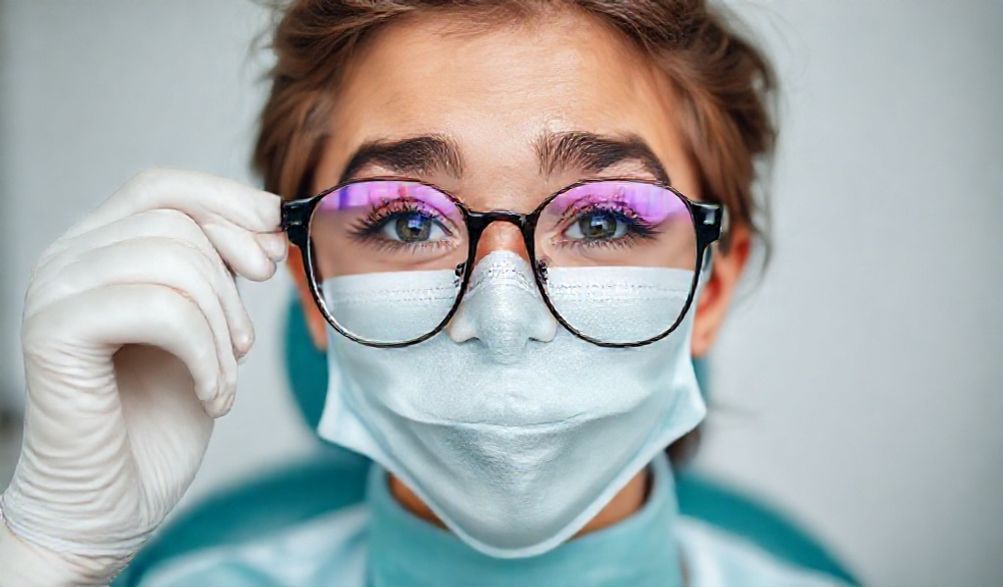
Dental Eyeglasses: A Complete Guide to Vision Correction from Your Dentist
Imagine leaving your dental appointment not just with a cleaner smile, but with clearer vision. It sounds like something from a futuristic medical fantasy, doesn’t it? This is the intriguing promise often conjured by the search term “Gafas Dentales,” a phrase that sits at a fascinating intersection of oral care and optometry. However, the reality is more nuanced—and just as important for your health.
This guide is designed to demystify the concept. Our purpose is to provide a trustworthy, expert-driven overview based on established dental and optical science, helping you navigate this topic with accurate information. We’ll cut through the confusion to clarify that “dental eyeglasses” is a common but ambiguous term that typically refers to two distinct concepts:
- Protective Eyewear: The safety glasses you wear during a dental procedure.
- Orthodontic Appliances: A colloquial term sometimes used for certain devices, like headgear or expanders, that guide facial development and can indirectly influence the area around the eyes.
Understanding this distinction is crucial for your safety and for setting realistic expectations about what dental and orthodontic professionals can and cannot do for your vision. Let’s bring this topic into clear focus.
What Are Dental Eyeglasses? Clarifying the Two Meanings
The term “dental eyeglasses” is a classic example of a search phrase that means different things to different people. To avoid confusion and ensure you get the right care, it’s essential to separate these two primary interpretations.
1. Protective Eyewear for Dental Visits
This is the most literal and common meaning in a dental practice setting. These are not for vision correction but for protection.
- Purpose & Function: Dental procedures, from routine cleanings to more complex restorations, can generate a surprising amount of debris, aerosols, and splatter. High-speed drills spray microscopic particles, ultrasonic scalers create a mist, and bright curing lights can be harsh. Protective eyewear serves as a vital barrier, shielding your eyes from potential physical irritants and infectious agents. It is a standard component of personal protective equipment (PPE) for patients, much like the bib and suction.
- Typical Features: These glasses are designed for function over fashion. You’ll often find features like:
- Side Shields: To protect from lateral splatter.
- Anti-Fog Coating: Essential for comfort during longer procedures.
- Disposable or Sanitizable Frames: They are either single-use or made of materials that can withstand high-level disinfection between patients.
- Clear, Impact-Resistant Lenses: To maintain visibility for both you and the dentist.
2. The Orthodontic Connection: Appliances That Influence Facial Profile
This usage is where the “eyeglasses” metaphor comes into play, though it’s something of a misnomer.
- Clarifying the Misnomer: When people search for “dental eyeglasses” in this context, they are often referring to orthodontic headgear or certain types of palatal expanders. These are not glasses at all but orthopedic appliances used primarily in children and adolescents during a phase of treatment called interceptive or Phase 1 orthodontics.
- The Vision Link: The connection to “eyeglasses” is indirect and anatomical. These appliances work by modifying the growth and position of the jaw bones, particularly the maxilla (the upper jaw). The maxilla forms the floor of the eye sockets (orbits). By guiding the development of the maxilla—for example, by expanding a narrow palate to correct a crossbite—the position and symmetry of the orbits can be subtly influenced. This can lead to changes in facial aesthetics, including the area around the eyes. It’s not about correcting refractive errors like nearsightedness, but about the structural framework that supports the eyes.
Expert Insights: The Science Behind Orthodontics and Facial Development
To understand the second meaning of “dental eyeglasses,” we need to dip into the principles of craniofacial growth. Orthodontics is not just about straightening teeth; it’s about managing the relationship between teeth, jaws, and the face.
The bones of a child’s face are not fully fused and can be guided during growth spurts. Devices like palatal expanders apply gentle, controlled pressure to the suture running down the middle of the upper jaw, encouraging it to widen. This correction of skeletal issues is situated directly beneath the nasal cavity and the eye sockets.
As Dr. Lisa Moreno, a board-certified orthodontist, explains: “While we don’t prescribe lenses, certain orthopedic appliances guide facial growth, which can subtly influence the symmetry and support structure around the eyes. Our goal is to create a balanced, functional, and healthy foundation for the entire face. Any perceived change in a patient’s ‘look’ around their eyes is a result of this underlying skeletal change, not an optical one.”
This highlights the sophisticated, biomechanical work of orthodontics, which operates in a realm adjacent to but distinct from optometry.
Primary Uses and Benefits of Protective Dental Eyewear
Focusing back on the first, more common meaning, let’s explore why those simple protective glasses are a non-negotiable part of modern dental care.
Essential Safety Protocol
The primary benefit is straightforward: seguridad. The American Dental Association (ADA) emphasizes infection control and patient protection as pillars of practice. Eyewear acts as a physical barrier against:
* Biological Hazards: Blood, saliva, and microbial aerosols generated during procedures.
* Physical Debris: Tiny fragments of tooth, old filling material, or calculus.
* Chemical Irritants: Certain dental materials or cleaning agents.
* Optical Radiation: The intense blue light used to cure resin materials is filtered by the lenses.
Its use is a sign of a compliant, safety-conscious practice.
Patient Comfort and Communication
Beyond safety, these glasses offer psychological benefits. The clear lenses allow you to maintain eye contact with your dentist or hygienist. This visual connection can be reassuring, help reduce anxiety, and facilitate non-verbal communication. You can see what’s happening in the room, which fosters a sense of involvement and control, rather than lying back in isolation.
Key Considerations If You’re Searching for “Dental Eyeglasses”
Your search intent dictates the next steps. Here’s what you need to know for each scenario.
Para el equipo de protección:
- Práctica estándar: Espere que le ofrezcan gafas protectoras al inicio de casi cualquier procedimiento más allá de una simple consulta. Es tan rutinario como el babero.
- Preferencia Personal: Si usa gafas graduadas, a menudo proporcionan protección suficiente. Puede preguntar a su dentista si son adecuadas. Algunos pacientes prefieren traer sus propias gafas de seguridad certificadas por comodidad o ajuste. Simplemente comente esto con su equipo dental con antelación.
Para el tratamiento de ortodoncia:
- Consejo crítico: Esto no puede exagerarse: La corrección visual real para problemas como miopía, hipermetropía, astigmatismo o presbicia requiere un optometrista u oftalmólogo licenciado. Ningún aparato de ortodoncia puede cambiar la forma de su córnea o cristalino para corregir su graduación. Si necesita gafas para ver con claridad, debe acudir a un especialista de la visión.
- El enfoque colaborativo: Si usted o su hijo están en tratamiento de ortodoncia y tienen inquietudes sobre el desarrollo facial, la simetría o cómo el crecimiento podría relacionarse con el área ocular, la comunicación es clave. El mejor enfoque implica un equipo. Comente sus observaciones con su ortodoncista. Si existen preocupaciones específicas de salud visual, su ortodoncista y optometrista pueden comunicarse (con su permiso) para garantizar una atención coordinada y holística. Esta es la verdadera integración de especialidades.
Preguntas frecuentes: Sus dudas respondidas por profesionales
P1: ¿Puede mi dentista recetar gafas regulares para la miopía?
R: No. Los dentistas son doctores en salud oral, no en visión. No están licenciados para realizar exámenes oculares, determinar errores de refracción o emitir recetas para lentes correctivos. Ese es el dominio exclusivo de optometristas y oftalmólogos.
P2: ¿Existen gafas que ayuden con la ansiedad dental?
R: Sí, de una manera diferente. Algunas consultas dentales modernas ofrecen “gafas de video” o gafas conectadas a reproductores multimedia, permitiéndole ver una película o programa de televisión durante el tratamiento como distracción. Sin embargo, para la ansiedad dental severa, debe discutir opciones sustanciales como el óxido nitroso (“gas de la risa”) o la sedación oral con su dentista.
P3: ¿Puede un tratamiento de ortodoncia como los brackets mejorar mi vista?
R: Directamente, no. La ortodoncia alinea dientes y mandíbulas para mejorar la mordida, la función y el equilibrio facial. Cualquier cambio percibido en la apariencia de sus ojos sería un resultado extremadamente indirecto de la alteración de la estructura y el soporte óseo facial, no una mejora en la vía óptica o la salud del ojo en sí. No corrige la visión.
P4: ¿Es obligatorio el uso de gafas protectoras durante los procedimientos dentales?
R: En consultas dentales acreditadas y de buena reputación, es una parte estándar y esperada de la atención al paciente, fuertemente recomendada por la ADA y los Centros para el Control y la Prevención de Enfermedades (CDC) para el control de infecciones. Aunque un paciente técnicamente puede negarse, una consulta que insiste en su uso demuestra un alto compromiso con su seguridad.
Conclusión: Viendo el panorama general con claridad
El viaje para comprender las “gafas dentales” refuerza en última instancia un principio vital en la atención médica: la importancia de la terminología precisa y la experiencia especializada. Hemos aclarado la distinción crucial entre equipo de protección (un elemento esencial de seguridad) y aparatos de ortodoncia (herramientas guía del crecimiento), dos cosas muy diferentes unidas solo por un nombre confuso.
El consejo central de esta guía, alineado con los principios E-E-A-T (Experiencia, Experticia, Autoridad, Confiabilidad), es buscar siempre al especialista adecuado para su necesidad:
* Acuda a su dentista general para la salud e higiene oral.
* Consulte a un ortodoncista para inquietudes sobre la alineación de dientes y mandíbulas.
* Visite a un optometrista u oftalmólogo para todos los asuntos relacionados con la visión y la salud ocular.
La fascinante intersección de estos campos—cómo el desarrollo mandibular se sitúa bajo los ojos, o cómo el equipo de protección salvaguarda múltiples sentidos—nos recuerda que el cuerpo es un sistema interconectado. El verdadero bienestar a menudo proviene de esta perspectiva integrada, donde los profesionales colaboran para su bienestar general. Sin embargo, siempre comienza viendo claramente el rol de cada especialista, para que pueda mirar hacia su futuro de salud con una visión perfecta.
p>