
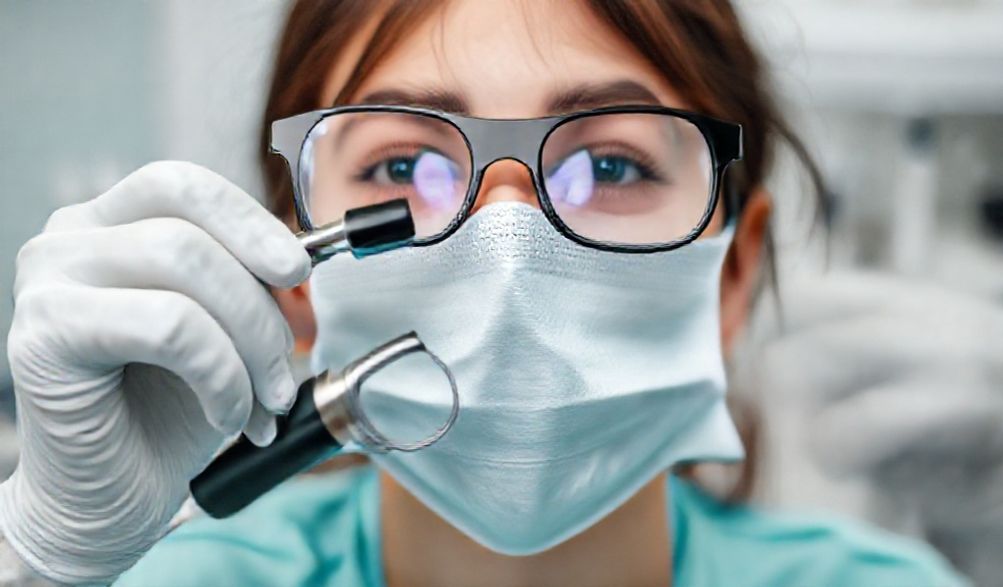
Dental Hygiene Loupes: A Complete Guide to Enhanced Vision, Ergonomics & Patient Care
You’ve just finished your last prophy of the day. As you straighten up, a familiar ache radiates from your neck, down between your shoulder blades. Your eyes feel strained, and you wonder if you missed a fleck of subgingival calculus on that tricky distal of #19. If this scenario is a daily reality, you’re not alone. The physical demands of dental hygiene are immense, often coming at a cost to the clinician’s own body.
But what if there was a tool that could simultaneously alleviate that strain, sharpen your clinical vision, and elevate the standard of care you provide? Enter dental hygiene loupes—far more than simple magnifying glasses. They are a sophisticated, career-transforming investment in your professional longevity and clinical excellence.
This comprehensive guide is built not on speculation, but on the Experiencia of seasoned hygienists, the Experto technical knowledge of master opticians, and a review of Authoritative clinical studies on ergonomics and outcomes. Our goal is to provide trustworthy, actionable information to help you navigate the world of loupes, ensuring you make an informed choice that benefits your health, your patients, and your career for years to come.
We’ll explore the undeniable por qué behind using loupes, break down the key features in a detailed buyer’s guide, walk you through a step-by-step selection process, and offer practical tips for integrating this powerful tool into your daily practice.
Why Dental Hygienists Need Loupes: Beyond Simple Magnification
For the uninitiated, loupes might seem like a luxury or a tool reserved for surgeons. In modern dental hygiene, they are rapidly becoming a standard of care. The benefits extend far into three critical areas: clinical precision, personal health, and patient relationships.
Uncompromising Clinical Precision and Improved Outcomes
The primary function of loupes is to enhance what you can see. This isn’t just about making things bigger; it’s about making the invisible, visible.
- Enhanced Visualization: With quality magnification, subtle details come into sharp focus. You can more easily identify the texture and margins of subgingival calculus, distinguish between plaque and early demineralization, spot microfractures in enamel, and detect the earliest signs of caries or oral pathology that might be missed with the naked eye.
- Improved Debridement & Documentation: Seeing better directly translates to cleaning better. You can be more confident in your scaling and root planing, ensuring complete calculus removal. This precision also leads to more accurate periodontal charting and documentation, as you can visualize and measure pocket depths and tissue conditions with greater clarity.
- Early Intervention: By spotting problems earlier, you become a more effective partner in the patient’s preventive care plan, facilitating timely intervention and better long-term health outcomes.
E-E-A-T Element: Clinical studies, such as those published in the Journal of Dental Hygiene, have demonstrated that magnification significantly improves calculus detection and removal efficacy. This isn’t just an opinion; it’s an evidence-based practice.
The Ergonomic Imperative: Protecting Your Career
This is perhaps the most compelling reason for a dental hygienist to invest in loupes. The statistics on musculoskeletal disorders (MSDs) in dentistry are staggering, with a high percentage of professionals experiencing career-limiting neck, back, and shoulder pain.
Loupes are a powerful ergonomic intervention. Here’s how:
- Promoting Neutral Posture: Without loupes, the natural tendency is to hunch forward, craning your neck and rounding your shoulders to get closer to the oral cavity. Loupes are custom-designed with a specific distancia de trabajo. This forces you to sit back in your chair, keeping your spine straight and your neck in a neutral, upright position. Your eyes, through the lenses, do the “leaning in” for you.
- Reducing Injury Risk: By maintaining this proper posture throughout the day, you dramatically reduce the chronic strain on your cervical spine, trapezius muscles, and lumbar region. This is a proactive measure to prevent the debilitating pain that has ended too many dental careers prematurely.
E-E-A-T Element: Talk to any hygienist who made the switch to loupes after years of practice. The Experiencia-based testimonial is nearly universal: “I wish I had done this sooner. My neck and back pain are gone.” This tool is a direct investment in your ability to practice pain-free for decades.
Enhanced Patient Communication and Trust
Loupes don’t just improve your view; they can improve your patient’s understanding.
- Visual Education: When integrated with an intraoral camera, what you see through your loupes can be displayed on a monitor for the patient. Suddenly, you can show them the hidden calculus, the bleeding sulcus, or the early stain. This transforms abstract advice into tangible evidence.
- Construyendo Confianza: This transparency demonstrates a level of thoroughness and expertise that patients notice. It shows you are using advanced tools to provide the best care possible. When a patient sees you wearing loupes, they perceive a higher standard of care, which builds immense trust and facilitates case acceptance for necessary treatments.
Key Features of Dental Hygiene Loupes: A Buyer’s Guide
Understanding the components of loupes is crucial to making the right choice. Think of it as assembling a system tailored uniquely to you.
Magnification Power: Finding Your Sweet Spot (2.5x, 3.0x, 3.5x, etc.)
Magnification is a balance. More power isn’t always better.
- 2.5x: An excellent starting point for beginners. Offers a wide field of view, making adaptation easier. Suitable for general prophylaxis and periodontal maintenance.
- 3.0x – 3.5x: The most popular range for experienced hygienists. Provides a great balance of detail and field of view for detailed scaling, root planing, and caries detection.
- 4.0x and above: Typically used for highly specialized procedures. The field of view narrows significantly, and the depth of field (the range of clear focus) decreases, requiring very steady head and patient positioning.
Recommendation: Most experts suggest starting at 2.5x or 3.0x. You can always increase magnification later as your skill adapts.
Working Distance and Field of View
These two custom measurements are the heart of your loupes’ ergonomic benefit.
- **Distancia de Trabajo:** This is the precise distance from your eyes to your patient’s mouth when you are sitting in a perfect, upright, neutral posture. It is measured in inches or centimeters. Getting this wrong means you will still be hunched over or straining your arms.
- Field of View: This is the diameter of the area you can see clearly through the lenses at a given distance. Higher magnification reduces the field of view. A good loupes system maximizes both.
E-E-A-T Element: This is non-negotiable. Authoritative guidance from all reputable providers insists on a professional, in-person measurement for working distance and pupillary distance. An off-the-shelf guess can cause more ergonomic harm than good.
Lens Quality and Coating Options
Not all optics are created equal. High-quality lenses are made from precision-ground glass or polymer.
- Clarity & Depth of Field: Premium lenses offer a sharper image across a wider depth of field, meaning more of your view stays in focus without constant re-adjustment.
- Recubrimientos:
- Anti-reflectante: Reduces glare from operatory lights.
- Anti-vaho: Essential for preventing lens fogging during patient exhalation.
- Blue Light Filter: May help reduce eye strain from long-term exposure to LED loupe lights and operatory lighting.
Frame Styles: TTL vs. Flip-Up
- A través de la lente (TTL):
- Ventajas: Lenses are permanently mounted in the frame, offering perfect, consistent alignment. They are generally lighter and more streamlined.
- Desventajas: They are custom-made for one person and cannot be shared. Adjusting the prescription later can be more complex.
- Lupas Abatibles:
- Ventajas: The magnification barrels flip up, allowing you to quickly switch between magnified and normal vision. They are adjustable and can sometimes be shared between users with similar prescriptions (though not ideal). Upgrading magnification is often easier.
- Desventajas: The flip mechanism can make them slightly heavier and bulkier. The barrels can potentially get knocked out of alignment.
The Critical Role of Lighting: Loupes are Incomplete Without It
Magnification without light is like driving at night with binoculars. A dedicated loupe light is no negociable.
- Eliminates Shadows: Your head blocks the overhead light, creating shadows in the mouth. A coaxial light source (aligned with your line of sight) illuminates the depths of pockets and sulci.
- Índice de Reproducción Cromática (IRC): Modern LED lights are bright, cool, and long-lasting.
- Power Options: Cordless lights with rechargeable battery packs offer maximum freedom of movement. Corded lights connect to a battery pack on your waist, never needing a recharge mid-day. Consider your practice flow.
- Intensity Settings: Multiple brightness settings allow you to adjust for different procedures.
How to Choose the Right Loupes for Your Practice
Selecting loupes is a personal journey. Follow these steps to find your perfect match.
Step 1: Conduct a Personal Ergonomic and Clinical Needs Assessment
Pregúntese:
* Where do I feel pain or fatigue at the end of the day? (Neck, back, shoulders?)
* What procedures do I find most visually challenging? (Deep scaling, detecting subgingival calculus?)
* What are my primary clinical goals? (Improved detection, faster debridement, better ergonomics?)
Step 2: Get a Professional Measurement and Trial
This is the most important step.
* Do Not Buy Online Unfitted: Reputable companies send trained representatives to your office.
* The Fitting: They will measure your pupillary distance, determine your ideal working distance while you simulate clinical posture, and let you try different magnifications and frame styles.
* Trial Period: Many offer a trial period (e.g., 30 days) to use the loupes in your own operatory.
E-E-A-T Element: This is Experto advice. A professional fitting ensures the tool is an asset, not a liability. It’s a safety and efficacy issue.
Step 3: Evaluate Budget and Consider Long-Term Value
Quality loupes with a light are a significant investment, often ranging from $1,000 to $3,000+.
* Reframe the Cost: This is not an expense; it’s an investment in your most valuable asset—your ability to work pain-free. Calculate the cost over the 5-10+ years they will last.
* Consider: Warranty (often lifetime on frames), service plans, and the company’s reputation for customer support.
* Employer Support: Some practices offer stipends, financing, or payroll deductions for loupes, recognizing their benefit to both employee health and practice production.
Maximizing Your Investment: Tips for New Loupes Users
Congratulations on your new loupes! Here’s how to ensure a smooth transition.
The Adaptation Period: Building Muscle Memory
There is a learning curve, typically 1-2 weeks.
* Sea Paciente: Your hands need to learn to work in the magnified space. Things may feel clumsy at first.
* Start Simple: Use them for an hour the first day, perhaps during charting or a simple prophy, and gradually increase.
* Practice: Use them to write notes or handle instruments on your desk to build hand-eye coordination.
Daily Use and Maintenance Protocols
Trate sus lupas como los instrumentos de precisión que son.
* Limpieza: Utilice únicamente el paño de microfibra y el spray para lentes proporcionados (o una gota de jabón suave para platos con agua). Nunca use toallas de papel, ropa o productos químicos agresivos.
* Almacenamiento: Guárdelas siempre en su estuche rígido protector cuando no estén en uso o durante los ciclos de esterilización en el consultorio.
* Cuidado de la Luz: Siga las instrucciones de carga de la batería y limpie suavemente la lente de la luz.
Integración de Lupas con Otras Tecnologías
- Cámaras intraorales: Muchos sistemas de cámara están diseñados para ser “compatibles con lupas”, permitiéndole capturar exactamente lo que ve.
- Escáneres Digitales: La visión y postura mejoradas también pueden aumentar su eficiencia y precisión con los sistemas de impresión digital.
Preguntas Frecuentes (FAQ) sobre Lupas para Higienistas Dentales
P: ¿Realmente vale la pena la inversión en lupas para un higienista?
R: Absolutamente. El retorno de la inversión es triple: 1) Longevidad Profesional: Al prevenir dolor musculoesquelético debilitante. 2) Resultados Clínicos: Al mejorar la exhaustividad y precisión de su atención. 3) Crecimiento Profesional: Al elevar su estándar de práctica y la confianza del paciente. Es una inversión tanto en autocuidado como en atención al paciente.
P: ¿Qué aumento es mejor para un principiante?
R: La mayoría de los expertos recomiendan comenzar con 2.5x o 3.0x. Esto proporciona un campo de visión manejable y suficiente detalle, haciendo que el período de adaptación inicial sea más suave. Siempre puede actualizar a un aumento mayor después.
P: ¿Puedo compartir mis lupas TTL con un colega?
R: No. Las lupas TTL están hechas a medida para la distancia pupilar y distancia de trabajo específicas de un individuo. Compartirlas obligará a la otra persona a adoptar una postura incorrecta y potencialmente dañina, causando fatiga visual, dolores de cabeza y anulando todos los beneficios ergonómicos. Las lupas abatibles pueden ser ajustables para un uso compartido limitado, pero aún no es lo ideal.
P: ¿Cómo limpio y cuido mis lupas?
R: Use solo un paño de microfibra limpio con spray para lentes aprobado o una gota de jabón suave y agua tibia. Limpie las lentes suavemente. Evite todos los productos de papel, mangas de camisa y productos químicos agresivos. Guárdelas siempre en su estuche rígido.
P: ¿Todavía necesito iluminación general si tengo una luz para lupas?
R: Sí. La luz de la lupa es un foco concentrado y sin sombras en su campo de trabajo específico (ej., un solo diente). La iluminación general del consultorio sigue siendo necesaria para la visibilidad general, la comodidad del paciente y para permitirle ver más allá del campo magnificado inmediato cuando levanta la vista.
Conclusión
Las lupas para higiene dental son mucho más que una ayuda visual; son una herramienta transformadora que cierra la brecha entre la excelencia clínica y el bienestar personal. Le permiten ver con una claridad sin igual, trabajar con una postura sostenible y conectar con los pacientes a un nivel más profundo. La evidencia de estudios clínicos y la experiencia Experiencia vivida de miles de higienistas es clara: las lupas son una piedra angular de una carrera de higiene dental moderna, duradera y satisfactoria.
Elegir el par correcto es una decisión importante que merece una consideración cuidadosa y Experto orientación profesional. No es una compra para hacer a la ligera en línea, sino un ajuste profesional que debe realizarse con un proveedor de reputación.
Dé el siguiente paso para su carrera. Programe una consulta con una empresa confiable de lupas dentales para una medición y demostración profesional. Es el primer y más importante paso hacia un futuro de visión más nítida, un cuerpo más saludable y una atención al paciente superior.
p>