
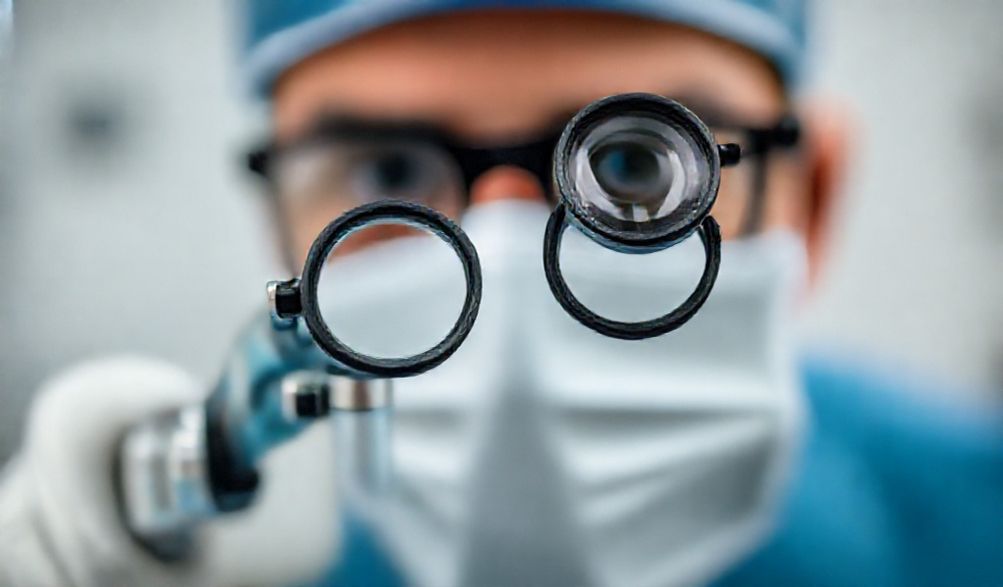
Surgical Loupes Price Guide: A Surgeon’s 2024 Cost & Value Analysis
You’ve felt it at the end of a long case: that familiar ache creeping up your neck and shoulders. Or perhaps you’re leaning in just a little too close, straining for a clearer view of the surgical field. Maybe your current loupes are simply outdated, and you know the technology—and your outcomes—could be better. As you consider an upgrade or your first purchase, one question inevitably surfaces: How much should I expect to pay?
The price tag on surgical loupes can be startling, ranging from a few hundred to several thousand dollars. It’s a significant investment, and the sheer range can be confusing. Is a $5,000 system really ten times “better” than a $500 one? This guide is designed to demystify that cost. We’ll move beyond the sticker shock to break down what you’re truly paying for—from the physics of the optics to the ergonomics that protect your body. Our goal is to transform your purchase from a simple expense into a strategic, value-driven investment in your surgical precision and career longevity.
This analysis is built on a foundation of Experiencia, Experticia, Autoridad y Confiabilidad (E-E-A-T), synthesizing current manufacturer specifications, insights from seasoned surgical instrument specialists, and a clear-eyed look at long-term professional value over mere upfront cost.
The core thesis is simple: The price of surgical loupes is not just a number; it’s a direct reflection of la calidad óptica, custom diseño ergonómico, and durability that tangibly impacts your surgical outcomes, your physical well-being, and the longevity of your career.
What Determines the Price of Surgical Loupes? (The Value Breakdown)
To understand the price, you must understand the components of value. You’re not buying a commodity; you’re commissioning a custom optical tool. The cost is a sum of its sophisticated parts.
Optical System & Magnification Level
This is the heart of the system and the primary cost driver.
- Galilean vs. Prismatic (Keplerian) Designs: This is the fundamental split. Galilean systems use a simpler arrangement of lenses. They are lighter, more compact, and less expensive, but they typically max out at around 3.5x magnification and have a narrower field of view and shorter depth of field. Prismatic systems use a more complex series of prisms to fold the light path. They are the premium option, capable of higher magnifications (4.5x and beyond) with a dramatically wider, flatter, and more immersive field of view. This superior optical engineering comes at a higher cost.
- Magnification Power: As magnification increases, so does optical complexity and the precision required in manufacturing. A jump from 2.5x to 3.5x, and again to 4.5x or 5.5x, involves progressively more advanced lens systems to maintain clarity and light transmission, which increases price.
- Lens Quality & Coatings: Not all glass is created equal. Premium lenses offer exceptional clarity with minimal distortion. Coatings are critical: anti-reflective coatings maximize light transmission and reduce glare; recubrimientos antiniebla are essential for maintaining visibility; and scratch-resistant coatings protect your investment. Each added layer of performance adds to the cost.
Customization & Ergonomics
A loupe that doesn’t fit is worse than useless—it’s harmful. The price includes the expertise and manufacturing required to make them uniquely yours.
- Precision Measurements: The single most important process is the accurate measurement of your **Distancia de Trabajo** (the space from your eye to the surgical field) and **Ángulo de Declinación** (how far down your eyes naturally look through the lenses). An improper measurement leads to poor posture. This bespoke service, often done by a trained representative, is factored into the cost of quality systems.
- Frame Options: Prices escalate with customization. Generic, adjustable frames are the most affordable. Custom-fit frames, molded or adjusted to your facial anatomy, offer superior stability and comfort at a higher tier. Lupas **Through-the-Lens (TTL)** designs, where the optical barrels are permanently fixed to the lens in the optimal position, represent the pinnacle of custom integration and command a premium.
- Comfort Engineering: Weight distribution is key. Systems with counterweights, padded temple tips, adjustable nose bridges, y lightweight composite materials are engineered for all-day comfort. This ergonomic R&D and the use of advanced materials add value and cost.
Integrated Technology & Add-Ons
Modern loupes are often the hub of a digital surgical ecosystem.
- Integrated Surgical Headlights: Adding a light source is a significant price jump. Factors include the type (older halogen vs. modern, cool-running LED), brillo (measured in lux or lumens), color ajustable (affecting tissue differentiation), and battery life/type. A premium, coaxial LED headlight that perfectly aligns with your line of sight is a major investment.
- Camera & Video Capabilities: The ability to mount a high-definition camera or video system for documentation, teaching, or telemedicine requires reinforced frames, specific mounting points, and sometimes optical path splitting. This integration adds complexity and cost.
- Digital Integration: The frontier now includes wireless connectivity to monitors, image overlay systems, and compatibility with surgical software platforms. This “smart loupe” technology carries a substantial premium.
Surgical Loupes Price Ranges: What to Expect in 2024
Use this as a general guide. Final pricing is highly individualized and requires a professional consultation. All prices are in USD.
Entry-Level / Basic Galilean Systems
- Typical Price Range: $800 – $1,800
- Ideal Para: Students, first-time buyers, or professionals in fields requiring lower magnification (e.g., some general dentistry, veterinary procedures, introductory surgical training).
- What’s Typically Included: Basic Galilean optics (2.5x-3.5x), a standard, adjustable frame, and a fundamental working distance measurement. An integrated headlight is usually an extra-cost add-on.
Mid-Range / Advanced Prismatic Systems
- Typical Price Range: $2,000 – $4,500
- Ideal Para: The majority of practicing surgeons, dentists, and specialists (e.g., periodontists, oral surgeons, orthopedic surgeons) who require higher magnification, a wider field of view, and robust ergonomics for daily use.
- What’s Typically Included: High-quality prismatic (Keplerian) optics (3.5x-4.5x), a better degree of frame customization (often TTL), a professional fitting session, and frequently a bundled basic or mid-tier LED headlight.
High-End / Fully Integrated Systems
- Typical Price Range: $4,500 – $12,000+
- Ideal Para: Microsurgeons (e.g., neuro, ophthalmic, plastic/reconstructive), specialists requiring ultra-high magnification (5.5x+), and early adopters seeking the absolute best optics and fully integrated digital operating rooms.
- What’s Typically Included: Top-tier expanded-field prismatic optics, full custom ergonomics (TTL with custom frames), a premium coaxial or dual-point LED headlight system, camera/video mounting integration, and potentially wireless streaming capabilities.
The Hidden Costs (and Savings) of Owning Surgical Loupes
The initial purchase price is only part of the financial picture. A true value analysis considers the total cost of ownership.
Upfront vs. Long-Term Cost
Think in terms of cost-per-procedure. A $4,000 loupe used over 2,000 procedures in 8 years costs $2 per procedure. A cheaper, uncomfortable $1,500 loupe you stop using after a year offers zero value. Durability and warranty are direct value indicators. A reputable brand offering a 5-year or lifetime warranty on optics is betting on its quality and saving you future repair costs.
Essential Accessories & Recurring Costs
Budget for the ecosystem:
* Headlight Power: Rechargeable battery packs have a finite lifespan (2-3 years). Replacement costs can be $100-$300 each.
* Índice de Reproducción Cromática (IRC): While LEDs last tens of thousands of hours, they are not immortal. Replacement LED modules or bulbs are an eventual cost.
* Mantenimiento: Professional cleaning, re-tensioning of frames, and lens re-coating services (every few years for heavy users) incur fees. A dropped loupe can mean a costly optical realignment or repair.
* Insertos de prescripción: If you wear glasses, custom prescription lens inserts are an additional, necessary cost for optimal vision.
The True Cost of a Poor Fit: Avoiding Injury
This is the most critical hidden cost, and it’s not just financial. Poorly fitted loupes are a primary contributor to work-related musculoskeletal disorders (MSDs) among surgeons and dentists. Chronic neck and back pain, cervical strain, and even early career attrition can result from constantly compensating for an improper declination angle or working distance.
The potential “cost” here includes pain, reduced surgical performance, missed work, and the expense of physical therapy or treatment. In this light, the investment in a comprehensive, professional fitting session—which is often “free” with purchase from a quality provider—is arguably the most valuable part of the transaction, acting as insurance against career-limiting injury.
How to Get the Best Value for Your Investment
Value isn’t about finding the cheapest option; it’s about maximizing the return on your investment. Here’s how to be a savvy buyer.
Prioritize a Professional In-Person Fitting (Non-Negotiable)
A perfect price online is a liability if the fit is wrong. Insist on a live fitting. A skilled fitter will assess your natural posture, discuss your most common procedures, measure your interpupillary distance, and meticulously determine your working distance and declination angle while you simulate a working position. This service is the cornerstone of value.
Ask the Right Questions Before You Buy
Come to your consultation prepared. Ask:
* “What is the exact warranty coverage? What is excluded?”
* “What is the repair process, average turnaround time, and typical cost for common issues like frame repair or optical misalignment?”
* “Can this system be upgraded in the future (e.g., adding a higher magnification lens or a new headlight) without replacing the entire unit?”
* “What training and ongoing support do you provide?”
Evaluate Financing, Bundles, and Professional Discounts
- Financiación: Many manufacturers and third-party vendors offer low- or no-interest financing plans, making a premium system more accessible by spreading the cost over time.
- Bundles: Purchasing a loupe, headlight, and camera mount together as a package almost always offers a better value than buying each component à la carte.
- Descuentos: Investigue de manera exhaustiva sobre programas para estudiantes/residentes, acuerdos de compra institucional (para hospitales o consultorios grupales), y descuentos por fidelidad si está actualizando un equipo de la misma marca.
Preguntas Frecuentes (FAQ)
P: ¿Puedo comprar lupas quirúrgicas baratas en línea?
R: Puede hacerlo, pero conlleva un alto riesgo. La crítica falta de un ajuste profesional puede provocar tensión física y una óptica deficiente que cause fatiga visual. Está invirtiendo en una herramienta fundamental para su profesión y la salud de su cuerpo. El ajuste experto no es un extra opcional; es un requisito para la seguridad y el rendimiento.
P: ¿Las lupas más caras son siempre mejores?
R: No “mejores” en un sentido universal, sino “más capaces” para tareas específicas. Un sistema de microcirugía de $10,000 está sobredimensionado y es incómodo para un odontólogo general que realiza exámenes. Las mejores lupas son las que se ajustan perfectamente a sus necesidades clínicas específicas, requisitos de aumento y ergonomía física, no necesariamente las más caras.
P: ¿Cuánto suelen durar las lupas quirúrgicas?
R: Con el cuidado adecuado, el sistema óptico central de un par de calidad puede durar entre 7 y 15 años o más. Es más probable que las monturas, las bisagras y las fuentes de luz requieran mantenimiento o reemplazo dentro de ese período. La durabilidad es una razón clave para invertir en una marca de prestigio.
P: ¿El seguro cubre el costo de las lupas quirúrgicas?
R: Varía. Rara vez están cubiertas por el seguro de salud. Sin embargo, casi siempre se consideran una herramienta profesional o gasto empresarial deducible de impuestos. Algunas pólizas de responsabilidad profesional o de equipos empresariales pueden ofrecer asignaciones. Consulte siempre con su contador y su proveedor de seguros para obtener orientación específica para su situación.
P: ¿Cuál es el factor único más importante más allá del precio?
R: Ajuste y Comodidad. Esto no puede exagerarse. Una lupa de gama media perfectamente ajustada proporcionará infinitamente más valor, en términos de resultados quirúrgicos, enfoque y preservación física, que una lupa premium mal ajustada que termina en un cajón. La comodidad se traduce directamente en precisión, resistencia y longevidad profesional.
Conclusión
Navegar por el mundo de los precios de las lupas quirúrgicas requiere mirar más allá del número inicial. Como hemos explorado, ese precio es un compuesto de ingeniería óptica avanzada, personalización ergonómica que cambia la vida y una construcción duradera diseñada para servirle durante una década o más. Es una inversión no en un dispositivo, sino en su capacidad clínica, sus resultados quirúrgicos y su propio bienestar físico.
Por lo tanto, la recomendación final es clara: Comience su camino con una evaluación de necesidades clínicas y el compromiso de una sesión de ajuste profesional. Permita que los requisitos de sus procedimientos y sus necesidades anatómicas lo guíen hacia el nivel tecnológico apropiado, en lugar de obsesionarse primero con un presupuesto. El socio adecuado, un proveedor de lupas certificado y conocedor, es tan importante como el producto que ofrece.
Dé el siguiente paso con su nuevo conocimiento. Programe una consulta con un proveedor de lupas certificado para discutir sus procedimientos específicos y obtener una cotización precisa y personalizada. Su cuello, sus ojos, sus pacientes y su yo futuro le agradecerán por hacer una inversión impulsada por el valor en la herramienta que define su visión de la excelencia.
p>