
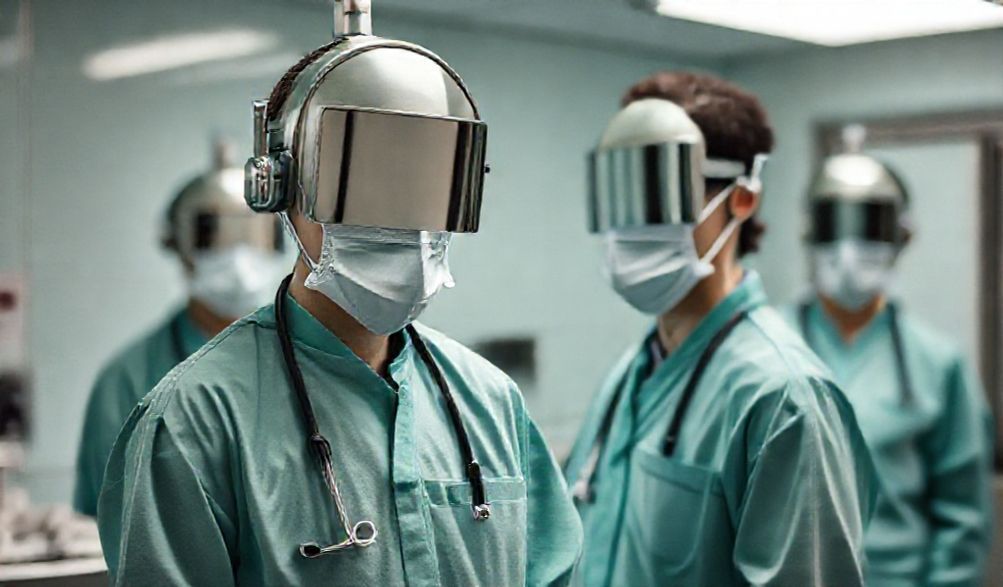
Why Did Doctors Wear Head Mirrors? Unveiling a Medical Icon
For generations, the image of a doctor was defined by a holy trinity of symbols: the draped stethoscope, the crisp white coat, and that mysterious, circular mirror strapped to the forehead. While the stethoscope remains a vital tool and the white coat a complex emblem, the head mirror has largely faded from modern practice, transforming from a daily necessity into a relic of a bygone medical era. It sparks immediate curiosity—a piece of polished metal that seems more suited to a detective’s magnifying glass or a mystic’s third eye than a physician’s clinic. What was its purpose? Was it a magnifying glass? A ceremonial object? Or a genuinely clever piece of technology?
This iconic device is far more than a quaint prop from a black-and-white film. It represents a brilliant, low-tech solution to one of medicine’s oldest and most fundamental challenges: seeing into the dark, hidden recesses of the human body. The doctor’s head mirror was a masterpiece of practical physics and ergonomic design, enabling breakthroughs in diagnosis and treatment for over a century. By exploring its history, function, and eventual decline, we uncover a story of ingenuity, adaptation, and the relentless march of technological progress. Let’s illuminate the fascinating truth behind this medical icon, separating historical fact from common fiction.
The Primary Function: Illumination and Magnification
At its core, the head mirror was a tool born of necessity, designed with a single, critical purpose in mind. Its design showcases the l'expertise of generations of physicians who needed to solve a very tangible problem with the technology available to them.
Shedding Light on Dark Cavities
Imagine a doctor in the late 1800s faced with a patient complaining of a severe sore throat, persistent earache, or chronic sinus trouble. The crucial diagnostic areas—the pharynx, the larynx, the nasal passages, and the ear canal—are deep, narrow, and naturally dark tunnels. Before the widespread availability of small, bright, and focusable electric lights, illuminating these spaces was a major hurdle. Candles and oil lamps were unwieldy and created shadows; holding a light in one hand left only one hand free for instruments.
This is where the simple, elegant physics of the head mirror came into play. The mirror was not flat; it was concave—curved inward like a shallow satellite dish. This shape is key to its function. A physician would position a bright light source, typically an adjustable kerosene or later electric lamp, to the side and slightly behind the patient. The concave head mirror would collect and concentrate this ambient light, reflecting it as a powerful, focused beam directly into the cavity being examined. It acted as a light amplifier, taking a decent light source and turning it into a brilliant, targeted spotlight exactly where the doctor needed to see.
The Advantage of Hands-Free Examination
The true genius of the design, however, lay in its ergonomics. By strapping the light-directing mechanism to their forehead, physicians achieved complete hands-free illumination. This is a prime example of design l'expérience emerging from clinical need.
With both hands now free, the doctor could simultaneously:
* Use a tongue depressor to get a better view of the throat.
* Employ a nasal speculum to gently open a nostril.
* Manipulate delicate forceps or probes within the ear or nose.
* Steady the patient’s head or adjust their position.
This allowed for a more thorough, efficient, and controlled examination. The doctor’s gaze, the beam of light, and the working space for their instruments were all perfectly aligned, creating an integrated diagnostic system that was, for its time, remarkably sophisticated.
A Brief History of the Head Mirror
The story of the head mirror is intertwined with the rise of medical specialization and the quest for better diagnostic tools. Its development and adoption provide a clear timeline that establishes the l'autorité of its role in medical history.
19th Century Origins and Adoption
While simple reflecting mirrors had been used in medicine for centuries, the classic forehead-mounted concave mirror was refined and popularized in the mid-19th century. This period coincided with the formal establishment of otolaryngology (Ear, Nose, and Throat, or ENT) as a distinct medical specialty. As physicians began to focus intensely on these areas, the need for specialized tools grew.
A key figure often credited with the design’s refinement is German physician Dr. Friedrich Hofmann in the 1840s. His version, with a precise focal length and a central aperture (hole) to look through, became the standard model. The tool spread rapidly across Europe and North America, becoming an indispensable part of the ENT specialist’s arsenal. It enabled the detailed examinations necessary for diagnosing conditions like tonsillitis, nasal polyps, mastoid infections, and early signs of throat cancers.
The Peak of Practical Use
From the late 1800s through the mid-20th century, the head mirror was at its peak. It was a standard-issue item in medical bags and a fixture on clinic walls. Its distinctive silhouette became synonymous with medical authority and expertise. This iconic status was cemented in popular culture—it appeared in medical textbooks, advertisements, and countless films and television shows depicting doctors. For nearly a hundred years, if you visited a doctor for an earache or sore throat, you would almost certainly encounter the glint of that familiar forehead mirror as they leaned in to examine you.
The Decline of the Head Mirror: Why It’s Rare Today
The head mirror’s journey from essential tool to historical artifact is a classic tale of technological disruption. Its decline was not due to a flaw in its concept, but because newer technologies solved the same problems more effectively. Understanding this transition is key to a trustworthy and balanced view of its legacy.
The Technological Revolution: Headlights and Scopes
The first major blow came with the development of the electric headlight in the mid-20th century. This was a lamp mounted on a headband, providing a bright, self-contained light source that no longer depended on adjusting an external lamp. It was more convenient and offered more consistent illumination.
The true revolution, however, arrived with fiber-optic and LED technology. Modern diagnostic tools like otoscopes, laryngoscopes, and endoscopes integrate powerful, cool, and adjustable light sources directly into the instrument itself.
* Otoscopes: Combine a light and a magnifying lens for examining ears.
* Laryngoscopes: Provide brilliant, focused light for viewing the vocal cords and throat.
* Endoscopes: Use fiber-optic bundles to channel light into the body, often with miniature cameras to display the image on a high-resolution monitor.
These devices didn’t just match the head mirror’s function; they vastly surpassed it. They offered brighter light, built-in magnification, the ability to document findings digitally, and far greater comfort for both patient and physician.
From Necessity to Niche
As a result, the head mirror transitioned from a daily necessity to a niche instrument. You are extremely unlikely to see one used in a standard ENT clinic today. Its remaining applications are limited:
* Historical Demonstration: C'est un outil pédagogique fantastique dans les cours d'histoire de la médecine.
* Usage cérémoniel : Parfois porté par des médecins seniors lors d'événements formels.
* Préférence personnelle : Un très petit nombre de praticiens chevronnés pourraient encore en utiliser un par habitude et compétence ancrées de longue date.
À toutes fins pratiques, l'ère du miroir frontal est révolue, supplantée par l'avancée implacable de la technologie médicale.
Questions et idées reçues courantes
L'apparence inhabituelle du miroir frontal suscite naturellement des questions et des suppositions. Abordons directement certaines des plus courantes.
Était-il utilisé pour autre chose que les oreilles, le nez et la gorge ?
Bien qu'associé de manière écrasante à l'ORL, le principe d'éclairage focalisé et sans mains du miroir frontal avait des applications limitées dans d'autres domaines. Certains dentistes ou chirurgiens buccaux les utilisaient pour examiner le fond de la bouche. Les dermatologues pouvaient les employer pour inspecter des lésions cutanées avec une lumière sans ombre. Cependant, sa conception et sa distance focale étaient optimisées pour les distances moyennes des examens ORL, et il n'a jamais atteint la même ubiquité dans d'autres spécialités.
Le miroir grossissait-il l'image ?
C'est une idée reçue très répandue. Le miroir frontal lui-même ne grossissait pas. Sa fonction principale et quasi unique était illumination. Toute perception d'un grossissement était généralement mineure, résultant de la forme concave créant une image virtuelle légèrement agrandie, ou, plus important encore, provenait d'une lentille diagnostique séparée que le médecin pouvait tenir dans sa main libre pour observer de plus près un point spécifique une fois qu'il était brillamment éclairé.
Pourquoi le portaient-ils sur le front ?
Le placement sur le front était une prouesse ergonomique. L'ouverture centrale (le trou) du miroir était alignée avec l'œil dominant du médecin. En regardant à travers ce trou, la ligne de vision du médecin était parfaitement alignée avec le point focal du faisceau lumineux réfléchi. Partout où le médecin regardait, le cercle de lumière vive était déjà là, fournissant un éclairage sans ombre. Le front offrait une plateforme stable et sans mains qui maintenait cet alignement constant tout au long de l'examen.
Section FAQ
Q : Comment appelle-t-on officiellement un miroir frontal de médecin ?
R : Il est le plus précisément appelé un “ miroir frontal ” ou un “ou ” miroir de tête ».” Dans le langage clinique, on l'appelait souvent simplement “ le miroir ”, car il était un élément fondamental de la configuration diagnostique.
Q : Des médecins utilisent-ils encore un miroir frontal aujourd'hui ?
R : Il est extrêmement rare dans la pratique clinique moderne active. Son usage est largement historique, cérémoniel, ou une question d'habitude personnelle pour un nombre décroissant de spécialistes plus âgés. Pour tous les usages diagnostiques standards, il a été complètement remplacé par des instruments éclairés modernes.
Q : À quoi servait le trou au milieu ?
R : L'ouverture centrale permettait au médecin de regarder directement à travers le miroir. La surface concave réfléchissait un anneau de lumière provenant d'une lampe externe, créant un cercle brillant d'illumination. Le médecin regardait à travers le trou sombre au centre de ce cercle lumineux, voyant la zone examinée dans une lumière parfaite et sans ombre.
Q : La source lumineuse était-elle toujours une lampe séparée ?
R : Oui, presque invariablement. Cette configuration était connue sous le nom d' “ éclairage externe ”.” Le médecin ajustait une lampe d'examen dédiée (souvent sur un bras flexible) à une position à côté et légèrement derrière la tête du patient. Le miroir frontal capturait et dirigeait alors cette lumière. La lampe et le miroir fonctionnaient comme un système couplé.
Conclusion
Le parcours du miroir frontal du médecin est un chapitre captivant de l'histoire de la médecine. Il a commencé comme une solution brillante et simple au problème élémentaire de voir dans les intérieurs sombres du corps. Pendant plus d'un siècle, il a été un symbole de l'examen clinique l'expertise et de la pratique manuelle l'expérience, permettant à des générations de médecins de diagnostiquer et de traiter des affitures autrefois littéralement plongées dans l'obscurité. Son design élégant – un réflecteur concave porté sur le front – incarnait l'ingéniosité pratique, permettant un examen détaillé bien avant l'ère numérique.
Si le progrès technologique l'a rendu obsolète, remplaçant sa surface polie par la lueur froide des LED et de la fibre optique, son héritage perdure. Le miroir frontal est plus qu'un antique ; c'est un rappel tangible des principes fondamentaux de l'examen médical : regarder de près, illuminer le problème et utiliser ses outils pour étendre ses sens. Il demeure une icône puissante d'une ère transformative en médecine, un témoignage brillant du désir intemporel de voir, de savoir et de guérir.
p>