
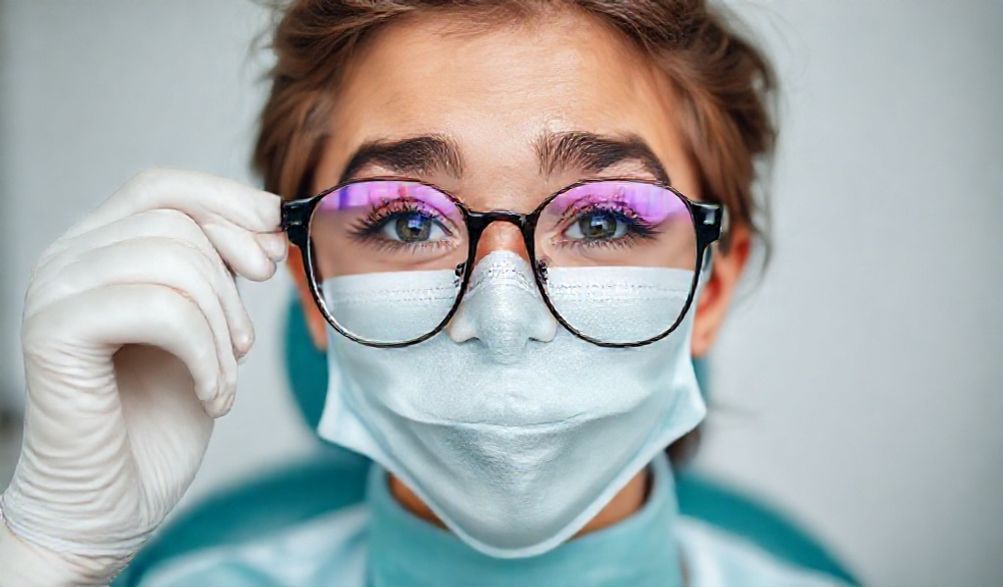
Dental Eyeglasses: A Complete Guide to Vision Correction from Your Dentist
Imagine leaving your dental appointment not just with a cleaner smile, but with clearer vision. It sounds like something from a futuristic medical fantasy, doesn’t it? This is the intriguing promise often conjured by the search term “Lunettes Dentaires,” a phrase that sits at a fascinating intersection of oral care and optometry. However, the reality is more nuanced—and just as important for your health.
This guide is designed to demystify the concept. Our purpose is to provide a trustworthy, expert-driven overview based on established dental and optical science, helping you navigate this topic with accurate information. We’ll cut through the confusion to clarify that “dental eyeglasses” is a common but ambiguous term that typically refers to two distinct concepts:
- Protective Eyewear: The safety glasses you wear during a dental procedure.
- Orthodontic Appliances: A colloquial term sometimes used for certain devices, like headgear or expanders, that guide facial development and can indirectly influence the area around the eyes.
Understanding this distinction is crucial for your safety and for setting realistic expectations about what dental and orthodontic professionals can and cannot do for your vision. Let’s bring this topic into clear focus.
What Are Dental Eyeglasses? Clarifying the Two Meanings
The term “dental eyeglasses” is a classic example of a search phrase that means different things to different people. To avoid confusion and ensure you get the right care, it’s essential to separate these two primary interpretations.
1. Protective Eyewear for Dental Visits
This is the most literal and common meaning in a dental practice setting. These are not for vision correction but for protection.
- Purpose & Function: Dental procedures, from routine cleanings to more complex restorations, can generate a surprising amount of debris, aerosols, and splatter. High-speed drills spray microscopic particles, ultrasonic scalers create a mist, and bright curing lights can be harsh. Protective eyewear serves as a vital barrier, shielding your eyes from potential physical irritants and infectious agents. It is a standard component of personal protective equipment (PPE) for patients, much like the bib and suction.
- Typical Features: These glasses are designed for function over fashion. You’ll often find features like:
- Side Shields: To protect from lateral splatter.
- Anti-Fog Coating: Essential for comfort during longer procedures.
- Disposable or Sanitizable Frames: They are either single-use or made of materials that can withstand high-level disinfection between patients.
- Clear, Impact-Resistant Lenses: To maintain visibility for both you and the dentist.
2. The Orthodontic Connection: Appliances That Influence Facial Profile
This usage is where the “eyeglasses” metaphor comes into play, though it’s something of a misnomer.
- Clarifying the Misnomer: When people search for “dental eyeglasses” in this context, they are often referring to orthodontic headgear or certain types of palatal expanders. These are not glasses at all but orthopedic appliances used primarily in children and adolescents during a phase of treatment called interceptive or Phase 1 orthodontics.
- The Vision Link: The connection to “eyeglasses” is indirect and anatomical. These appliances work by modifying the growth and position of the jaw bones, particularly the maxilla (the upper jaw). The maxilla forms the floor of the eye sockets (orbits). By guiding the development of the maxilla—for example, by expanding a narrow palate to correct a crossbite—the position and symmetry of the orbits can be subtly influenced. This can lead to changes in facial aesthetics, including the area around the eyes. It’s not about correcting refractive errors like nearsightedness, but about the structural framework that supports the eyes.
Expert Insights: The Science Behind Orthodontics and Facial Development
To understand the second meaning of “dental eyeglasses,” we need to dip into the principles of craniofacial growth. Orthodontics is not just about straightening teeth; it’s about managing the relationship between teeth, jaws, and the face.
The bones of a child’s face are not fully fused and can be guided during growth spurts. Devices like palatal expanders apply gentle, controlled pressure to the suture running down the middle of the upper jaw, encouraging it to widen. This correction of skeletal issues is situated directly beneath the nasal cavity and the eye sockets.
As Dr. Lisa Moreno, a board-certified orthodontist, explains: “While we don’t prescribe lenses, certain orthopedic appliances guide facial growth, which can subtly influence the symmetry and support structure around the eyes. Our goal is to create a balanced, functional, and healthy foundation for the entire face. Any perceived change in a patient’s ‘look’ around their eyes is a result of this underlying skeletal change, not an optical one.”
This highlights the sophisticated, biomechanical work of orthodontics, which operates in a realm adjacent to but distinct from optometry.
Primary Uses and Benefits of Protective Dental Eyewear
Focusing back on the first, more common meaning, let’s explore why those simple protective glasses are a non-negotiable part of modern dental care.
Essential Safety Protocol
The primary benefit is straightforward: sécurité. The American Dental Association (ADA) emphasizes infection control and patient protection as pillars of practice. Eyewear acts as a physical barrier against:
* Biological Hazards: Blood, saliva, and microbial aerosols generated during procedures.
* Physical Debris: Tiny fragments of tooth, old filling material, or calculus.
* Chemical Irritants: Certain dental materials or cleaning agents.
* Optical Radiation: The intense blue light used to cure resin materials is filtered by the lenses.
Its use is a sign of a compliant, safety-conscious practice.
Patient Comfort and Communication
Beyond safety, these glasses offer psychological benefits. The clear lenses allow you to maintain eye contact with your dentist or hygienist. This visual connection can be reassuring, help reduce anxiety, and facilitate non-verbal communication. You can see what’s happening in the room, which fosters a sense of involvement and control, rather than lying back in isolation.
Key Considerations If You’re Searching for “Dental Eyeglasses”
Your search intent dictates the next steps. Here’s what you need to know for each scenario.
For Protective Wear:
- Standard Practice: Expect to be offered protective eyewear at the start of almost any procedure beyond a simple consultation. It’s as routine as the bib.
- Préférence personnelle : If you wear prescription glasses, they often provide sufficient protection. You can ask your dentist if they are adequate. Some patients prefer to bring their own safety-rated glasses for comfort or fit. Simply discuss this with your dental team beforehand.
For Orthodontic Treatment:
- Critical Advice: This cannot be overstated: True vision correction for problems like myopia, hyperopia, astigmatism, or presbyopia requires a licensed optometrist or ophthalmologist. No orthodontic appliance can change the shape of your cornea or lens to fix your prescription. If you need glasses to see clearly, you must see an eye doctor.
- The Collaborative Approach: If you or your child are undergoing orthodontic treatment and you have concerns about facial development, symmetry, or how growth might relate to the eye area, communication is key. The best approach involves a team. Discuss your observations with your orthodontist. If there are specific visual health concerns, your orthodontist and optometrist can communicate (with your permission) to ensure coordinated, holistic care. This is the true integration of specialties.
FAQ: Your Questions Answered by Professionals
Q1: Can my dentist actually prescribe regular eyeglasses for nearsightedness?
R : No. Dentists are doctors of oral health, not vision. They are not licensed to perform eye exams, determine refractive errors, or write prescriptions for corrective lenses. That is the exclusive domain of optometrists and ophthalmologists.
Q2: Are there glasses that help with dental anxiety?
R : Yes, in a different way. Some modern dental practices offer “video glasses” or goggles connected to media players, allowing you to watch a movie or TV show during treatment as a distraction. For severe dental anxiety, however, you should discuss substantive options like nitrous oxide (“laughing gas”) or oral sedation with your dentist.
Q3: Can orthodontic treatment like braces improve my eyesight?
R : Directly, no. Orthodontics aligns teeth and jaws to improve bite, function, and facial balance. Any perceived change in the appearance of your eyes would be an extremely indirect result of altered facial bone structure and support, not an improvement in the optical pathway or health of the eye itself. It does not correct vision.
Q4: Is protective eyewear mandatory during dental procedures?
R : In accredited and reputable dental practices, it is a standard and expected part of patient care, strongly recommended by the ADA and the Centers for Disease Control and Prevention (CDC) for infection control. While a patient may technically refuse, a practice insisting on its use is demonstrating a high commitment to your safety.
Conclusion: Seeing the Big Picture Clearly
The journey to understand “dental eyeglasses” ultimately reinforces a vital principle in healthcare: the importance of precise terminology and specialized expertise. We’ve clarified the crucial distinction between protective gear (a safety essential) and orthodontic appliances (growth-guiding tools), two very different things united only by a confusing name.
This guide’s core advice, aligned with E-E-A-T (Experience, Expertise, Authoritativeness, Trustworthiness) principles, is to always seek the right specialist for your need:
* See your general dentist for oral health and hygiene.
* Consult an orthodontist for concerns about tooth and jaw alignment.
* Visit an optometrist or ophthalmologist for all matters related to vision and eye health.
The fascinating intersection of these fields—how jaw development sits beneath the eyes, or how protective gear safeguards multiple senses—reminds us that the body is an interconnected system. True wellness often comes from this integrated perspective, where professionals collaborate for your overall well-being. However, it always begins with seeing each specialist’s role clearly, so you can look toward your health future with perfect vision.
p>