
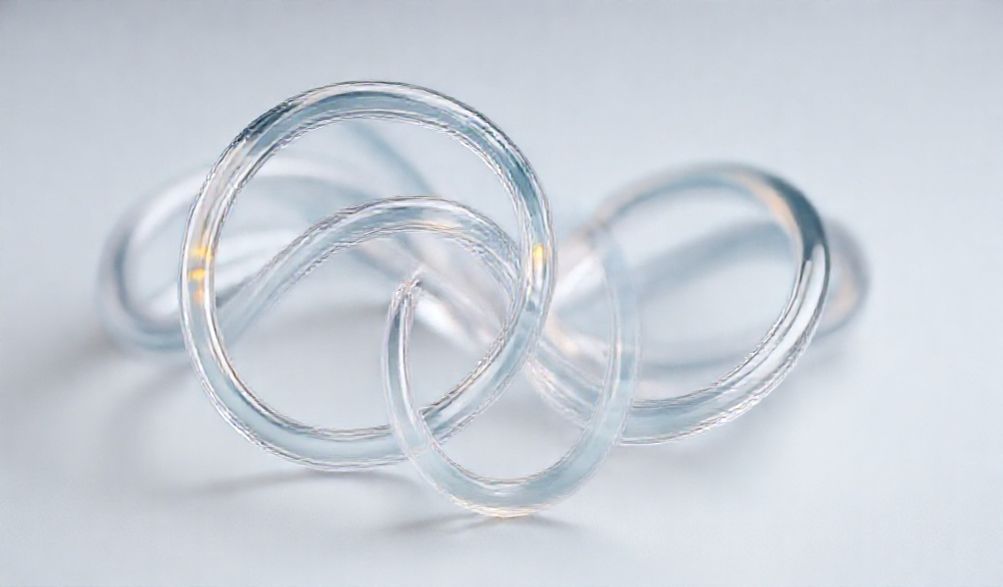
Ergonomic Loops: The Complete Guide to Healthier, More Productive Work Habits
Do you end your workday with a stiff neck, aching wrists, or a dull throb in your lower back? You’re not alone. In our quest for productivity, we often sacrifice our physical well-being, hunching over laptops for hours, forgetting to move, and ignoring the warning signs our bodies send us. That persistent wrist strain from coding, the shoulder tension after a marathon design session, or the general fog of fatigue by 3 PM—these aren’t just minor annoyances. They are symptoms of a broken system.
But what if the solution wasn’t just a better chair or an expensive gadget? What if it was a fundamental shift in how you approach your entire work life? Enter the concept of Boucles Ergonomiques.
This guide is built on a foundation of expertise, authoritativeness, and trustworthiness (E-E-A-T), synthesizing principles from occupational science, physiotherapy, and proven productivity frameworks. Our goal is not to sell you a product but to provide you with a comprehensive, actionable system. By the end, you’ll understand how to build and maintain your own personalized Ergonomic Loop—a continuous cycle that reduces your risk of injury, boosts mental focus, and transforms your long-term health and productivity.
What Are Ergonomic Loops? Beyond the Buzzword
At first glance, “ergonomic loops” might sound like the latest tech accessory. In reality, it’s a powerful mindset and methodology. It moves beyond static, one-time fixes to embrace a dynamic, holistic system for sustainable well-being.
The Definition: A System, Not Just a Gadget
An Ergonomic Loop is the continuous, intentional cycle of managing your physical interaction with your work. It’s the process of Assessing your environment and habits, Adjusting your setup and routines, Acting on healthy behaviors, and Analyzing the results to inform the next cycle. It turns ergonomics from a noun (a thing you have) into a verb (a thing you ?).
The Core Principles of the Loop
This system rests on four interconnected pillars:
- Proactive Posture Management: Instead of waiting for pain to tell you something is wrong, you learn to position your body optimally before discomfort sets in. It’s prevention over cure.
- Intentional Micro-Breaks and Movement: Human bodies are built for motion, not static sitting. Integrating short, frequent breaks for stretching and movement is non-negotiable for disrupting strain patterns.
- Environmental Optimization: This is where your tools—chair, desk, monitor, keyboard, mouse, and lighting—come in. They are the hardware that supports the software of healthy habits.
- Habit Stacking and Consistency: The most perfect setup is useless without consistent use. The loop is designed to help you build small, sustainable habits that compound over time.
Why Your Current Work Habits Are Breaking You (The Open Loop)
Most of us work with an “open loop”—we input effort and time but lack a feedback system to correct the physical toll it takes. This leads to a gradual, often invisible, decline.
The High Cost of Static Posture
When you sit still for prolonged periods, muscles become fatigued from holding a fixed position, pressure increases on spinal discs, and circulation slows. This state of low-grade physical stress diverts cognitive resources, leading to that familiar afternoon mental fog.
Common Culprits in the Modern Workspace
Look around your setup. Do you see:
* The Laptop Hunch: Screen too low, forcing your neck to crane forward.
* Mouse Shoulder: Reaching too far for a mouse, straining your shoulder and arm.
* The Screen Glare Squint: Lighting causing eye strain and subconsciously making you lean into the monitor.
* The Dangling Foot: Chair too high, cutting off circulation and destabilizing your posture.
These are not just quirks; they are the direct engineers of your discomfort.
From Discomfort to Injury: RSI, Carpal Tunnel, and Chronic Pain
An open ergonomic loop has a clear end point: injury. Repetitive Strain Injuries (RSI), including carpal tunnel syndrome, tendonitis, and chronic back pain, are the direct consequences of unaddressed, repetitive stress on the body’s musculoskeletal system. They are the body’s final, forceful signal that the loop must be closed.
Building Your First Ergonomic Loop: A Step-by-Step Guide
Ready to close the loop? Follow this four-phase cycle to build a foundation for healthier work.
Step 1: The Assessment Phase – Auditing Your Workspace
Grab a notepad and objectively evaluate your current station. Use this checklist:
* Chair: Do your feet rest flat on the floor? Are your thighs parallel to the ground? Is lumbar support present and positioned in the curve of your lower back?
* Desk Height: With arms at your sides and elbows bent at 90 degrees, your desk surface should be at or slightly below elbow height.
* Monitor: The top of your screen should be at or just below eye level, about an arm’s length away.
* Keyboard/Mouse: They should be on the same plane, close enough that your elbows remain at your sides (not reaching forward).
* Éclairage : Is there glare on your screen? Is the room bright enough without being harsh?
Step 2: The Adjustment Phase – Quick Wins and Key Investments
Now, make changes based on your audit.
-
Quick Fixes (Low/No Cost):
- Use sturdy books or a box to raise your laptop or monitor to eye level.
- Roll up a towel or use a small cushion for lumbar support.
- Adjust your chair height so your feet are flat.
- Reposition your desk lamp to eliminate screen glare.
-
Key Gear (Strategic Investments):
- Ergonomic Chair: Look for adjustable seat height, depth, lumbar support, and armrests. This is the cornerstone of your loop’s hardware.
- Sit-Stand Desk (or converter): Facilitates the crucial “movement” principle by allowing you to change postures throughout the day.
- Vertical Mouse & Split Keyboard: These peripherals are designed to keep your wrists and forearms in a more neutral, natural position, directly addressing common strain points.
Step 3: The Action Phase – Integrating Healthy Habits
Your optimized environment enables healthy habits. Now, you must practice them.
- The 20-20-20 Rule: Every 20 minutes, look at something 20 feet away for at least 20 seconds. This resets your eye muscles.
- Timed Micro-Breaks: Use a Pomodoro timer (25 minutes work, 5-minute break) or simple alarm. Every break, stand up, walk, and hydrate.
- Desk Stretches: Perform simple movements every hour:
- Neck Rolls: Gently drop your ear toward your shoulder, then slowly roll your chin to your chest and to the other shoulder.
- Wrist Flexor/Extensor Stretch: Extend your arm, palm facing down. Gently pull your fingers back toward you with the other hand. Switch to palm-up and pull fingers down.
- Seated Figure-Four Stretch: While seated, cross one ankle over the opposite knee and gently lean forward to stretch the hip.
Advanced Ergonomic Loops for Specific Professions
Tailor your loop to your specific work patterns.
The Coder’s Loop: Optimizing for Long Sessions
- Keyboard is King: Invest in a mechanical keyboard with low-force switches to reduce finger strain. Consider a split or columnar keyboard to align with your natural hand position.
- IDE/Theme Optimization: Use dark themes and adjust font size and contrast to minimize eye strain during long code reviews.
- Pacing with Pomodoro: Strict timer use is critical to enforce breaks during deep-focus debugging or development sprints.
The Creative’s Loop: Designers, Artists, and Video Editors
- Tablet & Display Setup: Ensure your drawing tablet or pen display is at a comfortable angle to avoid wrist extension. For video editors, a secondary color-calibrated monitor at eye level is essential.
- Master Shortcuts & Stream Decks: Program repetitive actions (brush size changes, common edits) to keyboard shortcuts or a stream deck to drastically reduce mouse dependency and repetitive clicks.
- Ambient Lighting: Use bias lighting behind your monitor to reduce contrast-induced eye fatigue during long color-grading sessions.
The Hybrid Worker’s Loop: Seamlessly Transitioning Between Spaces
- The Portable Kit: Your loop must be mobile. A lightweight laptop stand, a compact external keyboard (like a 65% layout), and a Bluetooth mouse can transform any coffee shop table into an ergonomic zone.
- Habit Consistency: The same 20-20-20 rule and timed stretch breaks apply, regardless of location. Your habits are the portable core of your loop.
Measuring Success: How to Know Your Loops Are Working
A loop requires feedback. How do you know it’s working?
Subjective Metrics: Tracking Pain, Energy, and Focus
Keep a simple daily log. Rate your wrist, neck, and back discomfort on a scale of 1-5. Note your energy levels at 10 AM, 2 PM, and 4 PM. Observe your ability to focus. Over weeks, you should see a positive trend.
Objective Metrics: Using Tech and Tools
- Wearables: Smartwatches that remind you to stand or move hourly.
- Software: Apps like
Stretchlyou vosTime Outthat lock your screen to enforce breaks. - Posture Devices: Wearable buzzers that vibrate when you slouch can be powerful training tools in the early “Action” phase.
When to Iterate and Refine Your Loop
If you notice a resurgence of pain or fatigue, don’t despair—this is the loop working. It’s a signal to return to the Assessment Phase. Did a new project change your mouse usage? Has your chair cushion worn out? The loop is a lifelong practice of tuning and refinement.
FAQ: Your Ergonomic Loops Questions, Answered
Q: Je travaille sur un ordinateur portable dans des cafés. Une boucle ergonomique est-elle même possible pour moi ?
R: Absolument. Votre “boucle mobile” repose sur des outils minimaux et portables et des habitudes rigoureuses. Un support d'ordinateur portable compact (pour surélever l'écran), un petit clavier externe (pour permettre une largeur d'épaules correcte) et un engagement envers la règle du 20-20-20 et des pauses debout horaires créeront un système robuste n'importe où.
Q: Les chaises ergonomiques coûteuses sont-elles vraiment nécessaires, ou est-ce un artifice marketing ?
R: Une chaise de haute qualité et réglable est l'un des outils les plus impactants de votre boucle, car elle soutient votre posture pendant des heures. Ce n'est pas un artifice, mais ce n'est pas non plus le seul composant. Recherchez les caractéristiques clés selon votre budget : un soutien lombaire réglable, la hauteur/profondeur de l'assise et des accoudoirs. Une chaise à 300€ avec ces caractéristiques est un meilleur investissement qu'une chaise “de direction” à 1000€ sans elles.
Q: Combien de temps faut-il pour voir des résultats après la mise en place de ces boucles ?
R: Gérez vos attentes. Un soulagement des tensions aiguës (comme la fatigue oculaire ou la tension cervicale) peut être ressenti en quelques jours. En revanche, inverser des problèmes chroniques ou construire de nouvelles voies neuronales pour la posture est un processus de formation d'habitudes constantes. Un changement significatif et durable prend typiquement 3 à 8 semaines de pratique quotidienne.
Q: Les boucles ergonomiques peuvent-elles aider en cas de mal de dos ou de TMS existants ?
R : Avertissement important : Bien que la mise en œuvre de ces stratégies puisse considérablement soulager l'inconfort, empêcher l'aggravation et favoriser la récupération, elles ne remplacent pas un diagnostic et un traitement médicaux professionnels. Si vous ressentez une douleur persistante ou aiguë, un engourdissement ou des picotements, nous vous recommandons vivement de consulter un médecin ou un kinésithérapeute pour une évaluation personnalisée et un plan de traitement.
Q: Quel est l'élément unique le plus important d'une boucle ergonomique ?
R : La régularité. Le trône ergonomique le plus cher et le bureau parfait sont des objets inertes sans les actions habituelles et quotidiennes de mouvement, de vérification de la posture et de pauses intentionnelles. La boucle ne fonctionne que si vous la refermez, jour après jour.
Conclusion
Les Boucles Ergonomiques ne sont pas un produit que vous achetez ; c'est un système personnalisé et durable que vous construisez et adoptez. C'est la compréhension responsabilisante que votre bien-être au travail n'est pas laissé au hasard, mais qu'il est quelque chose que vous pouvez activement concevoir et améliorer grâce au cycle simple et continu : Évaluer, Ajuster, Agir, Analyser.
C'est une pratique à vie qui consiste à être à l'écoute de son corps et à optimiser son environnement. Le but n'est pas la perfection, mais un progrès constant et conscient.
Commencez petit aujourd'hui. N'essayez pas de tout changer d'un coup. Choisissez une seule chose dans ce guide. Peut-être est-ce de réaliser l'audit de 5 minutes de votre espace de travail. Peut-être est-ce de régler un minuteur pour la règle du 20-20-20. Refermez simplement une petite partie de votre boucle. Cette action unique est le début d'une manière de travailler plus saine, plus concentrée et plus productive.
Nous sommes là pour soutenir votre parcours. Partagez vos propres astuces de boucle, vos réussites ou vos défis dans les commentaires ci-dessous. Construisons une communauté axée sur une réussite durable, une boucle à la fois.
p>