
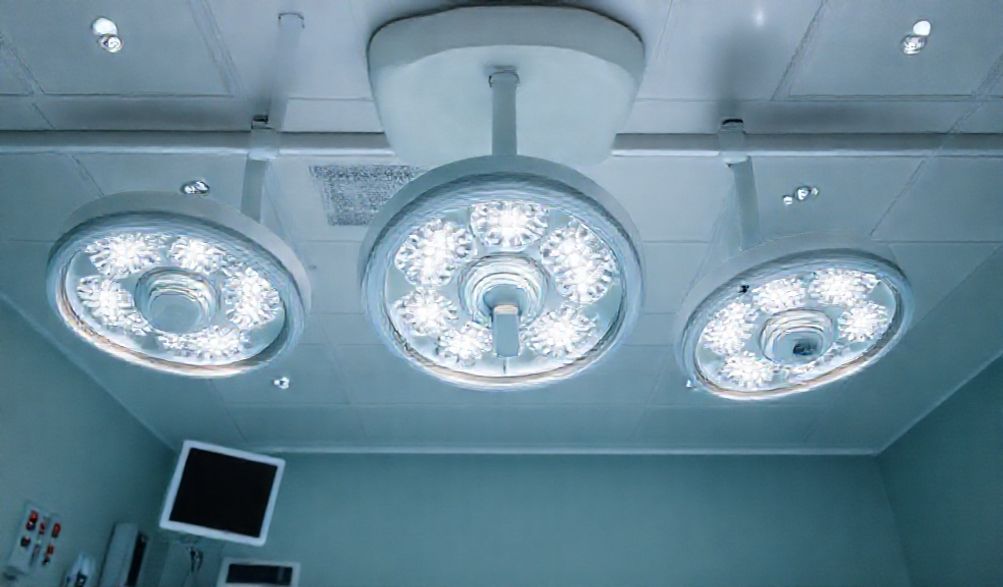
The Complete Guide to LED Operating Room Lights: Benefits, Technology & Selection Criteria
In the high-stakes environment of an operating room, every detail matters. From the precision of the instruments to the skill of the surgical team, success hinges on control and clarity. But what is the single piece of equipment that affects every visual decision a surgeon makes? The answer is the lampe chirurgicale. It is the sun of the OR, the foundational element upon which diagnosis, dissection, and repair are performed. For decades, the warm glow of halogen or the flat illumination of fluorescent lights defined the surgical landscape. Today, a quiet revolution has taken hold, driven by the superior technology of LED operating room lights.
This transition is more than a simple bulb swap; it’s a fundamental upgrade that enhances surgical precision, improves safety, and boosts operational efficiency. For hospital administrators, surgical directors, biomedical engineers, and procurement specialists, navigating this shift requires a deep, evidence-based understanding. This guide serves as your comprehensive, authoritative resource. We will move beyond marketing claims to explore the technical specifications, clinical benefits, and critical selection criteria for modern LED surgical lighting, empowering you to make an informed investment in one of your most vital OR assets.
Why LED Technology is Revolutionizing the Operating Room
The move to LED technology represents a paradigm shift in surgical illumination. It addresses long-standing limitations of traditional lighting while introducing capabilities that were previously impossible. The benefits are multifaceted, impacting clinical outcomes, staff well-being, and the hospital’s bottom line.
Unmatched Color Rendering and Tissue Differentiation
Perhaps the most critical advancement is in light quality. Accurate tissue differentiation—distinguishing a artery from a vein, healthy tissue from necrotic, or a subtle shade variation in an organ—is paramount. This is measured by the L’Indice de Rendu des Couleurs (IRC), on a scale of 0 to 100. A perfect CRI of 100 represents light identical to natural daylight.
Traditional surgical lights often struggled with high CRI, leading to visual fatigue and potential misinterpretation. Modern LED operating room lights consistently achieve a CRI of 95 or higher. This high-fidelity illumination reveals true tissue colors, enhancing a surgeon’s ability to make critical visual assessments. Studies have shown that high-CRI lighting reduces surgeon eye strain and mental fatigue over long procedures, directly contributing to sustained concentration and potentially better outcomes.
Superior Shadow Control and Depth Illumination
Obstructive shadows cast by a surgeon’s head or hands can create dangerous blind spots. LED technology tackles this through multi-point source design. Instead of one or two powerful bulbs, an LED surgical light head contains an array of hundreds of individual, tiny LED diodes.
This configuration allows light to penetrate deep into cavities from multiple angles. When a surgeon’s head blocks some diodes, the others immediately fill in, dramatically reducing the density and intrusion of shadows. This “shadow dilution” effect provides consistent, deep-cavity illumination, which is especially crucial in complex procedures like spinal, cardiothoracic, or deep abdominal surgery.
Enhanced Energy Efficiency and Sustainability
The operational advantages of LEDs are staggering. A typical halogen surgical light might consume 500-800 watts. An equivalent LED system often uses 70-90% less energy, frequently operating in the 50-150 watt range. This drastic reduction translates directly to lower electricity bills and a smaller carbon footprint for the facility.
Furthermore, LEDs convert most of their energy into light, not heat. Traditional lights acted like radiant heaters, uncomfortably warming the surgical site and the surgical team’s heads. The minimal infrared emission from LED operating room lights creates a cooler, more comfortable environment for both patient and staff, and reduces thermal stress on exposed tissues.
Exceptional Longevity and Reduced Maintenance
The lifespan of lighting components is a major operational consideration. Halogen bulbs may last 1,000 to 2,000 hours, requiring frequent, costly changes that disrupt OR schedules. LED modules, however, are rated for 50,000 to 60,000 hours or more.
This longevity means an LED light head could operate for over a decade before needing a module replacement, assuming typical OR usage. The result is dramatically reduced maintenance costs, virtually zero downtime for bulb changes, and a significantly lower total cost of ownership (TCO). The reliability of solid-state LED technology also means fewer mechanical failures compared to systems with moving filaments or complex reflectors.
Key Technical Specifications to Evaluate
When comparing systems, understanding the technical language is essential. Here are the core specifications that define the performance of LED operating room lights.
Understanding Lux and Illuminance
Lux is the unit measuring illuminance—the amount of light falling on a surface. In surgery, it refers to the intensity of light at the surgical site. Insufficient lux can cause eye strain and obscure detail; excessive lux can create glare and wash out contrast.
Industry standards provide guidelines:
* General Surgery: 40,000 – 160,000 lux
* Neuro & Spinal Surgery: 80,000 – 160,000+ lux (requiring exceptional depth penetration)
* Minimally Invasive Surgery: While the scope provides its own light, ambient OR lighting still requires sufficient, adjustable lux for monitor viewing and instrument handling.
A quality system will maintain its rated lux level consistently across its lifespan.
Color Temperature (Kelvin) and Clinical Application
Color temperature, measured in Kelvins (K), describes the “warmth” or “coolness” of white light. Lower Kelvin (e.g., 3000K-4000K) appears yellowish-white (“warm”), while higher Kelvin (e.g., 5000K-6000K) appears bluish-white (“cool” or “daylight”).
The innovation in modern systems is température de couleur réglable. Surgeons can tailor the light to the procedure:
* Cooler Light (5000K+): Provides high contrast, ideal for distinguishing red tones (blood, muscle) and for procedures requiring sharp visual acuity.
* Warmer Light (4000K and below): Can be easier on the eyes during long procedures and may be preferred for surface tissue work.
The ability to adjust this setting from a sterile handle is a key feature of advanced LED operating room lights.
Light Field Diameter and Homogeneity
It’s not just about how bright the light is, but how evenly it’s distributed. The light field is the illuminated area on the surgical plane. Specifications will note diameters at different focus distances (e.g., 18cm at 1m).
More important is de l'homogénéité—the consistency of illuminance within that field. A high-quality light produces a uniform circle of light with no distracting bright hotspots in the center or dim, fuzzy edges. This even illumination prevents the surgeon’s eyes from constantly readjusting between bright and dark zones, reducing fatigue.
Infection Control and Design
The operating light is a frequent point of contact and a potential reservoir for pathogens. Its design must prioritize infection control.
* Sealed Enclosures: The light head should be completely sealed to prevent dust, fluids, or microbes from entering the LED compartment.
* Cleanable Surfaces: All external surfaces should be smooth, seamless, and free of crevices. They must withstand repeated cleaning with harsh hospital-grade disinfectants without degrading.
* Sterilizable Handles: Controls should be operable via handles that can be easily sterilized or covered with disposable sterile sleeves.
Critical Features for Modern Surgical Suites
Beyond core specs, contemporary LED operating room lights offer features that integrate them into the smart, efficient OR of today.
Integration with Operating Room Systems
The surgical light should not be an island. Consider its compatibility with:
* Les bras chirurgicaux : Mounting interfaces, weight, and cable management for hybrid/integrated systems.
* OR Architecture: Ceiling load capacity, track systems, and clearances.
* Advanced Features: Many lights now offer integrated 4K/HD cameras for documentation, telemedicine, and teaching, with outputs that feed directly into the OR’s audiovisual network.
Ergonomic Design and Surgeon Comfort
A light that is difficult to position is a hindrance. Ergonomic excellence is critical:
* Maniabilité : Smooth, fluid movement with minimal inertia. The light should stay where it’s placed without drift.
* Portée et articulation : Sufficient range of motion to cover the entire table from various mounting positions.
* Sterile Touch Controls: Intuitive, responsive controls on the handle for on/off, intensity, focus, and color temperature—all operable without breaking the sterile field.
Reliability and Safety Features
In the OR, failure is not an option. Key safety and reliability features include:
* Redundancy: The LED array should be divided into multiple independent circuits. If one section fails, the others remain lit at a lower but still functional intensity.
* Compatibilité électromagnétique (CEM) : The light must not emit electromagnetic interference that could disrupt sensitive monitoring or life-support equipment (per IEC 60601-1-2 standard).
* Fail-Safe Mechanisms: Backup batteries or capacitors to power a safe shutdown or maintain minimal light during a power interruption.
Future-Proofing with Smart Technology
The IoT is entering the OR. Next-generation lights may feature:
* Programmable Presets: Save light settings (intensity, color temp) for specific procedures or surgeons.
* Connectivité réseau : For remote diagnostics, usage logging, and integration with OR scheduling systems to auto-load presets.
* Data Logging: Track operational hours, performance metrics, and predictive maintenance alerts.
A Step-by-Step Guide to Selecting the Right System
Choisir la bonne LED operating room lights is a strategic process that involves multiple stakeholders.
Réalisation d'une Évaluation des Besoins pour Votre Établissement
Begin by looking inward:
1. Surgical Specialty Mix: Do you perform mostly orthopedics (requiring bright, white light), microsurgery (requiring extreme depth and shadow control), or a general mix?
2. OR Volume and Utilization: How many hours per day will the lights run? This impacts ROI calculations.
3. Existing Infrastructure: Are you building new ORs or retrofitting existing ones? Note ceiling type, boom models, and electrical capacity.
4. Stakeholder Input: Involve surgeons, nurses, and biomedical engineering staff early. Their practical experience is invaluable.
Création d'une Liste de Contrôle pour l'Appel d'Offres (RFP)
Arm yourself with a detailed RFP. Essential questions for vendors include:
* Provide full technical specifications (Lux @ distance, CRI, CCT range, homogeneity).
* Detail the warranty: duration, what’s covered (LEDs, mechanics, electronics), and response time for service.
* Provide clinical evidence or white papers supporting your claims on CRI and shadow reduction.
* Outline installation requirements, timeline, and training provided.
* Share a list of comparable hospital installations for reference.
The Importance of Clinical Demonstrations and Trials
Spec sheets tell only part of the story. Insist on a clinical evaluation:
* In-Person Demo: Have the vendor set up a light in a non-active OR or simulation lab.
* Extended Trial: If possible, arrange a multi-week trial in a live OR. Let surgeons use it for various cases.
* Evaluate Real-World Performance: Assess glare, shadow control, ease of handling, and noise from cooling fans in a real environment.
Évaluation du Coût Total de Possession (CTP)
Look beyond the sticker price. A comprehensive TCO analysis includes:
* Prix d'achat : The initial capital outlay.
* Installation & Integration: Costs for mounting, electrical work, and integration with other systems.
* Energy Costs: Calculate annual savings based on wattage reduction vs. old lights.
* Maintenance : Cost of service contracts and expected replacement parts over 10 years.
* Disposal Costs: For old lighting systems.
Souvent, le coût initial plus élevé d'un système LED haut de gamme est compensé plusieurs fois par les économies d'énergie et de maintenance, générant un retour sur investissement à long terme solide.
Foire Aux Questions (FAQ) sur les Lumières LED de Salle d'Opération
Q1 : Quelle est la durée de vie typique d'une lumière chirurgicale LED, et que couvre la garantie ?
R : Les modules LED de haute qualité sont généralement conçus pour 50 000 à 60 000 heures. Dans une salle d'opération très active (10 heures/jour, 5 jours/semaine), cela représente plus de 15 ans de service. Il est crucial d'examiner attentivement la garantie. Recherchez une garantie complète (souvent de 3 à 5 ans) qui couvre non seulement les diodes LED, mais aussi les alimentations, l'électronique et les composants mécaniques. Comprenez les conditions de service et les garanties de réponse sur site.
Q2 : Comment les lumières LED se comparent-elles aux lumières traditionnelles en termes d'émission de chaleur ?
R : Les lumières LED de salle d'opération émettent considérablement moins de chaleur rayonnante (rayonnement infrarouge) directement sur le site chirurgical et l'équipe chirurgicale. Bien que la tête lumineuse elle-même puisse avoir des systèmes de refroidissement générant une certaine chaleur ambiante, le faisceau focalisé est pratiquement “ froid ”. Cela améliore la sécurité du patient en réduisant la dessiccation tissulaire et améliore le confort du chirurgien en éliminant l'effet de “ tête chaude ” courant avec les halogènes.
Q3 : Les bras de lumières chirurgicales existants et l'infrastructure peuvent-ils être adaptés avec des têtes LED ?
R : Souvent, oui. De nombreux fabricants proposent des kits de modernisation ou de nouvelles têtes LED conçues pour s'adapter aux bras existants de leur propre marque ou parfois d'autres marques. Cela peut être une solution rentable. Cependant, une évaluation approfondie de la compatibilité par un ingénieur biomédical et le fournisseur est essentielle. Les facteurs incluent l'interface mécanique, l'équilibre des poids, la charge électrique et l'intégration du système de contrôle. Dans certains cas, un système entièrement nouveau peut être plus pratique et offrir de meilleures performances.
Q4 : Existe-t-il des normes ou certifications spécifiques à rechercher ?
R : Absolument. La conformité indique la sécurité et les performances. Les normes clés incluent :
* IEC 60601-1 : Norme générale de sécurité pour les équipements électromédicaux.
* IEC 60601-2-41 : Norme particulière pour la sécurité de base et les performances essentielles des luminaires chirurgicaux et des luminaires de diagnostic.
* ISO 9680 : Spécifique aux performances et à la sécurité des lumières de salle d'opération.
* Directive CEM (par ex., IEC 60601-1-2) : Pour la compatibilité électromagnétique.
* Certifications Régionales : Autorisation FDA (USA), Marquage CE (Europe), etc.
Q5 : Comment la qualité de la lumière se dégrade-t-elle avec le temps, et comment est-elle mesurée ?
R : Les LED ne “ grillent ” pas soudainement ; elles s'atténuent progressivement. La norme industrielle mesure la durée de vie “ L70 ” ou “ L80 ” — le temps nécessaire pour que le flux lumineux se déprécie à 70% ou 80% de son intensité d'origine. Une durée de vie L70 de 50 000 heures est courante. Plus important encore, les LED de qualité médicale sont conçues pour un décalage de chromaticité, minimal, ce qui signifie que la température de couleur et l'IRC restent stables dans le temps. La lumière à 40 000 heures devrait être presque identique en qualité de couleur à celle d'origine, juste légèrement moins intense.
Conclusion
L'adoption de LED operating room lights l'éclairage LED chirurgical n'est plus une tendance prospective ; c'est la norme établie pour les soins chirurgicaux modernes. Les avantages sont clairs et convaincants : une visualisation inégalée grâce à un IRC élevé et un contrôle supérieur des ombres, des économies opérationnelles significatives via l'efficacité énergétique et une durée de vie ultra-longue, et des capacités d'intégration améliorées qui s'intègrent à l'écosystème numérique de la salle d'opération.
Choisir le bon système est une décision cruciale qui impacte les résultats chirurgicaux, la satisfaction du personnel et la performance financière pour les années à venir. Cela nécessite une approche méticuleuse et fondée sur des preuves, équilibrant les spécifications techniques avec les besoins cliniques réels. En réalisant une évaluation approfondie des besoins, en exigeant des démonstrations cliniques et en évaluant le véritable coût total de possession, les établissements de santé peuvent faire un investissement qui éclaire la voie vers de meilleurs soins aux patients et l'excellence opérationnelle.
Prêt à illuminer vos salles d'opération avec la nouvelle génération d'éclairage chirurgical ? Commencez par impliquer votre équipe clinique, consultez des experts en ingénierie biomédicale et contactez les principaux fabricants pour obtenir des spécifications détaillées et des démonstrations adaptées aux exigences uniques de votre établissement.
p>