
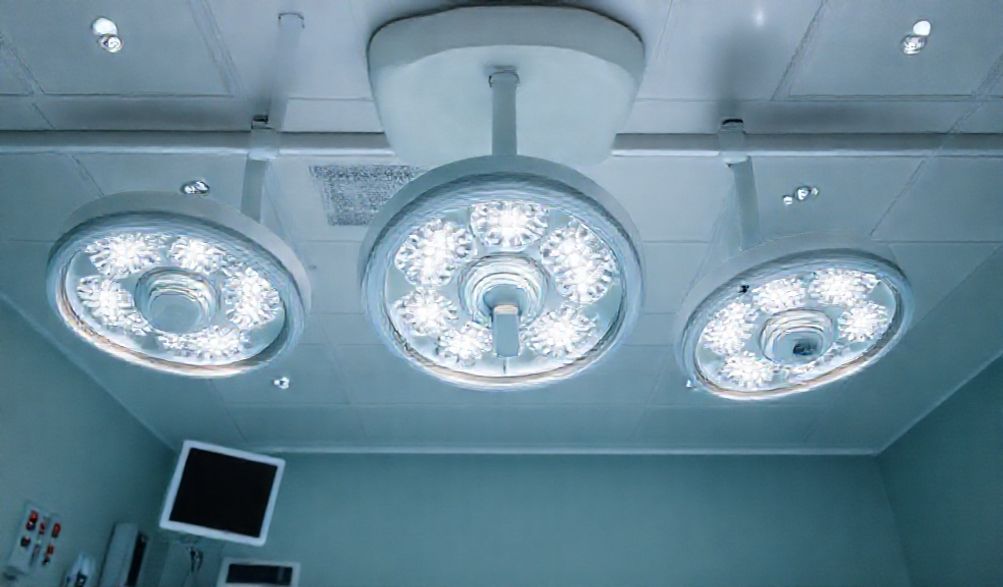
The Complete Guide to LED Operating Room Lights: Benefits, Technology & Selection Criteria
In the high-stakes environment of an operating room, every detail matters. From the precision of the instruments to the skill of the surgical team, success hinges on control and clarity. But what is the single piece of equipment that affects every visual decision a surgeon makes? The answer is the хирургический светильник. It is the sun of the OR, the foundational element upon which diagnosis, dissection, and repair are performed. For decades, the warm glow of halogen or the flat illumination of fluorescent lights defined the surgical landscape. Today, a quiet revolution has taken hold, driven by the superior technology of LED operating room lights.
This transition is more than a simple bulb swap; it’s a fundamental upgrade that enhances surgical precision, improves safety, and boosts operational efficiency. For hospital administrators, surgical directors, biomedical engineers, and procurement specialists, navigating this shift requires a deep, evidence-based understanding. This guide serves as your comprehensive, authoritative resource. We will move beyond marketing claims to explore the technical specifications, clinical benefits, and critical selection criteria for modern LED surgical lighting, empowering you to make an informed investment in one of your most vital OR assets.
Why LED Technology is Revolutionizing the Operating Room
The move to LED technology represents a paradigm shift in surgical illumination. It addresses long-standing limitations of traditional lighting while introducing capabilities that were previously impossible. The benefits are multifaceted, impacting clinical outcomes, staff well-being, and the hospital’s bottom line.
Unmatched Color Rendering and Tissue Differentiation
Perhaps the most critical advancement is in light quality. Accurate tissue differentiation—distinguishing a artery from a vein, healthy tissue from necrotic, or a subtle shade variation in an organ—is paramount. This is measured by the Индекс цветопередачи (CRI), on a scale of 0 to 100. A perfect CRI of 100 represents light identical to natural daylight.
Traditional surgical lights often struggled with high CRI, leading to visual fatigue and potential misinterpretation. Modern LED operating room lights consistently achieve a CRI of 95 or higher. This high-fidelity illumination reveals true tissue colors, enhancing a surgeon’s ability to make critical visual assessments. Studies have shown that high-CRI lighting reduces surgeon eye strain and mental fatigue over long procedures, directly contributing to sustained concentration and potentially better outcomes.
Superior Shadow Control and Depth Illumination
Obstructive shadows cast by a surgeon’s head or hands can create dangerous blind spots. LED technology tackles this through multi-point source design. Instead of one or two powerful bulbs, an LED surgical light head contains an array of hundreds of individual, tiny LED diodes.
This configuration allows light to penetrate deep into cavities from multiple angles. When a surgeon’s head blocks some diodes, the others immediately fill in, dramatically reducing the density and intrusion of shadows. This “shadow dilution” effect provides consistent, deep-cavity illumination, which is especially crucial in complex procedures like spinal, cardiothoracic, or deep abdominal surgery.
Enhanced Energy Efficiency and Sustainability
The operational advantages of LEDs are staggering. A typical halogen surgical light might consume 500-800 watts. An equivalent LED system often uses 70-90% less energy, frequently operating in the 50-150 watt range. This drastic reduction translates directly to lower electricity bills and a smaller carbon footprint for the facility.
Furthermore, LEDs convert most of their energy into light, not heat. Traditional lights acted like radiant heaters, uncomfortably warming the surgical site and the surgical team’s heads. The minimal infrared emission from LED operating room lights creates a cooler, more comfortable environment for both patient and staff, and reduces thermal stress on exposed tissues.
Exceptional Longevity and Reduced Maintenance
The lifespan of lighting components is a major operational consideration. Halogen bulbs may last 1,000 to 2,000 hours, requiring frequent, costly changes that disrupt OR schedules. LED modules, however, are rated for 50,000 to 60,000 hours or more.
This longevity means an LED light head could operate for over a decade before needing a module replacement, assuming typical OR usage. The result is dramatically reduced maintenance costs, virtually zero downtime for bulb changes, and a significantly lower total cost of ownership (TCO). The reliability of solid-state LED technology also means fewer mechanical failures compared to systems with moving filaments or complex reflectors.
Key Technical Specifications to Evaluate
When comparing systems, understanding the technical language is essential. Here are the core specifications that define the performance of LED operating room lights.
Understanding Lux and Illuminance
Lux is the unit measuring illuminance—the amount of light falling on a surface. In surgery, it refers to the intensity of light at the surgical site. Insufficient lux can cause eye strain and obscure detail; excessive lux can create glare and wash out contrast.
Industry standards provide guidelines:
* General Surgery: 40,000 – 160,000 lux
* Neuro & Spinal Surgery: 80,000 – 160,000+ lux (requiring exceptional depth penetration)
* Minimally Invasive Surgery: While the scope provides its own light, ambient OR lighting still requires sufficient, adjustable lux for monitor viewing and instrument handling.
A quality system will maintain its rated lux level consistently across its lifespan.
Color Temperature (Kelvin) and Clinical Application
Color temperature, measured in Kelvins (K), describes the “warmth” or “coolness” of white light. Lower Kelvin (e.g., 3000K-4000K) appears yellowish-white (“warm”), while higher Kelvin (e.g., 5000K-6000K) appears bluish-white (“cool” or “daylight”).
The innovation in modern systems is регулируемой цветовой температурой. Surgeons can tailor the light to the procedure:
* Cooler Light (5000K+): Provides high contrast, ideal for distinguishing red tones (blood, muscle) and for procedures requiring sharp visual acuity.
* Warmer Light (4000K and below): Can be easier on the eyes during long procedures and may be preferred for surface tissue work.
The ability to adjust this setting from a sterile handle is a key feature of advanced LED operating room lights.
Light Field Diameter and Homogeneity
It’s not just about how bright the light is, but how evenly it’s distributed. The light field is the illuminated area on the surgical plane. Specifications will note diameters at different focus distances (e.g., 18cm at 1m).
More important is homogeneity—the consistency of illuminance within that field. A high-quality light produces a uniform circle of light with no distracting bright hotspots in the center or dim, fuzzy edges. This even illumination prevents the surgeon’s eyes from constantly readjusting between bright and dark zones, reducing fatigue.
Infection Control and Design
The operating light is a frequent point of contact and a potential reservoir for pathogens. Its design must prioritize infection control.
* Sealed Enclosures: The light head should be completely sealed to prevent dust, fluids, or microbes from entering the LED compartment.
* Очищаемые поверхности: All external surfaces should be smooth, seamless, and free of crevices. They must withstand repeated cleaning with harsh hospital-grade disinfectants without degrading.
* Sterilizable Handles: Controls should be operable via handles that can be easily sterilized or covered with disposable sterile sleeves.
Critical Features for Modern Surgical Suites
Beyond core specs, contemporary LED operating room lights offer features that integrate them into the smart, efficient OR of today.
Integration with Operating Room Systems
The surgical light should not be an island. Consider its compatibility with:
* Хирургические консоли: Mounting interfaces, weight, and cable management for hybrid/integrated systems.
* OR Architecture: Ceiling load capacity, track systems, and clearances.
* Advanced Features: Many lights now offer integrated 4K/HD cameras for documentation, telemedicine, and teaching, with outputs that feed directly into the OR’s audiovisual network.
Ergonomic Design and Surgeon Comfort
A light that is difficult to position is a hindrance. Ergonomic excellence is critical:
* Maneuverability: Smooth, fluid movement with minimal inertia. The light should stay where it’s placed without drift.
* Достижимость и подвижность: Sufficient range of motion to cover the entire table from various mounting positions.
* Sterile Touch Controls: Intuitive, responsive controls on the handle for on/off, intensity, focus, and color temperature—all operable without breaking the sterile field.
Reliability and Safety Features
In the OR, failure is not an option. Key safety and reliability features include:
* Redundancy: The LED array should be divided into multiple independent circuits. If one section fails, the others remain lit at a lower but still functional intensity.
* Электромагнитная совместимость (ЭМС): The light must not emit electromagnetic interference that could disrupt sensitive monitoring or life-support equipment (per IEC 60601-1-2 standard).
* Fail-Safe Mechanisms: Backup batteries or capacitors to power a safe shutdown or maintain minimal light during a power interruption.
Future-Proofing with Smart Technology
The IoT is entering the OR. Next-generation lights may feature:
* Programmable Presets: Save light settings (intensity, color temp) for specific procedures or surgeons.
* Сетевое подключение: For remote diagnostics, usage logging, and integration with OR scheduling systems to auto-load presets.
* Data Logging: Track operational hours, performance metrics, and predictive maintenance alerts.
A Step-by-Step Guide to Selecting the Right System
Выбор правильного LED operating room lights is a strategic process that involves multiple stakeholders.
Проведение анализа потребностей для вашего медицинского учреждения
Begin by looking inward:
1. Surgical Specialty Mix: Do you perform mostly orthopedics (requiring bright, white light), microsurgery (requiring extreme depth and shadow control), or a general mix?
2. OR Volume and Utilization: How many hours per day will the lights run? This impacts ROI calculations.
3. Существующая инфраструктура: Are you building new ORs or retrofitting existing ones? Note ceiling type, boom models, and electrical capacity.
4. Stakeholder Input: Involve surgeons, nurses, and biomedical engineering staff early. Their practical experience is invaluable.
Создание контрольного списка для запроса предложений (RFP)
Arm yourself with a detailed RFP. Essential questions for vendors include:
* Provide full technical specifications (Lux @ distance, CRI, CCT range, homogeneity).
* Detail the warranty: duration, what’s covered (LEDs, mechanics, electronics), and response time for service.
* Provide clinical evidence or white papers supporting your claims on CRI and shadow reduction.
* Outline installation requirements, timeline, and training provided.
* Share a list of comparable hospital installations for reference.
The Importance of Clinical Demonstrations and Trials
Spec sheets tell only part of the story. Insist on a clinical evaluation:
* In-Person Demo: Have the vendor set up a light in a non-active OR or simulation lab.
* Extended Trial: If possible, arrange a multi-week trial in a live OR. Let surgeons use it for various cases.
* Evaluate Real-World Performance: Assess glare, shadow control, ease of handling, and noise from cooling fans in a real environment.
Evaluating Total Cost of Ownership (TCO)
Look beyond the sticker price. A comprehensive TCO analysis includes:
* Purchase Price: The initial capital outlay.
* Installation & Integration: Costs for mounting, electrical work, and integration with other systems.
* Energy Costs: Calculate annual savings based on wattage reduction vs. old lights.
* Обслуживание: Cost of service contracts and expected replacement parts over 10 years.
* Disposal Costs: For old lighting systems.
Often, the higher upfront cost of a premium LED system is offset many times over by savings in energy and maintenance, yielding a strong long-term ROI.
Frequently Asked Questions (FAQ) About LED OR Lights
В1: Каков типичный срок службы светодиодной хирургической лампы и что покрывает гарантия?
О: Высококачественные светодиодные модули, как правило, рассчитаны на 50 000–60 000 часов работы. В условиях активной операционной (10 часов в день, 5 дней в неделю) это соответствует более чем 15 годам службы. Ключевое значение имеет тщательное изучение условий гарантии. Необходимо искать комплексную гарантию (часто на 3–5 лет), которая покрывает не только светодиоды, но также драйверы, электронные и механические компоненты. Важно понимать условия обслуживания и гарантии выезда специалиста.
В2: Как светодиодные лампы сравниваются с традиционными по уровню тепловыделения?
О: Светодиодные операционные лампы выделяют значительно меньше лучистого тепла (инфракрасного излучения) непосредственно на операционное поле и хирургическую бригаду. Хотя в самой голове лампы могут быть системы охлаждения, создающие некоторое фоновое тепло, сфокусированный луч практически “холодный”. Это повышает безопасность пациента за счёт снижения высушивания тканей и улучшает комфорт хирурга, устраняя эффект “горячей головы”, характерный для галогенных ламп.
В3: Можно ли модернизировать существующие штанги (бoмы) и инфраструктуру хирургических ламп, установив светодиодные головы?
О: Часто — да. Многие производители предлагают комплекты для модернизации или новые светодиодные головы, предназначенные для установки на существующие штанги собственного, а иногда и других брендов. Это может быть экономически эффективным решением. Однако необходима тщательная оценка совместимости, проводимая биомедицинским инженером и поставщиком. К учитываемым факторам относятся механический интерфейс, балансировка по весу, электрическая нагрузка и интеграция с системой управления. В некоторых случаях более практичным и производительным решением может стать полностью новая система.
В4: Существуют ли конкретные стандарты или сертификаты, на которые следует обращать внимание?
О: Безусловно. Соответствие стандартам указывает на безопасность и производительность. Ключевые стандарты включают:
* IEC 60601-1: IEC 60601-1: Общий стандарт безопасности для медицинского электрооборудования.
* IEC 60601-2-41: Частный стандарт на базовую безопасность и основные рабочие характеристики хирургических осветителей и осветителей для диагностики.
* ISO 9680: Специфичен для производительности и безопасности операционных ламп.
* Директива по ЭМС (например, IEC 60601-1-2): Для электромагнитной совместимости.
* Региональные сертификаты: Регистрация FDA (США), маркировка CE (Европа) и т.д.
В5: Как со временем ухудшается качество света и как это измеряется?
О: Светодиоды не “перегорают” внезапно; они постепенно теряют яркость. Отраслевой стандарт измеряет срок службы “L70” или “L80” — время, за которое световой поток снижается до 70% или 80% от первоначальной интенсивности. Распространён рейтинг 50 000 часов для L70. Что более важно, высококачественные светодиоды медицинского класса сконструированы для минимального смещения цветности, что означает стабильность цветовой температуры и индекса цветопередачи (CRI) с течением времени. Через 40 000 часов качество цвета света должно быть почти идентичным первоначальному, лишь с немного меньшей интенсивностью.
Заключение
Внедрение LED operating room lights светодиодных операционных ламп.
больше не является перспективной тенденцией; это устоявшийся стандарт для современной хирургической помощи. Преимущества очевидны и убедительны: непревзойдённая визуализация благодаря высокому CRI и превосходному контролю тени, значительная экономия на эксплуатации за счёт энергоэффективности и сверхдолгого срока службы, а также расширенные возможности интеграции, соответствующие экосистеме цифровой операционной.
Выбор правильной системы — это критически важное решение, которое на годы вперёд влияет на результаты операций, удовлетворённость персонала и финансовые показатели. Оно требует тщательного, основанного на доказательствах подхода, который балансирует технические характеристики с реальными клиническими потребностями. Проведя всестороннюю оценку потребностей, запросив клинические демонстрации и оценив реальную совокупную стоимость владения, медицинские учреждения могут сделать инвестицию, которая осветит путь к улучшению ухода за пациентами и операционному совершенству.
p>