
Headlamp Surgery: A Comprehensive Guide to Benefits, Risks, and Recovery
For years, you’ve dealt with the relentless pressure of chronic sinus infections. Countless rounds of antibiotics, nasal sprays, and over-the-counter remedies provide only fleeting relief. Or perhaps it’s recurrent, painful ear infections disrupting your life, or enlarged tonsils causing sleep-disordered breathing. You’ve followed conservative treatments, but the problem persists. Your ENT specialist has now mentioned surgery as a potential definitive solution. As you begin your research, you encounter a term that might sound surprisingly analog in our digital age: headlamp surgery.
This article serves as a clear, authoritative, and balanced educational resource for patients considering or researching this specific surgical approach. Developed with insights from medical professionals, our goal is to demystify headlamp surgery, explaining its enduring role in modern Otolaryngology (ENT). We will define what it is, explore its benefits and considerations, and set realistic expectations—empowering you to have more informed discussions with your surgeon.
First, a clear definition: Headlamp surgery refers to a traditional, yet still actively utilized, method in ENT where the surgeon uses a head-mounted light source for illumination during an operation. The key context for today’s patient is this: while headlamp illumination is a distinct technique, in contemporary practice it is rarely used in isolation. It is often integrated with or serves as an alternative to other advanced visualization systems like endoscopes and microscopes, depending on the specific needs of the procedure. This guide will explore the nuanced role of headlamp surgery in a modern surgical setting.
What is Headlamp Surgery? Understanding the Technique
At its core, headlamp surgery is about one fundamental surgical necessity: seeing clearly. Before the widespread adoption of endoscopic towers and complex microscopes, the surgeon’s primary tool for illuminating the deep, dark cavities of the head and neck was a light mounted directly on their forehead.
The Core Principle: Direct, Focused Illumination
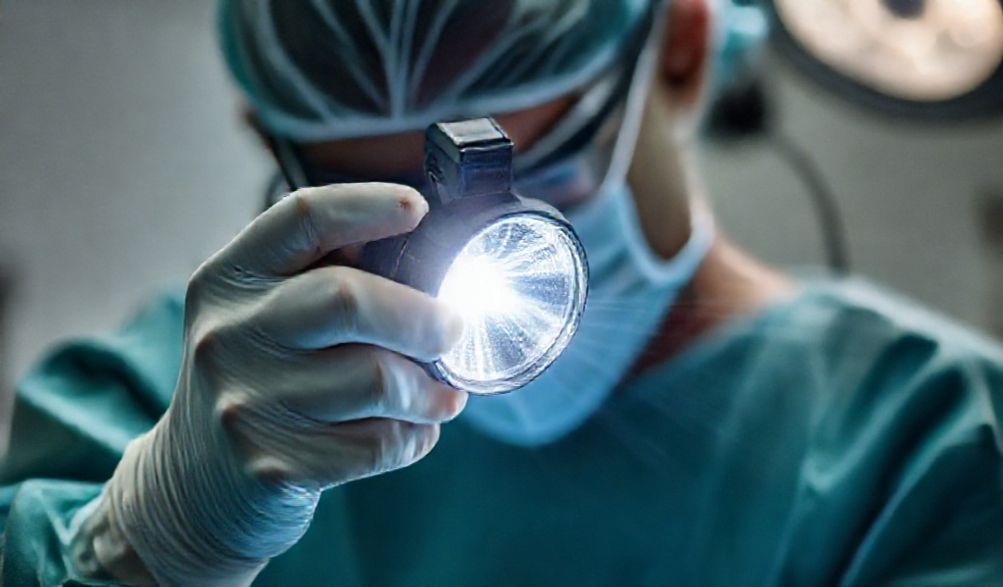
The principle is elegantly simple. A bright, focused light source is attached to a headband worn by the surgeon. This light is often fiber-optic, drawing illumination from a powerful base unit. The critical advantage is that it provides hands-free, directional lighting that moves in perfect synchrony with the surgeon’s line of sight. Wherever the surgeon looks, the beam of light follows. This allows for direct binocular (two-eyed) visualization of the surgical site, often through a small incision or a natural orifice like the mouth or nose.
Common Procedures Utilizing Headlamp Illumination
Headlamp illumination is not used for every ENT procedure, but it remains a workhorse for many common surgeries, particularly those involving the oral cavity and certain aspects of ear and sinus work. Typical procedures include:
- Tonsillectomy and Adenoidectomy: The removal of tonsils and/or adenoids is a classic example. The headlamp provides excellent, shadow-free illumination deep in the throat, allowing the surgeon to use both hands for instruments.
- Certain Sinus Surgery Approaches: While functional endoscopic sinus surgery (FESS) is standard, some external or “open” approaches to the sinuses (like a Caldwell-Luc procedure) may utilize headlamp illumination.
- Tympanoplasty and Mastoidectomy: For ear surgeries, a headlamp can be used, often in conjunction with or as an alternative to an operating microscope, especially during certain steps requiring broader visualization or specific angles.
- Oral and Pharyngeal Procedures: Surgeries for lesions, biopsies, or sleep apnea in the oral cavity and pharynx frequently employ headlamp lighting for its simplicity and effectiveness.
Headlamp vs. Endoscopic/Microscopic Surgery: A Complementary Tool
It is crucial to move beyond the idea of a technological showdown. For the skilled ENT surgeon, this is not an “either/or” debate but a “when and how” decision.
- Endoscopes provide magnified, high-definition views on a monitor, offering an unparalleled wide-angle look inside narrow sinuses or the nasal cavity. However, they typically provide a monocular (2D) view and occupy one of the surgeon’s hands.
- Microscopes offer high magnification and brilliant binocular vision but are large, fixed pieces of equipment that require the surgeon and patient to be positioned relative to the microscope’s stationary eyepieces.
- The Headlamp offers mobile, binocular, 3D vision with complete freedom of head movement and use of both hands.
A surgeon might use a headlamp for the initial dissection and exposure during a tonsillectomy, then switch to an endoscope to inspect the nasal pharynx. Or, during an ear surgery, they might use the microscope for the delicate ossicular chain work but rely on the headlamp for harvesting a tissue graft. The headlamp is a versatile component of a modern surgical toolkit, chosen for specific tasks where its advantages are paramount.
The Potential Benefits and Advantages of Headlamp Surgery
Why would a surgeon choose a headlamp in an era of advanced video technology? The benefits are tangible and rooted in fundamental surgical principles.
Enhanced Depth Perception and 3D Visualization
This is arguably the most significant advantage. The human brain uses binocular vision to perceive depth and spatial relationships accurately. A headlamp allows the surgeon to use both eyes directly on the surgical field, providing superior depth perception compared to the monocular view of a standard endoscope. This 3D visualization is critical for judging distances, handling tissues with precision, and navigating complex anatomy where a misinterpretation of depth could have consequences.
Tactile Feedback and Surgical “Feel”
Surgery is not just a visual art; it is a tactile one. Headlamp surgery facilitates what surgeons often call “surgical feel.” With direct visualization and both hands free, the surgeon can use traditional instruments like scalpels, dissectors, and forceps with a high degree of tactile sensitivity. They can feel tissue resistance, texture, and planes of dissection directly through their instruments—a feedback loop that is sometimes diluted when operating while watching a 2D screen and manipulating long endoscopic instruments.
Flexibility and Efficiency in Specific Scenarios
The headlamp system is remarkably uncomplicated. There’s no large tower to position, no monitor to adjust, and no camera head to fog or get smeared. This allows for rapid setup and repositioning. In procedures that require the surgeon to frequently change their angle of view or work in multiple areas (like during a combined tonsillectomy and adenoidectomy), the headlamp offers seamless flexibility. It is also invaluable in resource-limited settings or in situations where technological redundancy is necessary.
Considerations, Risks, and Limitations
A balanced view requires an honest discussion of the technique’s constraints. Understanding these limitations is key to appreciating why surgeons make the tool choices they do.
Inherent Limitations of the Technique
- Narrower Field of View: Unlike a wide-angle endoscope, a headlamp illuminates a more focused cone of light. The surgeon sees only what is directly in their line of sight, which can mean a more restricted field of view.
- Potential for Obstruction: The surgeon’s head, instruments, or assistants’ hands can occasionally cast shadows or block the light path, requiring constant minor adjustments.
- Physical Ergonomics: The surgeon must maintain a posture that keeps their head and the light beam aligned with the target. This can lead to neck and back strain during long procedures, a challenge less pronounced with ergonomically positioned video monitors.
Potential Risks and Complications
It is essential to frame this honestly: The primary risks of any surgery are tied to the procedure itself—such as bleeding, infection, anesthesia risks, or specific nerve injuries—not the type of light used for illumination. A headlamp does not introduce unique biological risks. The illumination method is a tool for execution; the risks are inherent to the anatomical area being operated on and the complexity of the pathology. The most important factor in minimizing these universal surgical risks is the skill, training, and experience of the surgeon.
The Surgeon’s Expertise is Paramount
This point cannot be overstated. A headlamp, an endoscope, and a microscope are all instruments. The outcome of your surgery depends overwhelmingly on the surgeon wielding them. A master surgeon using a headlamp can achieve outcomes that are superior to a less-experienced surgeon using the most advanced 4K 3D endoscopic system. The technology augments skill; it does not replace it. The surgeon’s judgment in selecting the right tool for each step of your specific operation is a critical component of their expertise.
What to Expect: The Headlamp Surgery Journey
If your surgeon plans to utilize headlamp illumination, here is a general overview of what your journey may look like.
Consultation and Candidacy Evaluation
The decision to use a headlamp is a clinical one made by your surgeon. During your consultation, they will evaluate your diagnosis, review imaging (like CT scans), and examine your anatomy. They will determine if a headlamp-assisted approach is suitable, often because it provides the optimal blend of 3D visualization and surgical access for your specific condition. They should explain why this method is preferred for your case.
During the Procedure
From the patient’s perspective under anesthesia, the experience is no different than any other ENT surgery. You will be asleep. In the operating room, the surgeon will don the headlamp, often after the initial timeout and preparation. The light will be focused on the surgical site. The surgeon will then proceed, using the mobile light to guide their work, potentially switching to or from other visualization tools as needed. The surgical team is accustomed to this workflow.
Recovery and Post-Operative Care
Your recovery process is determined almost entirely by the procedure performed (e.g., tonsillectomy, sinus surgery), not by the illumination method used. Post-operative pain, activity restrictions, and healing time are related to the tissue manipulation and incisions, not the type of light. It is imperative that you follow your surgeon’s specific, detailed post-operative instructions regarding medication, wound care, diet, and follow-up appointments for the best possible outcome.
Key Questions to Ask Your Surgeon
Empower yourself for your consultation. Here are targeted questions to help you understand your surgeon’s plan:
- “For my specific procedure, are you planning to use a headlamp, an endoscope, a microscope, or a combination of these?” This opens the discussion about their surgical approach.
- “What are the advantages of using this approach for my particular anatomy and condition?” This asks them to tailor the explanation to you.
- “How many of these specific procedures have you performed using this technique?” This gently probes their experience and comfort level.
- “Regardless of the tools used, what are the most common outcomes and the specific risks I should be prepared for with this surgery?” This correctly refocuses the conversation on the procedure’s goals and universal risks.
FAQ Section
Q: Is headlamp surgery outdated?
A: No, it is not universally outdated. While endoscopic technology has revolutionized many areas of ENT, headlamp surgery remains a valuable and actively used tool in the surgical arsenal. It is often the optimal choice for specific procedures and surgical steps, proving that simplicity and effectiveness are never obsolete. It is best understood as one component of a modern surgical toolkit.
Q: Is surgery with a headlamp more dangerous than endoscopic surgery?
A: The safety of any surgery is primarily determined by the surgeon’s skill and experience, the patient’s overall health, and the complexity of the procedure—not solely by the illumination method. Both headlamp and endoscopic techniques are standard, accepted, and safe when performed by a qualified, board-certified ENT surgeon. The choice is about optimal visualization for the task, not a hierarchy of safety.
Q: Will I have a worse outcome or more scarring with headlamp surgery?
A: Surgical outcomes and scarring are related to the surgical technique, the access incisions, and your body’s healing response, not the type of light used. A headlamp does not cause more scarring. Your surgeon selects the approach (e.g., intraoral, external incision) that best allows them to address the problem effectively and with the desired cosmetic result.
Q: How do I find a surgeon experienced in headlamp techniques?
A: Any board-certified Otolaryngologist (ENT surgeon) has been trained in a variety of illumination methods, including headlamp surgery. During your consultation, you can directly ask about their approach. A qualified surgeon will be able to articulate why they prefer a certain method for your case and discuss their experience comfortably.
Conclusion
Headlamp surgery is an established, effective technique that maintains its relevance in modern ENT practice. It is not a relic of the past but a testament to the enduring value of direct, three-dimensional visualization and surgical tactility. In today’s operating rooms, it frequently works in concert with endoscopic and microscopic technologies, giving the surgeon a versatile palette of visualization options.
The central theme is this: the choice of surgical tool—be it a headlamp, endoscope, or microscope—is a clinical decision made by an experienced surgeon based on what is best for your individual anatomy and condition. The goal is not to use the most high-tech tool, but the most appropriate one.
Use the information in this guide as a foundation for informed, collaborative discussions with your healthcare provider. Your journey is a partnership. The ultimate objective is a successful surgical outcome, achieved through the skill of your surgeon and the strategic use of the tools that best serve your unique needs.
Take the next step: Consult with a board-certified Otolaryngologist to discuss your specific diagnosis and the full spectrum of treatment options available to you.
p>