
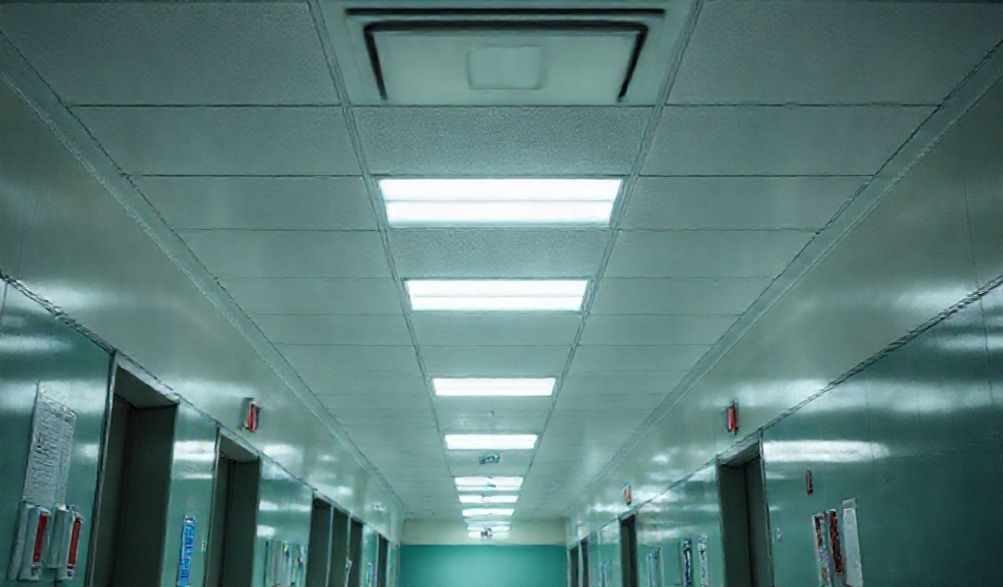
Hospital Lighting: A Guide to Healing Environments, Safety, and Compliance
When we think of hospital design, our minds often go to advanced medical equipment, sterile surfaces, and efficient floor plans. Rarely does lighting take center stage in the public imagination. Yet, the quality of light in a healthcare facility is one of the most pervasive and powerful environmental factors affecting everyone within its walls. It is far more than a simple utility to banish darkness; it is a critical clinical tool, a safety mechanism, and a silent partner in the healing process. Modern hospital lighting design directly influences patient recovery rates, staff performance and well-being, and overall facility safety, all while navigating a complex web of regulatory standards.
This guide synthesizes expertise from clinical research, architectural design principles, and healthcare facility management best practices. We will draw on studies from authoritative sources like The Journal of Clinical Sleep Medicine and frameworks from The Center for Health Design to move beyond anecdote and into evidence-based application. Whether you are a facility manager planning a renovation, a clinician advocating for patient well-being, or a designer specializing in healthcare environments, this post will illuminate the key considerations. You will learn about the different types of hospital lighting and their specific applications, understand the profound benefits of a well-lit environment, explore essential design criteria, and discover how to effectively navigate the crucial landscape of codes and compliance.
The Critical Role of Lighting in Healthcare Environments
In a hospital, light serves a triad of essential functions: it supports biological health, enables professional precision, and ensures physical safety. Understanding this multi-faceted role is the first step toward specifying lighting that truly serves its purpose.
Beyond Illumination: Lighting as a Clinical Tool
Light is the primary regulator of our circadian rhythm—the internal 24-hour clock governing sleep-wake cycles, hormone release (like melatonin and cortisol), and other vital bodily processes. For patients, especially those confined to bed or in windowless intensive care units, the static, often dim, and artificially cool light of traditional hospitals can severely disrupt this rhythm. This disruption is linked to poorer sleep, increased confusion, higher rates of depression and agitation, and even a longer length of stay.
Evidence-based design research has turned this understanding into actionable strategy. Studies have shown that exposing patients to bright, blue-enriched light during the day and ensuring darkness at night can:
* Reduce depressive symptoms in patients with conditions like Seasonal Affective Disorder (SAD) and general hospitalization-related depression.
* Lessen agitation in patients with dementia or those experiencing post-operative delirium.
* Contribute to shorter hospital stays by promoting better sleep and faster physiological recovery.
Lighting, therefore, transitions from a background feature to an active, non-pharmacological intervention in the patient’s care plan.
Enhancing Staff Efficiency and Reducing Errors
The demands on healthcare professionals require visual precision, sustained alertness, and unwavering attention to detail. Inadequate lighting is a direct threat to these requirements. Poor task lighting can lead to eye strain, fatigue, and—most critically—medical errors.
Consider these high-stakes environments:
* Surgical Suites: Shadowless, high-intensity, and color-accurate lighting is non-negotiable for distinguishing tissue types and ensuring procedural accuracy.
* Medication Preparation Areas: Precise lighting prevents misreading labels and dosages, a fundamental patient safety issue.
* Nursing Stations: Staff reviewing charts and digital records for hours need glare-free illumination to reduce visual fatigue.
Furthermore, aligning staff lighting with circadian principles can support their well-being during long, irregular shifts. Access to bright, stimulating light during night shifts can help maintain alertness, while warmer, dimmer light in break rooms can aid in relaxation.
Safety and Wayfinding for Patients and Visitors
A hospital can be a disorienting and intimidating environment. Strategic lighting plays a pivotal role in creating a safe and navigable space.
* Fall Prevention: For elderly or medicated patients getting up at night, low-level, glare-free night lights that illuminate the path from bed to bathroom are essential for preventing falls, a major cause of in-hospital injury.
* Emergency Egress: Code-compliant emergency lighting and exit signs must function flawlessly to guide safe evacuation during a power failure or other crisis.
* Intuitive Wayfinding: Lighting can be used architecturally to guide movement. Consistently lit pathways, illuminated signage, and differentiated lighting at key decision points (e.g., nurse stations, elevator banks) help reduce anxiety and confusion for visitors and outpatients.
Key Types of Hospital Lighting and Their Applications
A one-size-fits-all approach to hospital lighting fails. Different areas have distinct functional and psychological needs, met by a layered lighting strategy.
Ambient / General Lighting
This is the foundational layer that provides uniform, diffuse illumination for general orientation and movement. Its goal is to eliminate harsh shadows and create a comfortable base light level.
* Common Applications: Corridors, waiting rooms, lobbies, and standard patient rooms (as a base layer).
* Fixtures: Often recessed or indirect linear LEDs, troffers with deep parabolic louvers to control glare.
Task Lighting
This is high-intensity, focused light designed for specific visual activities where detail is critical. It is the workhorse of clinical care.
* Common Applications: Surgical overhead lights, examination lights in EDs and clinics, adjustable bedside lights for reading or wound inspection, and dedicated lighting at nurse station work surfaces.
* Fixtures: Highly adjustable, directional fixtures with excellent Color Rendering Index (CRI) and minimal heat output.
Accent & Wayfinding Lighting
This layer serves aesthetic and navigational purposes. It adds visual interest, reduces the monotony of clinical environments, and subtly guides people.
* Common Applications: Wall sconces in patient rooms or corridors, integrated floor-path lighting, illuminated handrails, and architectural lighting that highlights reception desks or art.
* Fixtures: Low-brightness LEDs, coves, and sconces with careful optical control.
Circadian-Tuning or Human-Centric Lighting (HCL)
This is the most advanced application, where lighting systems dynamically adjust their color temperature (from cool, blue-rich to warm, amber-rich) and intensity to mimic the natural progression of daylight.
* Purpose: To actively support circadian rhythm regulation for both patients and staff.
* Common Applications: Patient rooms (especially in ICUs, psychiatric units, and long-term care), dementia care facilities, and staff break rooms. Systems can be pre-programmed or tied to astronomical clocks.
Essential Design Considerations for Hospital Lighting
Selecting the right fixture is only part of the equation. How it is implemented determines its success or failure in the healthcare setting.
Glare Control and Visual Comfort
Glare—both direct and reflected—causes discomfort, visual fatigue, and can even trigger headaches. For a patient lying in bed, a ceiling downlight can be a source of constant irritation.
* Solutions: Use indirect lighting (bouncing light off ceilings/walls), fixtures with deep baffles or diffusers, and careful placement to keep bright sources out of direct sightlines. This is also critical in spaces with many computer screens to avoid reflected glare.
Color Temperature (CCT) and Color Rendering Index (CRI)
These two metrics are paramount for both clinical function and human comfort.
* Color Temperature (CCT), measured in Kelvins (K), describes how “warm” (amber) or “cool” (blue) the light appears.
* Guidelines: Use cooler white light (4000K – 5000K) in task areas like operating rooms, labs, and examination spaces to promote alertness and visual acuity. Use warmer white light (2700K – 3500K) in patient rooms, waiting areas, and lounges to promote relaxation and a sense of calm.
* Color Rendering Index (CRI) measures a light source’s ability to reveal the true colors of objects compared to natural light. A low CRI can distort the appearance of skin tone, tissue, and medication.
* Guidelines: In clinical areas, specify LEDs with a CRI of 90 or higher. This is essential for accurate patient assessment (detecting jaundice, cyanosis, rash) and in surgical and procedural settings.
Durability, Hygiene, and Maintenance
Hospitals are demanding environments. Lighting must be robust and support infection control protocols.
* Sealed Fixtures: In isolation rooms, operating suites, and other sensitive areas, fixtures must be completely sealed (IP-rated) to prevent dust and pathogens from accumulating inside.
* Cleanable Surfaces: All fixtures should have smooth, seamless surfaces that can withstand frequent cleaning with hospital-grade disinfectants without degrading.
* Accessible Maintenance: Design should allow for easy, quick lamp replacement and cleaning without disrupting clinical operations or contaminating sterile fields.
Integration with Controls and Automation
Smart lighting control is no longer a luxury; it’s a cornerstone of efficient, responsive design.
* Occupancy/Vacancy Sensors: Automatically turn lights off in unoccupied spaces like storage rooms, offices, and sometimes patient bathrooms (with override options).
* Dimming and Preset Scenes: Allow staff and patients to easily select lighting modes for “Exam,” “Rest,” “Night,” or “Reading.”
* Building Management System (BMS) Integration: Enables centralized control, scheduling, and monitoring of energy use, contributing to significant operational savings.
Navigating Standards, Codes, and Compliance
Hospital lighting is one of the most regulated aspects of building design. Compliance is not optional; it is a matter of licensure, reimbursement, and, most importantly, safety.
Overview of Key Regulatory Bodies and Standards
- The Joint Commission (TJC): The primary accrediting body for US hospitals. TJC surveyors verify compliance with life safety and environment of care standards, which include emergency lighting, exit signs, and general illumination levels.
- NFPA 101: Life Safety Code: Mandates rigorous requirements for emergency egress lighting, exit signage illumination duration (90 minutes minimum), and lighting in means of egress.
- FGI Guidelines: The Facility Guidelines Institute’s Guidelines for Design and Construction are the de facto standard for healthcare facility design. They provide detailed, room-by-room recommendations for illumination levels, lighting types, and control requirements.
- IECC/ASHRAE 90.1: These energy codes set limits on lighting power density (watts per square foot), driving the adoption of high-efficiency LED technology and advanced controls.
Specific Lighting Requirements for Critical Areas
- Operating Rooms: Require exceptionally high, shadow-reduced illumination (often 50,000+ lux), excellent color rendering (CRI >90), and often a color temperature around 4500K to match historical daylight-referenced standards.
- Isolation Rooms: Fixtures must be sealed to prevent pathogen harborage. Controls should ideally be operable from outside the room.
- Imaging Suites (MRI, etc.): All lighting must be non-ferrous and compatible with powerful magnetic fields. Specialized, MRI-safe LED fixtures are required.
Energy Efficiency and Sustainable Design
With lights operating 24/7, hospitals are prime candidates for energy-saving lighting strategies. Modern LED technology is the clear solution, offering:
* Dramatic Energy Savings: 50-70% reductions compared to fluorescent systems.
* Long Lifespan: Reducing maintenance frequency and labor costs.
* Cool Operation: Lowering HVAC cooling loads.
* Inherent Controllability: Perfect for integration with dimmers and sensors.
Investing in high-efficiency lighting supports sustainability goals like LEED or the WELL Building Standard, which places a strong emphasis on light for human health, while directly improving the hospital’s bottom line.
Frequently Asked Questions (FAQ) About Hospital Lighting
Q: What is the most important factor in choosing patient room lighting?
A: Patient control and visual comfort. A patient should have easy, intuitive control over multiple light levels—bright for tasks, medium for general room use, and very low for nighttime orientation—without causing glare from their bed-bound position. The integration of circadian-tuning features is increasingly seen as a best practice.
Q: Are LEDs the best choice for hospitals?
A: Yes, modern, high-quality LEDs specified for healthcare are the superior choice. They offer unmatched energy efficiency, long lifespan, minimal heat emission, excellent color rendering, and full dimmability. It is critical to select products from reputable manufacturers that meet the stringent CRI, durability, and hygiene requirements of healthcare settings.
Q: How does lighting help reduce patient confusion or delirium?
A: By reinforcing a strong day-night cycle. Consistent, bright light during daytime hours suppresses melatonin, promoting alertness and helping to anchor the circadian clock. Conversely, darkness or very low, warm light at night allows for natural melatonin production, supporting restorative sleep. This rhythm stabilization is a key non-pharmacological strategy to prevent and manage ICU delirium.
Q: Who should be involved in planning a hospital lighting design?
A: A multidisciplinary team is essential for success. This includes architects, electrical engineers, and lighting designers, working closely with facility managers, infection control practitioners, and—crucially—clinical end-users like nurses, surgeons, and patient experience advocates. Their frontline input on workflow, task needs, and patient interaction is invaluable.
Conclusion
Hospital lighting is a vital, multi-functional system that sits at the intersection of clinical science, human psychology, architectural design, and facility engineering. As we have explored, its impact extends far beyond simple visibility, directly influencing healing outcomes, staff performance, patient safety, and regulatory compliance. The evidence is clear: investing in thoughtful, evidence-based, and human-centric lighting design is not an aesthetic luxury but a core component of modern, high-quality healthcare delivery. It is an investment in the well-being of patients, the efficacy of staff, and the operational excellence of the facility itself.
For your next project or renovation, move beyond basic illumination. Consult with lighting designers and engineers who specialize in the unique complexities of healthcare environments. Make a thorough review of the latest FGI Guidelines and research from authoritative institutions like The Center for Health Design a foundational step. By prioritizing light, you illuminate the path to a healthier, safer, and more healing environment for all.
p>