
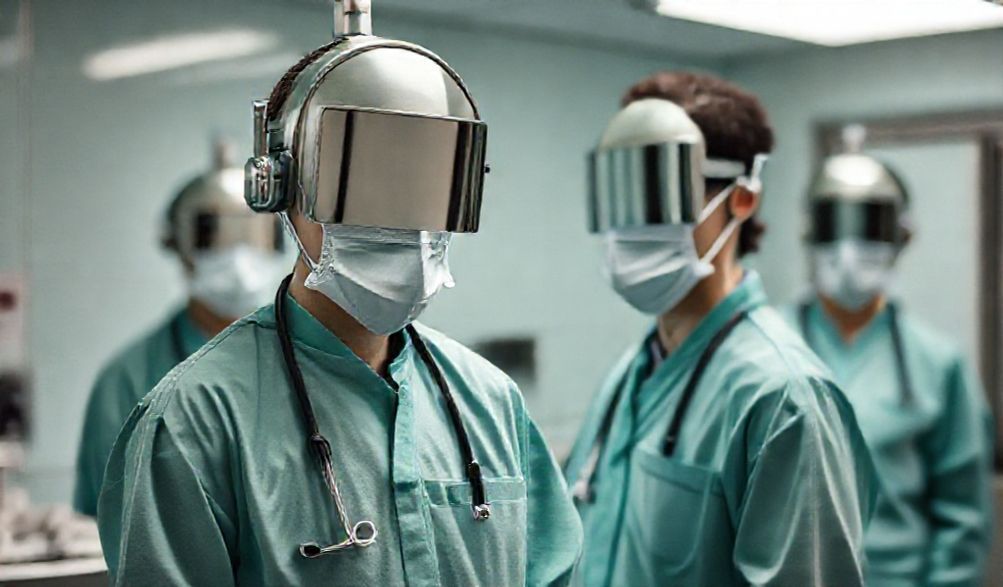
Why Did Doctors Wear Head Mirrors? Unveiling a Medical Icon
For generations, the image of a doctor was defined by a holy trinity of symbols: the draped stethoscope, the crisp white coat, and that mysterious, circular mirror strapped to the forehead. While the stethoscope remains a vital tool and the white coat a complex emblem, the head mirror has largely faded from modern practice, transforming from a daily necessity into a relic of a bygone medical era. It sparks immediate curiosity—a piece of polished metal that seems more suited to a detective’s magnifying glass or a mystic’s third eye than a physician’s clinic. What was its purpose? Was it a magnifying glass? A ceremonial object? Or a genuinely clever piece of technology?
This iconic device is far more than a quaint prop from a black-and-white film. It represents a brilliant, low-tech solution to one of medicine’s oldest and most fundamental challenges: seeing into the dark, hidden recesses of the human body. The doctor’s head mirror was a masterpiece of practical physics and ergonomic design, enabling breakthroughs in diagnosis and treatment for over a century. By exploring its history, function, and eventual decline, we uncover a story of ingenuity, adaptation, and the relentless march of technological progress. Let’s illuminate the fascinating truth behind this medical icon, separating historical fact from common fiction.
The Primary Function: Illumination and Magnification
At its core, the head mirror was a tool born of necessity, designed with a single, critical purpose in mind. Its design showcases the профессионализм of generations of physicians who needed to solve a very tangible problem with the technology available to them.
Shedding Light on Dark Cavities
Imagine a doctor in the late 1800s faced with a patient complaining of a severe sore throat, persistent earache, or chronic sinus trouble. The crucial diagnostic areas—the pharynx, the larynx, the nasal passages, and the ear canal—are deep, narrow, and naturally dark tunnels. Before the widespread availability of small, bright, and focusable electric lights, illuminating these spaces was a major hurdle. Candles and oil lamps were unwieldy and created shadows; holding a light in one hand left only one hand free for instruments.
This is where the simple, elegant physics of the head mirror came into play. The mirror was not flat; it was concave—curved inward like a shallow satellite dish. This shape is key to its function. A physician would position a bright light source, typically an adjustable kerosene or later electric lamp, to the side and slightly behind the patient. The concave head mirror would collect and concentrate this ambient light, reflecting it as a powerful, focused beam directly into the cavity being examined. It acted as a light amplifier, taking a decent light source and turning it into a brilliant, targeted spotlight exactly where the doctor needed to see.
The Advantage of Hands-Free Examination
The true genius of the design, however, lay in its ergonomics. By strapping the light-directing mechanism to their forehead, physicians achieved complete hands-free illumination. This is a prime example of design опытом emerging from clinical need.
With both hands now free, the doctor could simultaneously:
* Use a tongue depressor to get a better view of the throat.
* Employ a nasal speculum to gently open a nostril.
* Manipulate delicate forceps or probes within the ear or nose.
* Steady the patient’s head or adjust their position.
This allowed for a more thorough, efficient, and controlled examination. The doctor’s gaze, the beam of light, and the working space for their instruments were all perfectly aligned, creating an integrated diagnostic system that was, for its time, remarkably sophisticated.
A Brief History of the Head Mirror
The story of the head mirror is intertwined with the rise of medical specialization and the quest for better diagnostic tools. Its development and adoption provide a clear timeline that establishes the авторитетность of its role in medical history.
19th Century Origins and Adoption
While simple reflecting mirrors had been used in medicine for centuries, the classic forehead-mounted concave mirror was refined and popularized in the mid-19th century. This period coincided with the formal establishment of otolaryngology (Ear, Nose, and Throat, or ENT) as a distinct medical specialty. As physicians began to focus intensely on these areas, the need for specialized tools grew.
A key figure often credited with the design’s refinement is German physician Dr. Friedrich Hofmann in the 1840s. His version, with a precise focal length and a central aperture (hole) to look through, became the standard model. The tool spread rapidly across Europe and North America, becoming an indispensable part of the ENT specialist’s arsenal. It enabled the detailed examinations necessary for diagnosing conditions like tonsillitis, nasal polyps, mastoid infections, and early signs of throat cancers.
The Peak of Practical Use
From the late 1800s through the mid-20th century, the head mirror was at its peak. It was a standard-issue item in medical bags and a fixture on clinic walls. Its distinctive silhouette became synonymous with medical authority and expertise. This iconic status was cemented in popular culture—it appeared in medical textbooks, advertisements, and countless films and television shows depicting doctors. For nearly a hundred years, if you visited a doctor for an earache or sore throat, you would almost certainly encounter the glint of that familiar forehead mirror as they leaned in to examine you.
The Decline of the Head Mirror: Why It’s Rare Today
The head mirror’s journey from essential tool to historical artifact is a classic tale of technological disruption. Its decline was not due to a flaw in its concept, but because newer technologies solved the same problems more effectively. Understanding this transition is key to a trustworthy and balanced view of its legacy.
The Technological Revolution: Headlights and Scopes
The first major blow came with the development of the electric headlight in the mid-20th century. This was a lamp mounted on a headband, providing a bright, self-contained light source that no longer depended on adjusting an external lamp. It was more convenient and offered more consistent illumination.
The true revolution, however, arrived with fiber-optic and LED technology. Modern diagnostic tools like otoscopes, laryngoscopes, and endoscopes integrate powerful, cool, and adjustable light sources directly into the instrument itself.
* Отоскопы: Combine a light and a magnifying lens for examining ears.
* Laryngoscopes: Provide brilliant, focused light for viewing the vocal cords and throat.
* Endoscopes: Use fiber-optic bundles to channel light into the body, often with miniature cameras to display the image on a high-resolution monitor.
These devices didn’t just match the head mirror’s function; they vastly surpassed it. They offered brighter light, built-in magnification, the ability to document findings digitally, and far greater comfort for both patient and physician.
From Necessity to Niche
As a result, the head mirror transitioned from a daily necessity to a niche instrument. You are extremely unlikely to see one used in a standard ENT clinic today. Its remaining applications are limited:
* Historical Demonstration: It is a fantastic teaching tool in medical history courses.
* **Церемониальное использование:** Иногда надевается старшими врачами на официальных мероприятиях.
* Личные предпочтения: Очень небольшое число опытных практикующих врачей всё ещё может использовать его в силу давней привычки и навыка.
Для всех практических целей эпоха лобного зеркала завершилась, вытесненная неумолимым прогрессом медицинских технологий.
**Распространённые вопросы и заблуждения**
Необычный вид лобного зеркала естественным образом порождает вопросы и предположения. Давайте прямо рассмотрим некоторые из самых распространённых.
**Использовалось ли оно только для ушей, носа и горла?**
Хотя оно подавляюще ассоциируется с ЛОР-практикой, принцип сфокусированного, не требующего рук освещения лобного зеркала имел ограниченное применение в других областях. Некоторые стоматологи или челюстно-лицевые хирурги использовали его для осмотра задней части рта. Дерматологи могли применять его для исследования кожных поражений при бестеневом свете. Однако его дизайн и фокусное расстояние были оптимизированы для средних дистанций ЛОР-осмотров, и оно никогда не достигло такой же повсеместности в других специальностях.
**Увеличивало ли зеркало изображение?**
Это очень распространённое заблуждение. Само лобное зеркало **не увеличивало**. Его основной и почти единственной функцией было illumination. **освещение**. Любое кажущееся увеличение обычно было незначительным и являлось результатом того, что вогнутая форма создавала слегка увеличенное мнимое изображение, или, что более важно, результатом использования отдельной **диагностической линзы**, которую врач мог держать в свободной руке, чтобы рассмотреть конкретный участок более подробно после того, как он был ярко освещён.
**Почему его носили на лбу?**
Размещение на лбу было эргономическим шедевром. Центральное отверстие в зеркале совмещалось с доминирующим глазом врача. Глядя через это отверстие, врач обеспечивал идеальное совпадение линии взгляда с **фокусной точкой** отражённого светового луча. Куда бы врач ни смотрел, яркий круг света уже был там, обеспечивая бестеневое освещение. Лоб предоставлял стабильную, не требующую рук платформу, которая поддерживала это совмещение на протяжении всего осмотра.
Раздел Часто задаваемых вопросов (ЧАВО)
**В: Как официально называется лобное зеркало врача?**
О: Наиболее точными названиями являются “**”Лобное зеркало»**,” **лобный рефлектор** “**”фронтальное зеркало»**.” В клинической терминологии его часто называли просто **“зеркало”**, поскольку оно было настолько фундаментальной частью диагностического оснащения.
В: Используют ли врачи сегодня лобные зеркала?
О: В активной современной клинической практике оно встречается чрезвычайно редко. Его использование в значительной степени историческое, церемониальное или является делом личной привычки для сокращающегося числа пожилых специалистов. Для всех стандартных диагностических целей оно было полностью заменено современными осветительными инструментами.
**В: Для чего было отверстие посередине?**
О: Центральное отверстие позволяло врачу **смотреть прямо сквозь зеркало**.. Вогнутая поверхность отражала кольцо света от внешней лампы, создавая яркий круг освещения. Врач смотрел через тёмное отверстие в центре этого яркого круга, видя исследуемую область в идеальном, бестеневом свете.
**В: Источник света всегда был отдельной лампой?**
О: Да, почти всегда. Такая конфигурация была известна как “**”внешнее освещение»**.” Врач настраивал специальную осветительную лампу (часто на гибком кронштейне) в положение сбоку и немного позади головы пациента. Лобное зеркало затем улавливало и направляло этот свет. Лампа и зеркало работали как парная система.
Заключение
История лобного зеркала врача — это захватывающая глава в истории медицины. Оно началось как блестящее, простое решение фундаментальной проблемы — необходимости заглянуть в тёмные полости тела. Более века оно было символом клинической профессионализм **практики** опытом, **и непосредственной работы руками**, позволяя поколениям врачей диагностировать и лечить состояния, которые когда-то были буквально окутаны темнотой. Его элегантный дизайн — вогнутый рефлектор, носимый на лбу, — воплощал практическую изобретательность, позволяя проводить детальный осмотр задолго до цифровой эпохи.
Хотя технический прогресс сделал его устаревшим, заменив отполированную поверхность холодным свечением светодиодов и волоконной оптики, его наследие сохраняется. Лобное зеркало — больше, чем антиквариат; это осязаемое напоминание об основополагающих принципах медицинского осмотра: смотри внимательно, освети проблему и используй инструменты, чтобы расширить возможности своих органов чувств. Оно остаётся мощной иконой преобразующей эпохи в медицине, сияющим свидетельством вневременного стремления видеть, знать и исцелять.
p>