
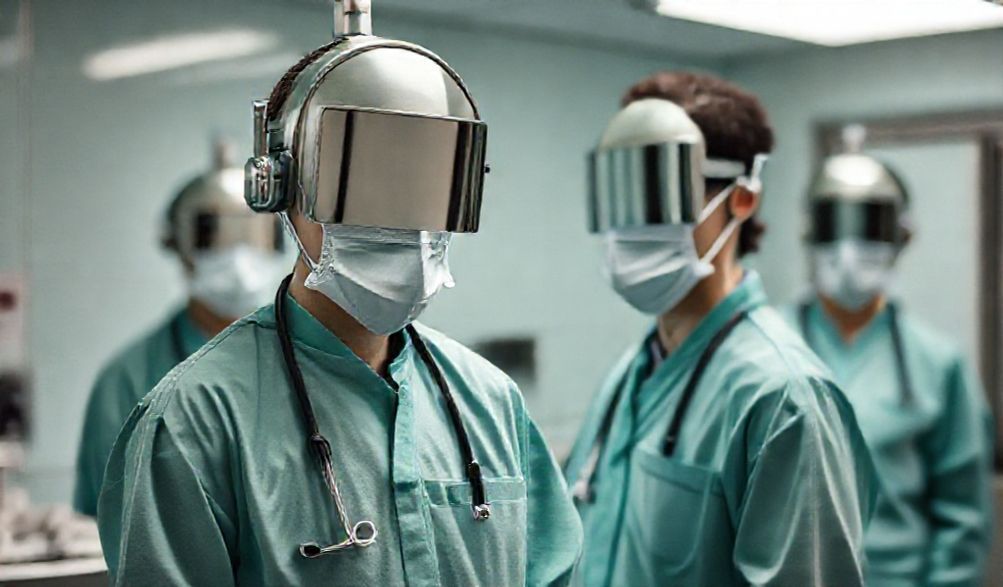
Why Did Doctors Wear Head Mirrors? Unveiling a Medical Icon
For generations, the image of a doctor was defined by a holy trinity of symbols: the draped stethoscope, the crisp white coat, and that mysterious, circular mirror strapped to the forehead. While the stethoscope remains a vital tool and the white coat a complex emblem, the head mirror has largely faded from modern practice, transforming from a daily necessity into a relic of a bygone medical era. It sparks immediate curiosity—a piece of polished metal that seems more suited to a detective’s magnifying glass or a mystic’s third eye than a physician’s clinic. What was its purpose? Was it a magnifying glass? A ceremonial object? Or a genuinely clever piece of technology?
This iconic device is far more than a quaint prop from a black-and-white film. It represents a brilliant, low-tech solution to one of medicine’s oldest and most fundamental challenges: seeing into the dark, hidden recesses of the human body. The doctor’s head mirror was a masterpiece of practical physics and ergonomic design, enabling breakthroughs in diagnosis and treatment for over a century. By exploring its history, function, and eventual decline, we uncover a story of ingenuity, adaptation, and the relentless march of technological progress. Let’s illuminate the fascinating truth behind this medical icon, separating historical fact from common fiction.
The Primary Function: Illumination and Magnification
At its core, the head mirror was a tool born of necessity, designed with a single, critical purpose in mind. Its design showcases the expertise of generations of physicians who needed to solve a very tangible problem with the technology available to them.
Shedding Light on Dark Cavities
Imagine a doctor in the late 1800s faced with a patient complaining of a severe sore throat, persistent earache, or chronic sinus trouble. The crucial diagnostic areas—the pharynx, the larynx, the nasal passages, and the ear canal—are deep, narrow, and naturally dark tunnels. Before the widespread availability of small, bright, and focusable electric lights, illuminating these spaces was a major hurdle. Candles and oil lamps were unwieldy and created shadows; holding a light in one hand left only one hand free for instruments.
This is where the simple, elegant physics of the head mirror came into play. The mirror was not flat; it was concave—curved inward like a shallow satellite dish. This shape is key to its function. A physician would position a bright light source, typically an adjustable kerosene or later electric lamp, to the side and slightly behind the patient. The concave head mirror would collect and concentrate this ambient light, reflecting it as a powerful, focused beam directly into the cavity being examined. It acted as a light amplifier, taking a decent light source and turning it into a brilliant, targeted spotlight exactly where the doctor needed to see.
The Advantage of Hands-Free Examination
The true genius of the design, however, lay in its ergonomics. By strapping the light-directing mechanism to their forehead, physicians achieved complete hands-free illumination. This is a prime example of design experience emerging from clinical need.
With both hands now free, the doctor could simultaneously:
* Use a tongue depressor to get a better view of the throat.
* Employ a nasal speculum to gently open a nostril.
* Manipulate delicate forceps or probes within the ear or nose.
* Steady the patient’s head or adjust their position.
This allowed for a more thorough, efficient, and controlled examination. The doctor’s gaze, the beam of light, and the working space for their instruments were all perfectly aligned, creating an integrated diagnostic system that was, for its time, remarkably sophisticated.
A Brief History of the Head Mirror
The story of the head mirror is intertwined with the rise of medical specialization and the quest for better diagnostic tools. Its development and adoption provide a clear timeline that establishes the authoritativeness of its role in medical history.
19th Century Origins and Adoption
While simple reflecting mirrors had been used in medicine for centuries, the classic forehead-mounted concave mirror was refined and popularized in the mid-19th century. This period coincided with the formal establishment of otolaryngology (Ear, Nose, and Throat, or ENT) as a distinct medical specialty. As physicians began to focus intensely on these areas, the need for specialized tools grew.
A key figure often credited with the design’s refinement is German physician Dr. Friedrich Hofmann in the 1840s. His version, with a precise focal length and a central aperture (hole) to look through, became the standard model. The tool spread rapidly across Europe and North America, becoming an indispensable part of the ENT specialist’s arsenal. It enabled the detailed examinations necessary for diagnosing conditions like tonsillitis, nasal polyps, mastoid infections, and early signs of throat cancers.
The Peak of Practical Use
From the late 1800s through the mid-20th century, the head mirror was at its peak. It was a standard-issue item in medical bags and a fixture on clinic walls. Its distinctive silhouette became synonymous with medical authority and expertise. This iconic status was cemented in popular culture—it appeared in medical textbooks, advertisements, and countless films and television shows depicting doctors. For nearly a hundred years, if you visited a doctor for an earache or sore throat, you would almost certainly encounter the glint of that familiar forehead mirror as they leaned in to examine you.
The Decline of the Head Mirror: Why It’s Rare Today
The head mirror’s journey from essential tool to historical artifact is a classic tale of technological disruption. Its decline was not due to a flaw in its concept, but because newer technologies solved the same problems more effectively. Understanding this transition is key to a trustworthy and balanced view of its legacy.
The Technological Revolution: Headlights and Scopes
The first major blow came with the development of the electric headlight in the mid-20th century. This was a lamp mounted on a headband, providing a bright, self-contained light source that no longer depended on adjusting an external lamp. It was more convenient and offered more consistent illumination.
The true revolution, however, arrived with fiber-optic and LED technology. Modern diagnostic tools like otoscopes, laryngoscopes, and endoscopes integrate powerful, cool, and adjustable light sources directly into the instrument itself.
* Otoscopes: Combine a light and a magnifying lens for examining ears.
* Laryngoscopes: Provide brilliant, focused light for viewing the vocal cords and throat.
* Endoscopes: Use fiber-optic bundles to channel light into the body, often with miniature cameras to display the image on a high-resolution monitor.
These devices didn’t just match the head mirror’s function; they vastly surpassed it. They offered brighter light, built-in magnification, the ability to document findings digitally, and far greater comfort for both patient and physician.
From Necessity to Niche
As a result, the head mirror transitioned from a daily necessity to a niche instrument. You are extremely unlikely to see one used in a standard ENT clinic today. Its remaining applications are limited:
* Historical Demonstration: It is a fantastic teaching tool in medical history courses.
* Ceremonial Use: Sometimes worn by senior physicians at formal events.
* Personal Preference: A very small number of veteran practitioners might still use one out of long-formed habit and skill.
For all practical purposes, the era of the head mirror has ended, superseded by the relentless advance of medical technology.
Common Questions and Misconceptions
The head mirror’s unusual appearance naturally leads to questions and assumptions. Let’s address some of the most common ones directly.
Was it used for anything other than ears, nose, and throat?
While overwhelmingly associated with ENT, the head mirror’s principle of focused, hands-free illumination had limited applications in other fields. Some dentists or oral surgeons used them for examining the back of the mouth. Dermatologists might have employed them for inspecting skin lesions with shadow-free light. However, its design and focal length were optimized for the mid-range distances of ENT exams, and it never achieved the same ubiquity in other specialties.
Did the mirror magnify the image?
This is a very common misconception. The head mirror itself did not magnify. Its primary and almost sole function was illumination. Any perceived magnification was usually minor, resulting from the concave shape creating a slightly enlarged virtual image, or, more importantly, from a separate diagnostic lens that the doctor might hold in their free hand to get a closer look at a specific spot once it was brilliantly lit.
Why did they wear it on their forehead?
The forehead placement was an ergonomic masterstroke. The central aperture (hole) in the mirror was aligned with the doctor’s dominant eye. By looking through this hole, the physician’s line of sight was perfectly aligned with the focal point of the reflected light beam. Wherever the doctor looked, the bright circle of light was already there, providing shadow-free illumination. The forehead provided a stable, hands-free platform that kept this alignment consistent throughout the examination.
FAQ Section
Q: What is a doctor’s head mirror officially called?
A: It is most accurately called a “head mirror” or a “frontal mirror.” In clinical parlance, it was often just referred to as “the mirror” as it was such a fundamental part of the diagnostic setup.
Q: Do any doctors still use head mirrors today?
A: It is exceedingly rare in active, modern clinical practice. Its use is largely historical, ceremonial, or a matter of personal habit for a dwindling number of older specialists. For all standard diagnostic purposes, it has been completely replaced by modern illuminated instruments.
Q: What was the hole in the middle for?
A: The central aperture allowed the doctor to look directly through the mirror. The concave surface reflected a ring of light from an external lamp, creating a brilliant circle of illumination. The doctor peered through the dark hole in the center of this bright circle, seeing the examined area in perfect, shadow-free light.
Q: Was the light source always a separate lamp?
A: Yes, almost invariably. This setup was known as “external illumination.” The physician would adjust a dedicated examination lamp (often on a flexible arm) to a position beside and slightly behind the patient’s head. The head mirror then captured and directed this light. The lamp and mirror worked as a paired system.
Conclusion
The journey of the doctor’s head mirror is a compelling chapter in the history of medicine. It began as a brilliant, simple solution to the elemental problem of seeing into the body’s dark interiors. For over a century, it was a symbol of clinical expertise and hands-on experience, enabling generations of physicians to diagnose and treat conditions that were once shrouded in literal darkness. Its elegant design—a concave reflector worn on the forehead—embodied practical ingenuity, allowing for detailed examination long before the digital age.
While technological progress has rendered it obsolete, replacing its polished surface with the cool glow of LEDs and fiber optics, its legacy endures. The head mirror is more than a antique; it is a tangible reminder of the foundational principles of medical examination: look closely, illuminate the problem, and use your tools to extend your senses. It stands as a powerful icon of a transformative era in medicine, a gleaming testament to the timeless desire to see, to know, and to heal.
p>